
Safe Sleep for Newborns: Crib and Room Tips
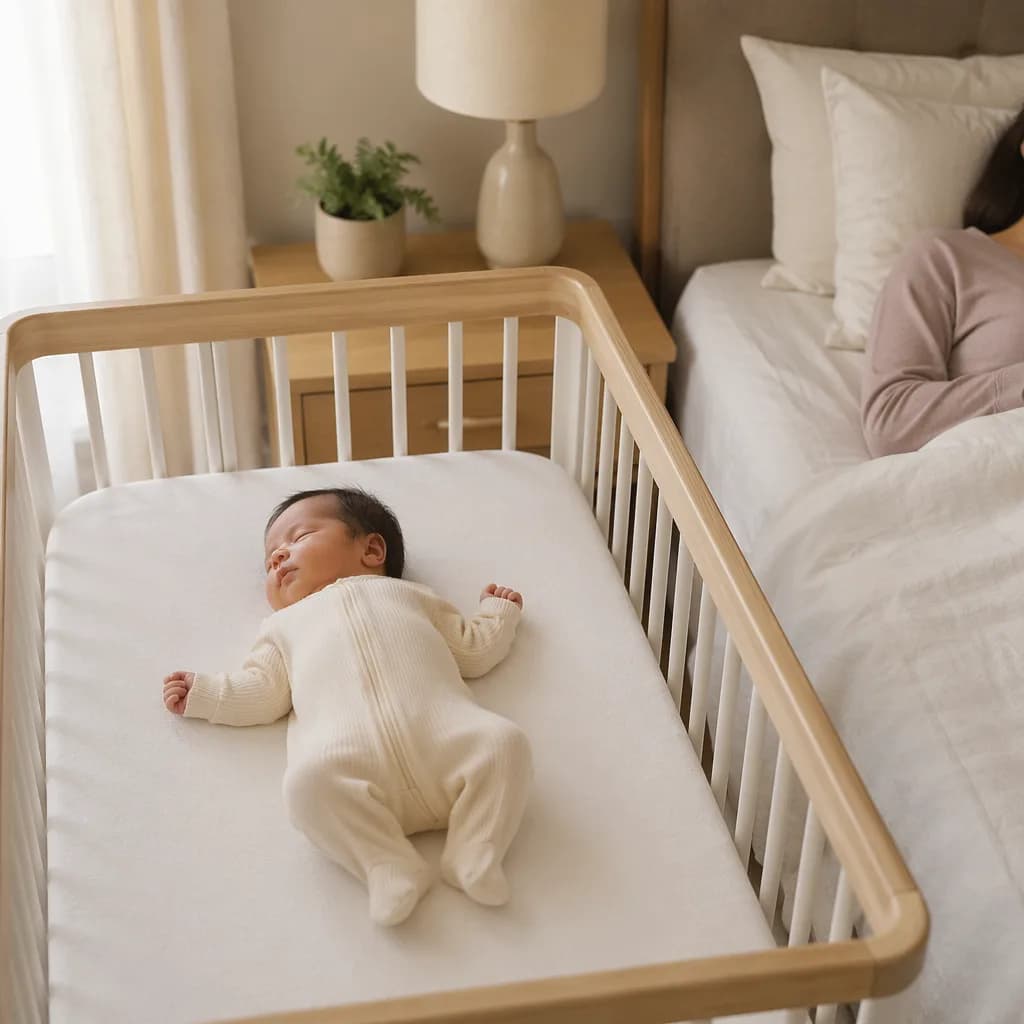
Safe sleep for newborns starts with back sleeping
For every sleep, place your baby on their back. That means naps, bedtime, and those blurry middle-of-the-night sleeps when everyone is running on scraps of rest.
Side sleeping isn’t considered safe for newborns, even if your baby seems to settle that way. A newborn can shift from their side into a position that makes breathing harder, and safe sleep guidance is clear: back sleeping is the safest position. If your baby fusses when placed down, you can soothe them, burp them, cuddle them while you’re awake, then try again on their back.
Picture this: it’s 2 a.m., your baby has fed, and you’re both heavy-eyed. Burp them on your shoulder, check that the crib or bassinet is firm, flat, and clear, then place them down flat on their back. No pillows. No loose blankets. No soft extras near their face.
Once a baby can roll both ways on their own, you don’t need to keep flipping them back all night. Still, keep starting every sleep on the back. That habit matters.
Tummy time is different. Supervised tummy time while your baby is awake is good for building strength, especially in the neck and shoulders. It’s just not for sleep. Think of it as a daytime floor activity, maybe after a diaper change, while you sit right there and cheer them on.
If you’re reading during a quiet contact nap and making baby-name lists too, we’ve got gentle name pages like Rami: meaning & origin and Aurora: meaning & origin for later. Sleep first, scrolling second.
What a safe crib setup looks like
A safe newborn sleep space is simple. Almost surprisingly simple.
Use a safety-approved crib, bassinet, Moses basket, or play yard with a firm, flat, level sleep surface. The mattress or pad should spring back when you press on it, and your baby’s head shouldn’t sink in more than a few millimetres. Cover it with one fitted sheet made for that exact mattress or pad, so it stays snug and smooth.
That’s it for the sleep space.
No pillows, loose blankets, quilts, stuffed animals, bumpers, sleep positioners, nursing pillows, pods, or nests. A bare crib can feel a little odd to us as adults, especially if you’ve spent time choosing sweet nursery details, maybe while scrolling name ideas like Rami: meaning & origin or Aurora: meaning & origin. But newborns can’t reliably move things away from their face yet. Empty space around them helps keep their nose and mouth clear and helps lower the risk of overheating and sleep-related death.
Before the first sleep, run your hand around the edges of the mattress. Check that there aren’t gaps between the mattress and crib frame where your baby could get stuck. The mattress should fit tightly and lie flat, not tilted or raised at one end.
Look around the crib too. Keep cords, monitor wires, curtain ties, blind cords, and mobiles well out of reach. Babies start surprising us with little reaches and wiggles sooner than we expect, especially at 3 a.m. when everyone is tired.
For routine sleep at home, skip inclined sleepers, loungers, couches, adult beds, and car seats. Couches and armchairs are especially risky if an adult falls asleep while feeding or comforting a baby. If your newborn dozes off in the car seat on the way home from an errand, move them to their cot, bassinet, or crib when you get inside.
Plain is good here. Firm, flat, fitted sheet, baby on their back.
Room sharing with baby, without bed sharing
For the first 6 months, the safest place for your baby to sleep is in your bedroom, close to your bed, but on their own separate sleep surface. That might be a crib, bassinet, Moses basket, or play yard with a firm, flat, level mattress and a fitted sheet.
This kind of room sharing is practical, too. When your baby is right beside you, night feeds feel a little less clumsy, soothing is quicker, and it’s easier to check on their breathing without getting fully up and walking down the hall.
Room sharing is different from bed sharing.
Bed sharing brings extra safety concerns, especially if there are pillows, sheets, blankets, or a soft adult mattress near the baby. The risk is also higher if an adult is very tired, has had alcohol, has smoked, has taken recreational drugs, or has taken medicine that causes drowsiness. If your baby was premature, had a low birthweight, has a fever, or seems unwell, bed sharing is not recommended.
A simple setup can help during those foggy 2 a.m. wakeups. Put the bassinet on your side of the bed, keep diapers and wipes within arm’s reach, and use a dim light so you can see without waking everyone fully. I used to keep a spare burp cloth tucked beside the wipes, because somehow it was always needed.
If you bring your baby into bed to feed or cuddle, move them back to their own sleep space before you fall asleep. It’s a small step that matters.
And try not to feed or settle your baby on a couch or recliner if you’re feeling sleepy. Falling asleep there with a baby is especially risky.
Tiny side note for those quiet night feeds: if you’re still choosing a name, Rami: meaning & origin and Aurora: meaning & origin are lovely reads while the room is calm.
Swaddles, sleep sacks, and temperature basics
A wearable blanket or baby sleep sack is usually the simpler, safer choice than a loose blanket. The NHS notes that sleeping bags can help reduce the risk of SIDS because they stop babies from wriggling underneath bedding, as long as the bag fits well around the shoulders and your baby’s head can’t slip down inside.
If you swaddle, keep it snug around the chest, but loose enough for healthy hip movement. And stop swaddling as soon as your baby shows signs of trying to roll. That moment can come earlier than parents expect, sometimes right when you’ve finally found a bedtime rhythm.
For warmth, think light layers rather than bundling. Dress your baby in one more light layer than an adult would wear in the same room, then check their chest or back of the neck. If they’re sweaty or their chest feels hot, take a layer off. Avoid hats indoors during sleep unless a clinician has told you otherwise, since babies can get too warm.
The room doesn’t need to feel toasty. Aim for comfortable for a lightly clothed adult. In a normal room, footed pajamas plus a well-fitting sleep sack is usually enough.
If you’re up at 3 a.m. reading baby name pages like Rami: meaning & origin or Aurora: meaning & origin, do one quick sleep check too: back, clear cot, firm flat mattress, no loose bedding. Then try to get some rest.
Common newborn sleep safety mistakes to avoid
Tiny babies make us second-guess everything, especially at 2 a.m. Here are the sleep-safety slip-ups worth watching for.
- Letting a newborn keep sleeping in a swing, bouncer, lounger, or car seat after you get home. If baby has nodded off somewhere that isn’t their sleep space, move them to a firm, flat, level surface as soon as you can.
- Adding a blanket because the crib looks too empty. Empty is the goal. The NHS advises keeping toys, pillows, cot bumpers, and loose bedding out of the cot because they can cover a baby’s mouth or nose or make them too hot.
- Using a wedge or positioner for reflux unless a clinician has specifically directed a medical device. A safe sleep surface is flat and level, not angled or inclined.
- Putting baby down on their side after a feed to help with spit-up. For sleep, place your baby on their back every time.
- Letting pets or older siblings climb into the baby’s sleep space. If you’re bed-sharing at any point, the NHS says not to let other children or pets in the bed at the same time.
- Using secondhand cribs or bassinets casually. Check the current safety standards, recalls, missing parts, and whether the mattress fits properly. For mattresses, the NHS says a reused one should be firm, flat, waterproof, and stored somewhere clean, dry, and smoke-free.
- Assuming a product is safe for sleep because the box shows a sleeping baby. Packaging can be persuasive, a bit like falling in love with Aurora: meaning & origin or Rami: meaning & origin before checking the details. For sleep gear, the details matter: firm, flat, level, and clear.
A simple safe sleep checklist for tonight
Before you lie down, do one quick scan of the sleep space. It doesn’t need to be fancy. It just needs to be clear, firm, and close enough that you can reach your baby easily.
- Place baby on their back for every sleep.
- Use a firm, flat mattress with only a fitted sheet.
- Keep the crib, bassinet, or play yard empty except for the baby.
- Take out pillows, loose blankets, toys, cot bumpers, loungers, nests, pods, and positioners.
- Dress baby warmly enough for the room without adding loose bedding. A well-fitting baby sleeping bag can help, as long as their head can’t slip down inside it.
- If you’re room sharing, set the sleep space in your room, near your bed, for the first 6 months.
- Check that cords, curtains, blind pulls, and monitor wires are well out of reach.
- After a feed or cuddle, put baby back in their own cot, bassinet, or Moses basket before you go to sleep.
One real-life trick: do the “empty crib check” after the last nappy change, the same way you might check the spelling of a name like Rami or Aurora twice before writing it down. Quick, calm, done.
Frequently Asked Questions
What is the safest sleep position for a newborn?
The safest position is on the back for every sleep, including naps and nighttime.
Can my newborn sleep on their side if they spit up?
No. Back sleeping is still safest, and healthy babies can usually clear spit-up while on their backs.
What should be inside a newborn's crib?
Only the baby, on a firm, flat mattress with a fitted sheet. Keep pillows, blankets, toys, bumpers, and positioners out.
How long should I room share with my baby?
Room sharing is recommended for at least the first 6 months when possible, with the baby on a separate sleep surface.
Is bed sharing the same as room sharing?
No. Room sharing means the baby sleeps near you in their own crib, bassinet, or play yard. Bed sharing means sharing the same sleep surface.
Are sleep sacks safe for newborns?
Yes, a properly sized sleep sack is a safer choice than a loose blanket.
When should I stop swaddling my baby?
Stop swaddling as soon as your baby shows signs of trying to roll, even if they have not rolled all the way over yet.
Can my baby sleep in a car seat after we get home?
No. Car seats are for travel. Once home, move your baby to a firm, flat sleep surface.
Frequently asked questions
What is the safest sleep position for a newborn?
What should be in a newborn's crib?
Is room sharing safer than bed sharing?
What should I do if my baby falls asleep in a car seat?
References
Sources
External research this article was grounded in.
- Framework - Scaled Agile Frameworkframework.scaledagile.com
- Baby safer sleep advice - Best Start in Life - NHSnhs.uk
- Safe Sleep Environment | Safe to Sleep®safetosleep.nichd.nih.gov
- Providing Care for Babies to Sleep Safely | SUID and SIDS | CDCcdc.gov
Related reading
More from the journal → sleep
sleep2 Month Old Sleep Schedule: Naps and Wake Windows
A calm, realistic 2 month old sleep schedule with wake windows, nap ranges, bedtime tips, and what to do when days still feel uneven.
13 min readJun 14, 2026 sleep
sleep4 Month Old Sleep Schedule: Naps and Bedtime Tips
A calm, realistic 4 month old sleep schedule with wake windows, nap goals, bedtime tips, and what to do when naps are short.
13 min readJun 13, 2026 sleep
sleep4 Month Sleep Regression: Signs and Gentle Help
The 4 month sleep regression can bring short naps, extra night waking, and fussy bedtimes. Here’s what’s normal and how to help gently.
11 min readJun 11, 2026