Quick facts
Last updated July 2026
What it means
“Eshani Diya is a Hindi girl name with Sanskrit roots, meaning “Goddess Parvati” and “light” or “lamp.” Together, it suggests a gentle, devotional light: calm, wise, and spiritually warm.”
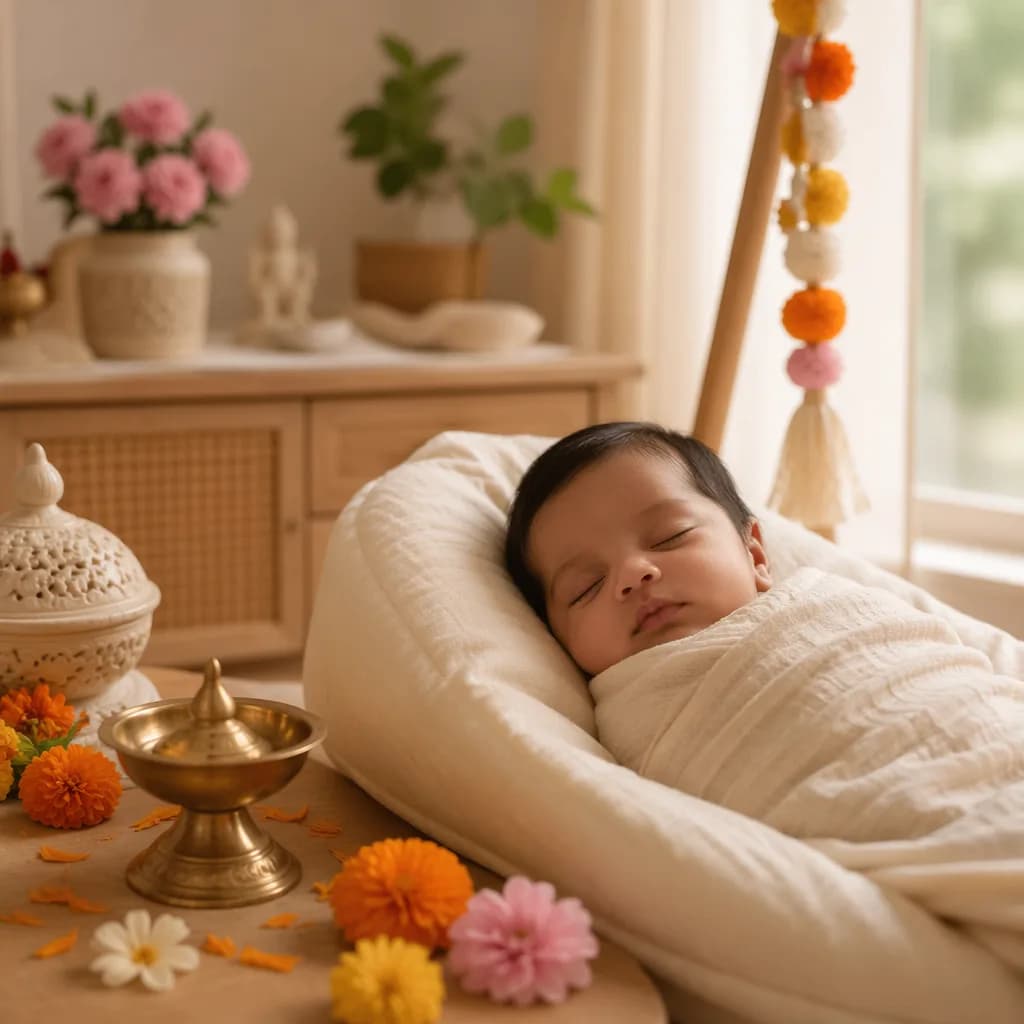
Eshani Diya is a luminous two-part Hindi name with a soft devotional heart. Eshani, written ईशानी in Devanagari, is described in Sanskrit-origin Hindu naming sources as meaning “Goddess Parvati.” That gives the first half of the name a distinctly sacred feeling, tied to a beloved goddess associated with strength, devotion, motherhood, and grace in Hindu tradition. Diya brings in a second image parents often love: light. The name Diya is given as an Indian feminine name derived from the Sanskrit word “diyam,” meaning “light” or “lamp.” A diya is also a familiar cultural image in many Indian homes: a small lamp, often lit during prayer or festivals. As a name, Diya is connected with enlightenment, knowledge, and wisdom, and is also associated in the source material with Saraswati, the Hindu goddess of knowledge. Put together, Eshani Diya feels especially tender. It doesn’t sound grand in a heavy way. It feels bright, composed, and prayerful, like a lamp glowing on a family altar in the early evening. For parents who want a Hindi name that is easy to say but still rich with meaning, this pairing has a lot to offer. The rhythm is another part of its charm. Eshani has three flowing syllables, while Diya is short and bright. The full name moves from sacred strength to light: Eh-sha-nee Dee-ya. It works well for a girl whose name you want to feel rooted, feminine, and full of quiet confidence. Because both elements are used as feminine names, Eshani Diya also has the feel of a complete given name pairing rather than a first name plus a filler middle. Each part carries its own meaning, and together they create a clear image: divine grace lit from within.
Why parents love it
Parents often choose Eshani Diya because it feels meaningful right away. Some names sound pretty but leave you searching for the heart of them. This one has the heart built in. Eshani brings the sacred association with Goddess Parvati, while Diya adds the image of a lamp, light, wisdom, and knowledge. It’s also a name with a lovely balance. Eshani is graceful and flowing. Diya is simple and bright. Together, they feel complete without becoming heavy. You can imagine it on a tiny baby, a school-age child writing it carefully on her notebook, and an adult introducing herself with quiet confidence. Another reason this pairing works is that it carries Indian identity in a way that’s clear and warm. The Devanagari form, ईशानी दीया, looks beautiful, and the English spelling is still approachable for many people outside Hindi-speaking communities. A teacher may need one correction on pronunciation, but it isn’t a name that feels hard to learn. If you want a girl name that suggests devotion, intelligence, softness, and light, Eshani Diya is a deeply affectionate choice.
Heritage
Eshani Diya sits comfortably within Hindu and Hindi naming traditions, where many names carry a spiritual idea, a deity connection, or a blessing parents hope to speak over their child. Eshani is tied in the provided source to Goddess Parvati, so it has a devotional quality from the start. Parvati is widely honored in Hindu homes and stories as a goddess connected with love, resolve, family, and divine feminine power. Diya adds a familiar and beloved image: the lamp. In Indian cultural life, a diya is more than a pretty object. It is often associated with prayer, welcome, auspicious beginnings, and the symbolic movement from darkness to light. The source for Diya gives the meaning as “light” or “lamp” and connects the name with enlightenment, knowledge, and wisdom. It also notes an association with Saraswati, the goddess of knowledge, which gives the name an intellectual and spiritual brightness. For many Hindi-speaking families, a name like Eshani Diya would feel meaningful without being difficult to carry. It has Sanskrit depth, clear feminine usage, and a sound that travels fairly well outside India too. One practical note: because deity-associated names can feel sacred to some families, parents may want to use the name with respect and choose nicknames that still feel affectionate rather than dismissive. That’s a family preference, not a strict rule. This is the kind of name that can feel at home at a naming ceremony, on school forms, and whispered at bedtime.
Not enough popularity data to chart yet.
The soft sounds in Eshani Diya give the name a calm, soothing feel.
Eshani’s association with Goddess Parvati gives the name a prayerful, spiritually rooted quality.
Diya means “light” or “lamp,” so the full name naturally suggests warmth and inner glow.
Diya’s connection with enlightenment, knowledge, and wisdom gives the name a reflective feeling.
The full name feels composed rather than flashy, which suits a child with quiet confidence.
Original
ईशानी दीया
Transliterations
A short surname lets the full first name keep its graceful rhythm.
The crisp ending of Rao balances the longer, flowing sound of Eshani.
Kapoor gives the name a familiar North Indian surname style while keeping it warm and polished.
Nair pairs nicely with the Sanskrit-rooted feel and keeps the full name easy to say.
Shah is short and strong, which makes the softer first name pairing stand out.
Pair two names and see how they sound, flow, and feel together.
Generate a soothing personalised bedtime story starring your child.
Reveal the life-path and destiny numbers hidden in a baby name.
Playful, name-based personality sketch to share with friends.
No stories for Eshani Diya yet. Be the first!