Quick facts
Last updated June 2026
What it means
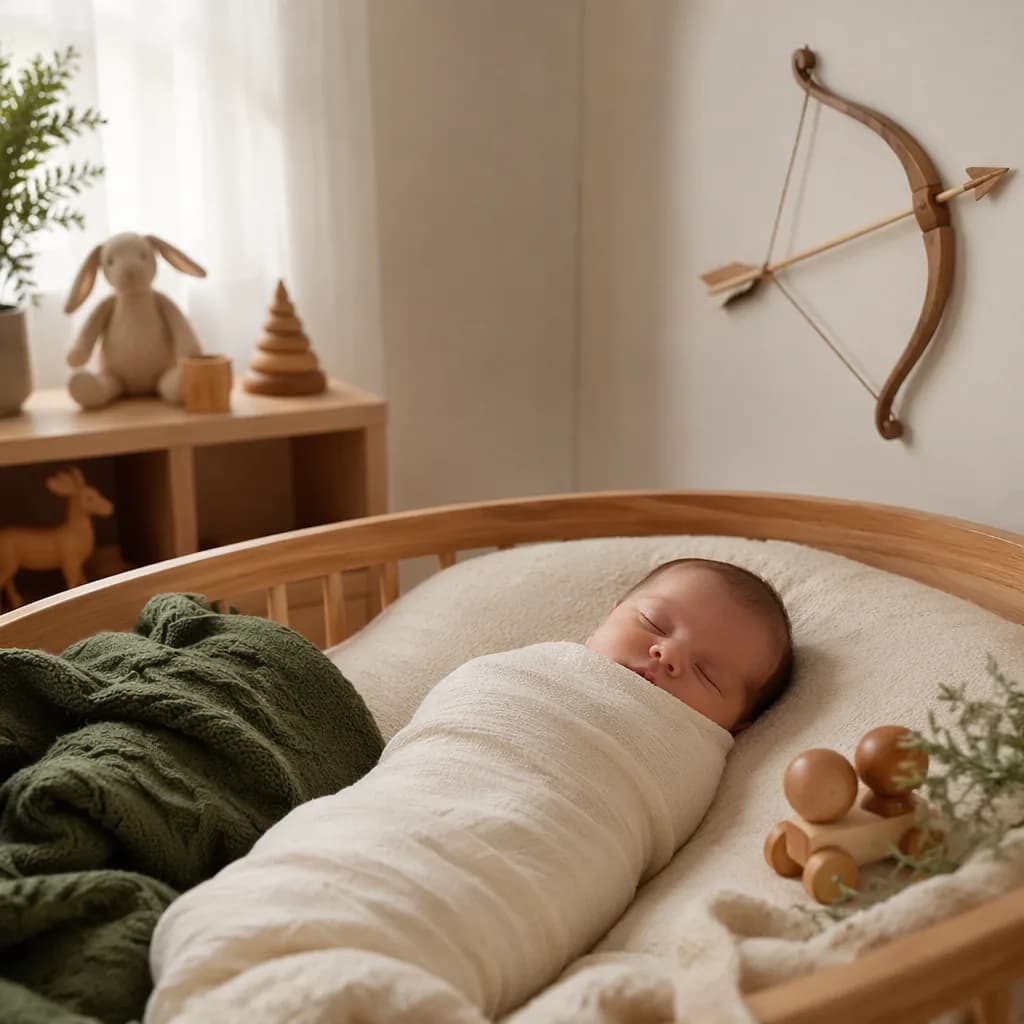
“Ivor is an English masculine name meaning "archer" or "bow warrior." It comes from the Old Norse name Ívarr, built from elements meaning "yew, bow" and "warrior, army."”
Ivor is one of those short names that carries more history than its four letters suggest. In English use, Ivor is a masculine given name connected to the Old Norse Ívarr. The usual meaning comes from two Old Norse elements: ýr, meaning "yew" or "bow," and herr, meaning "warrior" or "army." Put together, the name is often understood as "archer" or "bow warrior." It has a strong, spare feeling, a little like names such as Oscar, Hugo, or Arthur, but with a rarer edge. The name also has close cousins in nearby languages. In Welsh, the related spelling is Ifor. In Irish and Scottish Gaelic, the related form is Íomhar. These forms are generally traced back to the same Norse source, which makes sense given how names moved across Britain and Ireland through settlement, contact, storytelling, and family use. There is also a cautious scholarly note around the name: some sources mention the possibility that Ívarr may connect with an older Celtic root related to yew, but that idea is not as firmly established as the Old Norse explanation. For a parent, the meaning gives Ivor a vivid picture without feeling showy. The yew tree has long been associated with bows because its wood was used for them, so the name suggests focus, aim, and steadiness. The warrior part adds courage, but not in a noisy way. Ivor feels thoughtful and capable, like a child who might grow into his name rather than be swallowed by it. It is also a name with a distinctly British and Celtic-adjacent sound, especially because of its Welsh form Ifor and well-known Welsh bearer Ivor Novello. It works well for families who want something rooted, crisp, and uncommon, with an old story behind it.
Why parents love it
Parents who choose Ivor often want something with real roots, but not something every other child at the park will answer to. It has that rare sweet spot: easy to spell, easy to say, and still distinctive. You can imagine it on a toddler in rain boots, a teenager signing his name on a school project, and an adult in a serious profession. It grows well. The meaning is another reason it lands so nicely. "Archer" or "bow warrior" gives the name a clear image: focus, skill, and courage. It isn't aggressive. It feels composed. Like a child who learns to wait, aim, and try again. Ivor also has a quietly cultured feel because of bearers such as Ivor Novello, Ivor Gurney, and Ivor Cutler. That artistic thread gives it warmth and brains, while its Norse background keeps it sturdy. If you like Arthur but want something less common, or Hugo but want a sharper edge, Ivor is worth keeping on your list. It's brief, handsome, and full of history.
Heritage
Ivor sits at a lovely crossing point between English naming, Norse history, and Welsh, Irish, and Scottish Gaelic forms. The English Ivor is tied to Old Norse Ívarr, while Welsh uses Ifor and Irish and Scottish Gaelic use Íomhar. That gives the name a travel-worn feeling, as if it has lived in several places and kept its shape. For families with British, Welsh, Irish, Scottish, or Scandinavian interests, it can feel quietly meaningful without needing a long explanation every time someone asks. Religiously, Ivor is not usually treated as a specifically biblical or devotional name. It does, however, have an early Christian association through Ibar of Beggerin, an Irish saint who may have preceded or been contemporary with St. Patrick and probably died in the 500s. Because the source material frames this carefully, it is best to see that as a historical saintly connection rather than a common modern religious naming tradition. Culturally, Ivor has a literary and artistic flavor in English-speaking countries because of bearers such as Ivor Novello, the Welsh composer and actor, Ivor Gurney, the composer, and Ivor Cutler, the poet. It does not carry any major naming taboo in English use. The main practical note is pronunciation: in English, most people say EYE-vər. If you use the Welsh spelling Ifor, pronunciation expectations may vary more depending on the community. Ivor is simple on paper, serious in sound, and gentle enough for a child.
Not enough popularity data to chart yet.
The meaning "archer" gives Ivor a natural sense of aim, patience, and quiet concentration.
Its short, grounded sound makes the name feel calm and dependable rather than flashy.
The "warrior" element brings a feeling of courage, especially the kind that shows up when it matters.
Ivor has an old literary quality, helped by artistic namesakes, that gives it a reflective mood.
Original
Ivor
Transliterations
James gives the rare first name a familiar, warm balance.
Elias adds a gentle, lyrical middle without making the full name feel too ornate.
Bennett keeps the tailored English feel and gives the name a friendly rhythm.
Finn is crisp and bright, and it pairs well with Ivor's old Norse mood.
Sebastian lengthens the name beautifully and gives it a more formal, polished sound.
Rhys nods gently toward the Welsh side of Ivor's related forms.
Pair two names and see how they sound, flow, and feel together.
Generate a soothing personalised bedtime story starring your child.
Reveal the life-path and destiny numbers hidden in a baby name.
Playful, name-based personality sketch to share with friends.
No stories for Ivor yet. Be the first!