Quick facts
Last updated June 2026
What it means
“Karin is a Japanese girls' name that can be written 花梨, meaning Chinese quince, quince, or Burmese rosewood. It is unrelated to the Western name Karin, which developed as a form of Katherine and is often linked with the meaning "pure."”
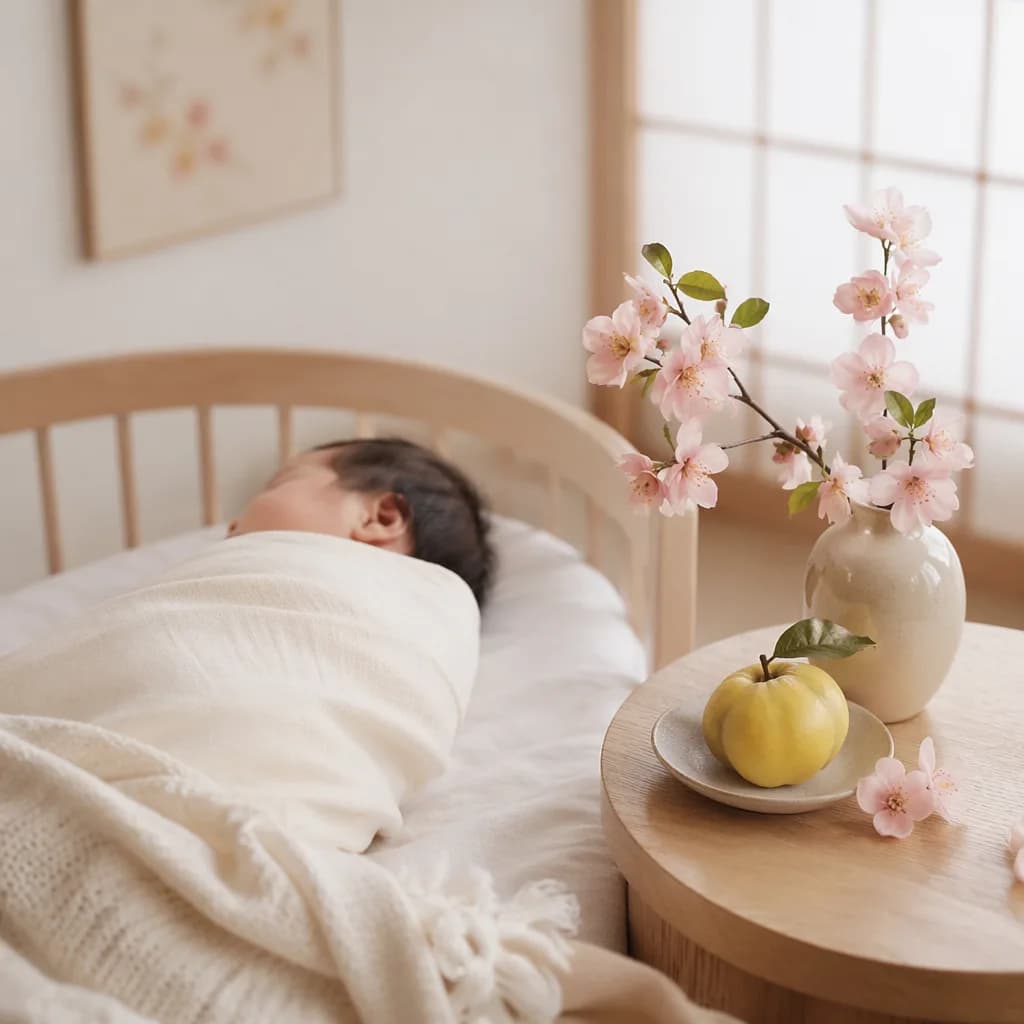
Karin is one of those names that looks wonderfully simple on paper, but carries more than one story depending on where you meet it. In Japanese, Karin is commonly written 花梨 in the source material provided. That writing is associated with Chinese quince, quince, or Burmese rosewood, giving the name a gentle botanical feeling. For a parent who likes nature names but wants something more delicate than Lily or Rose, Karin has that quiet garden quality without feeling overly floral. The Japanese reading is かりん, and the sound is soft, tidy, and bright: ka-rin. The final "n" in Japanese has its own small, settled sound, which gives the name a neat finish. It feels easy to say in many languages, while still keeping a clear Japanese identity when written in hiragana or kanji. There is also a completely separate Western name Karin. In Germanic-language settings, including places such as Austria, Germany, the Netherlands, Scandinavia, and Switzerland, Karin is used as a feminine given name. In those Western forms, it began as a Swedish form of Katherine. In English-speaking countries, it is often understood as an alternate spelling of Karen. The traditional Katherine family is associated with the meaning "pure." That Western background is helpful to know, especially because people outside Japan may assume Karin belongs to the Katherine or Karen family. For a Japanese girl, though, Karin can stand beautifully on its own as a nature-inspired name. The written form 花梨 brings in the image of a fruit tree and wood, something rooted, graceful, and quietly strong. That combination of softness and substance is part of the name's charm. It is short enough for everyday life, polished enough for adulthood, and meaningful without feeling heavy.
Why parents love it
Parents often love Karin because it does a lot with very little. It is only two syllables, so it feels clean and easy, but the Japanese writing 花梨 gives it a lovely layer of meaning. A name connected with quince, Chinese quince, or Burmese rosewood feels natural without sounding too common or too obvious. Karin is also practical. Teachers, relatives, and friends can usually learn it quickly, and it looks neat in Roman letters. At the same time, it keeps a distinct Japanese identity through かりん and 花梨. If your family has Japanese roots, or you simply want a Japanese name with a soft nature meaning, that balance can feel just right. There is another small advantage: Karin is familiar in some Western cultures too, though from a different origin. That means the spelling may not feel strange internationally, but you still get to share the Japanese meaning when someone asks. I like that kind of name for a child. It gives her an easy introduction and a story she can carry.
Heritage
In a Japanese naming context, Karin is especially appealing because it can be written with characters that carry natural imagery. The form 花梨 connects the name with quince or Chinese quince, and the same source also notes Burmese rosewood as a meaning. That gives the name a plant-based, earth-connected feeling, which many parents like in Japanese names because the written characters can add visual and emotional depth. Karin is also a good example of how the same romanized spelling can have different roots in different cultures. In Japan, Karin is unrelated to the Western Karin. In Germanic-language use, Karin developed from Katherine, and in English-speaking settings it may be read as a variant of Karen. A Japanese child named Karin may occasionally have people assume that Western background, especially on forms or in international classrooms. That isn't a problem, but it is useful to be ready with a simple explanation: "In Japanese, Karin can mean quince, written 花梨." There is no specific religious requirement or taboo attached to Karin in the provided sources. As with many Japanese names, the main cultural consideration is the chosen writing. Parents may choose kanji for beauty, meaning, family preference, or the feeling of the characters together. The hiragana かりん gives a softer and more open style, while 花梨 feels more botanical and traditional. Either way, the name has a calm, graceful sound that travels well.
Not enough popularity data to chart yet.
Karin's botanical meaning gives the name a poised, natural feeling, like a flowering tree that doesn't need to shout to be noticed.
Because the Japanese meaning is tied to fruit and wood, the name suggests steadiness and quiet roots.
The two crisp syllables make Karin feel clear, lively, and easy to call across a playground.
Karin works in Japanese and is also familiar in several Western naming traditions, so it can feel comfortable in more than one setting.
Original
花梨, かりん
Transliterations
Mei keeps the full name short, sweet, and easy to say.
Hana adds another soft nature note, pairing nicely with Karin's botanical meaning.
Aiko gives the name a warm, affectionate rhythm.
Yui is light and simple, so it doesn't compete with Karin.
Emi brings a friendly brightness to the full name.
Noa gives the pairing a modern, gentle sound.
Pair two names and see how they sound, flow, and feel together.
Generate a soothing personalised bedtime story starring your child.
Reveal the life-path and destiny numbers hidden in a baby name.
Playful, name-based personality sketch to share with friends.
No stories for Karin yet. Be the first!