Quick facts
Last updated June 2026
What it means
“Kotone is a Japanese feminine name most often written 琴音, meaning “sound of the koto” or “koto tone.” Its feeling is musical, graceful, and gentle.”
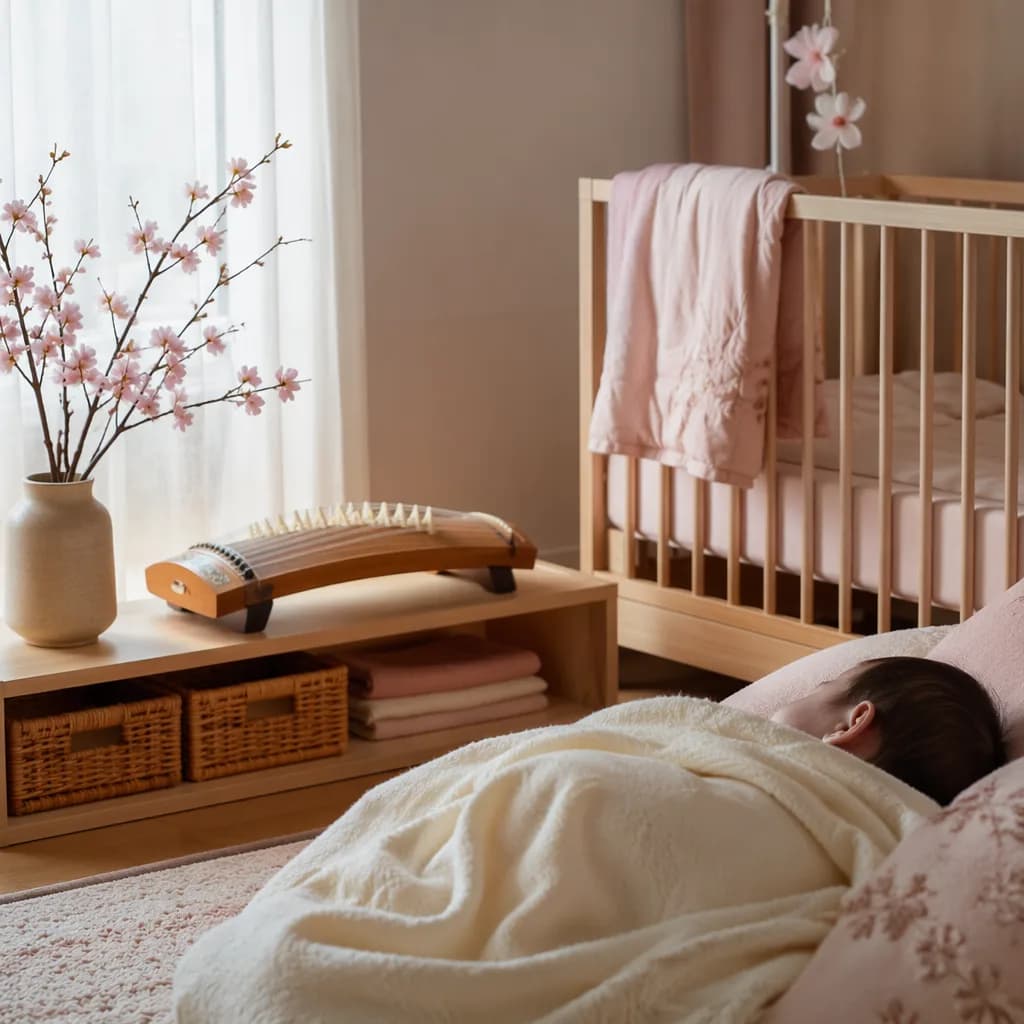
Kotone comes from Japanese naming traditions, where a name’s meaning depends strongly on the kanji a family chooses. The most common and best-supported writing is 琴音. 琴 refers to the koto, a traditional Japanese stringed instrument, and 音 means “sound” or “tone.” Put together, Kotone suggests “sound of the koto,” “koto tone,” or, more poetically, a beautiful melody. That musical image is the heart of the name. The koto has a refined, clear sound, so Kotone feels graceful without being fragile. It’s the sort of name that can bring to mind a quiet room, a careful plucked note, and a child with a calm but vivid presence. For parents who love names tied to music, Kotone has a lovely built-in meaning without sounding too ornate. Japanese names can also be written in hiragana as ことね or katakana as コトネ. These spellings keep the same pronunciation but soften or simplify the visual meaning. Hiragana can feel gentle and native to Japanese, while katakana may look modern or stylistic. Families may also choose other kanji combinations that are read Kotone. Reported possibilities include 言音, which can suggest “sound of words,” 古都音, “sound of the old capital,” 心音, “heartbeat,” 恋音, “sound of love,” 小音, “little sound,” and 湖音, “lake sound.” These should be understood as plausible kanji-based interpretations rather than one fixed dictionary meaning. That flexibility is part of the beauty of Japanese names. Kotone is not just a sound parents like. It can be shaped with characters that carry personal hopes: music, voice, love, a peaceful heart, or a connection to place. In English-speaking settings, Kotone will be uncommon, but its three clear syllables make it approachable once people hear it.
Why parents love it
Parents often love Kotone because it sounds gentle right away, then becomes even richer once you learn the meaning. KOH-toh-neh has a clear, balanced rhythm, and the common kanji 琴音 gives it a graceful musical image: the sound of the koto. That’s specific and beautiful, not vague. It’s also a name with room for family meaning. If you have Japanese heritage, you can choose kanji with care and make the written name feel personal. If you’re drawn to Japanese names for their sound and artistry, Kotone is approachable because each syllable is simple to say. A teacher may need one correction, but the pronunciation is not hard once heard. Kotone also has sweet nickname options. Koto feels bright and friendly. Nene is soft and playful. Ko-chan is affectionate in a Japanese context. The full name still feels complete and grown-up, which helps it age well from preschool cubby label to adult signature. If you want a girl’s name that is uncommon in the United States, tied to music, and quietly elegant, Kotone is a lovely choice to keep on your list.
Heritage
Kotone sits comfortably within Japanese naming culture, where sound, written form, and meaning often work together. A parent may first like the soft rhythm of ko-to-ne, then choose kanji that give the name its deeper meaning. With 琴音, the name points directly to music through 琴, the koto, and 音, meaning sound. That makes Kotone feel connected to traditional arts, beauty, and careful expression. There is no single religious rule attached to Kotone. It is not a name that belongs only to one faith tradition, and the sources do not support treating it as a religious name. Its cultural weight is more artistic and poetic. Like many Japanese given names, it can carry values through imagery rather than through a literal virtue word. A family might choose it because they love music, because they want a gentle sound, or because a certain kanji combination feels right for their child. One practical point matters for families outside Japan: kanji meanings should be handled with care. Two girls named Kotone may write their names differently, and those written forms can change the meaning quite a bit. If you’re using Kotone to honor Japanese heritage, it’s wise to choose the characters thoughtfully, ideally with help from a fluent Japanese speaker. If you simply love the sound, the hiragana ことね is a clean and authentic written option. The name’s softness does not make it weak. It has a quiet, artistic confidence.
Not enough popularity data to chart yet.
Kotone’s common kanji 琴音 points to the sound of the koto, giving the name a naturally melodic feeling.
The soft three-syllable rhythm of KOH-toh-neh feels calm, warm, and easy on the ear.
Because 音 means sound or tone, the name suits a child who seems to communicate feeling in her own clear way.
Japanese kanji names often carry layered meanings, so Kotone has a careful, chosen quality.
The koto connection brings to mind elegance, poise, and the beauty of a single well-played note.
Original
琴音
Transliterations
Mae is short and soft, so it lets Kotone’s three syllables stay in the spotlight.
Elise adds a light, musical feel that matches Kotone’s meaning without repeating it.
Hana has a gentle Japanese feel and pairs well with Kotone’s warm vowel sounds.
Grace echoes the refined image of the koto and gives the full name a calm finish.
Mirei keeps the Japanese rhythm and gives the name a polished, lyrical sound.
Pair two names and see how they sound, flow, and feel together.
Generate a soothing personalised bedtime story starring your child.
Reveal the life-path and destiny numbers hidden in a baby name.
Playful, name-based personality sketch to share with friends.
No stories for Kotone yet. Be the first!