Kenza Siham
Arabic
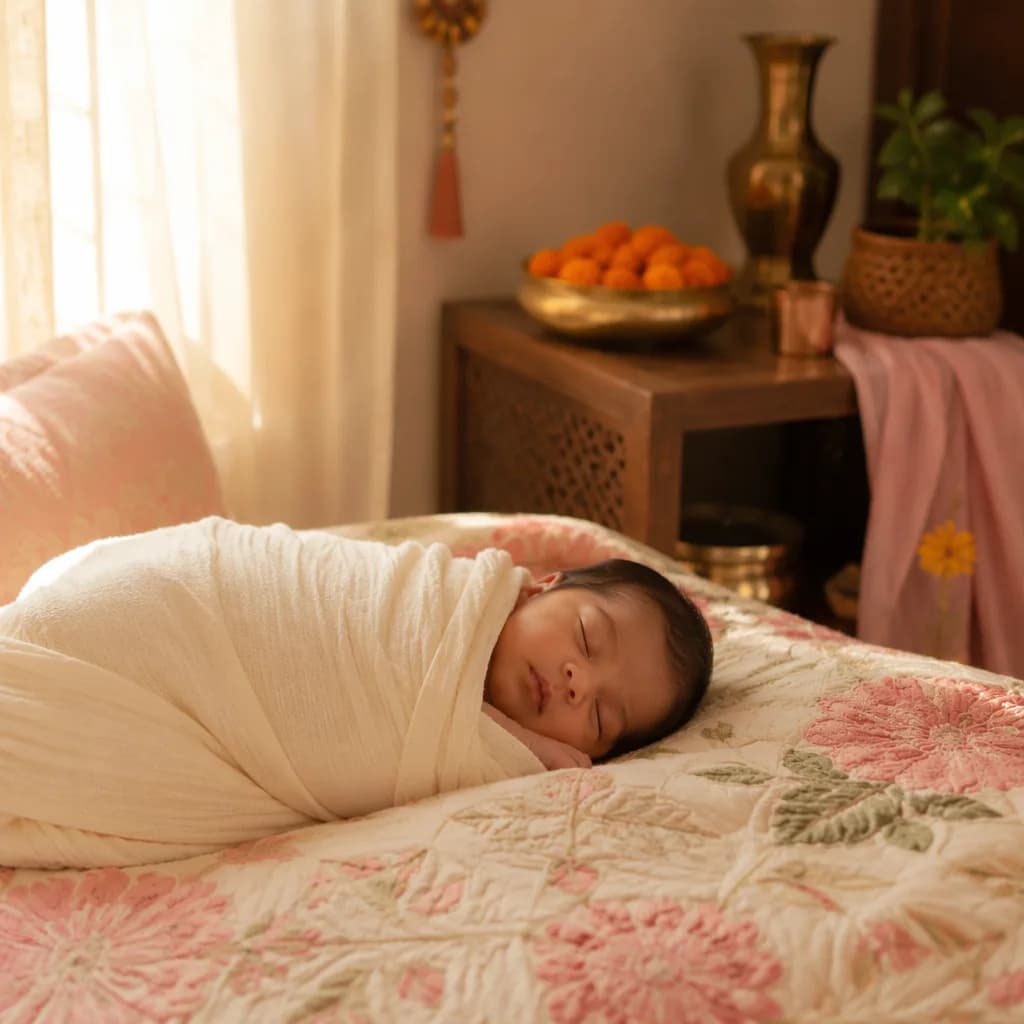
Kenza Siham is an Arabic girl name often understood as “treasure” paired with “arrows” or “shares.” Together, it has a bright, purposeful feeling: something precious with direction.
Just added: the newest names in our collection.
853 names
853 names

Arabic
Kenza Siham is an Arabic girl name often understood as “treasure” paired with “arrows” or “shares.” Together, it has a bright, purposeful feeling: something precious with direction.

Arabic
Naya Qamar pairs the given name Naya with Qamar, an Arabic unisex name from قمر, meaning “moon” and sometimes understood as “moonlight.” Together, it has a gentle, luminous feeling: Naya of the moon.

Arabic
Yara Widad is an Arabic girl name pairing the graceful, compact sound of Yara with Widad, an Arabic name associated with love, affection, and warm friendship. The exact meaning of Yara is not confirmed in the provided sources, so it’s best treated with care rather than pinned to one uncertain definition.

Arabic
Ghada is an Arabic feminine name meaning “graceful” or “an attractive, graceful woman.” Ghada Maisa has a soft, elegant feel, with both parts carrying a sense of beauty and poise.

Arabic
Tasnim Ruba is an Arabic girl name pairing with a soft, spiritual feel. Tasnim is widely used in Muslim naming contexts, while Ruba gives the full name a lyrical, balanced ending.

Arabic
Sawsan Hiba is an Arabic girl’s name often understood as a graceful pairing of Sawsan, commonly associated with the lily flower, and Hiba, commonly used with the sense of a gift. Together, it has a soft, floral feeling with a generous, beloved tone.

Arabic
Amal Layla is an Arabic girl name led by Amal, meaning “hope,” “aspiration,” or the expectation of something good. Together, the name feels gentle, luminous, and quietly optimistic.

Arabic
Nada Soraya is a graceful Arabic-style girls' name pairing Nada with Soraya, a name connected to Thurayya, the Pleiades star cluster. In the supplied sources, Soraya is described as meaning "the Pleiades" or "star cluster," with a feeling of celestial beauty and light.

Arabic
Maya Safa is a soft, graceful Arabic girl name pairing Maya with Safa, which means "purity" or "clarity." Safa also carries a sacred association with Al-Safa, one of the two hillocks connected to the Hajj ritual of Sa'i.

Arabic
Rania Suha is an Arabic girls' name pairing with a bright, gentle feel. Suha is given in Arabic baby-name sources as meaning "name of a star," while Rania is best known internationally through Queen Rania of Jordan.

Arabic
Hala Basma is an Arabic girl name led by Hala, meaning “halo around the moon.” In the provided sources, Hala appears in Arabic as هالة.

Arabic
Leen Nawal is commonly understood as an Arabic girls' name meaning “softness and generosity” or “gentle gift.” Leen carries a tender, flexible feeling, while Nawal suggests giving, grace, or something received.

Arabic
Jana Farah is a soft, bright Arabic girl name. Jana is associated with earning or reaping, while Farah is commonly understood as joy or happiness.

Arabic
Layan is an Arabic girl name meaning "soft" or "gentle." Layan Samira has a tender, graceful sound, with Layan carrying the supported meaning of kindness, tenderness, and ease.

Igbo
Jideofor Chukwuebuka is an Igbo boy's name that can be understood as “hold to truth, God is great.” It carries a steady, faith-filled feeling, with Ude as a family name.

Igbo
Ikechukwu is an Igbo boy name meaning "God's power" or "the power of God." It comes from ike, meaning "power" or "strength," and Chukwu, meaning "God."

Igbo
Nonso is an Igbo diminutive of Chinonso and Chukwunonso, with Chukwunonso understood as “God is holy.” In this full name, Chukwu carries the meaning “God” or “Supreme Being.”

Igbo
Chiamaka Ngozi Umeh is an Igbo girl’s name, with Chiamaka often understood as “God is beautiful” or “God is good,” and Ngozi commonly understood as “blessing.” Together, it carries the feeling of a cherished child whose life is received with gratitude.

Igbo
Ifeanyi is an Igbo masculine name often understood as "we can do anything with God" or "nothing is impossible with God." In the full name Ifeanyi Chukwudi Nwachukwu, the repeated presence of Chukwu gives the name a deeply faith-centered Igbo feeling.

Spanish
Joel is a Spanish and biblical boy name from Hebrew, meaning “Yahweh is God.” In Spanish, it is usually pronounced ho-EL.

Spanish
Álex is a Spanish unisex form of Alex, a short form of Alexander, Alexandra, and other names beginning with Alex. Through that family of names, it carries the familiar, strong-hearted feel of a protector name.

Italian
Corrado is the Italian form of Conrad or Konrad. It is commonly connected with Germanic roots associated with counsel and courage, giving it the feel of a brave or wise adviser.

Italian
Valerio is an Italian boy name derived from the Roman surname Valerius, from the Latin verb valere, meaning "to be strong" or "to be healthy." It has a confident, warm sound with deep roots in ancient Rome.

Spanish
Saúl is the Spanish form of Saul, from the Hebrew name Sha'ul, meaning "asked for" or "prayed for." It carries a classic, serious strength with deep biblical roots.

Spanish
Rubén is the Spanish form of Reuben, from the Hebrew Re'uven, meaning "behold, a son." It carries a joyful, almost announcing-the-baby feeling.

Spanish
Irene means "peace." It comes from the Greek name Eirene, from a word meaning peace.

Italian
Samuele is the Italian form of Samuel, a Hebrew-rooted name usually understood as “God has heard” or “name of God.” It carries a gentle, prayerful feeling with a distinctly Italian sound.

Spanish
Noa is a multicultural name with meanings tied to movement in Hebrew and love or affection in Japanese. For a Spanish girl, it feels short, bright, and tender.

Spanish
Héctor is the Spanish form of Hector, from Greek Hektor, meaning “holding fast” or connected to “to hold” and “to possess.” It carries a steady, protective feeling, shaped by the Trojan hero of Greek legend.

Spanish
Ariadna is a Spanish feminine form of Ariadne, from ancient Greek elements often interpreted as “most holy” or “most pure.” The name is closely tied to the Greek myth of Ariadne, who helped Theseus escape the Labyrinth with a thread.

Spanish
Rafael is the Spanish form connected with Raphael, a name long associated with healing and protection. It has a warm, rhythmic sound: strong at the start, gentle at the end.

Spanish
Iván means “God is gracious.” It is the Spanish-accented form connected to Ivan, a Slavic name related to John through Greek and ultimately Hebrew roots.

Italian
Niccolò is the Italian form of Nicholas, traditionally understood as “victory of the people.” It has a crisp, musical sound, with the accent giving the final syllable real Italian brightness.

Italian
Michele is the Italian form of Michael and means "Who is like God?" It comes from the Hebrew name Mikha'el through Greek and Latin forms.

Spanish
Marcos is the Spanish and Portuguese form of Marcus, a Latin name usually understood as “dedicated to Mars” or “warlike.” It carries a strong, steady feeling without sounding harsh.

Spanish
Jimena is a Spanish form related to Ximena, with meanings given as “hearing” or “listening,” and sometimes linked with the Hebrew Yemina, meaning “right hand.” It feels attentive, steady, and strong.

Spanish
Elena is the Spanish form of Helen, a name of Greek origin meaning "bright," "shining light," or "shining one." It has a gentle, luminous feel that fits beautifully in Spanish, Italian, Greek, German, and many other languages.

Spanish
Darío is the Spanish form of Dario, traditionally linked with Darius. It is commonly understood as “possessing goodness” or “holding firm to good.”

Indonesian
Vanya Pratiwi pairs Vanya, a name widely recognized through the Russian title Uncle Vanya, with Pratiwi, an Indonesian and Javanese name meaning “Mother Earth.” Together, it feels gentle, grounded, and quietly strong.

Indonesian
Rania Khairunnisa is a feminine Indonesian name with Arabic roots in its second element. Khairunnisa means “goodness of women” or “woman of good deeds,” from Arabic khair, meaning good, and nisa, meaning women.

Indonesian
Salsabila is an Arabic name referring to a spring or fountain in Paradise, mentioned in the Quran. Salsabila Azzahra carries a graceful Indonesian Muslim feel, with Salsabila bringing images of purity, freshness, and divine blessing.

Indonesian
Melati Anjani is a gentle Indonesian girl name pairing Melati with Anjani, a name identified in the source as the mother of Lord Hanuman. The full name feels floral, devotional, and quietly strong.

Indonesian
Nadia is a feminine name with Slavic links to “hope” and Arabic links to “delicate” or “tender.” Nadia Rahmawati has a gentle, optimistic sound that fits beautifully in an Indonesian context.

Indonesian
Hana Amalia has a gentle, graceful sound paired with a strong second name. Amalia is of Germanic origin and is linked with meanings such as brave, diligent, vigorous, and work.

Indonesian
Gita Permata can be read as “song jewel” or “precious song.” Gita is strongly associated with the Sanskrit word gītā, “song,” while Permata is Indonesian for “gem” or “jewel.”

Indonesian
Fathia is an Arabic girl name meaning “victory.” Fathia Zahra has a bright, graceful Indonesian feel, with Fathia carrying the central meaning of triumph and breakthrough.

Indonesian
Anindya means “immaculate,” “faultless,” or “blameless.” In the full Indonesian name Anindya Lestari, the first name gives a gentle sense of purity, grace, and being beyond reproach.

Indonesian
Aisyah is an Indonesian spelling of Aisha, from Arabic roots connected with “alive,” “living,” and “prosperous.” Paired with Maharani, the full name feels graceful, dignified, and warmly rooted in Indonesian Muslim naming style.

Indonesian
Zidan Hidayat has a calm, dignified Indonesian Muslim feel. The specific meaning of the full name is not verified in the provided sources, so it’s safest to treat it as a meaningful family or cultural choice rather than assign an unsupported definition.

Indonesian
Yudha Pratama is commonly understood as an Indonesian masculine name with a brave, first-born feeling: Yudha is associated with battle or struggle, while Pratama is associated with being first or foremost.