Quick facts
Last updated June 2026
What it means
“Maha is an Arabic girl name most often understood as “half moon” or “beautiful eyes.” It is also tied to the graceful image of the mahā, an animal praised in Arabic poetry for its lovely eyes.”
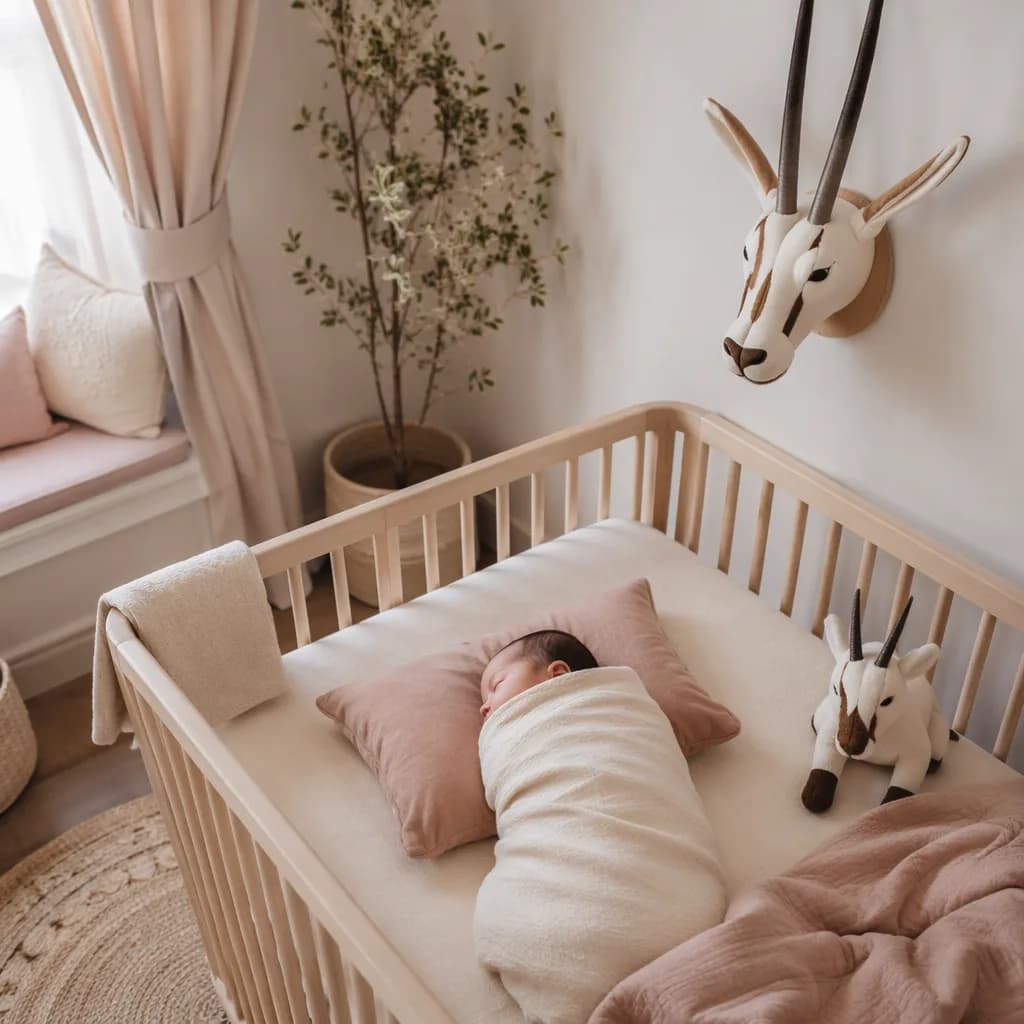
Maha is short, bright, and full of old Arabic imagery. In Arabic, Maha is written مها and is usually explained as meaning “half moon” or “beautiful eyes.” Those meanings give the name a gentle glow: a child named Maha carries a name that feels luminous without being flashy, elegant without trying too hard. One of the loveliest parts of Maha is its connection to classical Arabic poetic language. The word mahā has been linked in some sources with the wild deer or the Arabian oryx, an animal admired for the beauty and softness of its eyes. In poetry, the phrase “eyes of the mahā” was used as a tender compliment, praising a beloved’s eyes by comparing them to this graceful creature. For a parent, that makes the name feel more personal than a simple dictionary meaning. It has the mood of a compliment whispered across generations. Some sources also give related meanings such as “shining bright white pearl,” “white stones that shine,” “mirror,” “the Sun,” and “the planet(s).” These meanings all circle around brightness, whiteness, reflection, and beauty. They are best understood as part of the wider poetic range around the Arabic word, rather than as one single fixed translation. Maha is familiar in Arabic-speaking families and Muslim naming contexts, but it is easy to say in many languages because it has just two open syllables. It does not need a nickname, though it can certainly have one. The name feels grown-up enough for a doctor, poet, teacher, or artist, yet sweet enough on a baby wrapped in a soft blanket. If you like names that are simple on paper but rich underneath, Maha has that rare balance.
Why parents love it
Parents often fall for Maha because it does so much with so little. Four letters. Two syllables. No fuss. And yet the meaning is rich enough to grow with a child from babyhood into adulthood. Maha has a soft, moonlit feeling, especially with the meaning “half moon.” It also has that tender Arabic poetic layer, where the mahā is admired for beautiful eyes. That gives the name a built-in compliment, but not in a sugary way. It feels elegant and restrained. It is also practical. Maha is easy to spell, easy to say, and unlikely to be shortened unless your family wants a nickname like Mahi or Mimi. It works in Arabic-speaking families, Muslim families, and multicultural homes where parents want a name that travels well without losing its roots. Picture writing “Maha” on a tiny hospital bracelet, then later seeing it on a school art project, a graduation program, or a clinic door. It still fits. That kind of staying power is a gift.
Heritage
Maha belongs to Arabic naming tradition, where beauty is often expressed through images from nature: the moon, bright stones, pearls, animals, light, and the human face. Its best-known meanings, “half moon” and “beautiful eyes,” fit that tradition beautifully. The name feels especially poetic because the mahā, identified in some sources with a wild deer or the Arabian oryx, appears in Arabic literary imagery as a symbol of graceful eyes. A parent who chooses Maha may be choosing a name that sounds simple at school pickup, but carries the hush of older poetry behind it. In Muslim baby-name lists, Maha is commonly treated as a feminine Arabic name. It is not presented in the supplied sources as a specifically religious name from scripture, so it is better described as culturally Arabic and used by Muslim families, rather than as a strictly religious choice. That distinction matters. Some parents want a name that honors Arabic heritage without feeling formal or heavily theological, and Maha can fit that wish. There are no major taboos attached to the name in the provided sources. One small thing to know is that some English-language baby-name sites translate it as “wild cow,” while Arabic poetic explanations often frame the idea through beauty, grace, and the admired eyes of the animal. If relatives ask, you can gently explain that the older image is not meant as an insult. It is a poetic compliment, much like comparing someone’s eyes to a gazelle’s.
Not enough popularity data to chart yet.
Maha’s poetic link to beautiful eyes and the elegant mahā gives the name a soft, composed feeling.
Meanings connected with the half moon, shining stones, and pearls make the name feel clear and luminous.
The sound of Maha is open and calm, with no hard ending, which gives it a tender everyday warmth.
Because the name is tied to Arabic praise poetry, it carries a sense of language, beauty, and feeling.
Its four-letter simplicity gives Maha a strong, uncluttered presence on a classroom list or professional title.
Original
مها
Transliterations
Noor means light, so the pairing keeps Maha’s moonlit, shining feeling.
Yasmin adds a floral softness that sits beautifully beside Maha’s clean sound.
Leen is short and gentle, creating a sweet two-name rhythm.
Amina brings a classic Arabic feel and a steady, dignified balance.
Selene has moon associations in Greek tradition, which quietly echoes Maha’s half-moon meaning.
Rose gives the name an easy English-language middle that still feels graceful.
Pair two names and see how they sound, flow, and feel together.
Generate a soothing personalised bedtime story starring your child.
Reveal the life-path and destiny numbers hidden in a baby name.
Playful, name-based personality sketch to share with friends.
No stories for Maha yet. Be the first!