
Breast Milk Storage Guidelines for Fridge and Freezer
Quick breast milk storage chart
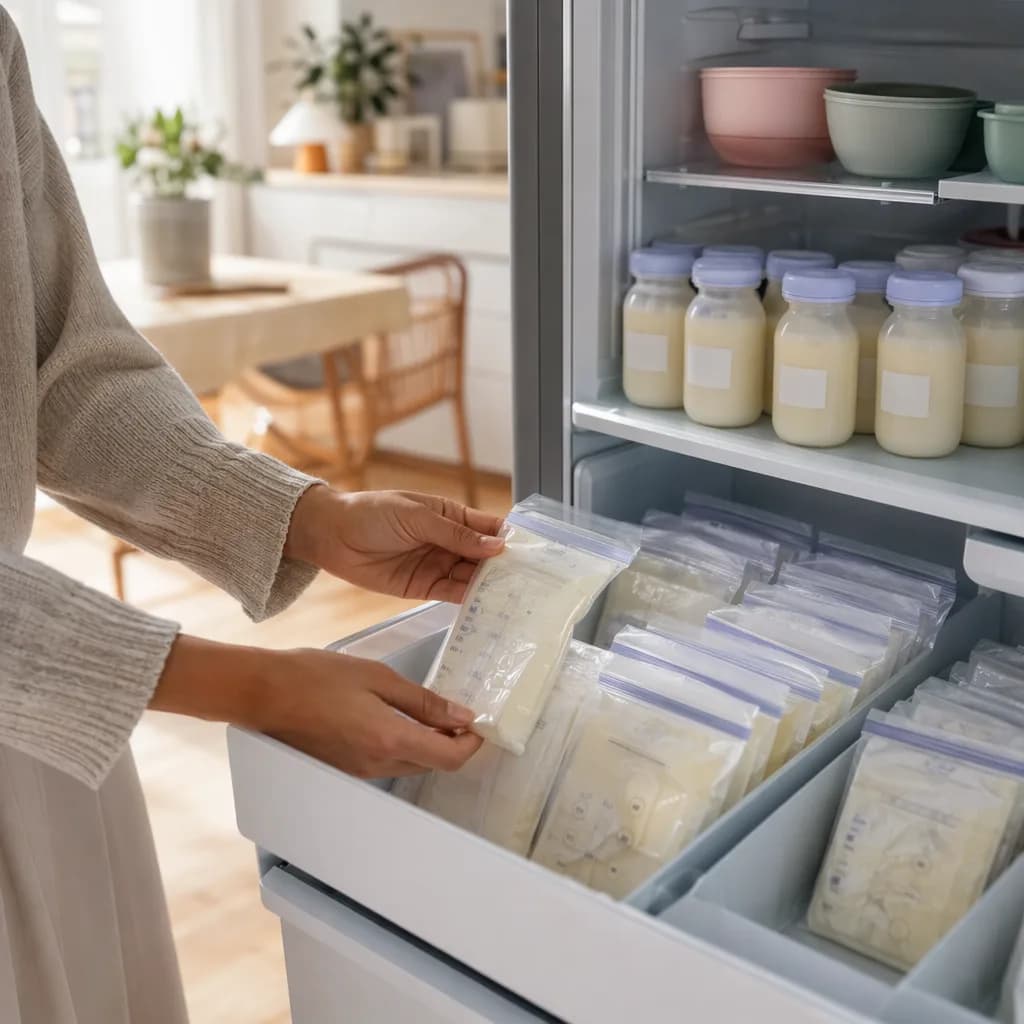
Here’s the simple version to screenshot. Cleaner pumping and storage habits matter too: wash your hands well, use clean food-grade, BPA-free containers, label the date, and store milk toward the back of the fridge or freezer where it stays coldest.
| Milk type | Room temperature, 26°C or lower | Insulated cooler | Refrigerator, 5°C or lower | Freezer | Deep freezer |
|---|---|---|---|---|---|
| Freshly pumped milk | Best: refrigerate if you can. Acceptable: 6 to 8 hours | Keep cool for travel, especially on warm days or longer trips | Best: use sooner. Acceptable: no more than 72 hours | 2 weeks in freezer compartment inside fridge. 3 months in freezer section with separate door | 6 to 12 months at -20°C |
| Thawed in refrigerator, not warmed | 4 hours or less, basically the next feed | Keep cold during transport | 24 hours | Do not refreeze | Do not refreeze |
| Thawed outside refrigerator in warm water | Use for completion of feeding | Not for storage | Hold for 4 hours or until next feed | Do not refreeze | Do not refreeze |
| Leftover after baby starts feeding | Use only to finish that feed, then discard | Discard | Discard | Discard | Discard |
A small practical tip: offer smaller amounts first so less milk gets thrown away after a feed. If you’re combination feeding, our How Much Formula Does a Baby Need by Age? guide can help you plan feeds without over-prepping. For direct feeds, comfortable positioning can also make a big difference, especially with a newborn. See Breastfeeding Positions for a Comfortable Latch.
How long is breast milk good for?
Breast milk storage can feel like one more tiny detail to remember when you’re already juggling feeds, naps, bottles, and laundry. A simple rule helps: label every container with the date, keep milk cold when you can, and use the oldest milk first.
Freshly expressed breast milk is generally good for up to 4 hours at room temperature, according to CDC guidance. The Australian Breastfeeding Association notes that freshly expressed milk may be kept at room temperature, 26°C or lower, for 6 to 8 hours, but if a fridge is available, storing it there is preferred. So for everyday home life, 4 hours is a nice conservative window.
In the fridge, breast milk is best used within 4 days. Keep it toward the back of the refrigerator, not in the door, where the temperature changes more often. If you’re pumping at work, a clearly labeled bottle tucked into the back of the fridge is a good habit.
For the freezer, breast milk is best within 6 months, and acceptable up to 12 months in a deep freezer. Use food-grade, BPA-free containers, and don’t fill them all the way. Milk expands as it freezes, so leaving a little space helps prevent leaks or cracked containers.
Thawed milk has its own clock. Once frozen breast milk is fully thawed in the fridge, use it within 24 hours and don’t refreeze it. If milk has been warmed, don’t reheat it more than once.
And if baby drinks from a bottle but doesn’t finish it, use the leftover milk within 2 hours, then discard what’s left. Offering smaller amounts can reduce waste. This is especially helpful during mixed feeding, when you may also be wondering how much formula a baby needs by age.
If feeding feels uncomfortable, storage isn’t the only piece to check. A small shift in hold can make a big difference, so you may want to revisit breastfeeding positions for a comfortable latch.
Storing pumped milk safely in the fridge
Fridge storage gets much easier when you set up a tiny system you can repeat while tired. Start with clean containers every time. The Australian Breastfeeding Association says expressed breastmilk containers should be food grade, BPA-free, and suitable for freezing if needed. Baby-feeding bottles, plastic or glass containers with tight-fitting lids, and zip-lock bags are all listed options, as long as they’re clean and appropriate for breastmilk storage.
Before you pump or handle milk, wash your hands well with soap and water. If you’re using a pump, check that the pump parts and tubing are clean before you begin.
Once the milk is in the container, label it clearly with the date. If it’s going to daycare, add your baby’s name too. A strip of masking tape on a bottle cap works fine, especially for a sleepy 6 a.m. handoff.
Store the milk in the back of the fridge, not in the door. That back area stays colder and more consistent, which is exactly what you want for expressed milk. The Australian Breastfeeding Association’s fridge guideline for freshly expressed breastmilk is no more than 72 hours at 5°C or lower, stored at the back where it’s coldest.
Keep portions small if you can. Two to 4 ounces is often a practical amount because any milk left after a feed needs to be thrown away. Smaller portions mean you can warm one little bottle, then prepare another if your baby is still hungry. If you’re combo feeding, you might also find it helpful to compare bottle amounts with how much formula a baby needs by age.
If you want to combine milk from two pumping sessions, cool the fresh milk in the fridge first. Once it’s cold, you can add it to milk that’s already chilled, then put the container straight back into the fridge.
And if pumping is part of a bigger feeding plan, comfort still matters. A better latch can protect your supply and your sanity, so keep breastfeeding positions for a comfortable latch nearby for those tender, fussy days.
Freezing breast milk without wasting ounces
Freezing breast milk feels a lot less stressful when you think in “future feeds,” not full bags.
If your baby usually takes 2 ounces, freeze 2 ounces. If they’re closer to 4 ounces, freeze 4. Small portions are easier to thaw, and they help you avoid that awful moment when you warm a big bag and baby only drinks half. Once a feed has started, any leftover milk needs to be discarded, so smaller amounts can save hard-earned ounces.
Leave room at the top of every bag or bottle. Breast milk expands as it freezes, and the Australian Breastfeeding Association says containers should be filled no more than three-quarters full so they don’t burst. Use food-grade, BPA-free containers that are suitable for freezing, like baby-feeding bottles, plastic or glass containers with tight lids, or breast milk storage bags.
Here’s a simple freezer routine that works well:
- Label each bag or bottle with the date.
- Pour in a feed-sized amount, leaving space at the top.
- Lay bags flat while they freeze.
- Once frozen, stand them upright together in date order.
- Use the oldest milk first, unless you need fresh milk for a specific reason.
That flat-freeze trick is small but mighty. Thin, flat bags thaw faster and stack more neatly, almost like little files in a box. You can keep the oldest milk at the front so you’re not digging around during a tired evening feed.
Store frozen milk toward the back of the freezer, where the temperature stays coldest. Try not to keep breast milk in the freezer door, since that area warms and cools more often as the door opens.
If you’re combo feeding and trying to estimate bottle sizes, our guide on how much formula a baby needs by age can give you a helpful comparison. And if pumping is part of a bigger feeding season, comfort still matters. These breastfeeding positions for a comfortable latch may help on nursing days.
Thawing breast milk the safe way
The easiest thaw is the one you plan before bedtime. If you know your baby will need frozen milk tomorrow, move it from the freezer to the refrigerator overnight. Keep it toward the back of the fridge, where it stays coldest, and use a clearly dated container so you’re reaching for the oldest milk first.
If baby is hungry sooner, you can thaw milk under warm running water or place the sealed container in a bowl of warm water. Keep the lid or bag tightly closed so water doesn’t get in. Once it’s ready, offer a small amount first. This helps avoid waste, since milk left after a feed needs to be thrown away.
Don’t microwave breast milk. Microwaving can heat unevenly and create hot spots, which can burn a baby’s mouth. It can also damage milk quality, so gentle warming is the safer choice.
You may notice the milk looks separated after thawing, with a creamy layer of fat at the top. That’s normal. Swirl the bottle or container gently to mix the fat back in instead of shaking it hard. Think slow circles, not a protein-shake moment at 3 a.m.
Once breast milk has fully thawed, don’t refreeze it. If it was thawed in the refrigerator and hasn’t been warmed yet, it can be kept in the fridge for 24 hours. If frozen milk thaws during transport, use it within 24 hours and don’t refreeze it. If you’re dealing with a freezer outage, milk that is partly thawed but still has ice crystals can be safely refrozen. Fully thawed milk should be discarded.
A practical routine can make this less stressful: label every container with the date, freeze in smaller portions, and thaw only what you expect baby to take. If you’re combo feeding, our guide on how much formula a baby needs by age can help with bottle planning. And if feeding feels physically awkward at the breast, these breastfeeding positions for a comfortable latch may make the next feed feel easier.
Warming and serving stored breast milk
Stored breast milk doesn’t have to be warm. Many babies will take it cold from the fridge, at room temperature, or gently warmed. If your baby accepts it, that’s fine.
If you do warm it, keep it simple and gentle. Warm only the amount your baby is likely to drink, especially in those early weeks when feeds can be unpredictable. A small bottle is easier to manage than watching a larger one go unfinished. If you’re also tracking bottle amounts alongside breastfeeding, our guide to how much formula a baby needs by age can help you think through typical feeding volumes, even though breast milk intake can vary from baby to baby.
Before offering warmed milk, test a few drops on the inside of your wrist. It should feel comfortably warm, not hot. Once your baby has started feeding from a bottle, use any leftover milk within 2 hours, then discard it. This can feel wasteful, so offering smaller amounts first is often the calmer option. You can always prepare a little more.
Stored breast milk can look different after sitting in the fridge or freezer. The cream may separate and rise to the top, which is normal. Gently swirl the container to mix it back together. Don’t worry if the color shifts a bit, either. Breast milk isn’t always the same shade from day to day.
Smell can vary too, especially after storage. If you’re unsure, pause and trust your senses. And if feeding has been hard lately, comfort at the breast still matters. Sometimes a small change from breastfeeding positions for a comfortable latch makes the whole routine feel easier.
Travel tips for storing pumped milk
Traveling with pumped milk is very doable, but it helps to pack like you’re expecting one small spill, one delay, and one moment where you can’t find a pen.
For short trips, an insulated cooler with frozen ice packs can keep expressed breast milk cold for up to 24 hours. Tuck the milk into the coldest part of the cooler, not right near the zipper, and keep the lid closed as much as you can. As soon as you arrive, move the milk to a refrigerator or freezer. If you’re staying with family, put it at the back of the fridge or freezer rather than in the door, where the temperature changes more often.
A simple leak trick: pack breast milk storage bags inside a larger zip bag. If one bag seeps, you’ve contained the mess and saved the rest of the cooler. I’d also bring extra labels and a marker, because tired travel brain is real. Write the date before you forget. If you’re pumping away from home, pack clean pump parts in their own clean bag, plus an extra set if you have one.
If you’re flying, breast milk is allowed in carry-on bags in reasonable quantities, but screening rules can vary. Check the airport or airline guidance before you leave, and give yourself extra time at security. Keep milk, ice packs, and any feeding supplies easy to reach so you’re not unpacking your whole bag in the line with a baby on your hip.
If your baby takes both pumped milk and formula, it can help to plan feeds before you travel. Our guide on how much formula a baby needs by age can help with rough amounts. And if you’re nursing during the trip too, a comfortable latch can make travel feeds much less stressful, so keep these breastfeeding positions for a comfortable latch handy.
For older babies, travel snacks may start joining the milk cooler. These guides on starting solids step by step and introducing solids safely can help you plan what to pack.
Common breast milk storage mistakes to avoid
Even careful parents make storage slip-ups, especially after a 3 a.m. pump or a fussy feed. A few small habits can protect your milk and save you from guessing later.
- Leaving pumped milk on the counter too long. Freshly expressed breast milk can sit at room temperature, 26°C or lower, for 6 to 8 hours, but if refrigeration is available, it’s better to store it there. After pumping, try to make “fridge or freezer” part of the routine before you wash parts or settle baby again.
- Adding warm milk straight to cold or frozen milk. Freshly pumped milk should be cooled in the fridge first. Once it’s cold, you can add it to milk that’s already chilled or frozen, then put the container straight back into the fridge or freezer.
- Forgetting to label before freezing. Label each container with the date before it goes in. Future-you will be grateful when you’re standing at the freezer choosing the oldest milk first. This is one of those tiny systems that helps on busy weeks, right alongside tracking feeds or checking something like How Much Formula Does a Baby Need by Age? if you’re combination feeding.
- Thawing milk on the counter for hours. If milk was previously frozen and thawed in the refrigerator, it can stay there for 24 hours. If it’s thawed outside the refrigerator in warm water, use it for that feeding or hold it for up to 4 hours or until the next feeding. Don’t refreeze thawed or warmed milk.
- Saving half-finished bottles too long. Once baby has begun feeding, use the milk only to complete that feed, then discard what’s left. Offering smaller amounts can reduce waste. This gets easier as feeding settles, whether you’re working on Breastfeeding Positions for a Comfortable Latch or later reading about Starting Solids Guide: First Foods Step by Step.
When stored breast milk may not be safe
Stored breast milk can separate, and that’s normal. Give it a gentle swirl first. If it still smells sour or rotten after mixing, don’t use it. Trust that moment. It’s better to throw out one bottle than spend the next few hours worrying.
Milk should also be discarded if it has been stored longer than the recommended time for its temperature. Freshly expressed milk can be kept at room temperature (26°C or lower) for 6 to 8 hours, in the refrigerator (5°C or lower) for no more than 72 hours, and in a deep freeze (-20°C) for 6 to 12 months. Once milk has been thawed or warmed, don’t refreeze it, and don’t reheat it more than once.
Take extra care with any container that looks damaged. A broken seal, leak, or signs that frozen milk has dried out or been exposed to air can mean the milk wasn’t protected well. If a bag has split in the freezer or a lid popped loose, it’s safest to discard it.
One confusing exception is high lipase milk. Some expressed milk smells soapy after storage, even when it has been handled safely. If you followed storage rules and your baby accepts it, that soapy smell alone doesn’t mean it has gone bad.
For premature or medically fragile babies, use the stricter instructions from your doctor, midwife, or hospital team. The Australian Breastfeeding Association notes that sick babies may need extra steps, and fresh breast milk each day is best for them.
And if you’re supplementing while sorting out storage, this guide on how much formula a baby needs by age can help you plan feeds calmly.
Frequently Asked Questions
How long can breast milk sit out after pumping?
Freshly pumped breast milk can usually sit at room temperature for up to 4 hours. If the room is very warm, refrigerate it sooner.
How long is breast milk good for in the fridge?
Breast milk is best used within 4 days when stored in the back of a clean refrigerator.
How long can you freeze breast milk?
Frozen breast milk is best used within 6 months, though it may be acceptable up to 12 months in a deep freezer.
Can you refreeze thawed breast milk?
No. Once breast milk has fully thawed, it should not be refrozen.
How long is thawed breast milk good for?
Milk thawed in the refrigerator should be used within 24 hours after it is fully thawed.
Can I mix freshly pumped milk with refrigerated milk?
Yes, but cool the freshly pumped milk first before adding it to already refrigerated milk.
Can you microwave breast milk?
No. Microwaving can create hot spots that may burn baby’s mouth and can affect milk quality.
How do I store breast milk while traveling?
Use an insulated cooler with frozen ice packs for up to 24 hours, then move the milk to a fridge or freezer as soon as you can.
Frequently asked questions
How long can freshly pumped breast milk stay at room temperature?
How long is breast milk good in the fridge?
Can you refreeze thawed breast milk?
How long can thawed breast milk sit out?
What should I do with breast milk left in the bottle after a feed?
References
Sources
External research this article was grounded in.
- Breast - Wikipediaen.wikipedia.org
- Storing expressed breastmilk | Australian Breastfeeding Associationbreastfeeding.asn.au
- Breast Milk Storage and Preparation | Breastfeeding | CDCcdc.gov
- 24 Real Photos Of Women's Breasts — No Filter (NSFW)refinery29.com
- Expressing and Storing Breastmilk - The Breastfeeding Networkbreastfeedingnetwork.org.uk
Related reading
More from the journal → feeding
Newborn Feeding Cues: Hunger and Fullness Signs
Learn early newborn hunger cues, late feeding signs, and fullness signals so feeds feel calmer and you know when your baby has had enough.
11 min readAug 3, 2026- feeding
Bottle Feeding Newborn Basics for Calm Feeds
Newborn bottle feeding can feel messy at first. Learn hunger cues, typical amounts, pacing, burping, and when to call your pediatrician.
10 min readAug 3, 2026 - feeding
Breastfeeding Positions for Newborn Comfort
Comfortable breastfeeding starts with your body supported, baby tucked close, and a position that helps both of you relax into the latch.
11 min readAug 3, 2026