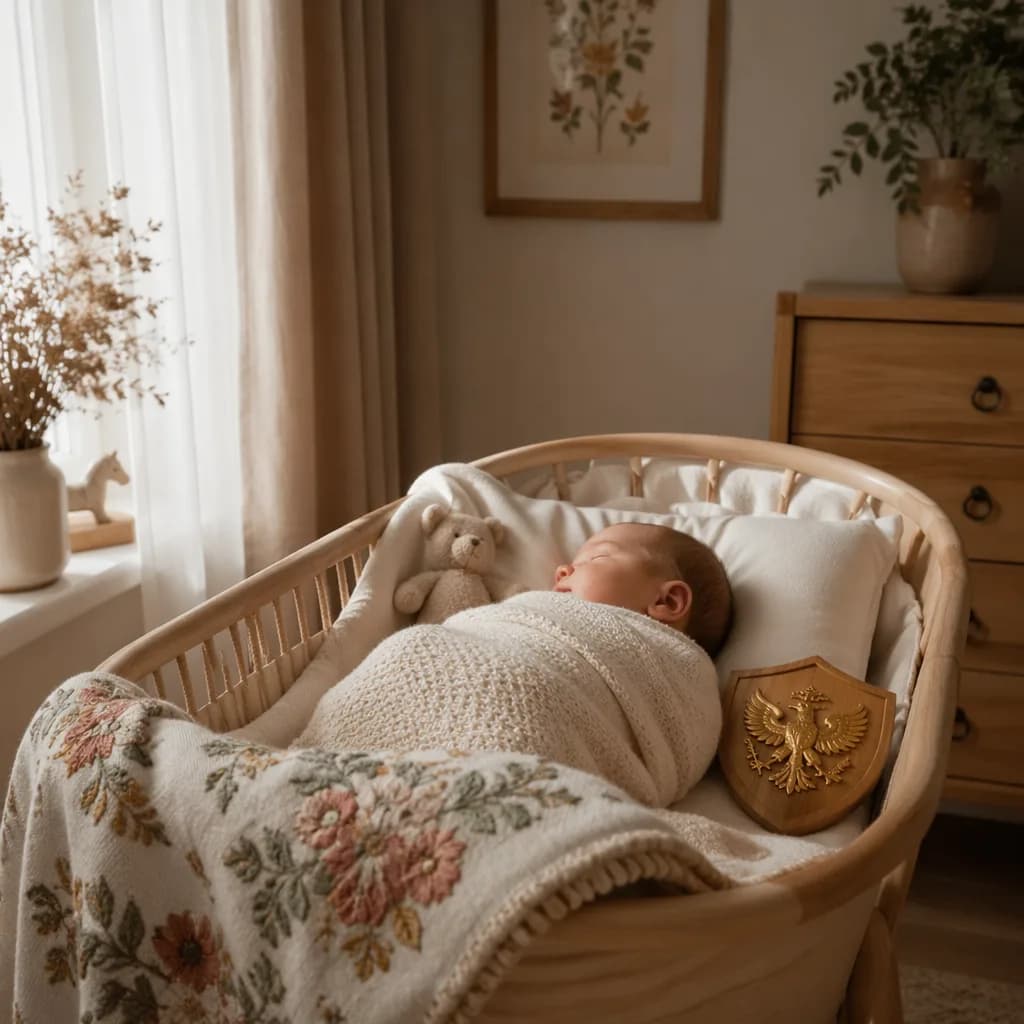
Quick facts
Last updated June 2026
What it means
“Matylda Beata pairs the Polish form of Matilda, often understood as “strength in battle,” with Beata, a Latin-rooted name meaning “blessed” or “happy.” Together, it has a brave, gracious feel: a strong girl with a blessed life.”
Matylda Beata is a very Polish-sounding double name with old European bones and a gentle, thoughtful finish. Matylda is the Polish form of Matilda, a name usually traced to old Germanic elements connected with might or strength and battle. That can sound intense at first, especially for a baby girl asleep in a knitted hat, but many parents hear it in a softer way: courage, steadiness, and the ability to stand firm when life asks for it. Beata adds a different kind of warmth. It comes from a Latin word associated with being blessed, happy, or fortunate. In Polish use, Beata feels familiar and classic, the kind of name you might hear on a teacher, aunt, doctor, artist, or neighbor. It brings brightness to Matylda’s more dramatic medieval sound. As a pairing, Matylda Beata has balance. Matylda gives the name weight and character. Beata gives it grace and a calm spiritual glow. You get a name that feels traditional without feeling plain, serious without feeling heavy, and distinctly Polish without being hard to love outside Poland. There are close cultural cousins across Europe. Matilda is the English and Italian-looking form many people recognize. Mathilde is used in French and German-speaking settings. Matylda, with its clear Polish spelling and the letter y, keeps the name rooted in Polish language and family tradition. One nice thing about Matylda Beata is that it gives a child room to grow. Matylda can be bold and bookish, artistic and practical, playful at home as Matyldka or Tysia, then formal and elegant on a diploma or passport. Beata in the middle softens the full name beautifully, especially if the family wants something meaningful, Catholic-friendly in tone, and easy for Polish relatives to say with affection.
Why parents love it
Parents love Matylda Beata because it feels strong without being sharp. Matylda has that wonderful old-name confidence, the kind of name that sounds right on a curious preschooler with paint on her sleeves and on a grown woman signing her first book, opening a clinic, or introducing herself at a family wedding. Beata makes the pairing warmer. Its meaning, tied to blessedness and happiness, gives the full name a tender wish tucked inside it. You’re not just choosing something pretty. You’re choosing a name that says, “May you be strong, and may your life be blessed.” That’s a lot to hold, but the name carries it gracefully. It’s also practical in a Polish family. Relatives can say it naturally, the spelling is familiar, and the nickname options are sweet: Matyldka when she’s tiny, Tysia if you want something cuddly, Bea or Beatka as a nod to the middle name. Outside Poland, Matilda helps people understand the shape of Matylda quickly. If you want a name with heritage, substance, and softness in the same breath, Matylda Beata is a beautiful choice.
Heritage
Matylda Beata sits comfortably in Polish naming culture because both names feel established, feminine, and easy to recognize in a Polish-speaking family. Matylda has the shape of an old European royal and noble name, and the source material includes a historical record for Matilda of Brandenburg, Duchess of Brunswick-Lüneburg, also shown with the Polish-style name Matylda in a genealogical context. That gives the name a medieval European flavor without making it feel costume-like. Beata brings a different layer. Because its meaning is tied to blessedness or happiness, many families hear a gentle spiritual note in it. It doesn’t have to be chosen for religious reasons, but in a Polish Catholic context it can feel especially natural because words connected with blessing and beatitude are familiar in church language. The name has a quiet dignity rather than a trendy sparkle. There aren’t strong taboos around Matylda Beata. The main practical point is pronunciation. In Polish, Matylda has the central Polish y sound, not exactly the English “ee” or “ih,” and Beata is usually three clear syllables. In English-speaking settings, people may say muh-TIL-duh or bee-AH-tuh at first. That’s fixable with one calm correction. For parents with Polish roots, the full name can be a lovely bridge. It honors heritage, sounds complete in Polish, and still has recognizable international relatives like Matilda and Beatrice-like blessed names in other cultures.
Not enough popularity data to chart yet.
Matylda has a strong, grounded sound that suggests a child who can take her time and still hold her own.
Beata softens the full name with a blessed, happy meaning that feels kind and approachable.
The full name has a serious, literary feel, the kind you can imagine on a girl who notices details others miss.
Matylda’s traditional meaning gives the name a quiet courage rather than a loud, showy strength.
The rhythm of mah-TIL-dah beh-AH-tah is elegant and measured, with a formal beauty that ages well.
Original
Matylda Beata
Transliterations
Zofia adds a soft, classic Polish ending and keeps the whole name elegant.
Anna is simple and timeless, which balances the fuller rhythm of Matylda Beata.
Klara brings a clear, bright sound after the warmer vowels in Beata.
Róża gives the name a floral Polish touch without making it feel too frilly.
Maria feels traditional and familiar in Polish families, especially where faith and heritage matter.
Pair two names and see how they sound, flow, and feel together.
Generate a soothing personalised bedtime story starring your child.
Reveal the life-path and destiny numbers hidden in a baby name.
Playful, name-based personality sketch to share with friends.
No stories for Matylda Beata yet. Be the first!