Quick facts
Last updated June 2026
What it means
“Prune is a French girl name meaning "plum." It comes directly from the French word prune, with deeper roots in Latin prunum and Greek prounon.”
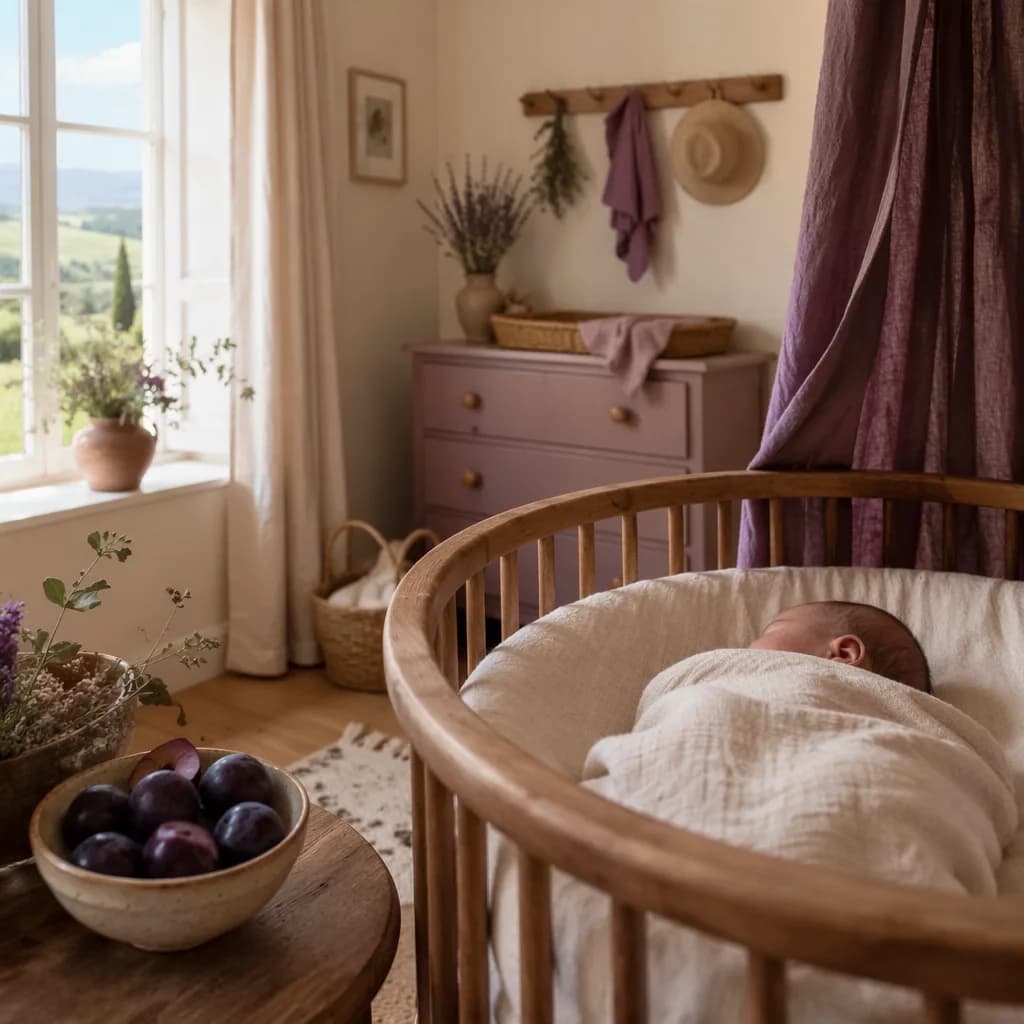
Prune is one of those names that feels tiny at first glance, then grows more interesting the longer you sit with it. In French, prune means "plum," the fruit. Namekin traces it through Latin prunum and Greek prounon, which gives this short name a very old, fruit-bearing root system. Nameberry also connects Prune to Prunella, a related name often understood through the same plum family of words. For English-speaking parents, Prune may first bring to mind the dried fruit. That association is real: in English, a prune is a dried plum, most commonly from the European plum, Prunus domestica. Historically, the word could also refer to certain fresh plums, though that use is now mostly obsolete. In French, though, prune is simply the ordinary word for plum, so the feeling is softer and fresher than it may sound in English. As a name, Prune belongs with simple French nature and food names that feel spare, chic, and a little unexpected. Think of the appeal of Cerise, which means cherry, or other nature-word choices that turn something familiar into something personal. Prune has that same everyday elegance. It is not frilly, and it does not try too hard. It is short, clear, and grounded. The image behind the name is lovely for a daughter: a deep purple fruit, sweet when ripe, connected to orchards, late summer, and old European cultivation. It has an earthy quality rather than a glittery one. A child named Prune would carry a name that is compact but memorable, gentle but not bland. It suits parents who like French names, botanical names, and names that feel quietly artistic instead of widely used.
Why parents love it
Parents are drawn to Prune because it has a very specific kind of charm. It is French, nature-inspired, and strikingly simple. No extra syllables. No decorative spelling. Just one clear word with a ripe, purple, orchard-warm image behind it. If you love names like Fleur, Cerise, Margot, or Colette but want something far less expected, Prune may be the name that makes you pause. It has the polish of a French word name and the softness of a fruit name, yet it does not feel sugary. It is earthy. A little artistic. A little brave. The name also works nicely for parents who like rare names with real roots. Prune is not invented. It comes from the French word for plum, with older Latin and Greek roots behind it. That gives it substance, even though it is short. There is one practical note: in English, prune usually means dried plum, so reactions may vary. But in the right family, especially one with French language, French heritage, or a love of unusual botanical names, Prune can feel wonderfully distinctive. It is the kind of name people remember after hearing it once.
Heritage
In French, Prune is a nature name with a simple, direct meaning: plum. That matters, because the name lands differently in French than it does in English. To a French ear, it can feel like a crisp one-syllable word name, closer in spirit to other fruit or nature names than to the English dried-fruit association. For a family with French language ties, it may feel fresh, pared-down, and quietly stylish. There is no major religious tradition attached to Prune in the source material, and it is not a biblical or saintly name. Its significance is cultural rather than devotional. It sits in the French habit of using everyday words, especially nature words, as given names when the sound and image feel right. The result can be charmingly minimal: one word, one image, one strong impression. For families outside France, the main consideration is teasing potential or misunderstanding. In English, "prune" usually means a dried plum and can carry bathroom-humor associations because prunes are commonly linked with digestion. That does not make the name unusable, but it does mean parents should say it aloud in their own community before choosing it. In a French-speaking home, Prune may feel elegant and natural. In an English-only classroom, it will feel much more unusual and may need a little explanation. A real-world bearer helps give the name artistic weight: Prune Nourry, the French sculptor, is the best-supported known namesake in the provided sources.
Not enough popularity data to chart yet.
Prune has a sculptural, distinctly French sound, and its best-known bearer in the sources is French sculptor Prune Nourry.
Its meaning, plum, gives the name a natural, orchard-grown feeling rather than something ornate or showy.
With just five letters and one strong syllable, Prune is easy to remember and hard to confuse with a common classroom name.
The fruit meaning brings in sweetness, ripeness, and a soft purple image that gives the name a tender side.
Because Prune is very uncommon as a given name, it has a confident, individual quality.
Original
Prune
Élodie adds a lyrical French flow after Prune's short, crisp sound.
Marguerite gives the name a classic French balance and a floral feeling.
Amélie softens Prune with warm vowels and a familiar French charm.
Céleste adds a light, sky-like quality beside Prune's earthy fruit meaning.
Joséphine brings vintage elegance and a longer rhythm that works well with a one-syllable first name.
Isabelle is graceful and widely recognized, which can make rare Prune feel more anchored.
Pair two names and see how they sound, flow, and feel together.
Generate a soothing personalised bedtime story starring your child.
Reveal the life-path and destiny numbers hidden in a baby name.
Playful, name-based personality sketch to share with friends.
No stories for Prune yet. Be the first!