
Baby Fever Guide: What to Track and When to Call
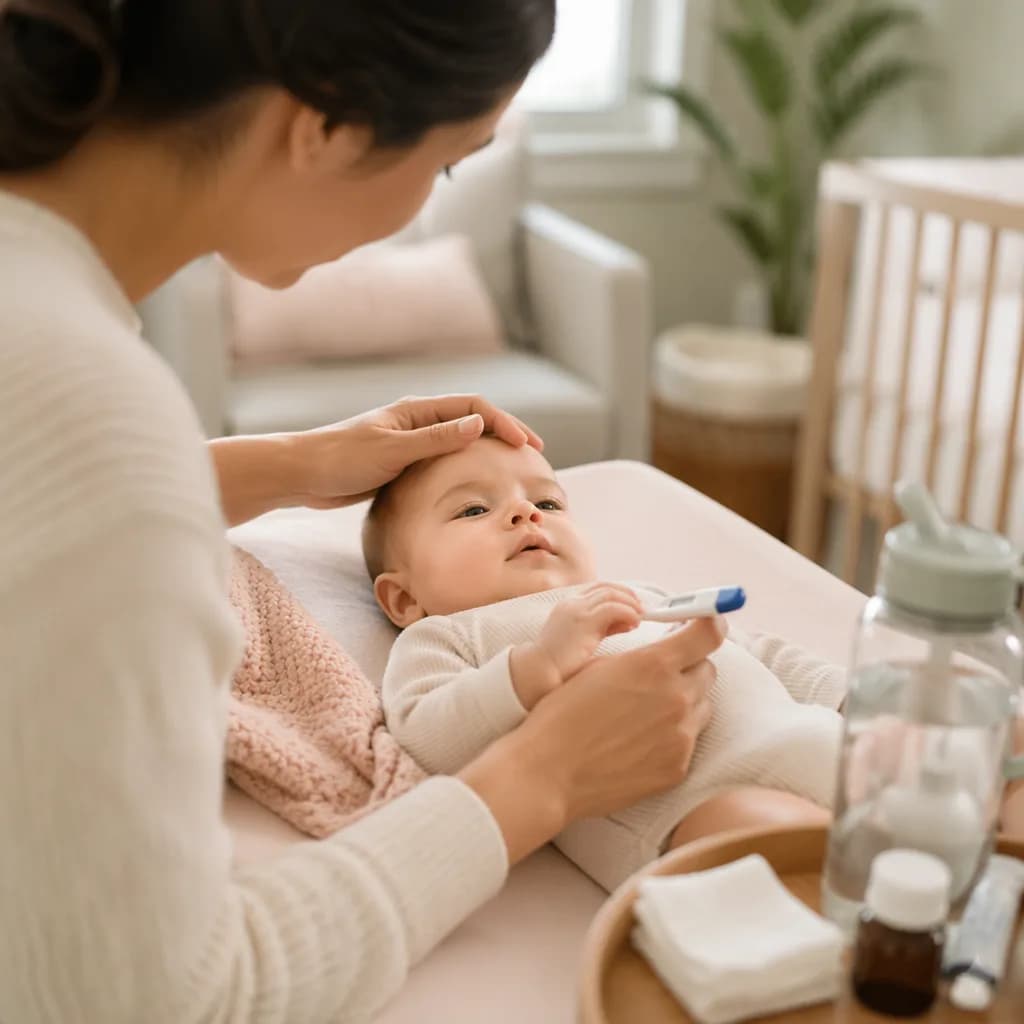
What counts as a baby fever?
A baby fever usually means a rectal temperature of 100.4°F or higher, and that number matters most urgently in babies under 3 months. A newborn is often described as a baby from birth to about 3 months old, so this early window is one where it’s especially smart to be careful and call your baby’s doctor for guidance.
For babies, a rectal temperature is usually the most accurate reading. Forehead, ear, and armpit temperatures can be helpful for a quick check, but they can also be less reliable. If your baby feels hot against your cheek or chest, that’s a good reason to take their temperature. Warm skin alone isn’t a diagnosis.
The number is only one piece of the picture, though.
Pay close attention to how your baby is acting. Are they feeding like usual? Making wet diapers? Breathing comfortably? Can they be soothed with cuddling, rocking, or a calm voice? Positive touch, like stroking and cuddling, has been studied in babies and linked with less crying, so comfort matters while you’re watching symptoms.
It’s also easy for fever worries to blur together with other baby concerns. A rash may send you to Baby Eczema Basics: Triggers, Care, and Doctor Tips, chewing and drooling may make you wonder about Teething Symptoms: Signs, Remedies, and Soothing Tips, and timing can matter around shots, which is why a Baby Vaccine Schedule First Year: Month-by-Month Guide is handy.
Write down the exact temperature, how you took it, the time, feeding, diapers, breathing, and behavior. Those details help more than “he seems off.” Then call if you’re unsure. That’s what your baby’s care team is there for.
When to call a doctor for baby fever
A fever can feel scary fast, especially with a very young baby. Since a newborn is a baby from birth to about 3 months old, this age group gets the most cautious fever rules.
Call a doctor right away if your baby is younger than 3 months and has a rectal temperature of 100.4°F or higher. Don’t wait to see if it passes. At this age, even a small-looking fever needs prompt medical advice.
For babies 3 to 6 months, call if the fever is 102°F or higher. Also call if your baby seems unusually sleepy, very fussy, weak, or is feeding poorly. You know the difference between “off day” and “something isn’t right.” Trust that.
For babies older than 6 months, call if the fever reaches 103°F or higher, lasts more than 24 to 48 hours, or comes with symptoms that worry you. Sometimes fever shows up around other normal baby stages, and it can be tempting to blame everything on teeth. If you’re unsure, this guide to teething symptoms and soothing tips can help you sort out what fits and what doesn’t.
Seek urgent care now if your baby has trouble breathing, blue lips, a stiff neck, a seizure, a rash that doesn’t fade when you press it, signs of dehydration, or extreme sleepiness. A rash can be especially confusing, so if skin symptoms are part of the picture, you may also want to read Baby Eczema Basics: Triggers, Care, and Doctor Tips, but don’t use that as a reason to delay urgent care.
If fever happens after shots, ask your baby’s doctor what they expect and what number should prompt a call. Keeping your baby vaccine schedule for the first year handy can make those conversations easier when you’re tired and worried.
And if your gut says your baby looks very unwell, call. Even if the number on the thermometer doesn’t seem high.
What parents should track during an infant fever
When your baby has a fever, a simple note on your phone can make the whole situation feel less blurry. You don’t need a fancy chart. Just write down the facts as they happen.
Start with the temperature, how you took it, and the time. For example: “101.2°F rectal at 7:30 p.m.” That one line is much more helpful than trying to remember later whether it was “around 101” before or after a feeding.
Next, track feeding. Write down how much breast milk or formula your baby is taking compared with their usual. If your baby normally finishes a 4-ounce bottle and now only takes 1 ounce, note that. If nursing sessions are much shorter than usual, jot that down too.
Count wet diapers. Fewer wet diapers can be a sign that your baby may not be getting enough fluid, especially if fever comes with vomiting or diarrhea.
Also note any other symptoms you’re seeing, even if they seem small:
- Cough or congestion
- Vomiting or diarrhea
- Rash, dry patches, or irritated skin (our baby eczema basics guide may help you describe what you’re seeing)
- Ear pulling
- Unusual crying or hard-to-soothe fussiness
- Chewing, drooling, or gum discomfort, which can overlap with teething symptoms
If you give medicine, record the name, dose, and exact time. For babies under 3 months, don’t give fever medicine unless a doctor tells you to.
It can also help to keep fever notes near other baby health records, like your baby vaccine schedule. And if you’re in that foggy postpartum stretch yourself, yes, track your own needs too, even the random worries like postpartum hair loss. Parenting a feverish baby is a lot. Keep the notes simple.
How to take a baby's temperature safely
For babies, especially newborns and younger infants, a digital rectal thermometer is often the go-to choice when accuracy matters. It gives the clearest reading of the baby’s core temperature, which helps you decide what to track and when to call your child’s doctor.
Here’s the calm, step-by-step version:
- Use a clean digital thermometer.
- Add a small amount of petroleum jelly to the tip.
- Lay your baby on their back or tummy, whichever feels safest and most controlled for you.
- Gently insert the tip only about 1/2 inch to 1 inch.
- Keep one hand on your baby the whole time so they can’t wiggle suddenly.
- Stop if you feel resistance or your baby seems very uncomfortable.
An armpit reading can be helpful for a quick check, especially if you’re trying not to wake a sleepy baby all the way. But if your baby is very young, seems sick, feels unusually hot, or you’re worried, confirm with a rectal temperature and call your clinician if needed.
Skip glass mercury thermometers. They can break and aren’t safe for babies. Fever strips are also best avoided because they’re often inaccurate and can give you false reassurance.
If your baby’s fussiness might be from skin irritation or mouth discomfort, these guides on baby eczema basics and teething symptoms may help you sort through what you’re seeing.
Comfort care while you wait or watch
While you’re watching a fever, comfort care is mostly about keeping things gentle and simple. Dress your baby lightly, and skip heavy blankets if they seem warm or flushed. A thin layer and a calm room can feel much better than bundling.
Offer breast milk or formula often. Some babies won’t want a full feed when they feel lousy, and that can be frustrating, but smaller amounts more often still count. Think of it like little sips during a sick day rather than one big meal.
If your baby is uncomfortable, ask your pediatrician whether a lukewarm bath makes sense. Keep it mild and soothing. Avoid anything harsh, like cold baths or rubbing alcohol, unless your baby’s clinician has specifically told you otherwise.
Medicine can be the part that makes parents second-guess everything, especially at 2 a.m. Acetaminophen may be recommended for some babies with the right dose, while ibuprofen is generally discussed for babies 6 months and older. Dosing is usually based on weight, not just age, so don’t guess from the bottle if you’re unsure.
Call the pediatrician or pharmacist if you have any doubt about the dose, timing, or which medicine is safe for your baby. That’s what they’re there for.
And while you wait, comfort still matters. Cuddling, stroking, and holding can help a baby feel more settled, and research on positive touch in babies has linked gentle touch with less crying and more smiling and vocalising. If fever comes with a rash or irritated skin, you might also find our guide to baby eczema basics helpful. If you’re wondering whether symptoms are from teeth instead, here’s our guide to teething signs and soothing tips.
What fever patterns can tell you
A fever pattern is one piece of the picture, not the whole story. Many parents notice that a fever seems higher in the evening, then dips and climbs again during an illness. Write down the temperature, the time, how you took it, and what your baby was acting like. “101.8°F at 7 p.m., sleepy but drinking” is much more helpful than “fever all day.”
Medicine can bring a fever down, but that doesn’t always mean everything is fine. If your baby is very young, unusually hard to wake, struggling to drink, breathing differently, or just seems seriously unwell to you, it’s reasonable to call for medical advice even if the number improves. Trust the behavior you’re seeing.
Also pay attention to a fever that leaves and then comes back after a fever-free day or two, especially if new symptoms show up. For example, a baby who seemed better yesterday but wakes today with fever plus a new rash or worsening cough deserves a check-in. If skin symptoms are part of the picture, our Baby Eczema Basics: Triggers, Care, and Doctor Tips can help you sort everyday irritation from something new.
Teething can come with mild temperature changes, but a true fever of 100.4°F or higher shouldn’t be blamed on teething without considering illness. For gum-specific comfort ideas, see Teething Symptoms: Signs, Remedies, and Soothing Tips. And if fever appears around routine shots, your Baby Vaccine Schedule First Year: Month-by-Month Guide can help you track timing before you call.
What to tell the pediatrician when you call
Before you call, jot a few things down. It’s hard to remember details when you’re worried and holding a hot, fussy baby.
Start with the basics: your baby’s age, the rectal temperature, and how long the fever has been going on. Be exact if you can. A baby under about 1 or 2 years old may be called a baby, and a very young baby from birth to about 3 months is sometimes called a newborn, so age matters when you’re describing what’s happening.
Next, share what you’re seeing at home:
- How feeding is going
- Number of wet diapers today
- Any breathing changes
- Extra sleepiness or hard-to-soothe crying
- Rash, vomiting, or diarrhea
- Any known exposures to illness
If there’s a rash, it may help to compare notes with Baby Eczema Basics: Triggers, Care, and Doctor Tips, but still describe what you see clearly on the call.
List any medicine already given, including the exact dose and the time you gave it. Also mention medical history, prematurity, immune problems, recent vaccines, or a recent hospital stay. If vaccines are on your mind, keep Baby Vaccine Schedule First Year: Month-by-Month Guide handy.
A simple script works well: “My baby is 8 weeks old and has a rectal temperature of 100.7°F taken 10 minutes ago. She’s feeding less than usual, has had 3 wet diapers today, and I haven’t given any medicine yet.”
Frequently Asked Questions
What temperature is a baby fever?
A rectal temperature of 100.4°F or higher is considered a fever in babies.
When should I call the doctor for baby fever?
Call right away if your baby is under 3 months and has a rectal temperature of 100.4°F or higher.
Is newborn fever an emergency?
A fever in a baby younger than 3 months needs prompt medical advice, even if the baby seems okay.
Can teething cause infant fever?
Teething may cause a slight temperature rise, but a true fever of 100.4°F or higher should be treated as possible illness.
What should I track during a baby fever?
Track temperature, time, how it was taken, feeding, wet diapers, symptoms, and any medicine given.
Can I give fever medicine to a baby?
Ask a doctor first for babies under 3 months. Older babies may be able to take medicine based on weight and age.
Frequently asked questions
What temperature counts as a fever in a baby?
What should I track when my baby has a fever?
When should I call the doctor for a baby fever?
Is a rectal temperature best for babies?
References
Sources
External research this article was grounded in.
Related reading
More from the journal → health
When to Call the Pediatrician: Baby Warning Signs Now
A calm, clear guide to baby warning signs, including fever, breathing trouble, dehydration, poor feeding, and when to call the pediatrician now.
13 min readJun 26, 2026 health
When Do Babies Start Teething? Signs and Relief
Most babies start teething around 6 months, but earlier or later can be normal. Learn the signs, timeline, and safe ways to soothe sore gums.
13 min readJun 17, 2026- health
Baby Fever: When to Call the Doctor and Track
Baby fever can feel scary fast. Learn what counts as a fever, when to call the doctor by age, and what details to track before you call.
10 min readJun 17, 2026