
Baby-Led Weaning vs Purees: Which Start Fits?
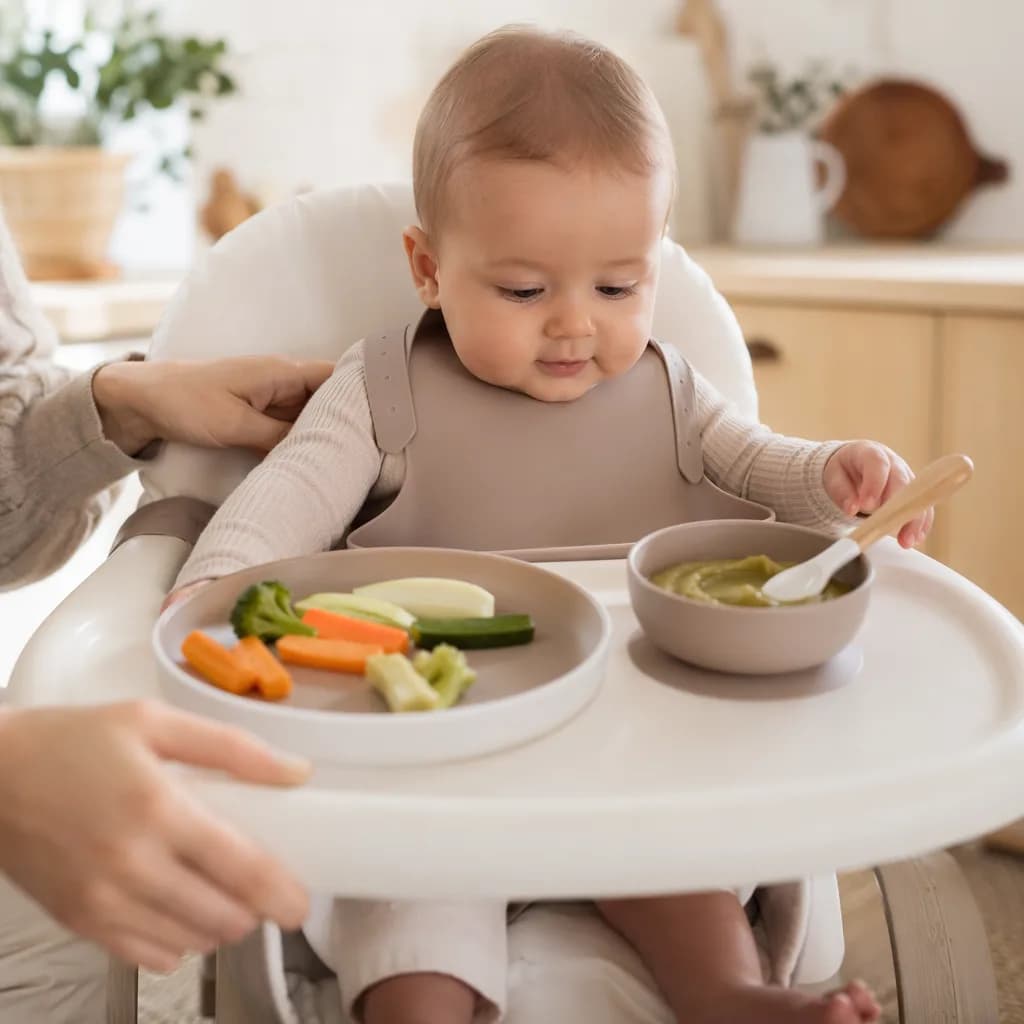
Baby led weaning vs purees at a glance
Baby led weaning means offering soft, graspable finger foods from the start, so your baby can pick up food and self-feed. Think a soft strip of ripe banana or a well-cooked piece of sweet potato that’s easy to hold.
Purees for baby are spoon-fed smooth or mashed foods. Many families begin with thinner textures, then gradually make them thicker and more textured as baby gets practice.
Both starting solids methods can be healthy when your baby is developmentally ready and foods are prepared safely. If you’re still figuring out timing, our Starting Solids Checklist for Baby's First Bites can help you feel more settled before that first messy meal.
| What to compare | Baby led weaning | Purees |
|---|---|---|
| Who controls the food | Baby picks up and brings food to their mouth | Parent or caregiver usually controls the spoon |
| Texture | Soft table foods from the start | Smooth or mashed foods, often thickened over time |
| Mess level | Usually very messy | Usually cleaner |
| Parent involvement | Parent prepares safe pieces and supervises | Parent actively spoon-feeds |
| Family meal fit | Baby can often eat modified parts of the family meal | Baby may eat before, after, or alongside family meals |
| Early texture practice | More practice with varied textures early | Texture practice builds gradually |
Starting solids also fits into the bigger feeding picture. If milk feeds still feel like the main event, that’s normal. You may like our Baby Feeding Schedule by Age for the First Year, especially if you’re also using a Combination Feeding Guide for Breast Milk and Formula or planning around Pumping at Work: A Practical Guide for Parents.
And if your baby’s name is Rami: meaning & origin, Leo, Maya, or anything else you whispered over the crib, they still get to make a glorious mess. That part seems universal.
Readiness matters more than the method
The purees vs baby-led weaning question gets a lot of attention, but readiness comes first. Most babies start solids around 6 months, and the safest start is the one that matches what your baby can actually do right now.
Look for signs like:
- Sitting with little support
- Good head control
- Bringing objects to their mouth
- Showing interest in food
- Seeming ready around 6 months, rather than much earlier
Starting too early can make both BLW and purees harder. A baby who can’t sit well or hold their head steady may struggle with food in their mouth, even if it’s just a tiny spoonful. And if they’re not interested yet, meals can quickly turn into a stressful little standoff at the high chair.
One helpful milestone is the tongue-thrust reflex fading. That reflex is what makes babies push things back out of their mouth with their tongue. As it fades, babies are better able to manage food, whether that’s mashed sweet potato on a spoon or a soft strip of avocado they’re holding themselves.
If you want a step-by-step gut check before the first bite, our Starting Solids Checklist for Baby's First Bites can help. You might also like seeing how milk feeds and solids fit together in a Baby Feeding Schedule by Age for the First Year, especially if you’re also using the Combination Feeding Guide for Breast Milk and Formula or figuring out Pumping at Work: A Practical Guide for Parents.
Check with your pediatrician before starting if your baby was premature, has feeding concerns, poor weight gain, reflux, or medical needs. Some babies, like a little Rami at the table, simply need a more personal plan.
What baby led weaning feels like day to day
A baby-led meal can look surprisingly simple. Picture a 6-month-old in the high chair with a soft roasted carrot stick, a strip of omelet, and mashed beans offered on a loaded spoon. Some of it gets licked. Some gets squished. A heroic amount may land on the floor.
That’s normal.
With baby-led weaning, babies are offered safe table foods from the start and are encouraged to self-feed. This gives them lots of practice using their hands, arms, back, and mouth as they figure out how food works. It also means they’re exposed to family foods, textures, and flavors early, instead of only smooth purees. If you’re already making omelets and beans for lunch, there may be less separate baby food prep too.
The tradeoff is the mess. There’s really no tidy way to let a baby learn by grabbing, squeezing, tasting, and dropping food. Intake can also feel slow at first, especially when your baby is mostly exploring or gumming food rather than swallowing much. If you’re wondering how solids fit around milk feeds, this Baby Feeding Schedule by Age for the First Year can help you picture the rhythm.
Safety prep matters. Whole grapes, popcorn, nuts, hard raw apple, coin-shaped hot dogs, and sticky spoonfuls of nut butter should be avoided or changed into safer forms. Food shape, softness, and size all count, so a Starting Solids Checklist for Baby's First Bites is worth keeping close.
And yes, gagging can be unnerving. Gagging is common and protective, often noisy, and can happen as babies learn textures. Choking is different: it’s silent or weak-sounding and needs an immediate response.
If you’re also managing milk feeds, formula, or pumping, solids don’t have to make the whole day feel complicated. You might find the Combination Feeding Guide for Breast Milk and Formula or Pumping at Work: A Practical Guide for Parents helpful alongside your feeding plan. And if you need a tiny mental break after wiping beans off the wall, we won’t judge a quick baby name rabbit hole like Rami: meaning & origin.
What purees are like in real life
Purees can feel reassuring at the beginning. Picture baby buckled into the high chair, bib on, while you offer a small spoon of smooth lentil puree or iron-fortified oatmeal. It’s slow, sweet, and sometimes funny, especially when half the spoon comes right back out.
One real benefit is that purees make intake easier to see. If baby takes six tiny spoonfuls, you know that. With self-feeding, food may end up in the hair, on the tray, and under the dog, so the math gets fuzzier. Purees are also familiar for many grandparents, daycare providers, and babysitters, which can make feeding feel less stressful if someone else is helping.
They can be tidy, too. Not spotless, but usually less floor cleanup than baby-led weaning.
Purees also give you simple ways to offer foods that help fill nutrition gaps during the 6 to 12 month window. Smooth beans, for example, can be paired with fruit since vitamin C helps increase iron absorption. If you’re sorting out milk feeds alongside solids, our Baby Feeding Schedule by Age for the First Year and Combination Feeding Guide for Breast Milk and Formula can help you see the bigger picture.
The main catch is pacing. With spoon-feeding, baby may rely on you to decide when the next bite arrives. Some families also stay with smooth textures longer than intended, and store-bought pouches can quietly become the default.
A gentle texture path looks like this: thin puree, thicker puree, mashed foods, soft lumps, then small soft pieces. If baby is still only taking smooth applesauce at 9 months, it may be time to practice mashed banana with tiny soft lumps. For readiness basics, keep this Starting Solids Checklist for Baby's First Bites close.
Safety rules that apply to both approaches
Whether you start with soft finger foods, spoon-fed purees, or a mix of both, the safety setup is the same. Baby should be sitting upright in a high chair for meals. Not reclined. Not toddling around with food. Not eating in a car seat.
Stay close enough to act quickly, ideally within arm’s reach, and try to keep meals distraction-free. It’s tempting to answer one text while baby works on a banana spear, but this is one of those times to keep your eyes on the tray. Food learning can be slow, silly, and messy. That’s normal.
Texture matters more than the label on the method. A safe food should squish easily between your fingers or be soft enough for baby to mash with their gums. Think ripe avocado, well-cooked sweet potato, or a very soft piece of pear. If you’re using purees, textures can gradually become thicker and more varied as baby gets practice, which fits with the bigger goal of moving toward table foods over time. A simple Starting Solids Checklist for Baby's First Bites can help you feel less scattered before that first meal.
Some foods need a little prep first. Quarter grapes lengthwise. Shred meat instead of offering firm chunks. Cook firm vegetables until they’re soft. Thin nut butter with yogurt or breast milk so it isn’t sticky or globby. Skip hard, round foods that can block the airway.
Taking an infant CPR class is a smart step for any feeding style. It doesn’t mean you’re expecting something to go wrong. It means you’re prepared, the same way you keep wipes nearby before opening a yogurt cup.
A few age rules are worth keeping steady: avoid honey before 12 months, and don’t let cow’s milk replace breast milk or formula before 1 year. If you’re sorting out milk feeds alongside solids, our Baby Feeding Schedule by Age for the First Year, Combination Feeding Guide for Breast Milk and Formula, and Pumping at Work: A Practical Guide for Parents can make the day feel more manageable. And if you’re reading during a nap while also debating baby names, Rami: meaning & origin is a sweet little detour.
Nutrition needs in the first months of solids
In the first months of solids, breast milk or formula still does the heavy lifting. Solids are there to help your baby practice eating, explore tastes and textures, and start filling nutrition gaps between about 6 and 12 months. If you’re combining milk feeds, this combination feeding guide for breast milk and formula can help you keep the day feeling manageable.
Around 6 months, iron and zinc deserve extra attention. With purees, that might look like pureed beef, lentils, beans, or iron-fortified cereal on a spoon. With baby-led weaning, you might offer shredded soft chicken, egg strips, mashed tofu, or salmon flakes in a safe texture your baby can handle. A simple plate could be mashed beans with soft fruit, since pairing foods can help you build a more varied meal.
Allergens can feel nerve-racking, but they don’t have to be dramatic. Once baby is ready for solids, common allergens can usually be offered in safe forms unless your pediatrician says otherwise. Pick one new allergen at a time, choose a calm moment, and keep it boring in the best way. For example, stir a small amount of thin peanut butter into oatmeal in the morning, then stick close and watch how your baby does.
Try to skip added salt and added sugar most of the time. Babies are learning what food tastes like, and plain foods can still be interesting to them.
If you’re still checking readiness signs, the starting solids checklist is a helpful place to start, and this baby feeding schedule by age can make the big picture feel less fuzzy.
Can you combine baby led weaning and purees?
Yes, you can absolutely combine baby led weaning and purees. A mixed approach is common, practical, and can work really well for many families.
Think of it as giving your baby more than one way to practice eating. They might self-feed soft finger foods from the tray, then take mashed or pureed foods from a spoon at the same meal. For example: a preloaded spoon with mashed avocado, soft toast strips they can pick up, and a little water offered in an open cup. Simple. Messy. Very normal.
The key is responsive feeding. Offer the spoon and wait for your baby to open their mouth. If they turn away, clamp their lips, push food out, or lose interest, pause or stop. Those are useful cues, not a problem to solve.
Try not to force bites, scrape the spoon on the roof of their mouth, or distract them into eating more with songs, toys, or screens. Babies learn a lot from being trusted at the table, including how hungry or full they feel.
If you’re just getting set up, our Starting Solids Checklist for Baby's First Bites can help you feel prepared. You may also like looking at a Baby Feeding Schedule by Age for the First Year, especially if milk feeds and solids are starting to feel jumbled.
And if your feeding life already includes breast milk, formula, or pumping logistics, you’re in good company. Many families mix methods there too, like in our Combination Feeding Guide for Breast Milk and Formula and Pumping at Work: A Practical Guide for Parents.
How to choose the starting style for your family
The best starting style is the one your baby is ready for and your family can repeat without dread at 5:30 p.m. on a Tuesday.
Start with readiness first. Solids are meant to help your baby move toward table foods and fill nutrition gaps between roughly 6 and 12 months, so it helps to check the basics before picking a method. If you’re unsure, this Starting Solids Checklist for Baby's First Bites can give you a calmer place to begin.
Then look at real life: your comfort level, caregiver consistency, time, cleanup tolerance, and any medical history you want to discuss with your pediatrician or a pediatric registered dietitian.
Baby-led weaning may fit if you want your baby at the table with everyone else, eating safe versions of family foods from the start. It can make mealtimes feel more shared, since baby learns by watching and gets practice self-feeding. It does mean mess. A lot of mess. Food in the high chair straps, on the floor, maybe in your hair. You’ll also need to feel comfortable preparing foods safely and watching your baby learn oral motor skills, including the normal gagging practice that can happen as babies figure things out.
Purees may fit if spoon-feeding feels calmer to you. Some parents like being able to see how many spoonfuls baby ate, especially in the early days when intake feels mysterious. Purees can also be easier if grandma, opa, daycare, or another caregiver is more comfortable with that setup. If you’re juggling feeds, naps, bottles, and work logistics, a simple plan matters. The Baby Feeding Schedule by Age for the First Year may help you see how solids can sit alongside milk feeds, and if you’re also managing bottles, the Combination Feeding Guide for Breast Milk and Formula can be useful.
A mixed method is completely reasonable. Maybe one parent loves the idea of baby-led weaning, while the other feels better starting with applesauce on a spoon. Maybe daycare serves spoon-fed meals, but dinner at home is soft strips of food from your plate. That counts.
You can change course. Starting with purees doesn’t block finger foods later, and starting with baby-led weaning doesn’t mean spoons are banned. If meals feel tense, simplify the next one. A few bites, a wipeable bib, and a calmer parent are all valid progress. If pumping at work is part of the bigger feeding picture, Pumping at Work: A Practical Guide for Parents may help with that piece too.
And if your baby’s name is Rami, or any name you picked with love, they still don’t need a picture-perfect feeding plan. They need safe food, steady chances to practice, and parents who are allowed to adjust.
A simple first week plan
For the first week, keep solids small and low-pressure. One short meal a day is plenty at first, ideally after a milk feed so your baby isn’t frantic and frustrated before the food even reaches the tray.
If you’re still sorting out milk feeds alongside solids, our Combination Feeding Guide for Breast Milk and Formula and Baby Feeding Schedule by Age for the First Year can help you see how this new meal fits into the bigger day.
Here’s a gentle example:
Day 1 and 2: Offer iron-fortified oatmeal on a spoon, or let baby hold a preloaded spoon if you’re leaning toward baby-led weaning. Add a soft banana spear on the tray. Some babies will mouth it. Some will mash it into the high chair. Both are normal.
Day 3 and 4: Try mashed lentils or a very soft bean spread on a spoon. Add soft cooked carrot sticks for holding and exploring. This gives baby a chance to practice with different textures, which is one reason baby-led weaning can expose babies to a wider variety of foods, flavors, and textures.
Day 5 and 6: Offer plain full-fat yogurt or mashed avocado. If egg is appropriate for your baby, add soft omelet strips. If you’re unsure, check in with your pediatrician.
Day 7: Repeat a food your baby handled well. Add a little water practice in an open cup, just for learning.
A few tastes count. So do smears, licks, and that tiny thoughtful face they make before dropping the carrot on the floor.
Before you start, the Starting Solids Checklist for Baby's First Bites is a helpful gut-check. And if you’re returning to work while starting solids, Pumping at Work: A Practical Guide for Parents may make the daily rhythm feel less scattered.
When to ask for feeding support
Starting solids can feel surprisingly emotional, especially if meals are messy, slow, or full of gagging. Getting help doesn’t mean you picked the wrong method. It means you’re paying attention.
Call your pediatrician, pediatric registered dietitian, or feeding therapist if you’re seeing:
- Frequent coughing during meals
- Repeated vomiting
- Very low intake over time
- Trouble sitting well enough for meals
- No interest in food by around 7 months
- Stressful gagging that doesn’t improve with practice
Some babies also deserve more tailored guidance from the start. That includes babies with prematurity, oral ties, cleft palate, low muscle tone, food allergies, eczema, reflux, or poor growth. These don’t automatically rule out baby-led weaning, purees, or a combination approach, but they do make it wise to get a plan that fits your baby.
Sometimes the fix is small. A clinician might suggest a thicker texture, a slower pace, or a different high chair position so your baby feels steadier and meals feel calmer. That’s support, not failure.
If you’re still getting organized, a Starting Solids Checklist for Baby's First Bites can help you think through readiness and setup, while a Baby Feeding Schedule by Age for the First Year can give you a big-picture rhythm. And if milk feeds are still shifting, you may also find the Combination Feeding Guide for Breast Milk and Formula or Pumping at Work: A Practical Guide for Parents helpful. Tiny side note for name lovers: Rami: meaning & origin is a sweet read during contact naps.
Frequently Asked Questions
Is baby led weaning better than purees?
Not always. Baby led weaning and purees can both work well. The better choice is the one that fits your baby’s readiness, safety needs, and your comfort.
Can I do both BLW and purees?
Yes. Many families use both. Offer soft finger foods for self-feeding and spoon foods like mashed beans, yogurt, or oatmeal without forcing bites.
Do babies choke more with baby led weaning?
Research does not show higher choking when foods are prepared safely and babies are supervised. Choking hazards must be modified for any feeding method.
What age should babies start solids?
Most babies are ready around 6 months, when they can sit with support, hold their head steady, and show interest in food.
What are good first foods for baby led weaning?
Good options include soft avocado spears, cooked carrot sticks, omelet strips, mashed beans on a preloaded spoon, and flakes of soft salmon.
What are good first purees for baby?
Try iron-fortified oatmeal, pureed lentils, mashed avocado, pureed meat, full-fat plain yogurt, or smooth beans thinned to a safe texture.
How long should baby stay on purees?
Purees should progress fairly quickly. Many babies can try thicker mashes and soft lumps within weeks, depending on readiness and comfort.
What if my baby gags during solids?
Gagging is common as babies learn. Stay calm, keep baby upright, and watch closely. If gagging is frequent, intense, or paired with coughing, ask for help.
Frequently asked questions
Is baby-led weaning better than purees?
Can I combine baby-led weaning and purees?
When should my baby start solids?
Are purees safer than baby-led weaning?
References
Sources
External research this article was grounded in.
- Baby-led weaning vs Puree: Which method is better? | Huckleberryhuckleberrycare.com
- Rock-A-Bye Baby +More Nursery Rhymes - CoCoMelon - Videos For Kidskidvideo.org
- Purees, Baby-Led Weaning, or Both? What Actually Matters When Starting Solids - PedsDocTalkpedsdoctalk.com
- What is Baby-Led Weaning? Benefits of BLW - Solid Startssolidstarts.com
Related reading
More from the journal → feeding
Breast Milk Storage Guidelines for Fridge and Freezer
Simple breast milk storage times for the fridge, freezer, cooler, and thawed milk, with practical tips to help you waste less milk.
14 min readJun 11, 2026 feeding
How Much Formula Does a Baby Need by Age?
A calm age-by-age guide to how much formula babies usually drink, from tiny newborn bottles to 6 to 8 ounce feeds later in the first year.
14 min readJun 11, 2026 feeding
Starting Solids Guide: First Foods Step by Step
A calm, step-by-step guide to starting solids around 6 months, including readiness signs, first foods, textures, safety tips, and baby-led feeding basics.
13 min readJun 11, 2026