
Starting Solids Guide: First Foods Step by Step
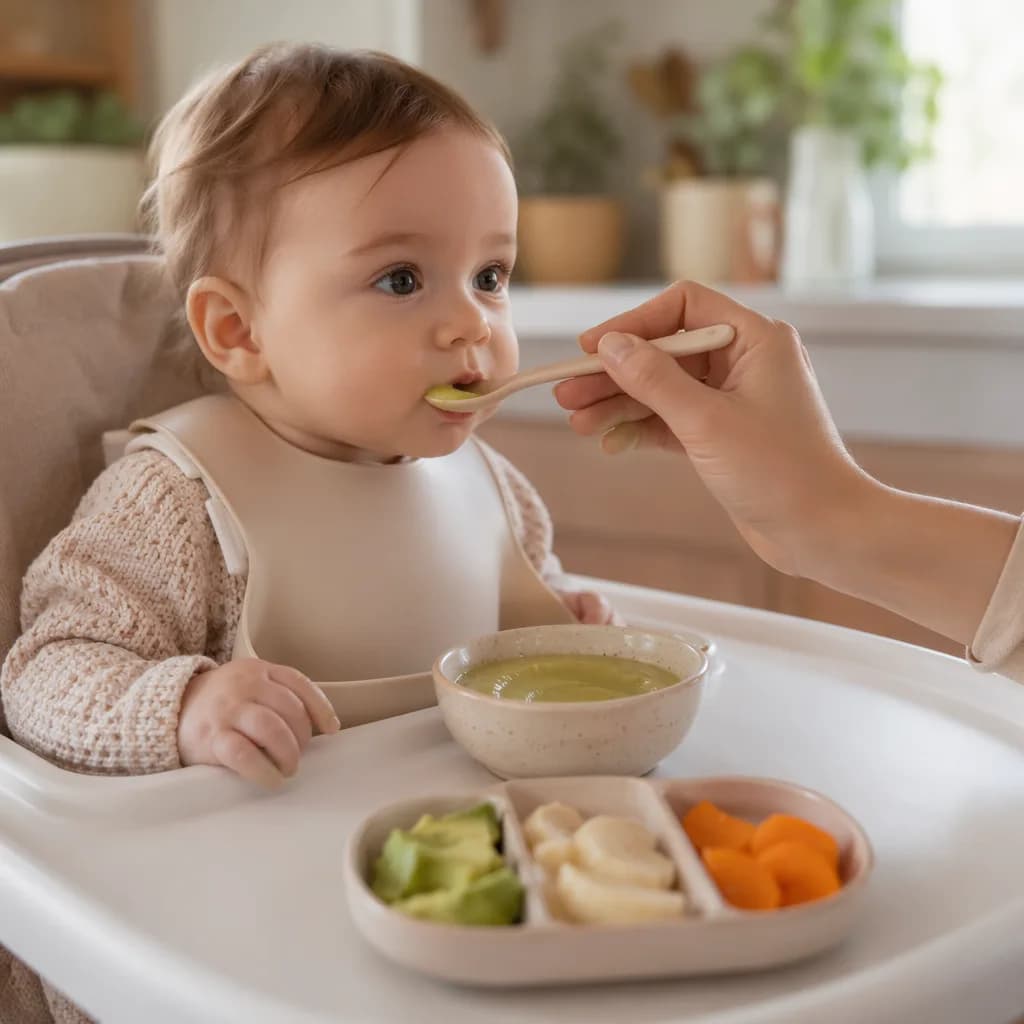
When to Start Solids: Readiness Signs to Watch
Starting solids is one of those milestones that can feel exciting, messy, and a little nerve-wracking all at once. Pediatric guidance from the Dietary Guidelines for Americans and the American Academy of Pediatrics recommends introducing foods other than breast milk or infant formula at about 6 months, while introducing solids before 4 months is not recommended.
Because every baby develops at their own pace, we’re looking less at the calendar alone and more at readiness signs. Around this stage, many babies may be ready to begin solids when they can:
- Sit up alone or with support
- Control their head and neck well
- Open their mouth when food is offered
- Swallow food instead of pushing it back out onto their chin
- Bring objects to their mouth
- Try to grasp small objects, like toys or food
It’s also helpful to remember what doesn’t always mean a baby is ready. Night waking, fussiness, or seeming extra hungry can happen for many reasons and doesn’t automatically mean solids are needed. Sometimes feeding patterns shift, and if we’re sorting through frequent feeds, Cluster Feeding Explained: What New Parents Should Know can help us think through what might be going on.
In the early weeks of solids, breast milk or formula still does the heavy nutritional lifting while baby practices new tastes and textures. Whether we’re nursing, bottle-feeding, or doing a mix, Bottle vs Breastfeeding: Honest Trade-offs for Parents can be a reassuring read. And if we’re also in the baby-name daydreaming phase between meals, names like Olivia, meaning & origin and Lucía, meaning & origin make a sweet little detour.
Step-by-Step Starting Solids Guide for Beginners
Starting solids can feel like a big milestone, but we don’t have to make it complicated. Around 6 months, many babies are ready to begin foods other than breast milk or infant formula, especially when they can sit with support, control their head and neck, open their mouth for food, and swallow rather than push food back out.
A gentle first step is choosing one calm meal per day. Pick a time when baby is alert, rested, and not overly hungry. If baby is frantic for milk, solids may feel frustrating instead of fun. We can offer breast milk or formula first, then try a small amount of soft food afterward. This keeps milk as the steady foundation while baby practices something new. If feeding rhythms still feel unpredictable, it may help to revisit patterns like Cluster Feeding Explained: What New Parents Should Know or compare approaches in Bottle vs Breastfeeding: Honest Trade-offs for Parents.
Set baby up in an upright high chair, with good support, and stay close the entire time. At first, smooth mashed, pureed, or strained foods may be easier for baby to manage. We can start with a tiny spoonful or a soft piece prepared safely for baby’s stage, then watch their cues.
It’s also okay if baby mostly touches, smells, squishes, or licks the food. Exploration is part of learning. We don’t need to pressure “one more bite” or worry if very little gets swallowed at first. Some babies dive in; others warm up slowly.
From there, we can gradually increase variety, texture, and frequency as baby’s skills grow. The American Academy of Pediatrics notes that most children do not need foods in a certain order, and by 7 or 8 months, babies may be eating foods from several food groups. One day we may be choosing sweet potato; another day, chatting about names like Olivia, meaning & origin or Lucía, meaning & origin while baby paints the tray with yogurt. That counts, too.
Best First Foods for Babies
There’s no single “perfect” first food for every baby, and that can be a relief. When we’re starting solids, we’re really looking for foods that are developmentally appropriate, nutrient-dense, and prepared in a safe texture for our baby’s stage.
Iron-rich foods are a helpful place to begin. We might offer soft, well-cooked meat, lentils, beans, eggs, tofu, or iron-fortified infant cereal. If we use infant cereal, offering a variety, such as oat, barley, and multigrain, can be a good approach rather than relying only on rice cereal.
Soft fruits and vegetables can also make wonderful first foods. Think avocado, banana, sweet potato, squash, pear, and peas. These can be mashed, pureed, or served very soft, depending on our baby’s readiness and feeding style. If we’re still figuring out milk feeds alongside solids, it may help to revisit gentle feeding basics like Cluster Feeding Explained: What New Parents Should Know or Bottle vs Breastfeeding: Honest Trade-offs for Parents.
For texture, we can start with smooth purees, mashed foods, or soft foods that are prepared so they’re easy to manage. Foods should be soft enough to mash with a fork, cut into small pieces or thin slices when needed, and served in a way that reduces choking risk. Round foods like grapes, berries, cherries, and tomatoes should be cut into small pieces, and cylindrical foods should be cut into short, thin strips.
We’ll also want to avoid added sugars where possible, especially in foods like yogurt, and keep an eye on added salt. Honey before 12 months and unsafe choking hazards are also best avoided; when in doubt, we can ask our child’s healthcare professional.
And because every baby’s start is their own little story, whether we’re feeding an Olivia, a Lucía, or any beautifully named tiny eater, we can take it one safe, curious bite at a time. If you love name meanings too, you might enjoy Olivia, meaning & origin and Lucía, meaning & origin.
Purees vs Baby Led Weaning: Which Approach Works Best?
When we’re starting solids, it can feel like we have to pick a “side”: traditional purees or baby led weaning. In real life, many families find that the best approach is the one that fits their baby, their routines, and their comfort level.
Traditional spoon-feeding usually means offering mashed, pureed, or strained foods from a spoon. The CDC notes that, at first, smooth textures can be easier for babies to manage as they adjust to eating foods other than breast milk or formula. This approach can make texture control feel more straightforward: we can thin foods with breast milk, formula, or water, cook fruits and vegetables until soft, and mash or puree them until smooth. Purees can also make it simple to offer early options from different food groups, including meats or other proteins, vegetables, fruits, whole grains, and dairy foods without added sugars like yogurt. And yes, spoon-feeding can sometimes mean a little less food on the floor.
Baby led weaning generally means offering appropriately prepared foods that baby can pick up and bring to their mouth. This gives babies practice with self-feeding, exploring textures, and joining in family meals in a hands-on way. Since readiness matters no matter the method, we’re looking for signs like sitting with support, good head and neck control, opening the mouth for food, and swallowing rather than pushing food back out.
We also don’t have to be all-or-nothing. A combination approach might look like spoon-feeding yogurt or mashed beans one day and offering soft, safely cut pieces of avocado or cooked vegetables another. Feeding choices often evolve, just like nursing rhythms do in the early days of cluster feeding, or like the personal trade-offs families weigh with bottle vs breastfeeding.
Whichever path we choose, responsive feeding and safety come first. We can offer small portions, let baby set the pace, watch closely during meals, and prepare foods in textures and shapes that reduce choking risk. There’s no perfect label required, whether we’re feeding an Olivia, a Lucía, or any little eater in between.
How to Introduce Common Allergens Safely
Once we’ve started solids, common allergens can usually be introduced alongside other first foods, unless our baby’s doctor or nurse has advised a different plan. The CDC notes that potentially allergenic foods can be introduced when we introduce other foods, and that if a child has severe eczema or an egg allergy, we should talk with their doctor or nurse about when and how to safely introduce peanut foods.
Common allergens include peanut, egg, milk, wheat, soy, fish, shellfish, sesame, and tree nuts. We can offer them in baby-safe forms that match our baby’s eating skills, think thinned peanut butter stirred smooth with breast milk, formula, or water, or well-cooked egg mashed to a soft texture. Yogurt without added sugars can be introduced before 12 months, while drinking cow’s milk or fortified dairy alternatives is not recommended until after 12 months.
A calm, step-by-step approach helps. We can offer one new allergen at a time, then watch for any problems before adding another. The CDC recommends trying one single-ingredient food at a time at first and waiting 3 to 5 days between each new food, which can make it easier to notice possible reactions.
If our baby is higher risk, especially with severe eczema or an existing egg allergy, it’s worth checking in with a pediatrician before introducing allergens. Feeding journeys can feel emotional, whether we’re navigating solids, cluster feeding, or the everyday realities of bottle vs breastfeeding. We don’t need to rush; we can move gently, safely, and one bite at a time.
Sample Feeding Schedule for Starting Solids
When we start solids, it helps to think of meals as gentle practice, not a full replacement for breast milk or formula. Many families begin with one small meal a day around 6 months, then move toward two meals, and eventually three meals as baby’s interest, skills, and routine develop. Breast milk or infant formula can continue on demand, or in the pattern your pediatric professional recommends.
A simple progression might look like this:
- First few weeks: one relaxed meal daily, when baby is rested and not overly hungry
- As baby gets more comfortable: two meals, such as breakfast and dinner
- Over time: three meals that fit naturally into family life
First food combinations can stay simple. For breakfast, we might offer smooth oatmeal mixed with breast milk, formula, or water, plus mashed banana. Lunch could be mashed sweet potato with yogurt without added sugars. Dinner might be soft, mashed vegetables with a small amount of meat or another protein. The CDC notes that children can eat a variety of foods from different food groups by 7 or 8 months, including vegetables, fruits, proteins, dairy without added sugars, and whole grains.
Timing is flexible. Some babies do best after a nap; others are more curious before a milk feed. We can follow hunger cues, nap rhythms, daycare schedules, and family dinners. If feeding feels unpredictable, that is normal, appetite can vary day to day.
And if milk feeding is still taking center stage, that’s okay. Whether we’re navigating cluster feeding or weighing bottle vs breastfeeding, solids can begin slowly, one calm spoonful or soft piece at a time. For baby Olivia or little Lucía, yes, even names like Olivia and Lucía can become part of the mealtime story, this is just the beginning.
Choking Safety, Gagging, and Foods to Avoid
Starting solids can feel like a big emotional leap, especially when we’re learning the difference between gagging and choking. In simple terms, gagging is often noisy: baby may cough, gag, or spit food out as they adjust to new textures. Choking is different because food can block the airway, which is why safe preparation and close supervision matter every single time baby eats.
Some foods are more likely to become choking hazards, especially if they are round, hard, sticky, or difficult to chew. As we begin offering solids, we’ll want to avoid or carefully modify foods like:
- Whole grapes
- Nuts
- Popcorn
- Hard raw vegetables
- Chunks of meat
- Hot dog rounds
- Sticky nut butter
The goal is not to make feeding scary, it’s to make foods match baby’s stage. We can cook hard fruits and vegetables until they’re soft enough to mash with a fork, then mash or puree as needed. We can shred tender meats, cut soft foods into small pieces or thin slices, and cut cylindrical foods like hot dogs lengthwise into thin strips rather than rounds. For fruits, we can remove pits, seeds, and tough skins when needed, then cut them into safer pieces.
Positioning helps, too. Baby should be seated upright and fully supported while eating. We’ll want to stay close, watch the whole meal, and encourage a slow pace with small portions. Eating in car seats, strollers, or while crawling, walking, or playing adds unnecessary risk, so we can keep meals and snacks at the table or another calm, seated spot.
It’s also wise for parents and caregivers to take infant CPR training so everyone feels more prepared. Just like we learn feeding rhythms through newborn days, whether we’re navigating cluster feeding or weighing bottle vs breastfeeding, we can build confidence with solids one small skill at a time. And someday, whether we’re feeding an Olivia, a Lucía, or any wonderfully curious little eater, these safety habits become part of the routine.
How Much Should Baby Eat When Starting Solids?
When we’re starting solids, it helps to think of those first meals as practice, not a full “meal” in the grown-up sense. Early portions may be just one or two teaspoons, and that can be completely okay. At about 6 months, babies are learning how food feels, how to move it in their mouth, and how to swallow instead of pushing food back out.
We can watch baby’s cues more than the bowl. Hunger or interest may look like leaning forward, opening their mouth when food is offered, reaching for food, or trying to grasp small pieces. Fullness cues may look like turning away, closing their mouth, pushing food away, getting fussy, or losing interest.
The gentlest approach is to offer, pause, and let baby respond. We don’t need to force “one more bite,” sneak food in, or use pressure. Babies are building trust at the table, and keeping meals calm can make starting solids feel less stressful for everyone.
As baby’s skills and interest grow, the amount they eat will usually increase gradually. The CDC notes that, by 7 or 8 months, children may be eating a variety of foods from different food groups, including vegetables, fruits, proteins, dairy without added sugars, and whole grains.
And of course, solids are just one part of the feeding journey. If we’re also navigating milk feeds, it may help to read about Cluster Feeding Explained: What New Parents Should Know or Bottle vs Breastfeeding: Honest Trade-offs for Parents. Whether we’re feeding baby Olivia, Lucía, or any little eater, see Olivia, meaning & origin and Lucía, meaning & origin, small steps count.
Common Starting Solids Problems and What to Do
Starting solids can feel wonderfully exciting, and surprisingly wobbly. If baby refuses a food, we can keep the mood low-pressure and try again another day. The CDC notes that children can begin solid foods at about 6 months, and that every child is different, so refusal does not mean we’ve failed or that baby will never like that food. Tiny tastes, calm modeling, and repeated exposure can help meals feel familiar over time.
Constipation can also pop up as babies adjust to new foods. We can offer fluids in age-appropriate ways and include fiber-rich foods that fit baby’s stage and texture needs, such as soft fruits, vegetables, or whole grains when appropriate. If we’re still balancing milk feeds with solids, it may help to revisit feeding rhythms in Cluster Feeding Explained: What New Parents Should Know or think through feeding options with Bottle vs Breastfeeding: Honest Trade-offs for Parents.
Messy eating is part of the learning. Babies are exploring texture, smell, temperature, and how food moves in their mouths. Whether we’re feeding an Olivia, a Lucía, or any tiny new eater, yes, we have name rabbit holes like Olivia, meaning & origin and Lucía, meaning & origin, the splatter is often sensory practice, not misbehavior.
Gagging can happen as babies adjust to textures, and the CDC notes babies might cough, gag, or spit up while learning. With practice and development, many babies handle textures more smoothly.
We should call a pediatrician if we notice poor weight gain, frequent vomiting, allergic symptoms, swallowing concerns, or persistent feeding distress. Getting support early can make feeding feel safer and calmer for everyone.
Frequently Asked Questions
What is the best age to start solids?
Most babies are ready to start solids around 6 months, when they show readiness signs such as good head control and interest in food.
What foods should I introduce first?
Iron-rich foods are ideal first foods, including meat, lentils, beans, eggs, tofu, and iron-fortified infant cereal.
Can I start with baby led weaning instead of purees?
Yes. Baby led weaning can be used if foods are soft, safely shaped, and baby is developmentally ready. Many families combine it with purees.
How many times a day should I offer solids at first?
Start with one small meal per day, then gradually increase to two or three meals as baby gains interest and feeding skills.
Should I introduce one food at a time?
You do not need to wait several days for every low-risk food, but common allergens are best introduced one at a time so reactions are easier to spot.
What foods should babies avoid when starting solids?
Avoid honey before 12 months, added salt and sugar, and choking hazards such as whole grapes, nuts, popcorn, and hard raw vegetables.
Frequently asked questions
When should babies start solids?
What are good first foods for babies?
Should breast milk or formula continue after starting solids?
Do baby foods need to be introduced in a certain order?
References
Sources
External research this article was grounded in.
- Solid Starts - How to introduce any food to babiessolidstarts.com
- When, What, and How to Introduce Solid Foods | Infant and Toddler Nutrition | CDCcdc.gov
- START | English meaning - Cambridge Dictionarydictionary.cambridge.org
- Starting Solids Handbook | Expert Feeding Guideeatplaysay.com
Related reading
More from the journal → feeding
Newborn Feeding Cues: Hunger and Fullness Signs
Learn early newborn hunger cues, late feeding signs, and fullness signals so feeds feel calmer and you know when your baby has had enough.
11 min readAug 3, 2026- feeding
Bottle Feeding Newborn Basics for Calm Feeds
Newborn bottle feeding can feel messy at first. Learn hunger cues, typical amounts, pacing, burping, and when to call your pediatrician.
10 min readAug 3, 2026 - feeding
Breastfeeding Positions for Newborn Comfort
Comfortable breastfeeding starts with your body supported, baby tucked close, and a position that helps both of you relax into the latch.
11 min readAug 3, 2026