
Baby Naming Traditions Around the World, Explained
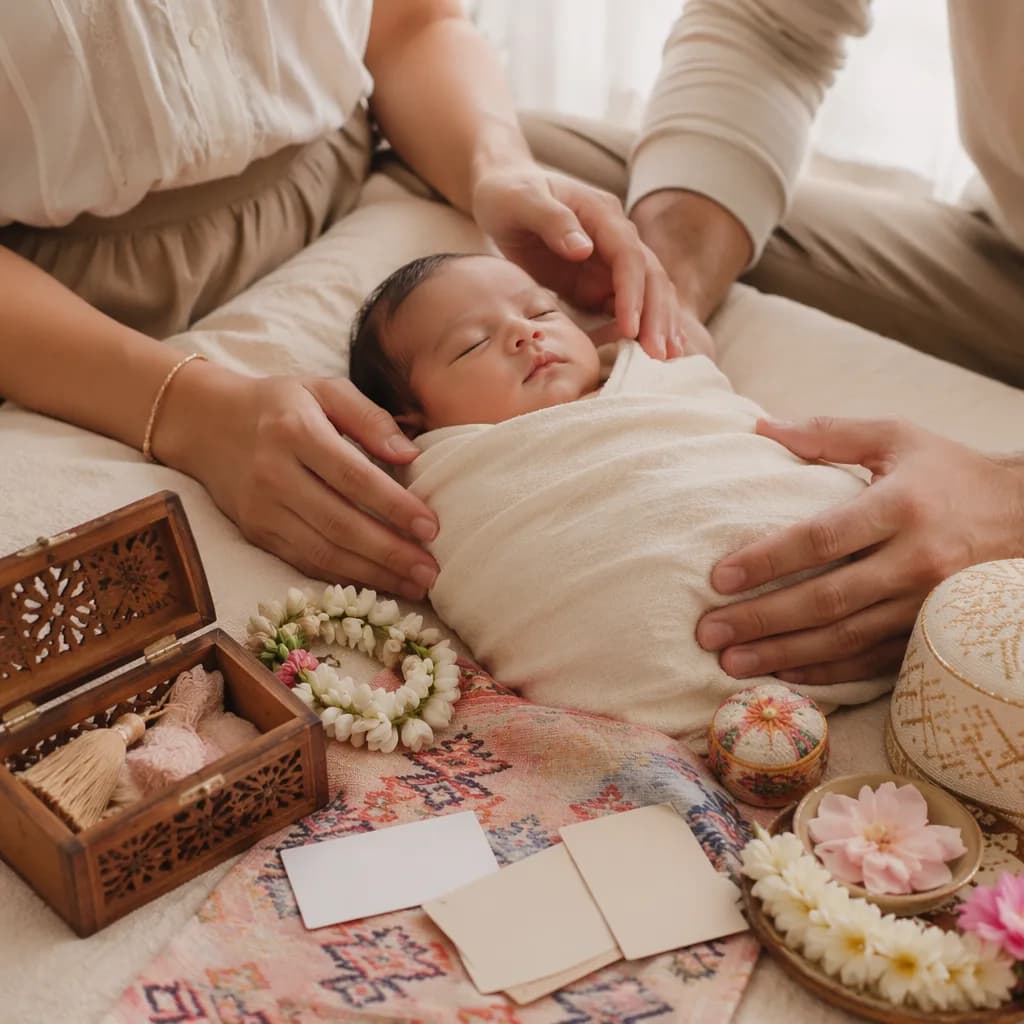
What baby naming traditions are and why they matter
Baby naming traditions are the customs families use to choose, give, announce, and sometimes change a child’s name. They can be formal, like a ceremony with relatives gathered around. They can also be quiet and personal, like choosing a name at the kitchen table because it feels tied to someone you loved.
A name can carry a lot. Ancestry. Faith. A place. The time or circumstances of birth. A hope you have for your child. A family story you don’t want to lose.
For example, a baby might be named after a grandparent so that person’s memory stays close. Every time the name is said, it can feel like a small thread connecting generations. That doesn’t mean the name has to feel old-fashioned or heavy. Sometimes it’s a first name. Sometimes it’s tucked into the middle. Sometimes parents choose a related name with the same meaning or sound, which can be a lovely way to honor family while still giving the child their own identity. If that’s the direction you’re considering, family heritage baby names with real meaning can help you think through it gently.
Traditions also vary more than people sometimes realize. They can shift by country, religion, region, community, and even household. One family may follow a naming ceremony closely, while cousins in the same extended family may do something simpler. Both can be meaningful.
If you’re building your own approach, it may help to think of naming as one part of welcoming a baby, right alongside the rituals, visits, and keepsakes that surround birth. You can borrow ideas from baby welcome traditions from around the world, keep things low-pressure with family traditions with baby, without the stress, or simply start by exploring names and stories, from Aurora to Tanmay Suresh Upadhyay.
Family naming traditions: honoring parents and elders
Family names often carry the warmest kind of meaning. They can point to a grandparent who shaped the family, a parent whose name has been carried for generations, a godparent, or a respected relative whose character you hope your child will grow up hearing about.
In Greek naming tradition, for example, giving children the names of their grandparents is a common and meaningful custom. It keeps family memory close. A baby named for a beloved grandmother isn’t just getting a pretty name. They’re getting a story at every holiday table: who she was, what she loved, how she showed up for people.
Some traditions build that family connection right into the name structure. Patronymic names reflect the father’s given name, while matronymic names reflect the mother’s. Iceland is a clear example from Scandinavian naming heritage: a boy whose father is Jón may be Jónsson, while a girl may be Jónsdóttir. The name tells you, plainly, whose child this is.
Spanish and Latin American naming patterns can also make family ties visible by including surnames from both parents. That can feel especially meaningful if you want your baby’s name to reflect two family lines rather than choosing one over the other.
You don’t have to copy a relative’s exact first name to honor them, either. That’s one of the most freeing parts. You might use their middle name, initials, surname, or a name with a similar meaning. If Grandma Rose feels too direct, maybe you choose a floral name you love. If a relative’s name was long or formal, a softer variation may fit better for daily life. Looking through Family Heritage Baby Names With Real Meaning can help you think beyond exact matches.
Some parents also honor the feeling of a name rather than the name itself. A bright, dawn-inspired choice like Aurora might remember someone who brought hope into the family. A fuller name such as Tanmay Suresh Upadhyay shows how layered names can hold personal and family identity at once.
If family expectations start to feel heavy, take a breath. Traditions are meant to connect, not corner you. The gentlest approach is often to choose one clear thread of meaning and let the rest go, much like building Family Traditions With Baby, Without the Stress. And if you’re curious how naming fits into the wider welcome of a child, Baby Welcome Traditions From Around the World is a lovely next read.
Saints, scripture, and religious name days
Faith can shape a baby name in very visible ways, like a baptismal name, or in quieter ways, like choosing a name that simply feels connected to the prayers, stories, and values a family grew up with.
In Greek Orthodox tradition, baptism is a central naming moment, often taking place when a child is between 6 and 14 months old. Names may honor saints, martyrs, or biblical figures, with choices like Giannis for St. John, Giorgos for St. George, Maria for the Virgin Mary, and Dimitris for St. Dimitrios. In some families, the name also carries a grandparent’s memory forward, so faith and family history sit side by side.
Saint names can matter in Catholic and Orthodox families, too, especially in places where name days are celebrated. A child might be named for a saint honored near their birth date, or parents may choose a saint whose story feels meaningful to them. Names like Mary, Maria, and Joseph can feel familiar and deeply rooted for Christian families, while still working beautifully in everyday life.
Scripture can guide naming in many faith traditions. Jewish families may be drawn to names such as Sarah or Miriam. Muslim families may choose names like Muhammad or Ibrahim. Hindu families may look for names with spiritual meaning, such as Lakshmi, and some families also connect naming to astrology and ritual through ceremonies like Namakarana. Buddhist families may be drawn to names such as Tenzin, especially when they want a name with a calm, spiritual feel.
For some parents, the religious connection is front and center. For others, it’s private. A name might be chosen because it sounds gentle, honors a grandparent, or keeps a thread of religious heritage alive without making the child feel boxed in.
If you’re sorting through these layers, it can help to treat naming as one small family ritual, not a test. We love this gentle approach in Family Traditions With Baby, Without the Stress, and if heritage is part of your shortlist, Family Heritage Baby Names With Real Meaning is a helpful next read. You might also enjoy seeing how naming sits alongside other baby welcome traditions from around the world, or comparing meanings in names like Tanmay Suresh Upadhyay and Aurora.
Seasonal and birth timing names
Some names begin with the calendar.
Across cultures, parents have named babies for the season, month, day of the week, holiday, harvest, weather, or even the time of day when they arrived. These names can feel especially tender because they don’t just describe a hope for the child. They remember the child’s first moment in the world.
A baby born at sunrise might be given a name tied to dawn, like Aurora. A winter baby might carry a name meaning snow. A child born during a long-awaited storm might receive a name connected to rain, while a spring baby might be named for renewal, blossoms, or new life. In some families, a baby born near Christmas may receive a name that honors the holiday, and a Sunday-born child might be given a name that marks that day.
One of the clearest examples is the Akan day-name tradition from Ghana, where a child’s first name may reflect the day of the week they were born. A boy born on Friday may be named Kofi, while a girl born on Friday may be named Afua. These names can also carry personality associations, so the timing of birth becomes part of the child’s identity and story.
That’s why timing names often feel so personal. They’re rooted in something no one had to invent: the hour, weather, season, or sacred day that surrounded a baby’s arrival.
If you’re drawn to this kind of name, it can pair beautifully with family heritage baby names with real meaning, or with a small ritual from baby welcome traditions from around the world. Keep it simple. Even writing the birth-season story in a baby book can become one of those family traditions with baby, without the stress.
Names chosen for meaning, virtue, and wishes
In many naming traditions, the sound of a name is only one small piece. The meaning matters deeply. A name can carry a wish, a family value, a spiritual belief, or a reminder of where a child comes from.
You can see this in virtue names like Grace, Hope, Patience, and Justice. These names say something plainly: “This is a quality we cherish.” Other names point toward strength, wisdom, beauty, peace, or blessing. In Swahili culture, names such as Amani (peace), Baraka (blessing), and Furaha (joy) express parents’ hopes for a child’s life. In ancient Greek naming, compound names could reflect aspirations too, such as Nikomachos, which combines ideas of victory and battle.
This is one reason meaning-led names feel so personal. They’re less about what sounds stylish this year and more about what you want your child to carry into the world. Asha, for example, is often loved for meanings connected with hope or life in different cultural contexts. Felix has long been associated with happiness or good fortune. A name like that can feel like a tiny blessing you say every day.
Some families start with their own roots first. If that’s you, Family Heritage Baby Names With Real Meaning can help you think through names tied to ancestry, language, and family stories. You might also enjoy reading about Baby Welcome Traditions From Around the World, since naming often sits right beside the rituals that introduce a baby to their community.
A gentle caution, especially if you’re drawn to a name from outside your own background: check more than the pretty meaning on a list. Look into pronunciation, cultural context, spelling, and whether the name has religious or ceremonial weight. Ask someone knowledgeable if you can. That extra care matters.
And if you’re building your own low-pressure family ritual around the name, Family Traditions With Baby, Without the Stress is a lovely place to start. You can also compare meaning-rich name pages like Aurora: meaning & origin or Tanmay Suresh Upadhyay: meaning & origin as you think it through.
Ceremonies that welcome a baby's name
In many families, birth and naming are not treated as the same moment. A baby arrives first. Then, after a little time, the name is spoken publicly, blessed, recorded, or shared with the wider community.
That pause can be meaningful. It gives parents a moment to breathe, and it gives the name a setting.
You see this in different ways across cultures and faiths. In Greek Orthodox tradition, baptism is a central naming ceremony and is typically performed when a child is between 6 and 14 months old. In Hindu tradition, the Namakarana ceremony often involves rituals and astrology to help choose an auspicious name. Among the Yoruba people of Nigeria, babies may receive multiple names during a ceremony tied to destiny, hopes, and family connections. In Ghana, outdooring ceremonies welcome a baby into the community and connect the child’s name to the day of birth.
Some families may also mark a name through a Jewish brit milah or baby naming ceremony, a Christian baptism, or a Muslim aqiqah. The details vary, but the heart of it often feels familiar: prayers, blessings, food, elders, and a formal announcement that says, “This is who we welcome.”
If you’re drawn to this idea, you don’t have to recreate a ceremony exactly. You might gather grandparents for lunch, read a short blessing, or tell the story behind the name before everyone eats. You could write the name in a family notebook, share why family heritage baby names with real meaning matter to you, or keep things simple with one candle and one sentence.
A name like Aurora or Tanmay Suresh Upadhyay can carry a story. A small gathering can help that story begin with care. For more low-pressure ideas, Family Traditions With Baby, Without the Stress and Baby Welcome Traditions From Around the World are lovely places to start.
Naming rules, taboos, and modern legal limits
Naming customs can feel wonderfully personal, but they often come with quiet rules too. In some families, using a grandparent’s name is the highest compliment. Greek tradition, for example, commonly gives children the names of their grandparents, and Greek Orthodox baptism often ties names to saints. In other cultures or families, the exact name of a living relative, a deceased person, or a sacred figure may be avoided out of respect, fear, or spiritual caution.
That’s why heritage naming is worth asking about gently. One aunt may love the idea of honoring Grandpa directly. Another may say, “We don’t use that name while someone is still living.” Both reactions can come from love. If you’re trying to carry family history forward without stepping on a sensitive custom, Family Heritage Baby Names With Real Meaning can help you think through namesakes, middle names, and meaningful variations.
Some traditions also treat certain names as private, protective, or risky. A name might be avoided because it sounds unlucky, because it’s believed to attract envy, or because it belongs in a ceremony rather than everyday use. In Yoruba naming ceremonies, babies may receive multiple names, often tied to hopes, destiny, and family connections. In Ghana’s day-name tradition, a child’s name can reflect the day they were born and their welcome into the community. These customs remind us that a name can be public, personal, spiritual, and protective all at once.
Then there are legal limits. Germany is one example where baby names must be approved to help protect the child’s welfare. Some countries also set rules around spelling, titles, symbols, or names considered harmful. Before you fall hard for an unusual format, check your local birth registration rules.
A little homework now can save a lot of stress later, especially if you’re blending cultures, honoring relatives, or planning a ceremony like the ones in Baby Welcome Traditions From Around the World. You might also use naming pages like Aurora: meaning & origin or Tanmay Suresh Upadhyay: meaning & origin as a starting point, then pair that with real family conversations and low-pressure ideas from Family Traditions With Baby, Without the Stress.
How to choose a cultural name with care
A cultural name can feel like a bridge. It can carry family history, faith, language, place, or a story you want your child to grow up hearing. Before you fall in love with a name from a list, pause long enough to ask what it will feel like in real life.
Here’s a gentle checklist to keep nearby:
- Meaning: What does the name mean, and does that meaning fit your hopes or family story?
- Pronunciation: Can close relatives, teachers, and friends say it with care after hearing it a few times?
- Family reaction: Is there a grandparent, aunt, or cousin who may have helpful context?
- Spelling: Will you use the traditional spelling, a simplified version, or a spelling that works across languages?
- Cultural connection: Is this name part of your own heritage, your partner’s heritage, or a community you’re connected to?
- Daily use: What will it sound like when you’re calling it across the playground or writing it on a school form?
If you’re choosing from naming traditions around the world, start with your own people first. Ask relatives for the stories behind family names before scrolling another baby name list. You may find out that a great-grandfather was named after a saint, that a middle name came from a beloved neighbor, or that a nickname carried more love than the formal name ever did. For more ideas, Family Heritage Baby Names With Real Meaning is a good next read.
Multicultural families may want a name that can travel. Look for similar spellings, sounds that exist in both languages, or easy nicknames. A family might use an Irish grandmother’s name as a middle name, then choose a first name that works in both English and Spanish. Something like Aurora, for example, can feel familiar in more than one language.
Respect matters too. Be especially careful with sacred names, Indigenous names, or names from communities you don’t belong to. Some names are tied to ceremonies, ancestry, religion, or community roles, not just style.
If naming has started to feel heavy, bring it back to connection. Family Traditions With Baby, Without the Stress and Baby Welcome Traditions From Around the World can help you think about the wider welcome, not just the name itself.
Frequently Asked Questions
What are baby naming traditions?
Baby naming traditions are cultural, religious, or family customs that guide how a child's name is chosen, given, and shared.
Why do some families name babies after grandparents?
Many families use a grandparent's name to honor ancestry, keep memories alive, or show respect for an elder's role in the family.
What cultures use day of the week names?
Akan communities in Ghana are well known for day names, where a child's name can reflect the weekday they were born.
What is a name day?
A name day is a celebration tied to a saint or religious calendar date connected with a person's given name.
How do seasons influence baby names?
Some parents choose names linked to spring, winter, harvest, rain, dawn, holidays, or the weather around a baby's birth.
Can I use a cultural baby name from another background?
You can, but it's wise to learn the name's meaning, pronunciation, sacred use, and cultural context before choosing it.
What are common religious baby naming traditions?
Common traditions include naming after saints, prophets, scripture figures, virtues, deities, ancestors, or names chosen during a blessing ceremony.
How can multicultural families choose a baby name?
Look for names that work in both languages, honor both sides of the family, and feel comfortable in everyday use.
Frequently asked questions
What are baby naming traditions?
How do families honor relatives in baby names?
Do all cultures name babies in the same way?
What if I like a tradition but want a more modern name?
References
Sources
External research this article was grounded in.
- 8 Baby Naming Traditions From Around the Worldnamehatchapp.com
- Cultural Baby Naming Traditions Around the World | BabyNameScoutbabynamescout.com
- How To Name Your Babytoday.com
- Naming ceremony - Wikipediaen.wikipedia.org
Related reading
More from the journal → traditions
Family Traditions With Baby for the First Year
Simple, low-pressure family traditions to start in baby's first year, from weekly photos and bedtime songs to tiny keepsakes you'll actually want to keep.
13 min readAug 3, 2026- traditions
Baby Naming Traditions Around the World
A warm look at baby naming traditions across cultures, from ancestor names and birth order to faith, language, blessings, and family stories.
14 min readAug 3, 2026 - traditions
Naming Traditions Around the World for Babies
A warm guide to baby naming traditions worldwide, from surnames and honor names to cultural customs, family stories, and modern choices.
14 min readAug 3, 2026