
Diaper Bag Essentials for Short Trips and Full Days
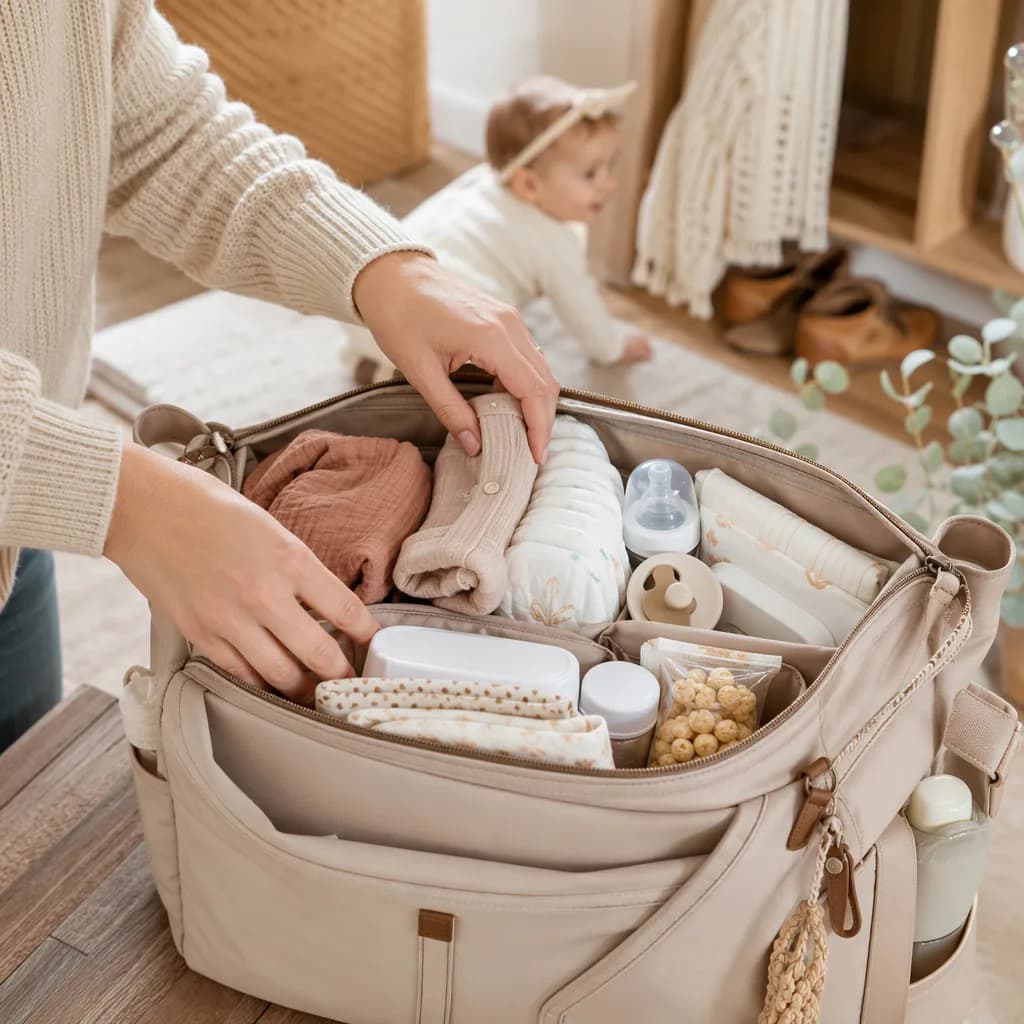
Diaper Bag Essentials at a Glance
A good diaper bag starts with the basics: diapers, wipes, a changing pad, diaper cream, an extra outfit, feeding supplies, one or two burp cloths, bags for messes, and a small first aid item or two. Think a couple of bandages, a baby-safe thermometer if you like having one nearby, or whatever tiny item makes you feel less stranded when something goes sideways.
For diapers, a simple rule works well: pack one diaper for every 2-3 hours away from home, plus one extra. Newborns may need more, while older babies and toddlers can often go a little longer between changes. Still, the extra diaper is the one you’ll be grateful for after a surprise blowout in a parking lot.
The best diaper bag isn’t stuffed with everything you own. It’s packed for the day you’re actually having.
For a quick grocery run, two diapers, wipes, a changing pad, and a small pack of snacks may be plenty. If you’re heading to the zoo for the day, you’ll want backup clothes, extra wipes, snacks, sunscreen, feeding gear, and a wet bag for dirty clothes. If that spare outfit gets used, toss it in the wash when you get home. This guide on how to wash baby clothes without irritating skin can help if your baby’s skin is picky.
Feeding supplies depend on your baby’s stage. Bottles, formula, nursing covers, bibs, or a favorite cup can all earn a spot. If you’re choosing a cup for outings, here’s a helpful look at the best cups for babies. Keep it practical. Pack what you’ll really use, and leave the rest at home.
What to Pack in a Diaper Bag for a Short Trip
Short trips have a sneaky way of turning into longer ones. You run into a friend at daycare pickup, the pharmacy line takes forever, or the baby has a blowout five minutes into a walk.
So yes, even for quick errands or a short visit, we still want a tiny plan.
For most short outings, pack:
- 2-3 diapers
- Travel wipes, or a half-used regular pack if that’s easier
- A changing pad
- Diaper cream or ointment
- One extra outfit
- One burp cloth
- A pacifier, if your baby uses one
- A bottle, snack, or cup if your baby may need it while you’re out
The goal isn’t to pack for a weekend away. It’s to cover the most likely mess: one diaper change, one surprise blowout, or one spit-up accident that soaks the front of a onesie right before you walk into preschool pickup.
If space is tight, choose a thin onesie instead of a bulky outfit. It takes up less room, it’s easy to roll, and it still gets the job done if the outfit your baby is wearing doesn’t survive the trip. If that spare outfit comes home dirty, our guide on how to wash baby clothes without irritating skin can help with the laundry side of things.
A small grab-and-go pouch makes this even easier. Keep diapers, wipes, cream, and the spare onesie in one pouch, then toss that into your stroller basket, tote, or diaper bag before you leave. You’re not rebuilding the whole bag every time. You’re just checking the pouch.
For older babies, add the feeding item that fits your routine: a bottle, a snack cup, or a small cup for water. If you’re figuring out what kind of cup works best, our baby cup guide is a helpful place to start.
Simple is good here. Short-trip packing should feel light, quick, and realistic.
What to Pack for a Full Day Out
A full day out needs a little more planning than a quick grocery run, but it still doesn’t mean packing half the nursery. Think through the day from the car ride to the last diaper change before heading home.
A practical full-day diaper bag checklist might look like this:
- Enough diapers for the hours you’ll be out, plus one extra
- A good supply of wipes
- Diaper rash cream or ointment
- Portable changing pad
- Two outfits, especially for babies who spit up or toddlers in the middle of potty practice
- A waterproof wet bag or zip-top bag for soiled clothes
- Feeding supplies: bottles, formula or pumped milk if needed, nursing cover if you use one
- Bibs and burp cloths
- Snacks for older babies and toddlers
- Water or a baby cup, if your child is using one. If you’re deciding what to bring, this guide to the best cups for babies: straw, open, and sippy picks can help.
- A small toy or board book
- Lightweight blanket
- Sunscreen, if appropriate for your child
- Hat
- Weather layers, like a sweatshirt, rain jacket, or warm socks
The outing matters. A museum day usually means indoor temperatures, stroller time, and maybe a café stop, so you may lean harder on snacks, a cup, and a quiet toy. An outdoor birthday party is different. You’ll want the hat, sunscreen, blanket, extra layers, and probably more wipes because frosting plus playground mulch is its own parenting category.
I like separating the bag into “clean” and “messy” zones. Put diapers, cream, and wipes in one pouch. Keep clean clothes in another. Then stash a wet bag or zip-top bag where you can grab it fast. If an outfit gets soaked, you don’t want it touching the spare bib, the snacks, or the clean pajamas you carefully washed. For sensitive skin, it also helps to keep clothing simple and comfortable, and this piece on how to wash baby clothes without irritating skin is a good one to save.
Pack for yourself, too.
Toss in a phone charger, water bottle, snack, lip balm, and hand sanitizer. A baby with a fresh diaper is great. A parent with water and a granola bar is better company for everyone.
Newborn Diaper Bag Checklist
Newborn outings can be tiny and still feel like a full production.
A quick pediatrician visit, a walk to the coffee shop, or a stop at grandma’s can turn messy fast because newborns go through diapers, spit-up cloths, and clothes more quickly than we expect. The goal isn’t to pack your whole nursery. It’s to have the things that save the moment when there’s a leak in the car seat or milk on the only clean sleeve.
Here’s a simple newborn diaper bag checklist to start with:
- Newborn-size diapers, at least a few more than you think you’ll need
- Wipes or cotton pads
- Diaper cream or ointment
- Portable changing pad
- Two sleepers or onesies
- Socks
- Mittens, if your baby uses them
- Burp cloths, usually 1-2, with extras if your baby spits up a lot
- Muslin blanket for warmth, shade, or a quick clean surface
- Feeding supplies for the way your baby eats
- Pediatrician contact details
- Any needed medicines, tucked into a safe pocket
For feeding, pack based on your real routine. If you bottle-feed, bring bottles and formula. If you’re bringing pumped milk, use a cooler bag. If you nurse, you might want a nursing cover if that helps you feel comfortable, plus nipple cream and breast pads. None of this has to be fancy. It just has to work at 2 p.m. in a parking lot when the baby is hungry now.
Newborns often need more clothing backup than older babies. Spit-up happens. Diaper leaks happen. Sometimes both happen in the same ten-minute stretch, because babies have a sense of humor we didn’t ask for. Two simple sleepers are easier than matching tops and bottoms, and if skin sensitivity is on your mind, this guide on how to wash baby clothes without irritating skin is a helpful one to keep nearby.
Use one small pocket for the things you don’t want to dig for: pediatrician details, medicine, breast pads, and nipple cream. Future you will be grateful.
And if you’re packing for an older baby too, save this next-stage guide to the best cups for babies: straw, open, and sippy picks.
Feeding Items to Pack by Age
Feeding gear changes a lot from the newborn stage to the snack-cup stage, so it helps to pack by how your baby actually eats right now. A tiny baby may need only milk supplies and a burp cloth. An older baby might need a whole mini lunch setup.
For breastfed babies, keep it simple. Pack 1-2 burp cloths, depending on how much your baby spits up, plus a clean cover if you like using one. If you pump while you’re out, add whatever you need for that, along with a cooler pack so milk stays cold until you get home.
For bottle-fed babies, pack clean bottles, measured formula, safe water if needed, a cooler pack for milk, and a burp cloth. Pre-measuring formula can save you from counting scoops in the back seat while your baby is crying. Keep milk cold, and try not to hang onto a half-finished bottle for too long once baby has started drinking from it.
Combination feeding can feel like packing for two babies, but it doesn’t have to be wild. Bring the breastfeeding items you use, then add one clean bottle, measured formula or pumped milk, and a cooler pack if milk needs to stay cold. I’d still toss in an extra burp cloth. Spit-up never checks the schedule.
Once solids are part of the day, add a bib, baby spoon, pouch or small container of food, snack cup, sippy cup, and wipes for sticky hands. If you’re comparing cup styles, this guide to the best cups for babies: straw, open, and sippy picks can help you choose what fits your baby’s stage.
One small parent trick: pack the bib with the spoon and food, then tuck an extra outfit nearby. If lunch turns into a yogurt explosion, you’ll be glad you read up on how to wash baby clothes without irritating skin.
Diaper Changing Supplies You'll Reach for Most
Start with the basics you’ll grab on almost every outing: diapers, wipes, a changing pad, diaper cream, disposable bags, hand sanitizer, and a small pack of tissues. Nothing fancy. Just the stuff that saves you when the park bathroom has no counter space, the restaurant changing table is questionable, or your baby decides the grocery store is the place.
For diapers, a simple rhythm helps. Pack at least a couple, then add more for longer days or younger babies who need changes more often. A changing pad keeps public surfaces from feeling quite so stressful, and diaper cream is one of those tiny items you’ll be grateful for when redness shows up out of nowhere.
Keep wipes in the bag even after diaper changes slow down. They’re not just for bottoms. They clean sticky hands, yogurt faces, stroller trays, car seat buckles, and the mystery spill that somehow appears five minutes after you leave the house. If your baby is practicing with cups, wipes earn their spot fast. Our guide to the Best Cups for Babies: Straw, Open, and Sippy Picks has more help for that messy learning stage.
Add a small wet bag or zip-top bag for soiled clothes. Please don’t let a damp onesie roll around loose with the snacks and clean burp cloth. If you’re dealing with blowouts often, it also helps to know How to Wash Baby Clothes Without Irritating Skin once you get home.
The easiest restocking habit is boring, which is why it works: check diapers and wipes every night, or right when you walk in the door. Future you will be very relieved.
Extra Clothes, Comfort Items, and Weather Gear
A spare outfit sounds optional until the diaper leak happens in the grocery store checkout line.
For short trips, pack one full outfit. A simple onesie or footed pajama is easiest because you’re not digging around for matching pieces while your baby is wiggling on a changing pad. For a full day out, bring two outfits. Add socks if your baby loves kicking them off in the stroller, car seat, or carrier.
If your baby has sensitive skin, it also helps to keep that spare outfit washed and ready in a gentle routine. This guide on how to wash baby clothes without irritating skin is a good one to save for laundry day.
Comfort items earn their spot fast. Depending on your baby’s age and habits, tuck in:
- A pacifier, plus a backup if pacifiers disappear in your house too
- A teether
- One small toy
- A lovey for older babies
- A lightweight blanket for stroller naps, shade, or a chilly restaurant
Keep it small. The goal is comfort, not packing the whole nursery.
Weather gear changes with the season, so this is the part of the bag worth checking before you leave. In warm weather, think sun hat and sunscreen if it’s age-appropriate for your baby. On cooler days, add a sweater or light jacket. Rainy forecast? A stroller rain cover can save the outing. In winter, pack a warm hat and stroller blanket.
One parent trick that’s saved me more than once: keep an extra shirt for yourself in the car if your baby spits up often. It doesn’t need to be cute. A plain T-shirt is enough to get you through lunch, school pickup, or the drive home without wearing spit-up as an accessory.
How to Organize Your Diaper Bag So You Can Find Things Fast
A well-packed diaper bag is only helpful if you can actually find what you need while your baby is wiggling, crying, or seconds away from a blowout.
The easiest fix is to group items into small pouches. Think in categories: diapering, feeding, clothes, parent items, and medicine or first aid. Your diapering pouch can hold diapers, wipes, rash cream, and a portable changing pad. Feeding might include bottles, burp cloths, bibs, or cups, depending on your child’s age. If you’re comparing cup options for older babies, this guide to the best cups for babies can help you decide what’s worth packing.
Keep the things you reach for constantly near the top of the bag or in outer pockets. Wipes. Pacifier. Burp cloth. Hand sanitizer. These are the items you don’t want buried under pajamas, snacks, and an extra shirt when you’re standing in a parking lot with one hand on the stroller.
Clear pouches are especially helpful if more than one person uses the same diaper bag. Labeled bags work too. “Diapers,” “feeding,” and “extra clothes” may feel obvious to you, but they’re a gift to a grandparent, partner, or babysitter who doesn’t know your system yet.
Here’s the real-life setup that saves the most stress: keep one complete diaper change kit in a single pouch. Add a couple of diapers, wipes, diaper rash cream, and a changing pad. Then when you’re in a restaurant or at the zoo and need to head to the bathroom, you don’t have to haul the whole bag with you. Just grab the pouch and go.
For the clothes pouch, tuck the spare outfit inside a waterproof wet bag so clean clothes stay together and dirty clothes have a place to land later. If your baby has sensitive skin, it’s also worth thinking about how those backup outfits are washed. This guide on how to wash baby clothes without irritating skin is a helpful next read.
Common Diaper Bag Packing Mistakes
The easiest mistake is overpacking. We’ve all done the “just in case” thing, then ended up digging past three toys, a bulky blanket, and an extra outfit that’s two sizes too small just to find one wipe. Too much stuff makes the bag harder to use, especially when you’re changing a baby in a tiny public bathroom or trying to grab a bottle before a meltdown starts.
Too many toys can be the sneaky culprit. One small favorite toy is usually easier than a whole pile that gets lost at the bottom. Same with blankets. A thick blanket may sound helpful, but it can take up half the bag and crowd out the things you’ll actually reach for, like diapers, wipes, rash cream, and a change of clothes.
Underpacking diapers is the other classic. A couple may be fine for a quick errand, but newborns need more frequent changes, and accidents happen at the worst times. Tuck in a little more than you think you’ll need, especially for a full day out.
Don’t forget parent needs, either. A water bottle, a snack, lip balm, or an extra shirt for spit-up days can save the afternoon. If your baby is practicing with cups, it may help to keep your go-to option handy from our Best Cups for Babies: Straw, Open, and Sippy Picks.
A few maintenance habits help, too. Rotate spare clothing sizes as your baby grows. Check expiration dates on sunscreen, medicine, and snacks. And please don’t leave dirty clothes in the bag overnight. Toss soiled outfits into the wash, and if sensitive skin is a concern, this guide on How to Wash Baby Clothes Without Irritating Skin can help.
Printable Diaper Bag Checklist for Different Outings
A diaper bag checklist works best when it’s simple enough to use while someone is looking for their shoes, the baby is fussing, and you’re already five minutes late.
Print this, screenshot it, or write your own version on a sticky note. It can live by the door, in the car, or tucked inside the diaper bag so you’re not repacking from memory every time.
Short trip checklist, about 1-3 hours
- 2 diapers
- Small pack of wipes, or a half-full regular pack
- 1 travel diaper cream or ointment
- Portable changing pad
- 1 burp cloth or bib
- 1 spare outfit, pajamas or a onesie are easiest
- 1 waterproof wet bag
- Bottle, nursing cover, or snack if needed
- Parent item: keys, wallet, phone, water bottle
Full day checklist
- 4-6 diapers, more for a newborn
- Wipes with plenty left in the pack
- Diaper cream or ointment
- Portable changing pad
- 2 burp cloths or bibs
- 2 spare outfits
- Waterproof wet bag
- Feeding supplies for each planned feed
- Extra pacifier, if your baby uses one
- Small toy or comfort item
- Parent items: water, snack, charger, wallet, lip balm
Newborn add-ons
Newborns go through diapers quickly, so pack more than you think you’ll need. Add 2 extra diapers, an extra burp cloth, and one more outfit if you’ll be out for multiple feedings.
Feeding items
Pack bottles, formula or pumped milk if you use them, nursing items if you need them, and a bib or burp cloth. For older babies, bring a cup that works for them. If you’re comparing options, this guide to the best cups for babies: straw, open, and sippy picks can help.
Clothes, weather, and extras
Keep one clean outfit in a wet bag so it’s easy to grab during a messy change. If skin is sensitive, it also helps to wash backup clothes the same way you wash everyday baby clothes. Here’s a gentle guide on how to wash baby clothes without irritating skin.
Add a hat, light blanket, or extra layer based on the weather.
The goal isn’t to carry the whole nursery. Match the checklist to your baby, the weather, and the plan for the day.
Frequently Asked Questions
What are the most important diaper bag essentials?
The most important diaper bag essentials are diapers, wipes, a changing pad, diaper cream, extra clothes, feeding supplies, burp cloths, bags for dirty items, and hand sanitizer.
How many diapers should I pack in a diaper bag?
Pack one diaper for every 2-3 hours you’ll be out, plus one extra. For a full day, many parents pack 6-8 diapers for a baby.
What should be in a newborn diaper bag checklist?
A newborn diaper bag checklist should include diapers, wipes, changing pad, diaper cream, two outfits, burp cloths, a blanket, feeding supplies, and bags for wet or dirty clothes.
What should I pack in a diaper bag for a quick errand?
For a quick errand, pack 2-3 diapers, wipes, a changing pad, one outfit, diaper cream, a burp cloth, and a bottle or pacifier if your baby uses one.
Do I need a different diaper bag checklist for a full day out?
Yes. A full day out usually needs more diapers, extra clothes, feeding supplies, snacks, weather gear, toys, and a few parent items like water and a phone charger.
How do I keep a diaper bag organized?
Use small pouches for diapering, feeding, clothes, and parent items. Keep wipes, a pacifier, and hand sanitizer in easy-to-reach pockets.
Frequently asked questions
How many diapers should I pack in a diaper bag?
What should I pack for a short trip with a baby?
What should I add for a full day out?
How do I keep a diaper bag from getting overpacked?
References
Sources
External research this article was grounded in.
- 【楽天市場】Shopping is Entertainment! : インターネット最大級の通信販売、通販オンラインショッピングコミュニティrakuten.co.jp
- 17 Diaper Bag Essentials: A Practical Checklistpaisleyandsparrow.com
- What to Pack in a Diaper Bag: Complete Checklist - Mothers Always Rightmothersalwaysright.com
Related reading
More from the journal → baby-products
Newborn Essentials Checklist: Buy This, Skip That
A calm newborn essentials checklist for what to buy now, what can wait, and what to skip so you can prep for baby without overbuying.
20 min readAug 3, 2026- baby-products
Car Seat Safety for Newborns: Fit, Position, Mistakes
Newborn car seat safety starts with fit: rear-facing straps, a snug harness, correct recline, and no bulky coats or extra padding.
12 min readAug 3, 2026 - baby-products
Babywearing for Beginners: Fit, Wraps, and Tips
New to babywearing? Start with simple fit checks, carrier types, and calm tips that help you carry baby safely and comfortably.
12 min readAug 3, 2026