
How to Build a Simple Baby Memory Box at Home
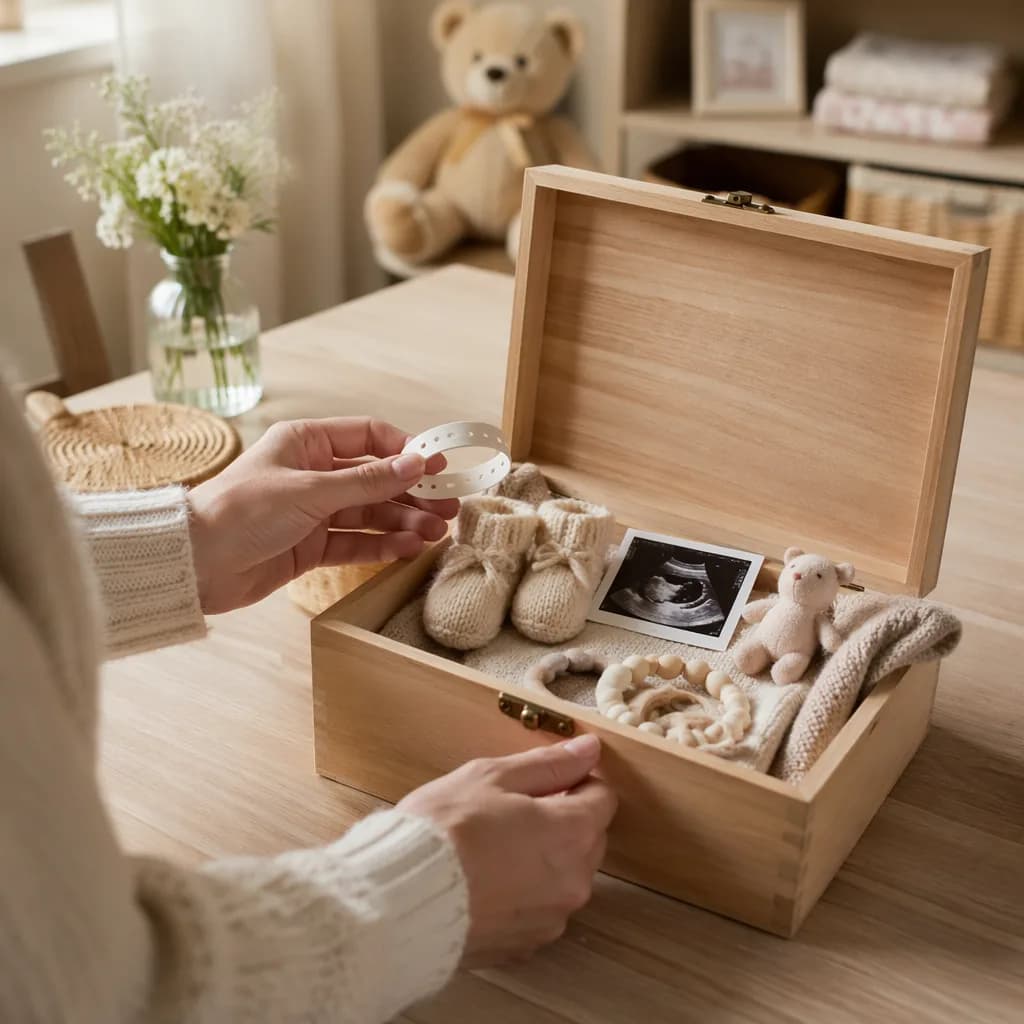
Start With a Box That Can Handle Real Life
A baby memory box doesn’t need to be fancy. It needs to survive closets, moves, busy mornings, and the occasional “where did I put that?” search.
Start with something sturdy that has a lid. A photo storage box works well, especially if you’re saving printed pictures, cards, or hospital papers. A wooden keepsake box feels sweet and permanent. A fabric bin can be easy to tuck onto a shelf. An archival document box is a good pick if you want something simple, protective, and made for paper items.
For most families, the sweet spot is somewhere between a shoebox and a small file box. Big enough for a tiny hat, a coming-home outfit, cards, hospital bracelets, and a few favorite photos. Small enough that it doesn’t turn into a guilt-filled storage project by the time your child is three.
If you’re planning to keep paper, photos, cards, or anything with ink, look for acid-free or photo-safe materials. You don’t have to overthink it. Just check the label before you buy, especially if this box will hold things you want to last.
Where you store it matters too. Skip damp places like basements or garages. A bedroom closet shelf is usually a safer, calmer home for it.
Then add one plain label: your baby’s name and birth year. Years from now, that little label will help the box make sense at a glance. If you’re still choosing names, our guide to creating a family baby name list without drama can help keep that part gentle too.
And if someone offers to help organize cards or tuck away keepsakes, let them. Here’s a kind way to ask family for help after baby, guilt-free.
Gather the Newborn Keepsakes Worth Saving
Start with the tiny things that tell the earliest part of the story. The hospital bracelet. The birth announcement. The first hat. An ultrasound photo. The coming-home outfit that looked impossibly small and somehow still swallowed them whole.
Those are the pieces that usually carry the feeling.
To keep the box from turning into a crowded drawer, choose a few newborn keepsakes with real weight to them. A washed newborn hat with faint milk stains often says more than ten folded sleepers. One coming-home outfit is enough. Maybe add the little mittens if they make you smile, but you don’t need to save every bodysuit from those first blurry weeks.
Flat paper items deserve their own spot. Slip the hospital bracelet, birth announcement, ultrasound photo, crib card, or a printed name note into a labeled envelope before placing them in the box. Otherwise, they tend to slide to the bottom, get bent, or disappear under bulkier things. If you spent time thinking through names, you might tuck in a small note about why you chose the one you did, or even a printed page like Tanmay Suresh Upadhyay: meaning & origin if that kind of detail matters to your family.
Add one handwritten note from you. Keep it simple. What was the weather like? Who visited? Did the baby sneeze three times in a row? Did someone bring soup, fold laundry, or hold the baby so you could shower? Those small details are the ones we think we’ll never forget, and then life gets loud. If you’re still planning for those early days, our guides on how to ask family for help after baby, guilt-free and newborn visitors can help you protect a little space for memories, too.
For bulky things, take a photo instead. A diaper cake ribbon, a big shower sign, or a nursery decoration can live beautifully in a printed picture without taking over the box. If an older sibling is part of the story, add their drawing or “welcome baby” card. Our calm guide to preparing a toddler for a new baby has more ideas for making them feel included.
Think small, meaningful, and easy to open later. That’s the sweet spot.
Add Baby Memory Ideas From the First Year
Once you’ve tucked away the hospital bracelet and coming-home outfit, the first year still gives you so many sweet little pieces to save. You don’t need everything. Truly. A memory box feels more meaningful when each item has a reason for being there.
Choose a few milestones that tell the story of your baby’s first year. Maybe it’s the first lock of hair from that tiny trim you weren’t ready for, the candle from the first birthday cupcake, a favorite pacifier, or the small toy your baby dragged from room to room like a best friend. One real object can bring back a whole season.
Print a handful of photos too. Phones are wonderful, but printed pictures have a different kind of magic. Write on the back: who’s in the photo, the date, and one tiny detail. “Grandma holding Maya after bath time, 7 months. She kept grabbing Grandma’s glasses.” That’s the stuff you’ll forget, even if you swear you won’t.
Keep short notes nearby for funny or tender moments. A sticky note about the first belly laugh, the way your baby bounced every time a nursery rhyme came on, or the afternoon they fell asleep clutching a spoon can become priceless later. If relatives love sharing memories, you might even ask them for one sentence after a visit. This can be a gentle add-on if you’re already figuring out how to ask family for help after baby, guilt-free or setting calm expectations around newborn visitors.
Handprints and footprints are lovely if you have them. If you missed the newborn stage, don’t stress. Trace a chubby 10-month-old hand on plain paper and label it. Still beautiful.
You can also save one card or letter from each parent, grandparent, or sibling. If an older child is getting ready for a baby, a scribbled “I love you” note pairs sweetly with ideas from preparing a toddler for a new baby. Family keepsakes can even include early name notes, like a list inspired by creating a family baby name list without drama, or a printed name meaning page such as Tanmay Suresh Upadhyay: meaning & origin.
Use Simple Categories So the Box Stays Organized
A baby memory box gets much easier to keep up with when the categories are simple enough for a tired parent to use at 10 p.m.
Start with a few plain groups: birth, first year, family notes, photos, and special clothing. That’s enough. You don’t need a museum-level system. A hospital bracelet can go in “Birth.” A tiny birthday candle wrapper can go in “First year.” A handwritten card from Grandma can go in “Family notes.”
Use little containers inside the box so the small things don’t scatter. Envelopes work well for paper keepsakes. Zip pouches are great for hospital bands, first haircut curls, or tiny socks. Small fabric bags can hold soft items, and photo sleeves keep prints from bending.
Label each section in words you’ll actually remember. “Hospital things” beats “medical memorabilia.” “First birthday” beats “milestone celebration items.” Future-you will be grateful.
Put heavier pieces at the bottom, like shoes, a folded outfit, or a small toy. Keep fragile paper items in a folder or envelope near the top so they don’t get crushed. If you’re saving a first outfit, tuck it into a clean fabric bag before placing it in the box.
Leave a little empty space, too. You don’t want to unpack the whole baby memory box just to add one drawing, photo, or note from a cousin.
If family members want to contribute keepsakes, it helps to be clear and gentle about what you’re saving. The same approach we’d use in asking family for help after baby or setting calm newborn visitor rules works here: simple, kind, and specific. You might even add a name card if you’ve been working through a family baby name list, or save a printed meaning page like Tanmay Suresh Upadhyay. If there’s an older sibling, let them choose one drawing for the box. It can help, especially while you’re preparing a toddler for a new baby.
Try Easy Baby Keepsake Box Ideas for a Personal Touch
A baby memory box doesn’t need to look like a craft store project. It just needs to feel like your family.
Start by lining the bottom with something soft: a swaddle, a tiny baby blanket, or even a piece of fabric from the nursery curtains if you have extra. It gives the box a cozy base, and years from now, that little pattern or texture may bring you right back to those sleepy newborn days.
The inside lid is a sweet spot for a name card, birth stats tag, or printed label. You can keep it simple: baby’s name, birthday, time, weight, and length. If you’re still sorting through name ideas, our guide to creating a family baby name list without drama can help keep that part calmer. You might even save a name meaning printout, like Tanmay Suresh Upadhyay: meaning & origin, if that kind of detail matters to your family.
Use small index cards for the items that won’t explain themselves later. Write things like, “The bear Grandma brought to the hospital,” or “The hat from our first walk around the block.” These little notes do the memory-keeping for your tired future self.
Add a mini timeline of firsts, too. First smile. First tooth. First crawl. First word. First steps. You can jot them on one card or make a tiny stack tied with string.
If older siblings want to help, let them choose one drawing or sticker for the box. It can make the change feel shared, especially if you’re also preparing a toddler for a new baby.
Keep decorations easy. A ribbon, name sticker, or small photo on the lid is enough. And if family wants to contribute items, you can keep boundaries gentle with ideas from asking family for help after baby or setting calm rules for newborn visitors.
Decide What Not to Keep
This is the part that can feel surprisingly emotional. Tiny socks, hospital papers, cards from people who love your baby, it all seems like it should matter forever.
But the box has a job. It’s meant to hold the best reminders, not prove you saved everything.
Start with the easy no’s. Skip anything dirty, damaged, sticky, or likely to smell over time, unless you can clean it and let it dry completely. A stained burp cloth might have been part of those early weeks, but if it’s going to make the whole box musty, a photo may be kinder.
You also don’t need every card, outfit, or daycare paper. Keep the ones that make you pause for a second. Maybe it’s the card your sister wrote after you finally asked for help, like we talk about in How to Ask Family for Help After Baby, Guilt-Free. Maybe it’s the first scribbly “family” picture your toddler made while you were preparing your toddler for a new baby.
For big or awkward things, take a photo before letting them go. The welcome-home balloon, the giant diaper cake, the poster from a baby shower, they don’t all need physical space.
If you’re stuck, make a maybe pile. Put it in a bag, label it with today’s date, and revisit it in a month. Distance helps. So does remembering that family memories aren’t made by keeping everything, just like family decisions don’t need to be perfect to be meaningful, from newborn visitor rules to baby name lists, or even saving a name note like Tanmay Suresh Upadhyay: meaning & origin.
Protect the Keepsakes for the Long Run
Once you’ve chosen what goes in the baby memory box, give everything the best chance of staying in good shape. Start with fabric items. Wash clothing, blankets, hats, and soft toys first, then let them dry completely before packing them away. Even a slightly damp corner of a muslin cloth can make you regret rushing.
If you have acid-free tissue paper, tuck a sheet between delicate outfits, printed photos, hospital bracelets, cards, and paper keepsakes. It gives fragile things a little breathing room and helps prevent items from rubbing against each other. For a tiny coming-home outfit, I’d fold tissue inside the sleeves and place another sheet over the top before closing the layer.
Choose the storage spot with care. Keep the box away from direct sunlight, heat, dampness, and pests. A closet shelf inside the house is usually kinder than a garage, attic, or basement. If family is helping you sort or store things, it’s okay to be clear about what matters to you, just like setting calm boundaries in How to Ask Family for Help After Baby, Guilt-Free or Newborn Visitors: Calm Rules for Family Visits.
Don’t forget the digital side. Save backups of photos, letters, and birth documents in at least two places, such as cloud storage and an external drive. You can also keep a note with name ideas, like the ones you gathered from How to Create a Family Baby Name List Without Drama, or a printed name meaning page such as Tanmay Suresh Upadhyay: meaning & origin.
Set a yearly reminder around your child’s birthday. Add one or two new memories, maybe a drawing, a funny quote, or a sibling note inspired by Preparing Toddler for New Baby: A Calm Parent Guide. Then remove anything that no longer feels meaningful. The box should feel loved, not stuffed.
Frequently Asked Questions
What do you put in a baby memory box?
Good items include a hospital bracelet, ultrasound photo, first hat, coming-home outfit, birth announcement, handprint, photos, cards, and a short note about the birth day.
What size should a baby memory box be?
A shoebox-sized container works for a small collection, while a small file box is better if you want room for clothing, photos, cards, and first-year keepsakes.
How do I organize newborn keepsakes?
Group them by category, such as hospital items, photos, clothing, cards, and first-year milestones. Use labeled envelopes or pouches for tiny pieces.
How can I make a baby memory box without spending much?
Use a sturdy box you already own, add envelopes for sorting, print a few favorite photos, and write simple labels by hand. Meaning matters more than fancy supplies.
Should I keep baby clothes in a memory box?
Yes, but choose only one or two special pieces, like the coming-home outfit or first hat. Wash and dry them fully before storing.
Where should I store a baby keepsake box?
Keep it in a dry, cool indoor place, such as a bedroom closet shelf. Avoid basements, attics, garages, and direct sunlight.
Frequently asked questions
What should I put in a baby memory box?
How big should a baby memory box be?
How do I keep baby keepsakes from getting damaged?
Do I need to save every newborn outfit?
References
Sources
External research this article was grounded in.
- BuildNow GG 🕹️ Play on CrazyGamescrazygames.com
- Rock-A-Bye Baby +More Nursery Rhymes - CoCoMelon - Videos For Kidskidvideo.org
Related reading
More from the journal → family
How to Ask Family for Help After Baby, Guilt-Free
Asking family for help after baby can feel awkward. Here are guilt-free scripts, clear tasks, and gentle boundaries that make support easier to accept.
11 min readJul 13, 2026 family
How to Create a Family Baby Name List Without Drama
Build a family baby name list with less pressure, clearer boundaries, and room for meaningful names from both sides of the family.
13 min readJul 7, 2026 family
Preparing Toddler for New Baby: A Calm Parent Guide
Help your toddler get ready for a new baby with honest words, simple practice, steady routines, and calm ways to handle big feelings.
12 min readJul 5, 2026