
Preparing Toddler for New Baby: A Calm Parent Guide
Start talking about the baby in simple, honest ways
Toddlers do best with words they can picture. Try: “The baby will sleep a lot and cry when they need help,” or “I’ll hold the baby to feed them, and then I’ll sit with you for our book.” Simple. True. Repeated often.
It helps to connect the baby’s arrival to something concrete. “The baby will come after your birthday,” “after winter,” or “when the crib is set up in our room.” Time is slippery for toddlers, so these little anchors make the idea feel less mysterious.
I’d avoid promising a built-in playmate. A newborn won’t be ready for blocks, chase, or pretend pancakes for a while. You can say, “The baby won’t play much at first. They’ll eat, sleep, cry, and need lots of holding. You can help by bringing a diaper or singing softly.” That gives your toddler a real role without setting them up for disappointment.
Picture books are a gentle way in. Read a book about becoming an older sibling, then pause over the pages and ask, “What is the baby doing here?” or “Does that look confusing?” You’re not quizzing them. You’re giving them a place to wonder out loud.
Baby photos work beautifully too. Show your toddler a picture of themselves wrapped in a blanket or wearing a tiny hat. Tell them, “You needed diapers, bottles, rocking, and cuddles too. We took care of you just like we’ll take care of the baby.” That can be surprisingly reassuring.
If you want more help with the first meeting itself, this guide on introducing a new baby to a sibling with less stress pairs nicely with these early conversations.
Practice baby care through play before the birth
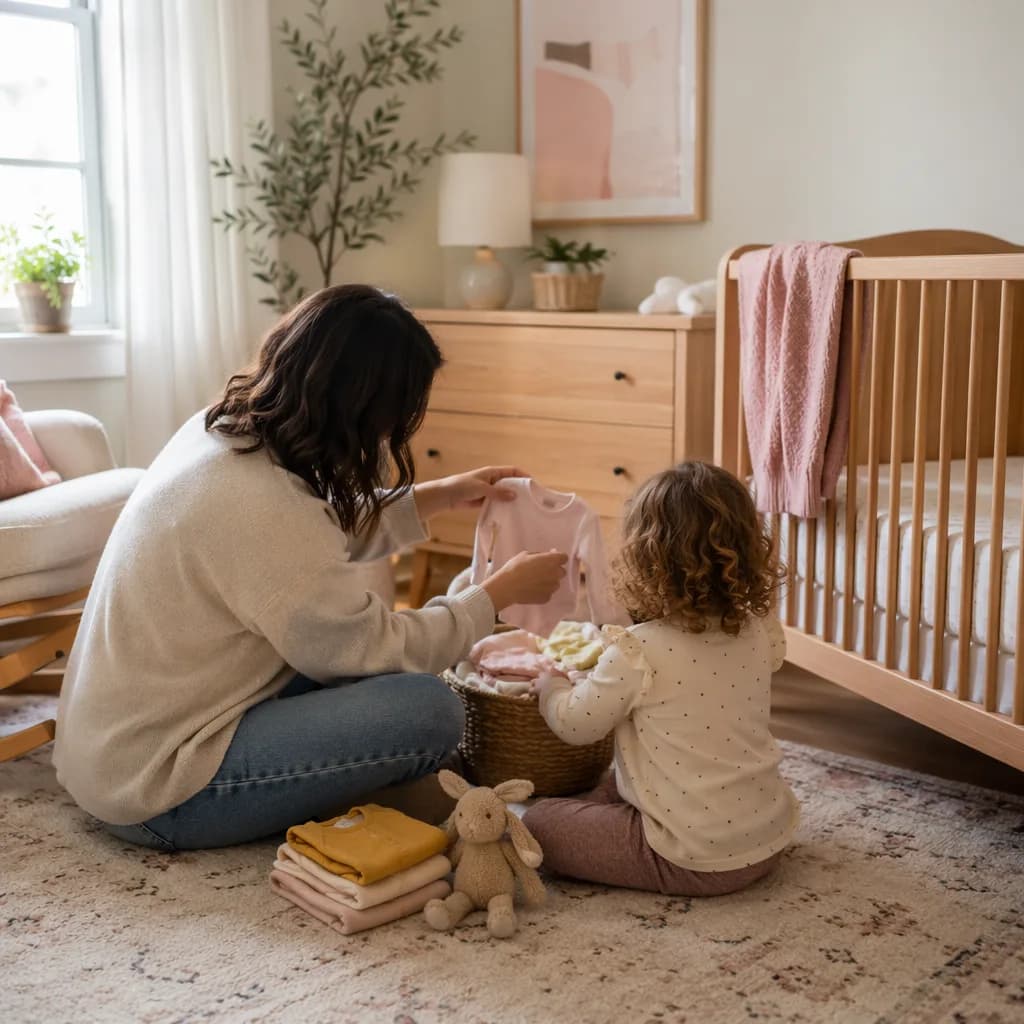
Toddlers learn best when they can touch, try, repeat, and laugh a little. Before the baby arrives, give your child a doll or stuffed animal and let them practice the tiny routines they’ll see you doing soon: putting on a diaper, wrapping the baby in a blanket, or pretending to feed while you fold real burp cloths nearby.
Keep it concrete. “This is how we touch a baby’s feet.” Then show them. Feet are a great practice spot because they’re safer than faces, eyes, or tiny fingers. You can say, “Gentle hands on the baby’s feet,” and guide their hand softly over a stuffed animal’s toes.
Role-play the noisy moments too. Try, “The baby is crying. What can we do?” Your toddler might pat the doll, bring a blanket, sing a song, or run away. All of that gives you useful information. You’re not aiming for perfect behavior. You’re helping them get ready for something that will happen in the future, one small practice round at a time.
Teach jobs they can actually do later. “Can you bring me the burp cloth?” works better than “Can you help with the baby?” You might also let them choose between two baby socks or pick which board book to put near the chair. These tiny choices can make them feel included without giving them too much responsibility.
And if your toddler throws the doll across the room? Stay calm. “Looks like you’re done practicing. Dolls are for gentle play, so we’ll try again later.” Then move on.
This same gentle rehearsal can help with bigger first-meeting moments too, especially if you’re thinking ahead about introducing new baby to sibling with less stress or setting calm expectations around newborn visitors and family visits.
Protect routines during the sibling transition
Preparing means getting someone ready for something that’s coming, and for toddlers, “ready” often starts with ordinary things staying ordinary. Bedtime. Breakfast. Daycare drop-off. The song you sing after bath. The pancake plate they always choose on Saturday.
Keep those anchors as steady as you can, especially in the first weeks after the baby arrives. Your toddler may not understand every detail, but they’ll feel the rhythm of the day. That rhythm says, “You still belong here.”
If a big change needs to happen, try to make it early. Moving to a new room, stopping a pacifier, starting potty training, or switching beds can feel much bigger when it happens right after the baby comes home. If it’s possible, give that change its own space so it doesn’t feel like the baby caused it.
Add one small parent-toddler ritual that can survive newborn life. Not a grand plan. Something tiny and repeatable.
Two books after lunch.
A five-minute floor game before dinner.
Sitting together while they eat a banana after daycare.
The key is that it still works on a tired day, with a fussy baby nearby. For more help with the first meeting and early days, this guide on introducing a new baby to a sibling with less stress can pair nicely with your routine plan.
Visitors matter too. Tell family the plan ahead of time if your toddler needs quiet greetings, no surprise hugs, or a little space before saying hello. You can share simple visiting rules using ideas from Newborn Visitors: Calm Rules for Family Visits, and if grandparents need clearer expectations, How to Set Boundaries With Grandparents After Baby may help.
Some toddlers love seeing what comes next. Try a simple picture routine: wake up, breakfast, play, nap, bedtime. You can even add little family labels, like Nana or Pops, after choosing from Grandparent Names for Every Style and Family. If your family enjoys name meanings, saving a baby name note like Tanmay Suresh Upadhyay: meaning & origin for later can become one more calm, familiar ritual.
Plan the first meeting with the new baby
That first meeting doesn’t need to be magical. It needs to feel safe.
If you can, try to have your arms free when your toddler first walks in. Let someone else hold the baby for a minute, or place the baby safely nearby, so your toddler can come straight to you for a hug. They’ve missed you. Before they meet the baby, they may need to check one very important thing: “Is there still room for me?”
Keep the visit short and low-pressure. Your toddler might be curious, shy, silly, clingy, or completely uninterested. All of that can fit inside a normal first meeting. You can offer tiny, concrete details: “Look at her little toes,” or “Do you see her soft hair?” Let them look at the baby’s fingers or feet without asking for a kiss, cuddle, or photo-ready reaction.
A simple script helps: “This is baby Maya. She’s so glad to meet you. You’re still my big Sam.”
Some families like having a small sibling gift ready, maybe a sticker book or a toy car “from the baby.” That can be sweet, but keep the focus on connection rather than buying affection. The real gift is your attention.
If relatives will be present soon after, it may help to set calm expectations ahead of time. You can borrow ideas from Newborn Visitors: Calm Rules for Family Visits or think through How to Set Boundaries With Grandparents After Baby. For a wider plan, see Introducing New Baby to Sibling With Less Stress.
Help your toddler adjust to baby after you come home
The first weeks home can bring out big feelings in small bodies. Even a toddler who seemed excited may suddenly want to be carried everywhere, wake more at night, have toileting accidents, whine over tiny things, or melt down when you pick up the baby.
That doesn’t mean you prepared them badly. It means they’re preparing in their own toddler way, trying to understand what this new family shape means for them.
Try naming the feeling without letting it run the house. You might say, “You wish I could put the baby down right now. You want me.” Then add the limit calmly: “My hands are busy, and I’m right here.” That wording matters. If we keep saying, “I can’t because of the baby,” the baby can start to sound like the problem. “My hands are busy” keeps the limit clear without putting blame on the newborn.
During baby care, offer safe little choices. “Do you want to sit next to me or bring your book?” “Can you hold the diaper cream cap?” “Should we sing the sleepy song or the silly song while I change her?” These choices give your toddler a job and a bit of control, which can soften the sting of waiting.
Catch the good moments out loud. Be specific. “You waited while I buckled the baby. That was hard, and you did it.” Or, “You used gentle hands on his blanket.” Toddlers need to hear exactly what went well so they can find that behavior again.
Baby-free attention helps too, even in tiny doses. Ten minutes of blocks while the baby naps can matter more than an hour of distracted attention. Put your phone down if you can. Let your toddler pick the play. No teaching, no correcting, just connection.
If visitors add noise or pressure, simple rules can protect everyone’s mood. You may like these calm ideas for newborn visitors and setting boundaries with grandparents after baby. And if you’re still working through the first sibling meeting, this guide on introducing a new baby to a sibling with less stress pairs well with this stage.
Handle jealousy, roughness, and big feelings safely
Jealousy doesn’t mean you’ve done anything wrong. A toddler can love the baby, feel curious, and still feel furious that your lap is suddenly full.
In the early weeks, stay close whenever your toddler is near the baby. Not hovering with panic, just near enough to guide hands, block a sudden grab, and step in before things get unsafe. A two-year-old who pats gently one minute may poke the baby’s eye the next because they’re tired, excited, or testing what happens.
If rough touch happens, respond fast and calm: “I won’t let you hit. You can stomp your feet over here.” Keep your voice steady. Move the baby or move your toddler, then give the feeling somewhere to go. Pushing a laundry basket down the hallway, tearing scrap paper, squeezing play dough, or stomping on a pillow can help anger leave the body without landing on the baby.
Try not to shame the feeling itself. “You’re mad at the baby” is very different from “You’re being bad.” One names the truth. The other can make a toddler feel pushed out right when they need reassurance most. The boundary is still firm: feeling mad is allowed, hurting the baby isn’t.
Watch for small bids for attention before they get loud. Climbing on you during feeds, tossing toys near the bassinet, or suddenly needing help with something they usually do alone can all mean, “Do you still see me?” A quick hand on their back or a simple “I’m feeding the baby, and I see you waiting” can sometimes prevent the big crash.
If unsafe behavior keeps happening, increase supervision and reduce access instead of repeating the same scolding. Use gates, a safe baby spot, or another adult’s help. This is also where visitor boundaries matter. Fewer overstimulating visits can make everyone steadier, so it may help to plan ahead with Newborn Visitors: Calm Rules for Family Visits and How to Set Boundaries With Grandparents After Baby. For the first meeting itself, Introducing New Baby to Sibling With Less Stress can give you a softer starting point.
Build sibling bonding without forcing affection
Sibling bonding works best when it feels safe, not staged. Invite your toddler to sit near the baby, bring over a burp cloth, or peek at tiny toes, but let “no” be an acceptable answer. A toddler who gets to step back often feels safer stepping in later.
One gentle trick is to point out the baby’s interest in them. Try, “She turned her head when she heard your truck sounds,” or “He’s looking at your red socks.” This helps your older child feel noticed without asking them to perform love on command.
Keep shared moments tiny. Sing the same bedtime song to both children. Let your toddler show the baby a favorite board book while you hold the baby safely. If you want more help with that first stretch at home, Introducing New Baby to Sibling With Less Stress has more calm, practical ideas.
Also, protect a few special toys. Sharing every stuffed animal, blanket, or truck can build resentment fast. You might say, “This one is just for you. The baby can look, but it stays in your room.”
Photos are lovely, especially those soft little moments when your toddler gently touches the baby’s foot. Take them when they happen. Don’t ask for kisses, smiles, or “hold the baby for Grandma” if your child isn’t feeling it. This matters even more during visits, so having calm expectations helps. You may like Newborn Visitors: Calm Rules for Family Visits or How to Set Boundaries With Grandparents After Baby for that piece.
You can use “our baby” if it helps your toddler feel included. Just keep adult caregiving off their shoulders. They’re a sibling, not a mini parent.
Know when your toddler may need extra support
Some big feelings are expected after a new baby arrives. Preparing means getting someone ready for a future change, but even good preparation doesn’t make a toddler’s feelings neat or quiet.
Watch the pattern, not just one hard afternoon.
If your toddler has intense behavior that doesn’t ease with time, like frequent aggression, major sleep loss, or nonstop distress, it’s a sign to slow down and look closer. A child who screams every time you feed the baby may need more connection and predictability. A child who tries to hit the baby again and again needs calm, firm safety steps and adult help right away.
Talk with your pediatrician if your toddler seems withdrawn, loses several skills, refuses food, or repeatedly tries to hurt the baby. You’re not overreacting. You’re getting support before the stress gets bigger.
Before assuming it’s “just jealousy,” check the basics: sleep, food, outdoor time, and one-on-one attention. A ten-minute walk with one parent, a snack, and a quiet bedtime routine can change the whole evening.
Ask daycare or preschool caregivers what they’re seeing too. Some toddlers hold it together at home and unravel elsewhere.
Extra help may also be needed if a parent is recovering from a hard birth, postpartum depression, or anxiety. Toddlers feel household stress, even when nobody says it out loud. If visitors are adding pressure, simple plans like Newborn Visitors: Calm Rules for Family Visits or How to Set Boundaries With Grandparents After Baby can protect the whole family’s breathing room.
For more gentle transition ideas, see Introducing New Baby to Sibling With Less Stress.
Frequently Asked Questions
When should I start preparing toddler for new baby?
Start a few months before the due date with simple talks, books, and pretend play. Toddlers do best with repeated, concrete information.
How do I explain a new baby to a toddler?
Say the baby will sleep, cry, eat, and need help. Keep it honest and short, then answer questions as they come up.
What if my toddler ignores the new baby?
That is normal. Ignoring the baby can be a toddler’s way of coping. Keep offering gentle chances to connect without forcing it.
How can I help toddler adjust to baby crying?
Explain that crying is how babies ask for help. Offer your toddler headphones, a quiet spot, or a small helping job during crying spells.
Is toddler regression normal after a new baby arrives?
Yes. Clinginess, sleep changes, potty accidents, and baby talk are common. Calm routines and small daily attention usually help.
Should I buy a gift from the baby to the older sibling?
You can, but it is optional. A small gift may help the first meeting feel special, but steady attention matters more.
How do I stop my toddler from hitting the baby?
Stay close, block the hit, and say, “I won’t let you hit.” Then give a safe action, like stomping feet or squeezing a pillow.
How much should my toddler help with the baby?
Offer tiny optional jobs, like choosing a bib or bringing a diaper. Do not make your toddler responsible for baby care.
Frequently asked questions
When should I start preparing my toddler for a new baby?
What should I tell my toddler about the new baby?
How can my toddler help with the baby safely?
What if my toddler acts out after the baby comes home?
References
Sources
External research this article was grounded in.
- PREPARING | English meaning - Cambridge Dictionarydictionary.cambridge.org
- How to Prepare Your Toddler for a New Baby (July 2026) Expert Tips & Guidepeggyomara.com
- Preparing Your Toddler for a New Baby: Tips and Advice - The Parenting Protheparentingpro.com
Related reading
More from the journal →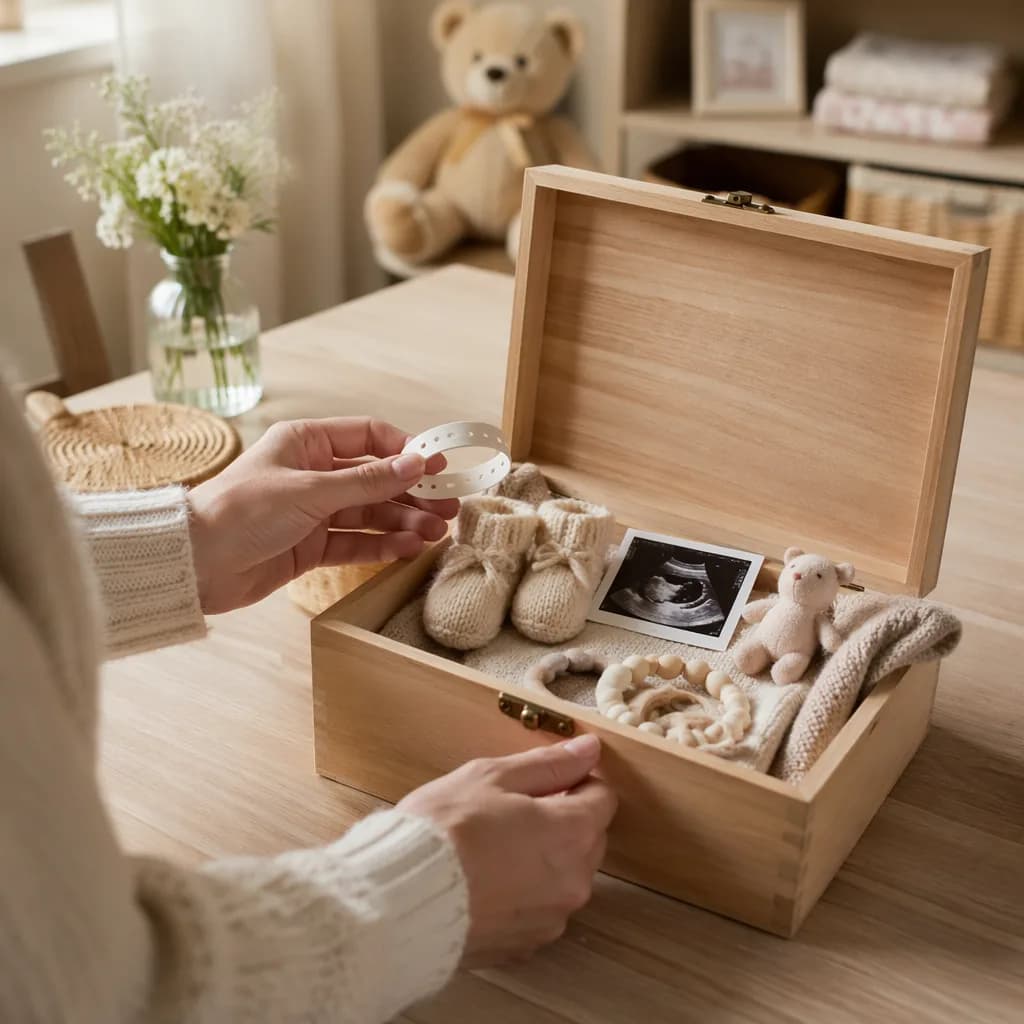 family
How to Build a Simple Baby Memory Box at Home
Build a simple baby memory box with the keepsakes that matter most, from hospital bracelets to first outfits, without turning it into clutter.
11 min readJul 19, 2026 family
How to Ask Family for Help After Baby, Guilt-Free
Asking family for help after baby can feel awkward. Here are guilt-free scripts, clear tasks, and gentle boundaries that make support easier to accept.
11 min readJul 13, 2026 family
How to Create a Family Baby Name List Without Drama
Build a family baby name list with less pressure, clearer boundaries, and room for meaningful names from both sides of the family.
13 min readJul 7, 2026