
How to Transition Baby from Swaddle to Sleep Sack Safely
When to stop swaddling your baby
Most babies need to stop swaddling when they start showing signs of rolling, often around 2 to 4 months. Some families choose to begin the transition just before 8 weeks so they’re not caught off guard by that first roll. Either way, once rolling begins, the swaddle needs to go right away.
Watch for the little clues. Twisting the hips in the crib. Rocking onto one side. Breaking one or both arms out again and again. Rolling during tummy time, even if it looks wobbly and accidental. These are all signs that your baby is getting stronger and more mobile.
The safety reason is simple: a swaddled baby who rolls onto their tummy may not be able to push up, move their arms, or reposition safely. That’s why the next sleep option should let their arms and hands move freely, such as a sleep sack or another wearable layer that doesn’t restrict movement.
Some babies are ready even earlier. If your baby fights the swaddle every night, keeps escaping, or seems calmer with hands near their face, it may be time to move on before rolling fully starts. You can make the change gradually with one arm out, or stop the swaddle all at once if that fits your baby better.
Keep the sleep setup plain and safe: always place baby on their back for sleep on a firm, flat sleep surface. If you’re adjusting layers after the swaddle, this guide on how to dress baby for sleep by room temperature can help, and a steady baby bedtime routine can make the switch feel less jarring.
Why a sleep sack is the next safe step
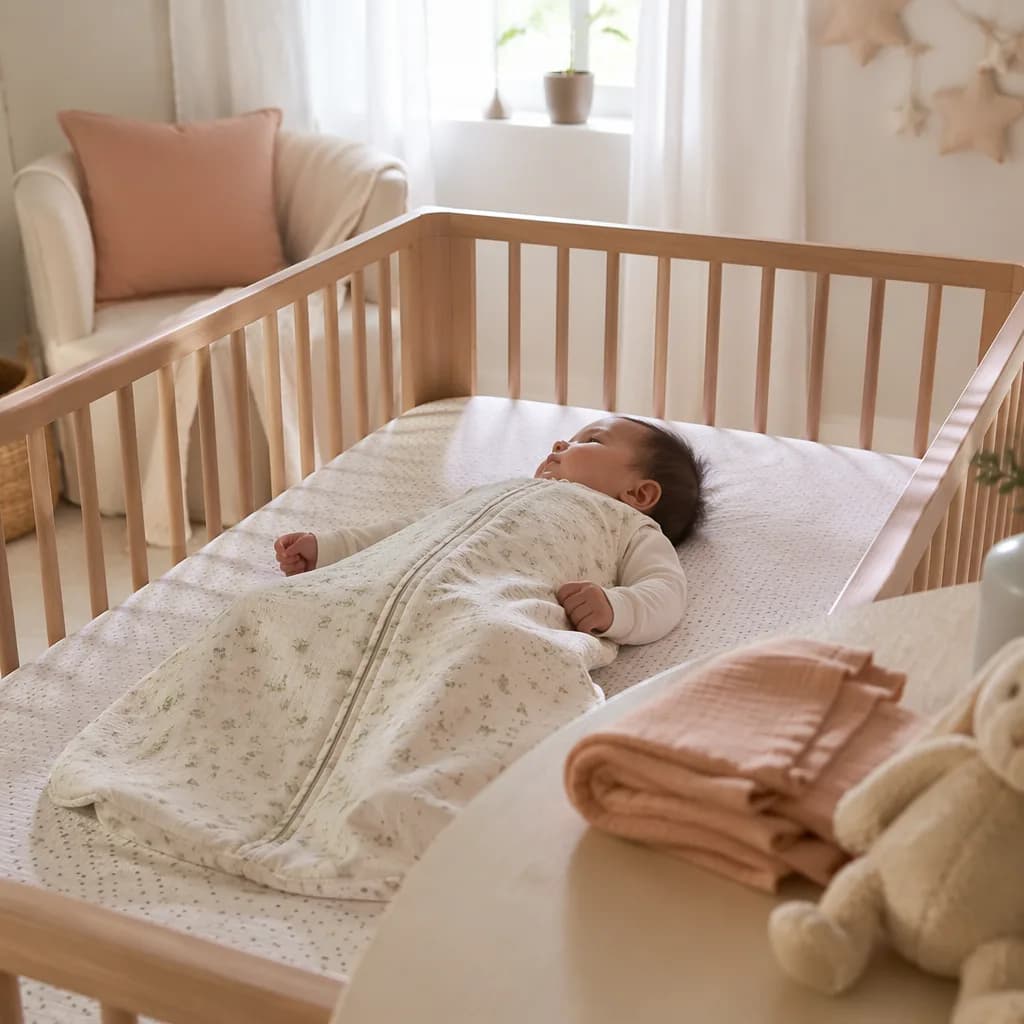
A sleep sack is basically a wearable blanket. It keeps your baby’s chest and legs covered, while leaving their arms free to move. That arms-free part is the big shift from a swaddle, and it matters once your baby is getting stronger and starting to roll.
When a swaddled baby rolls onto their tummy, they may not be able to use their arms and hands to push, adjust, or reposition. That’s why the swaddle has such a short window, and why many parents move toward a sleep sack around the transition stage. Baby still gets that snug, cozy sleep cue, but without having their movement restricted in the same way.
A sleep sack is also different from placing a loose blanket in the crib. Loose blankets aren’t recommended for babies under 12 months, while a properly fitted sleep sack is worn on the body and stays in place. If you’re wondering what should go underneath it, this guide on how to dress baby for sleep by room temperature can help you think through layers without overcomplicating bedtime.
The familiar routine can help, too. If your baby used to settle the moment the swaddle zipper closed, the sleep sack zipper can become the new “sleep is coming” signal. Pair it with a simple, repeatable rhythm from a calm baby bedtime routine, and the change may feel less abrupt for everyone.
Two ways to transition from swaddle to sleep sack
There are two main ways to move from swaddle to sleep sack: gradual or cold turkey. Both can work. The safer choice depends on where your baby is developmentally, especially if they’re showing signs of rolling.
With the gradual method, you give your baby time to adjust to having their arms free. Start with one arm out of the swaddle for a few nights. Then move to both arms out. Once baby is sleeping with both arms free, switch fully into a sleep sack. This can be a gentler option for sensitive sleepers who startle easily or get upset with sudden changes.
The cold turkey method is exactly what it sounds like. You stop the swaddle and begin the sleep sack on the same night. This may feel abrupt, but if your baby is already rolling or trying hard to roll, it’s usually the better choice because they need their arms and hands free right away. A swaddled baby who rolls onto their tummy can be in a risky position because they can’t use their arms to help move or reposition.
If you have time to transition before rolling begins, here’s a simple 5-night plan:
- Night 1: Swaddle with one arm out. Keep the rest of bedtime familiar.
- Night 2: Use one arm out again. Expect a little extra wiggling.
- Night 3: Move to both arms out, still using the swaddle around the body if your product allows it safely.
- Night 4: Try both arms out again. If baby is settling, you’re close.
- Night 5: Switch fully to the sleep sack.
Keep the room and clothing consistent while you make the change. If you’re unsure what layers make sense under the sleep sack, this guide on how to dress baby for sleep by room temperature can help you keep things simple.
A few rough nights can happen. More wake-ups for 2 to 5 nights is normal while your baby gets used to free arms, especially if the swaddle has been part of every sleep. A calm, repeatable bedtime routine helps signal that sleep is still coming, even though the outfit has changed. If you need a steady starting point, try these calm baby bedtime routine steps.
Step-by-step baby sleep sack transition plan
Start with the sleep period that usually goes best.
For some babies, that’s the first nap of the day, when they’re rested enough to try something new. For others, bedtime is easier because sleep pressure is stronger and the routine already has a steady rhythm. There isn’t one right answer here. Pick the moment when your baby is most likely to accept the change, then keep the rest of the setup boringly familiar.
A simple bedtime flow might look like this: feed, diaper, pajamas, sleep sack, short book or song, then crib. If you already have a calming routine that works, keep it. The sleep sack is the new part, so the rest should feel predictable. If you want a gentle structure to follow, this baby bedtime routine can help you keep things calm without making bedtime feel complicated.
Use the same sleep space your baby is used to. If they already sleep in a crib or bassinet, keep them there. If white noise has been helpful, keep that going too. This isn’t the week to change the room, the sound machine, the bedtime song, and the swaddle all at once.
Next, check the fit of the sleep sack carefully. The neck opening should sit comfortably without being loose enough to slide up over your baby’s mouth or nose. The armholes should let the arms move freely without extra fabric gaping around the shoulders. The length should give enough room for natural leg movement, but not so much that the sack bunches heavily around the body or rides upward.
Then dress your baby for the room they’re actually sleeping in, not for what the weather feels like outside. In a warm room, cotton pajamas under a lightweight sleep sack may be enough. In a cooler room, you might choose warmer pajamas with an appropriate sleep sack. If you’re unsure how to layer, this guide on how to dress baby for sleep by room temperature gives you a practical way to think it through.
Place your baby down drowsy or calm if you can. If they fuss, you haven’t ruined anything. This is a big change from the snug feeling of a swaddle, and some extra soothing is completely normal for a few nights. You might pause, offer a hand on their chest, sing the same short song, or pick them up briefly if they need help settling.
Keep the crib clear. Don’t add loose blankets, pillows, positioners, or weighted products to “make up” for the swaddle. A well-fitting sleep sack is meant to replace that extra bedding, while still leaving your baby’s arms and hands free.
If your baby is older and you’re adjusting sleep timing at the same time, it can help to look at age-based rhythms like an 8 month sleep schedule or a 12 month sleep schedule. And if you somehow find yourself reading baby names during a 3 a.m. resettle, Tanmay Suresh Upadhyay is right there waiting for you.
What to do if baby wakes more after the switch
A few rougher nights after moving from a swaddle to a sleep sack can be completely expected. Your baby’s arms are suddenly free, and that means their startle reflex can show up more. A tiny arm jerk, a brush against their cheek, or their own hand waving near their face can be enough to wake them briefly.
It doesn’t mean the sleep sack isn’t working. It often means your baby is learning how to sleep with more movement.
If scratching is the problem, try pajamas with fold-over cuffs or soft mittens for sleep, as long as they fit safely and don’t slip off. Keep nails trimmed too. Those little nails can be surprisingly sharp, especially during a 2 a.m. face rub. During the day, give your baby plenty of practice moving their arms freely during playtime. A few minutes on a blanket, reaching for a toy or bringing hands to mouth, can help those new sleeping freedoms feel less surprising at night.
When baby wakes, try soothing in the crib first. Place a steady hand on their chest, shush softly, or use gentle patting for a minute or two before picking them up. Sometimes that small bit of reassurance is enough to help them settle without fully waking.
Keep the rest of bedtime predictable too. A simple pattern like feed, diaper, pajamas, sleep sack, song, and bed can help your baby understand what’s coming next. If you’re still shaping that rhythm, this baby bedtime routine guide can help. And if you’re unsure what layers make sense under the sleep sack, especially when the room feels chilly or warm, check how to dress baby for sleep by room temperature.
Try to stay consistent for several nights. Switching back and forth repeatedly can make the change harder because baby doesn’t know what to expect. But if your baby is rolling, returning to a full swaddle isn’t a safe option. At that point, arms need to stay free so baby can move and reposition safely.
How to choose the right sleep sack
A good sleep sack should fit your baby’s body now, not the age printed on the tag. Check the brand’s weight and height range first, then look at the neckline and armholes. The neck shouldn’t ride up over baby’s mouth, and the armholes shouldn’t be so loose that baby can slip inside the sack.
Age can be a helpful starting point, but babies grow so differently. One 8-week-old might still be tiny in newborn clothes, while another is already stretching the next size. Weight and height give you the safer fit.
Fabric matters too. TOG is just a warmth rating for sleepwear. Lower TOG means lighter, better for warm rooms. Higher TOG means warmer, better for cool rooms. If you’re unsure what to layer underneath, our guide on how to dress baby for sleep by room temperature can help you match pajamas and sleep sack weight without overdoing it.
Once your baby can roll, choose an arms-free sleep sack. The research is very clear that swaddling should stop when rolling begins, and arms-free designs give babies the movement they need to adjust their position. Skip anything that pins the arms down or limits normal movement.
A few parent-friendly details make a big difference at 3 a.m.:
- A zipper that opens from the bottom for diaper changes
- Soft fabric that can handle frequent washing
- A zipper cover near the chin, so it doesn’t rub
- Enough room for hips and legs to move comfortably
Avoid weighted sleep sacks or products that restrict movement unless your pediatric clinician specifically advises one for your baby. For most families, simple is best: safe fit, free arms, washable fabric, and the right warmth for the room.
The sleep sack is only one piece of bedtime. A steady wind-down can help too, especially as babies grow into new rhythms like an 8 month sleep schedule, a 12 month sleep schedule, or a gentle baby bedtime routine.
Swaddle transition mistakes that make nights harder
A few common missteps can make the swaddle-to-sleep-sack change feel bumpier than it needs to be.
- Waiting too long after rolling signs appear. Once your baby starts showing signs of rolling, increased strength, or trying to break free of the swaddle, it’s time to stop swaddling. A wrapped baby who rolls onto their tummy may not be able to move safely.
- Choosing a sleep sack that’s too roomy at the neck or armholes. A sleep sack should let arms and hands move freely, but it shouldn’t be so loose that fabric can ride up near the face. If the neck opening looks wide enough to slip over the chin or mouth, pick a smaller size.
- Changing everything in one night. New sleep outfit, new bedtime routine, new crib setup, new room. That’s a lot for a tired baby. Keep the rest familiar. If bath, feeding, song, and bed have been working, keep that rhythm. A simple baby bedtime routine can be a real anchor during this change.
- Deciding the sleep sack “failed” after one rough night. Some babies protest because the swaddle felt cozy and womb-like. One unsettled night doesn’t mean you chose wrong. Give your baby a little time to adjust.
- Adding too many layers. Overheating can happen when we stack pajamas, a sleep sack, and extra warmth out of worry. Use the room temperature as your guide, and check how to dress baby for sleep by room temperature if you’re unsure.
- Tossing in a loose blanket as a quick fix. It’s tempting at 2 a.m., especially when everyone’s exhausted. Skip it. Choose a wearable layer instead, then protect the rest of the routine as much as you can. Later on, steady schedules like an 8 month sleep schedule or 12 month sleep schedule can help nights feel more predictable.
When to ask your pediatrician for help
Most swaddle transitions are bumpy for a few nights. A baby who slept peacefully wrapped up may suddenly startle, wiggle, or need extra soothing in a sleep sack. That can be normal. Still, safety comes first, especially if your baby has anything going on medically that could affect sleep positioning.
Check in with your pediatrician before or during the transition if your baby has reflux, was born premature, has breathing concerns, low muscle tone, or another medical issue that changes how they sleep or move. It’s also smart to ask about safe sleep options if your baby uses special medical equipment or has developmental needs. In those situations, a quick conversation can help you choose a plan that fits your baby, rather than guessing at 2 a.m.
Call the doctor if sleep suddenly changes and you’re also seeing poor feeding, fever, unusual fussiness, or fewer wet diapers. Those signs can point to something more than “I miss my swaddle.”
For everyday comfort questions, like layers under a sleep sack, our guide on how to dress baby for sleep by room temperature can help. A steady wind-down also helps many babies cope with change, so you might like this simple baby bedtime routine as you make the switch.
Frequently Asked Questions
When should I transition from swaddle to sleep sack?
Start the transition when your baby shows signs of rolling, often around 2 to 4 months. Stop swaddling right away once rolling begins.
Can I use a sleep sack for a newborn?
Yes, if it fits properly at the neck and armholes. For newborns who are not rolling, some families use a swaddle, but a sleep sack is also an option.
Is it better to transition one arm out or both arms at once?
One arm out can work well for babies who startle easily. Both arms out is safer right away if your baby is already rolling.
How long does the baby sleep sack transition take?
Many babies adjust in 2 to 5 nights, though some need a week or more. Consistency usually helps more than changing the plan nightly.
What should baby wear under a sleep sack?
Use pajamas that match the room temperature. In a warm room, cotton pajamas and a lightweight sleep sack may be enough.
Can I go back to swaddling if baby hates the sleep sack?
If your baby can roll or is trying to roll, do not return to a full swaddle. Try extra soothing and a well-fitted arms-free sleep sack instead.
Frequently asked questions
When should I stop swaddling my baby?
Is a sleep sack safe once my baby starts rolling?
Should I transition gradually or stop the swaddle cold turkey?
What should my baby wear under a sleep sack?
References
Sources
External research this article was grounded in.
- Transition Bikes - It's Time To GiddyUptransitionbikes.com
- 5 Golden Rules to Follow When Helping Your Baby Transition from Swaddl – Blooming Babymybloomingbaby.com
- TRANSITION | English meaning - Cambridge Dictionarydictionary.cambridge.org
- The Realistic Swaddle Transition Sleep Sack Guideswaddlean.com
- How to Transition From Swaddle to Sleep Sack in 5 Nightstheollieworld.com
Related reading
More from the journal → sleep
sleepDaycare Nap Tips for Helping Baby Sleep Away From Home
Daycare naps can be shorter at first. Help your baby adjust with a gentle prep plan, steady home sleep, and simple questions for caregivers.
15 min readJul 22, 2026 sleep
sleepNewborn Sleep Cues: Tired Signs to Watch For
Learn the tiny newborn sleep cues that mean your baby is getting tired, from glassy eyes to turning away, plus what overtired signs can look like.
12 min readJul 3, 2026- sleep
Bassinet to Crib Transition: Gentle Tips That Work
Gentle, practical tips for moving baby from bassinet to crib, including readiness signs, safe crib setup, and how to start with one sleep at a time.
12 min readJul 3, 2026