
Postpartum Hair Loss: Timeline, Care Tips, and Help
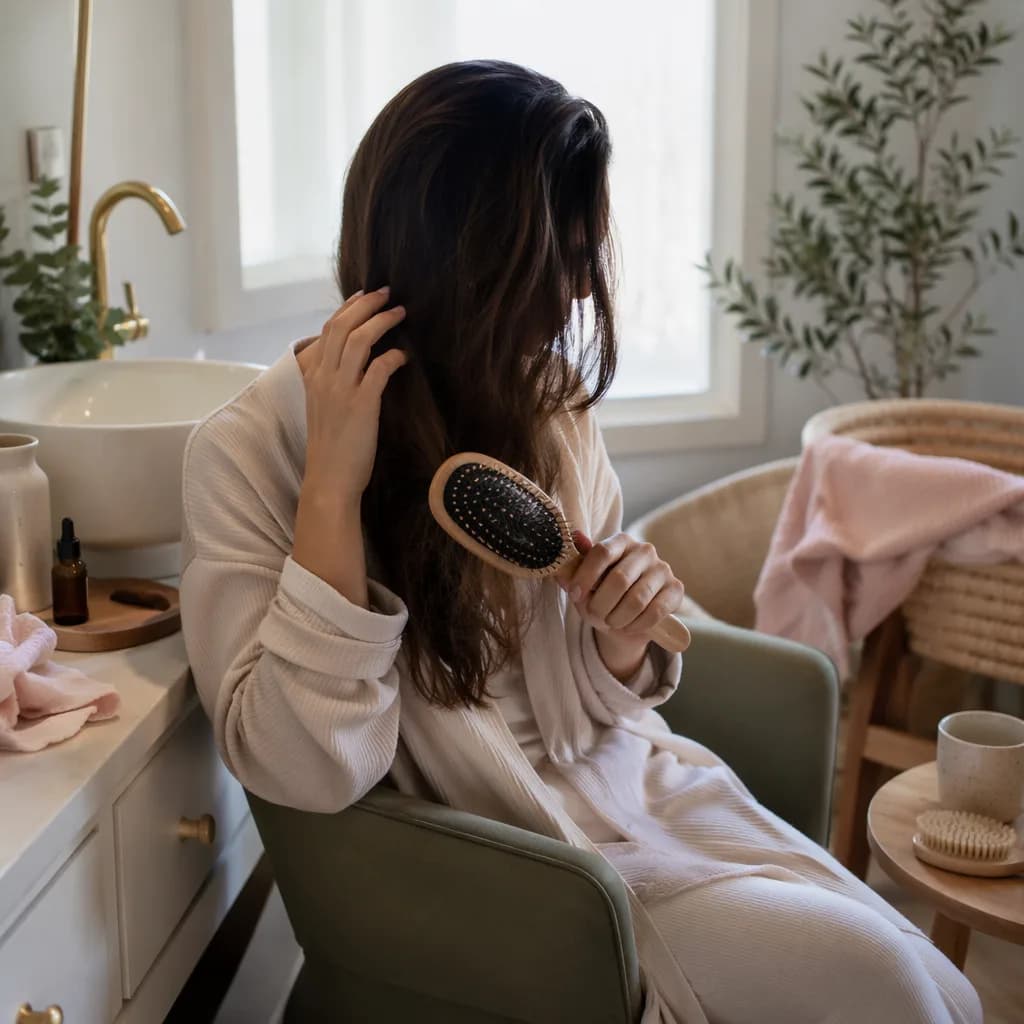
What postpartum hair loss is and why it happens
Postpartum hair loss is usually extra shedding after birth, not permanent hair loss. It can look dramatic in the shower drain or on your pillow, especially when you’re already tired and healing, but for many parents it’s a common and temporary part of the postpartum season.
During pregnancy, hair often feels fuller or thicker. Then after birth, your body goes through major hormone shifts, and that change can move more hairs into the shedding phase at once. This is why hair loss after pregnancy can feel so sudden. One week your ponytail feels normal, and the next you’re pulling handfuls from your brush while the baby is kicking on the changing mat.
Postpartum begins right after childbirth and is often described as the first six to eight weeks, though symptoms and body changes can last longer. Your body is recovering from birth, adjusting hormonally, and caring for a newborn all at the same time. That’s a lot.
If the shedding is bothering you, try to treat it as one part of recovery rather than one more thing you’re “failing” at. Gentle washing, loose hairstyles, and simple meals when you can manage them all count as care. If you’re looking for realistic support, Postpartum Self-Care That Fits Short Newborn Days is a good place to start.
And if hair shedding is making you feel panicky, low, or unlike yourself, bring that up too. Emotional changes are also part of postpartum, and you deserve support. You may find Postpartum Anxiety Signs and When to Get Help helpful.
Postpartum hair loss timeline by month
Postpartum shedding often starts around 2 to 4 months after birth, peaks around 4 to 5 months, and improves by 6 to 12 months. It can feel dramatic, but for many parents, it’s one more body change arriving after the first rush of recovery.
Here’s what you may notice month by month.
0 to 2 months: Hair may seem pretty normal at first. You’re also in the thick of early postpartum healing, which Cleveland Clinic describes as the first six to eight weeks after childbirth. Your body is dealing with bleeding, cramping, soreness, swelling, breast changes, fatigue, and big hormone shifts. Hair may not be the loudest thing yet. If you’re stocking your bathroom basket, our guide to Postpartum Recovery Essentials for the First Weeks may help.
2 to 4 months: This is when shedding often begins. You might see extra hair in the shower drain, wrapped around your fingers when you shampoo, or stuck to the shoulder of a baby’s burp cloth after a feeding. It can be unsettling, especially when you’re already tired.
Breastfeeding does not usually cause postpartum hair loss. The timing can vary from person to person, though, and postpartum symptoms don’t always follow a neat calendar.
4 to 6 months: Shedding often peaks around 4 to 5 months. This is the stage where ponytails can feel thinner and the hairline may look different in photos. Be gentle with brushing, skip tight styles when you can, and keep self-care small enough to actually happen. Even a two-minute shower comb-out counts. For realistic ideas, see Postpartum Self-Care That Fits Short Newborn Days.
6 to 12 months: Shedding often improves during this window. You may notice short, wispy hairs around your hairline. Those “baby bangs” can be annoying, but they can also be a sign of regrowth.
If hair changes are adding to worry, panic, or racing thoughts, it’s okay to talk with your provider. These posts on postpartum anxiety signs and what new moms should know can help you sort through what you’re feeling.
How much shedding is normal after pregnancy
Postpartum shedding can feel shocking, especially the first time you pull a clump from the shower drain.
Outside of postpartum, hair usually sheds in a steadier, less noticeable way. After birth, hormone shifts are happening alongside bleeding, cramping, breast changes, soreness, swelling, and deep fatigue. Your body is recovering from a major physical event, and some symptoms can last beyond the first six to eight weeks. So instead of a few hairs here and there, it can look like a lot of extra hairs are leaving at once.
That “all at once” part is what makes it feel so alarming. A handful in your brush, hair on the baby’s sleeper, strands wrapped around your fingers during shampooing. It’s a lot to see, especially when you’re already tired.
Shedding all over the scalp is different from patchy bald spots. If you’re seeing round bare patches, scalp pain, redness, or something just feels off, it’s reasonable to check in with your healthcare provider. Postpartum care doesn’t stop after delivery, and those checkups are a good place to ask direct questions about what’s normal for you.
Hair length and texture can also change how dramatic shedding looks. Long dark curls in a white sink will look like more than short fine hair on a towel. Washing less often can make it seem worse too, because loose hairs collect for several days.
Gentle care can’t stop hormone-related shedding completely, but it can help reduce breakage. That’s a kind place to start, along with small recovery habits from Postpartum Self-Care That Fits Short Newborn Days.
Gentle postpartum hair care that can help
Postpartum hair shedding can feel startling, especially when you’re already recovering, feeding a baby, and trying to shower in tiny scraps of time. The postpartum period usually refers to the first six to eight weeks after birth, though changes can last longer, and your body is doing a lot of healing during that stretch. So postpartum hair care should be simple, gentle, and realistic.
Start with how you detangle. A wide-tooth comb is often kinder than yanking through knots with a dense brush. Work from the ends upward in small sections, holding the hair above the tangle so you’re not pulling hard at the scalp. If you usually throw your hair into a tight ponytail or bun, try loosening it. Tight styles can tug and make shedding feel even more dramatic.
You don’t need to skip washing your hair because you’re afraid more will come out. Hair that’s already shedding may collect until wash day, which can make the shower look scarier than it is. Gentle shampooing as needed is fine. Use your regular rhythm, or adjust it to what feels comfortable, especially on the days when baby spit-up, night sweats, or dry shampoo buildup have joined the party.
For everyday styling, think soft and low-tension: loose braids, low ponytails with soft scrunchies, or claw clips placed gently instead of twisted tight. A satin pillowcase can also make hair feel less tangled in the morning, which matters when your “morning routine” is really three minutes between diaper changes.
During heavier shedding, try to limit heat styling, harsh chemical treatments, and aggressive brushing. This isn’t about doing everything perfectly. It’s about removing a few extra stress points from hair that’s already getting handled a lot.
One tiny trick: keep a soft brush or wide-tooth comb where life actually happens. Maybe that’s in the shower. Maybe it’s near the changing table. You can detangle for 30 seconds while the baby kicks on the mat instead of waiting until it becomes a big knotted task at 10 p.m.
If you’re building a calmer recovery setup overall, Postpartum Recovery Essentials for the First Weeks and Postpartum Self-Care That Fits Short Newborn Days can help you keep care small and doable. And if the changes in your body are feeding worry that feels hard to shake, it may help to read Postpartum Anxiety Signs and When to Get Help.
Nutrition, stress, and sleep support for hair regrowth
Postpartum recovery asks a lot from your body. Cleveland Clinic describes the first six to eight weeks after birth as a time of major physical and emotional change, and some symptoms can last longer. So if your hair is shedding and you’re also sore, tired, hungry, and holding a baby at 3 a.m., you’re not doing anything wrong. Your body is recovering.
Hair regrowth needs enough overall calories, protein, iron, zinc, vitamin D, and steady nourishment. That doesn’t mean you need perfect meals. It may look like two scrambled eggs, Greek yogurt with granola, lentil soup from a can, salmon with microwave rice, or nut butter toast eaten with one hand. Small, repeatable choices count. If your clinician recommends continuing a prenatal or postnatal vitamin, that can help fill gaps while meals are unpredictable.
Be careful with crash dieting after birth. Eating too little can make shedding worse, and it can leave you feeling even more depleted during a season that already comes with fatigue, hormonal shifts, bleeding, soreness, and healing. If you’re trying to figure out what actually matters in the early weeks, Postpartum Recovery Essentials for the First Weeks is a gentle place to start.
Sleep and stress matter too, but not in a blamey way. Newborn sleep is broken. Rest may mean closing your eyes for 20 minutes while someone else holds the baby, or skipping one chore so you can sit down with food. For tiny, realistic ideas, Postpartum Self-Care That Fits Short Newborn Days keeps it practical.
Before starting supplements, especially iron or high-dose vitamins, ask your clinician. And if worry feels constant or scary, read Postpartum Anxiety Signs and When to Get Help or Postpartum Anxiety Signs: What New Moms Should Know. You deserve care too.
Hairstyles and products to skip for now
Postpartum hair shedding can feel personal, especially when you’re already tired and healing. For a little while, treat your scalp like it’s tender skin.
Skip styles that pull hard on the roots: tight braids, tight buns, slick ponytails, and heavy extensions. The issue isn’t one ponytail for a quick grocery run. It’s repeated pulling in the same spots, day after day. That tugging can lead to traction alopecia, which simply means extra thinning from tension, often around the hairline and temples.
Chemical and heat stress can make things feel worse, too. If you can, pause harsh relaxers, bleach, frequent flat-ironing or curling, and strong clarifying shampoos. A clarifying wash once in a while may be fine for some hair types, but using one often can leave a sensitive postpartum scalp feeling dry, tight, or itchy.
If your scalp feels irritated, choose gentle products with no fragrance or a low-fragrance formula. Think mild shampoo, soft conditioner, and a wide-tooth comb. Keep it boring for now. Boring is underrated.
Scalp oils are a mixed bag. A light oil may soothe dryness for some people, especially along flaky areas, but it won’t fix hormone-related postpartum hair loss. Use it for comfort, not as a cure.
This is also a good season to lower the bar where you can. A loose braid, soft scrunchie, and five minutes in the bathroom can count as care, just like the tiny ideas in Postpartum Self-Care That Fits Short Newborn Days. If hair loss is adding to worry that feels hard to shake, Postpartum Anxiety Signs and When to Get Help may help you sort out what’s normal new-parent stress and what deserves support.
When postpartum hair loss may need medical help
Postpartum shedding can be unsettling, especially when you’re already healing, feeding, and sleeping in tiny scraps. Some hair loss after birth can happen alongside the bigger physical and hormonal changes of the postpartum period, which Cleveland Clinic describes as the first six to eight weeks after childbirth, though some symptoms can last longer.
Still, there are times to ask for help.
Call a clinician if shedding feels severe, lasts longer than 12 months, causes bald patches, or shows up with other symptoms. You don’t have to wait until you’re scared or miserable. A quick check can rule out common issues and give you a plan.
Symptoms that deserve a call include:
- Fatigue that feels extreme, even for newborn life
- Dizziness
- Heavy periods
- Rapid heartbeat
- Feeling unusually cold
- Scalp pain
- Scaling, redness, or itching on the scalp
- Clearly thinning spots or bald patches
A clinician may check for thyroid changes, low iron, anemia, vitamin deficiencies, alopecia areata, or scalp conditions. Depending on what’s going on, a good first step could be your OB-GYN, midwife, primary care clinician, or a dermatologist. If you’re already booking a postpartum visit, bring it up there. Your health still counts after the baby is born.
One practical tip: take a photo of your hairline or part every few weeks in the same light. That gives you something useful to show your clinician without checking the mirror ten times a day. Obsessive checking can make everything feel worse, especially if you’re already feeling keyed up. If worry is taking over, this piece on Postpartum Anxiety Signs and When to Get Help may help you sort out what’s normal stress and what needs support.
For the rest of your recovery, keep care simple. Food, rest when you can, and basic supplies matter more than a complicated routine. These guides on Postpartum Self-Care That Fits Short Newborn Days and Postpartum Recovery Essentials for the First Weeks are good places to start.
What to ask at your appointment
If your hair shedding feels intense, sudden, patchy, or just plain worrying, it’s completely reasonable to bring it up at a postpartum checkup. Postpartum recovery can stretch beyond those first six to eight weeks, and your provider is there to keep watching your healing, not just the baby’s growth.
Bring a quick note on timing: when the shedding started, whether it’s getting worse, and whether you’re seeing thinning all over or specific patches. It also helps to bring your medication list, supplement list, birth history, and whether you’re breastfeeding or pumping.
A few questions you can take with you:
- “Does this amount of shedding fit with postpartum changes, or does anything look unusual?”
- “Would labs make sense for me, such as thyroid, ferritin or iron, CBC, vitamin D, or B12?”
- “Are any treatments or supplements safe while breastfeeding or pumping?”
- “Could any of my current medications or supplements be playing a role?”
- “Do I need a dermatologist referral, especially if I have bald patches, itching, pain, scaling, redness, or no improvement over time?”
- “What symptoms would mean I should call sooner instead of waiting?”
If you’re also feeling unusually anxious, low, or unlike yourself, say that out loud too. Hormonal shifts can affect mood, and postpartum life is physically and emotionally demanding. You might also find it helpful to read Postpartum Anxiety Signs and When to Get Help or keep a few gentle basics from Postpartum Self-Care That Fits Short Newborn Days nearby for the hard days.
Frequently Asked Questions
When does postpartum hair loss start?
Postpartum hair loss often starts around 2 to 4 months after birth, though some parents notice extra shedding a little earlier or later.
How long does postpartum shedding last?
For many people, postpartum shedding improves by 6 to 12 months after birth. If it lasts longer, it’s reasonable to ask a clinician.
Can breastfeeding cause hair loss after pregnancy?
Breastfeeding itself usually does not cause postpartum hair loss. The main trigger is the hormone shift after pregnancy.
Will my hair grow back after postpartum hair loss?
Yes, in most cases hair grows back as the normal growth cycle resets. You may notice short new hairs around your hairline first.
What helps postpartum hair loss the most?
Time helps the most. Gentle postpartum hair care, enough protein, avoiding tight styles, and checking for low iron or thyroid issues can also help.
When should I worry about postpartum hair loss?
Call a clinician if you have bald patches, scalp pain or redness, shedding past 12 months, or symptoms like extreme fatigue, dizziness, or feeling cold.
Frequently asked questions
When does postpartum hair loss usually start?
Is postpartum hair loss permanent?
Does breastfeeding cause postpartum hair loss?
What can I do to care for my hair during postpartum shedding?
When should I call a doctor about postpartum hair loss?
References
Sources
External research this article was grounded in.
- Postpartum: Stages, Symptoms & Recovery Timemy.clevelandclinic.org
- Postpartum period - Wikipediaen.wikipedia.org
- Dealing with Postpartum Hair Loss in 2026: A Nurturing Guide for New Momspregnancymagazine.com
- Postpartum: The Authoritative Guide (2026) | APAamericanpregnancy.org
Related reading
More from the journal → wellness
Postpartum Self Care: Rest, Heal, and Ask for Help
Postpartum self care means real recovery: rest, food, pain relief, checkups, honest support, and tiny breaks that help you heal.
14 min readJul 31, 2026 wellness
Postpartum Identity: Feeling Like Yourself After Baby
Feeling unlike yourself after baby is common. Here’s why postpartum identity shifts happen, what helps, and when to ask for extra support.
14 min readJul 28, 2026 wellness
Relationship After Baby: Stay Close as New Parents
Baby changes your relationship fast. Here’s how to talk, share the load, repair after hard moments, and stay close in the postpartum weeks.
11 min readJul 25, 2026