
Safe Sleep for Babies: Crib and Bassinet Basics
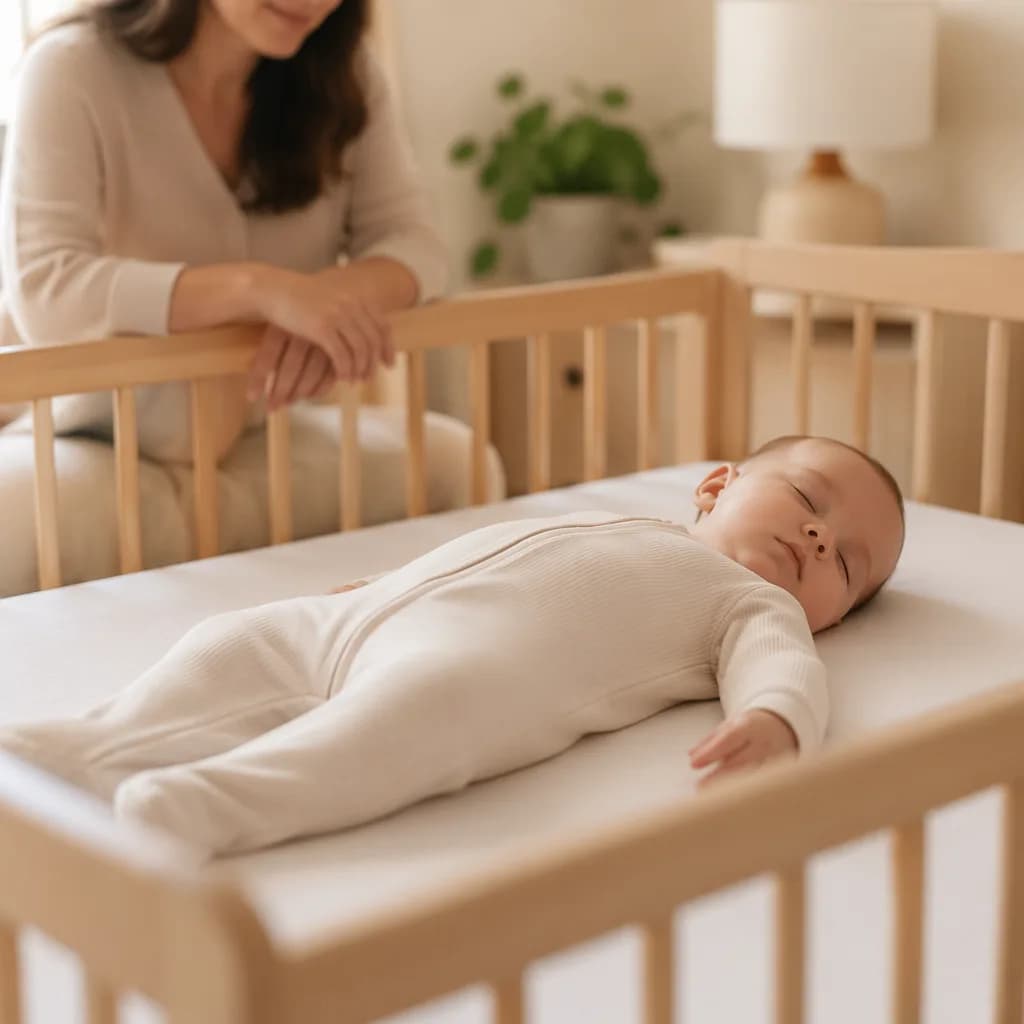
The safest sleep setup for babies
The safest baby sleep space is simple: firm, flat, level, and made for infant sleep. Think crib, bassinet, play yard, or bedside sleeper that meets safety requirements.
Place baby on their back for every sleep, including naps and nighttime. Every time counts, even the short nap you think might only last 20 minutes.
The mattress should be covered with a fitted sheet only, pulled tight so it doesn’t bunch up around baby’s face or body. If you press on the sleep surface, it should return to its original shape quickly. Soft spots, pillow-top surfaces, couches, armchairs, and adult beds aren’t safe sleep surfaces for babies.
Bare really is best here. No pillows, blankets, bumpers, stuffed animals, positioners, loungers, quilts, comforters, or weighted sleep products in the sleep space. A crib can look strangely empty at first, especially when you’ve seen nursery photos packed with cute extras, but empty is what makes it safer.
Here’s a real-life moment that happens all the time: baby finally dozes off in the swing after a fussy stretch. Take the win for your nerves, then move baby to the crib or bassinet as soon as you can. Swings, car seats, strollers, and other sitting devices aren’t recommended as regular sleep spaces.
If you’re setting up the nursery, our Safe Sleep Newborn Guide: Reduce SIDS Risk pairs well with a practical Babyproofing Checklist: Room-by-Room Home Safety. And for outings, safe sleep and safe travel are both worth planning for, so keep Rear Facing Car Seat Guidelines for Safer Rides handy too.
Baby safe sleep guidelines parents can follow tonight
Tonight, keep the setup simple: baby sleeps on their back, in a crib, bassinet, play yard, or bedside sleeper made for infant sleep, with a firm, flat, level surface and only a fitted sheet. Bare really is best. No pillows, loose blankets, stuffed toys, crib bumpers, positioners, weighted blankets, or weighted swaddles in the sleep space.
If baby dozes off somewhere else, move them as soon as you can. Car seats, strollers, swings, rockers, gliders, and other sitting devices aren’t recommended as a regular nap or sleep spot. A seated or semi-reclined position can let baby’s head tip forward, which may block the airway. Save the car seat for travel, and if you want a refresher, our Rear Facing Car Seat Guidelines for Safer Rides can help there.
For warmth, skip the loose blanket in the crib. If baby needs another layer, choose clothing or a wearable option that doesn’t add loose bedding to the sleep area. Keep baby’s face and head uncovered during sleep, and avoid anything that could bunch near the nose or mouth. If you’re unsure how warm is warm enough, check baby’s chest or back and adjust clothing as needed. For hats indoors during sleep, ask your pediatrician if there’s a medical reason to use one.
Room sharing can make nights easier and safer: place baby’s separate sleep space near your bed, not in your bed. If you fall asleep while feeding or comforting baby, move them back to their own bassinet or crib as soon as you wake. Before bringing baby into bed for a feed, clear pillows, blankets, and loose sheets from your side.
Keep the sleep routine calm and clear-headed. If smoking, vaping, alcohol, or sedating medicines are part of the environment, ask your pediatrician for specific safety guidance. For a bigger room-by-room reset, pair this with our Babyproofing Checklist: Room-by-Room Home Safety, or read the full Safe Sleep Newborn Guide: Reduce SIDS Risk. Then go admire that tiny sleeper, whether you named them Rami, Aurora, or something all their own.
Crib safety: what to check before baby sleeps
Before baby sleeps, give the crib or bassinet a calm, practical once-over. The safest sleep setup is simple: a product made for infant sleep, such as a crib, bassinet, play yard, or bedside sleeper, with a firm, flat, level surface and only a fitted sheet.
Start with the crib itself. Choose one that meets current safety standards, and check that it hasn’t been recalled. The CPSC recommends using sleep products that meet federal requirements and checking SaferProducts.gov for recalls. If you’re using a hand-me-down, be extra picky. Skip drop-side cribs, broken hardware, missing screws, cracked slats, or anything that needs a DIY repair before it feels sturdy.
The mattress should fit snugly, with no gaps around the edges. Press on it, too. A safe sleep surface should return to its original shape quickly, stay flat like a table, and sit level rather than tilted. Keep the crib bare: no pillows, blankets, stuffed toys, crib bumpers, positioners, or weighted sleep items. If you want the full sleep setup, our Safe Sleep Newborn Guide: Reduce SIDS Risk walks through the basics.
As baby gets stronger, lower the mattress. Once they can push up, sit, or stand, a higher mattress can turn a sleepy crib into a climbing project.
Now look around the crib. Keep cords from monitors, blinds, lamps, and chargers at least several feet away. Move the crib away from windows, curtains, shelves, frames, and anything baby could grab or pull down. This is the same kind of room-by-room thinking we use in our Babyproofing Checklist: Room-by-Room Home Safety.
One last habit helps: if baby falls asleep in a car seat or stroller, move them to their crib or bassinet as soon as you can. For travel days, this pairs well with Rear Facing Car Seat Guidelines for Safer Rides. Then, once the sleep space is safe, you can get back to the sweet stuff, like debating names such as Rami or Aurora.
Bassinet safety: what matters most
A bassinet can be a sweet, practical sleep spot in those early months, especially when you’re room sharing. The key is making sure it’s actually made for infant sleep. Choose a bassinet, bedside sleeper, play yard, or crib that’s labeled for sleep and meets current safety rules. If you’re using a hand-me-down, check the manual and look for recalls before baby sleeps there.
Read the limits in the manual before the first nap. Bassinets often have weight, age, and milestone limits, and many babies outgrow them sooner than parents expect. Stop using the bassinet when baby can roll, push up, or reaches the product limit, whichever comes first. That “whichever comes first” part matters.
Set the bassinet on a stable, level floor. Not on an adult bed. Not on a couch, table, cushion, or any soft surface. Babies need a firm, flat, level sleep surface with only a fitted sheet. Extra padding may look cozy, but it can create real breathing risks.
Skip wedge inserts, loose sheets, aftermarket mattresses, positioners, and anything soft or weighted. Bare really is best: mattress, fitted sheet, baby. If the bassinet rocks, swivels, or has motion features, follow the manual closely and lock it during sleep if the instructions say to.
For a fuller sleep setup, our Safe Sleep Newborn Guide: Reduce SIDS Risk walks through the basics in one place. And while you’re checking baby gear, it helps to review car sleep habits too, since babies who fall asleep in a car seat should be moved to a safe sleep space as soon as possible. Here’s our guide to Rear Facing Car Seat Guidelines for Safer Rides.
Room-sharing without bed-sharing
Room-sharing means baby sleeps in your room, close to you, but in their own separate sleep space: a crib, bassinet, bedside sleeper, or play yard made for infant sleep. If possible, plan for this setup for at least the first 6 months.
Keep the crib or bassinet close enough that you can reach over for a hand on baby’s belly, offer a pacifier, or scoop them up for a feed without crossing the room half-asleep. That small bit of convenience matters at 3 a.m.
The key is separate surfaces. Babies should not sleep on an adult bed, couch, recliner, or armchair, either alone or with you, another child, or a pet. Couches and armchairs are especially risky if an adult dozes while feeding or comforting baby. If you’re building your setup from scratch, our Safe Sleep Newborn Guide: Reduce SIDS Risk walks through the basics in a calm, checklist-style way.
Night feeds need a plan. If you bring baby into bed to nurse or bottle-feed, clear pillows, blankets, loose sheets, and soft bedding away from your side first. Then, as soon as the feed is done, return baby to their own sleep space.
If you’re so tired that you might fall asleep, use a backup. Set a phone timer for 10 or 15 minutes, or ask another adult to check on you. No shame. Tired parents need systems, not guilt.
Keep pets and older siblings out of baby’s crib or bassinet, even if they’re gentle and curious. The sleep space should stay boring: firm, flat, level, and covered only with a fitted sheet.
For the rest of the house, this pairs well with a simple Babyproofing Checklist: Room-by-Room Home Safety. And for naps on the go, remember that car seats are for travel, so review Rear Facing Car Seat Guidelines for Safer Rides too.
Common sleep products that are not safe for routine sleep
Some baby products look cozy, but cozy isn’t the goal for infant sleep. Safe sleep is plain: a firm, flat, level surface with a fitted sheet, in a crib, bassinet, play yard, or bedside sleeper made for sleep.
These products are not safe places for routine naps or overnight sleep:
- Inclined sleepers, baby loungers, nursing pillows, and adult mattresses. A baby’s head can tip forward or their body can slide into a position that makes breathing harder. Soft adult mattresses, memory foam, pillow-top surfaces, couches, and armchairs are not safe sleep surfaces.
- Car seats, strollers, swings, and bouncers. These are for rides or supervised awake time, not regular sleep. If baby nods off in the car seat after errands, move them to a flat, firm crib or bassinet as soon as you can. For ride safety, here’s our guide to rear facing car seat guidelines for safer rides.
- Weighted blankets, weighted swaddles, and weighted sleep sacks. These aren’t recommended for infant sleep.
- Crib bumpers and mesh liners. Anything added around the crib can create breathing, suffocation, strangulation, or entrapment risks. Bare really is best.
- Sleep positioners and wedges. Don’t use these in baby’s sleep space unless your medical professional has given you specific instructions and is supervising their use.
If you’re setting up the nursery while also checking outlets, cords, and furniture, our babyproofing checklist can help. And for the full sleep setup, keep this safe sleep newborn guide nearby.
Tiny name tabs like Rami or Aurora can wait. The empty crib comes first.
Swaddling, rolling, and the move to arms-free sleep
Swaddling can calm some newborns, especially in those early weeks when their startle reflex keeps waking them. If you swaddle, keep it snug around the chest, but loose around the hips so baby’s legs can bend and move. Skip tight wraps that pin the hips or legs in place.
Always place a swaddled baby on their back for sleep. Every time.
The crib or bassinet should still stay bare: firm, flat, level, and covered only with a fitted sheet. No loose blankets, pillows, loveys, bumpers, or stuffed animals. If you want the bigger picture, our Safe Sleep Newborn Guide: Reduce SIDS Risk walks through the basics in a calm, step-by-step way.
Stop swaddling as soon as baby shows signs of trying to roll. For many babies this is around 2 months, but some start earlier, so watch for little clues: rocking to the side, twisting the hips, or repeatedly working one arm free.
At that point, switch to an arms-free sleep sack. It gives baby a wearable layer without loose bedding in the crib, and it lets their arms help them reposition if they roll. Do not use weighted swaddles or weighted blankets.
If baby rolls onto their tummy after they can roll both ways, keep starting every sleep on their back. Then leave the sleep space empty and safe.
This is also a good moment to check the rest of the room. Our Babyproofing Checklist: Room-by-Room Home Safety can help you spot things that are easy to miss when everyone’s tired.
When to ask your pediatrician about sleep safety
Most crib and bassinet questions can be handled with the basics: baby on their back, on a firm, flat, level surface, with only a fitted sheet. Still, some babies have medical needs that make parents wonder if they should change something. That’s the moment to call the pediatrician before trying anything different.
Ask first before using any nonstandard sleep position, wedge, monitor, or special mattress for reflux, prematurity, or breathing concerns. The same goes for anything that claims to keep baby in one position. A bare sleep space can look almost too simple, but it’s the safest setup described in safe sleep guidance.
Call right away if your baby regularly chokes, turns blue, struggles to breathe, or has long pauses in breathing. Don’t wait for the next checkup.
It’s also smart to talk with the doctor if your baby was born premature or spent time in the NICU, since discharge instructions may include specific sleep guidance. Ask again if baby has poor weight gain, feeding trouble, or a medical device.
One practical tip: take photos of the crib or bassinet setup on your phone. Show the mattress, sheet, sleep sack, and where the sleep space sits in the room. It can make the conversation much easier, especially when you’re tired and trying to remember every detail.
For more everyday safety context, you might also like our Safe Sleep Newborn Guide: Reduce SIDS Risk, Babyproofing Checklist: Room-by-Room Home Safety, and Rear Facing Car Seat Guidelines for Safer Rides. And if you’re still naming baby between appointments, Rami: meaning & origin and Aurora: meaning & origin are lovely reads.
Frequently Asked Questions
What is the safest way for a baby to sleep?
On their back, on a firm, flat mattress, in an empty crib, bassinet, or play yard with only a fitted sheet.
Can a newborn sleep in a crib right away?
Yes. A newborn can sleep in a safety-approved crib from day one if the mattress is firm, flat, and free of loose items.
Is a bassinet as safe as a crib?
A bassinet can be safe if it meets current safety standards, is used on a level surface, and baby is within the product's limits.
How long should a baby sleep in the parents' room?
The American Academy of Pediatrics recommends room-sharing without bed-sharing for at least the first 6 months if possible.
When should baby move from bassinet to crib?
Move baby when they reach the bassinet's weight or milestone limit, or when they can roll, push up, or seem cramped.
Are crib bumpers safe?
No. Crib bumpers, including padded and mesh styles, are not recommended because they can increase breathing and entrapment risks.
Can baby sleep with a blanket?
Loose blankets are not safe for infant sleep. Use a properly sized sleep sack or wearable blanket instead.
What if baby falls asleep in a car seat?
If you're not traveling, move baby to a firm, flat crib, bassinet, or play yard as soon as you can.
Frequently asked questions
What is the safest sleep setup for a baby?
Can my baby sleep with a blanket or stuffed animal?
What should I do if my baby falls asleep in a swing or car seat?
How can I keep my baby warm without a loose blanket?
Is room sharing safer than bed sharing?
References
Sources
External research this article was grounded in.
- Safe Sleep Environment | Safe to Sleep®safetosleep.nichd.nih.gov
- Safe Sleep – Cribs and Infant Products | CPSC.govcpsc.gov
- Framework - Scaled Agile Frameworkframework.scaledagile.com
- Baby safer sleep advice - Best Start in Life - NHSnhs.uk
- Providing Care for Babies to Sleep Safely | SUID and SIDS | CDCcdc.gov
Related reading
More from the journal → safety
Baby Proofing Checklist Before Crawling Begins
A calm room-by-room baby proofing checklist to help you spot choking hazards, sharp corners, cords, outlets, furniture tip risks, and more before crawling starts.
15 min readAug 3, 2026- safety
Baby Bath Safety: Temperature, Setup, Supervision
Simple baby bath safety tips for water temperature, setup, and supervision, so bath time stays warm, calm, and safe.
11 min readAug 3, 2026 - safety
How to Choose a Safe Newborn Car Seat
Choosing a newborn car seat? Start with rear facing fit, safe harness setup, labels, dates, and recall checks before that first ride home.
10 min readAug 3, 2026