
When Do Babies Roll Over? Timeline, Signs, Tips
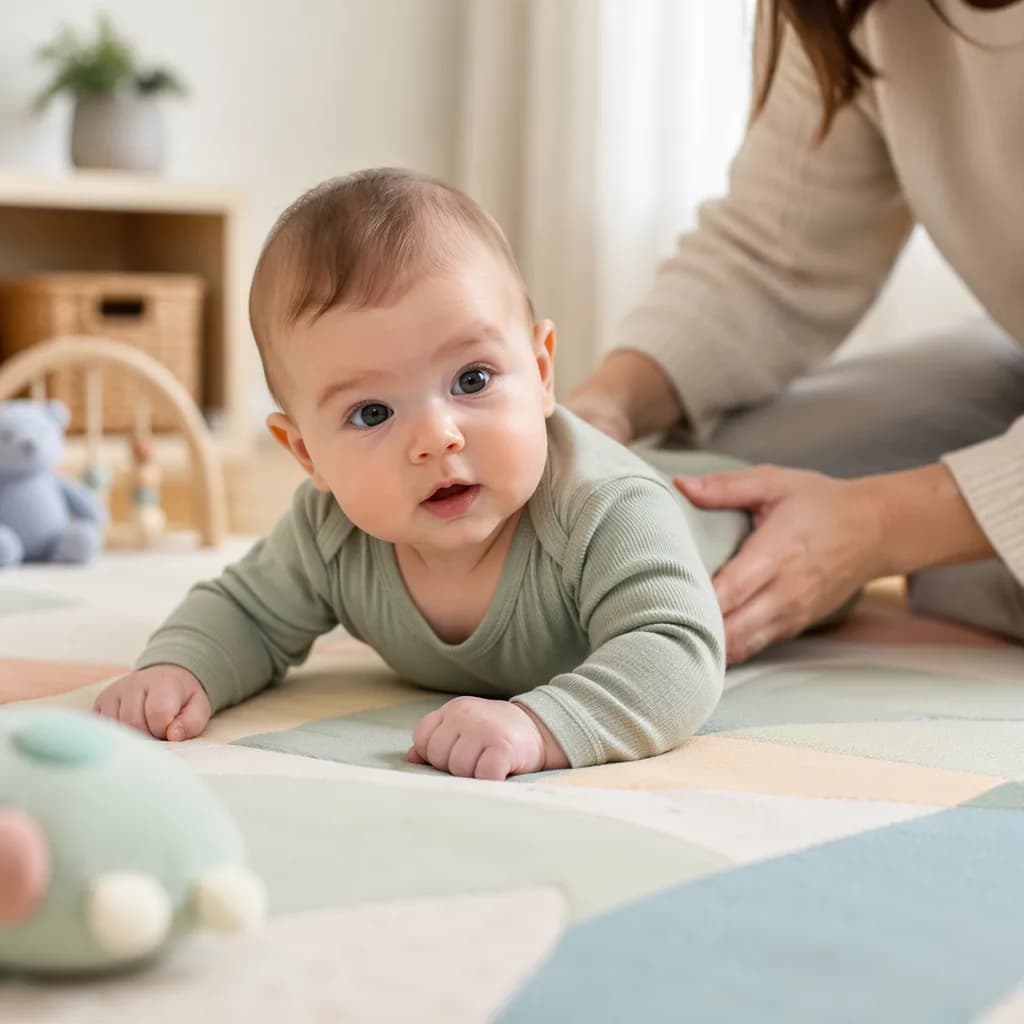
When do babies roll over?
Most babies roll from tummy to back around 3 to 5 months, then from back to tummy around 5 to 7 months. Tummy-to-back usually comes first because it can happen with a little push from the arms, shoulders, and head. Back-to-tummy often takes more strength and coordination.
Some babies roll earlier. Some take longer. That range can still be normal, especially if your baby was born early or hasn’t had many chances to practice on a firm, safe floor. If your baby was premature, use corrected age when thinking about the rolling timeline. So if your baby is 5 months old but was born 2 months early, you’d look closer to the 3-month range for expectations.
Rolling is one of the first big motor milestones because it shows your baby is building neck, shoulder, core, and hip strength. Those same muscles matter later for sitting, crawling, and all the wiggly floor skills in between. If you’re watching the next steps too, you may like When Do Babies Sit Up? Timeline, Signs, Practice and When Do Babies Crawl? Timeline, Signs, and Tips for Parents.
One funny thing: the first roll may look like an accident. Your baby might tip over during tummy time, surprise themselves, and then not do it again for days or even weeks. That’s okay. Practice turns a random roll into an on-purpose skill.
For a fuller age-by-age guide, see When Do Babies Roll Over? Timeline and Safety Tips.
Rolling over timeline by age
Rolling over usually builds in small, wiggly steps. One week your baby is only turning their head during tummy time, and a few weeks later they may surprise everyone by tipping right over.
0 to 2 months: Your baby may turn their head from side to side during tummy time and start lifting their chin for a second or two. It can look tiny, but this is real practice. Those little head turns help them begin learning where their body is in space.
2 to 3 months: Many babies start pushing up on their forearms. Some accidentally roll from tummy to back because their head leads the movement and the rest of the body follows. It may happen once, then not again for a while. That’s normal.
3 to 5 months: Tummy to back rolling often shows up during this stretch as babies gain better head control and shoulder strength. You might notice your baby rocking on their belly, leaning to one side, or getting one arm tucked underneath them right before a roll.
5 to 7 months: Back to tummy rolling often comes next because it takes more core control and coordination. This one can involve lots of leg lifting, hip twisting, and frustrated grunting. If you’re tracking the bigger motor picture, our guide to When Do Babies Sit Up? Timeline, Signs, Practice pairs well with this stage.
7 months and beyond: Many babies can roll both ways, pivot on their belly, and start getting ready for sitting, crawling, or scooting. Rolling becomes less of a “milestone moment” and more of a way to get to a toy across the blanket. For what often comes next, you may like When Do Babies Crawl? Timeline, Signs, and Tips for Parents.
A baby who loves floor play may practice rolling more often than a baby who spends more time in seats, swings, or carriers. If you want the full safety picture too, here’s our broader guide to When Do Babies Roll Over? Timeline and Safety Tips.
Signs your baby is getting ready to roll
Rolling often starts with little practice moves that look small at first. You might notice them during tummy time, on a play mat, or during a diaper change when your baby suddenly seems very interested in turning toward something.
One of the clearest signs is stronger tummy time. Your baby may lift their head and chest, then push up on their hands or forearms like they’re trying to get a better view of the room. That upper body strength helps them shift weight, which is a big part of rolling.
On their back, you may see more wiggling with purpose. They might rock side to side, kick both legs strongly, or bring their hands to their feet and grab their knees. Those “happy baby” moves aren’t just cute. They help your baby learn how their hips, belly, and legs work together.
Here’s a real-life example: your baby is lying on their back, spots a crinkly toy just out of reach, twists their shoulders toward it, kicks hard, and suddenly ends up halfway onto their side. It may surprise both of you.
You may also notice your baby twisting toward a toy, your voice, or a bright patch of light. That reaching and turning can be an early hint that a roll is coming soon. If you’re watching this stage closely, you may also like When Do Babies Roll Over? Timeline and Safety Tips.
Rolling is one step in a bigger pattern of movement. After this, many babies keep building toward sitting and crawling, so When Do Babies Sit Up? Timeline, Signs, Practice and When Do Babies Crawl? Timeline, Signs, and Tips for Parents can be helpful next reads.
Tummy time tips that help rolling happen safely
Tummy time doesn’t have to be a big production. Tiny, steady practice counts.
Start with short sessions, even 1 to 2 minutes at a time, several times a day. A minute after a diaper change, another minute before a nap routine, another little try in the afternoon. That’s enough to help your baby get used to the feeling without turning it into a battle.
Put your baby on a firm, flat surface while they’re awake and supervised. A clean blanket on the floor works well. The floor gives their body something steady to push against, which matters when they’re learning to lift their head, shift weight, and eventually roll. Soft couches, pillows, and beds make it harder for babies to practice safely.
If your baby cries the second their belly touches the floor, try chest-to-chest tummy time. Recline on the couch, place your baby on your chest, and let them practice lifting their head while looking at you. Your face is the best motivation in the room.
You can also place a favorite toy slightly to one side, close enough to notice but not so far that it feels impossible. This encourages reaching and gentle weight shifting, which are part of the path toward rolling. If they start fussing hard, move the toy closer or pause. Practice works better when it feels doable.
Get down at eye level too. Seriously, try it. Babies often work harder for a parent’s face than for any toy, especially if you talk, smile, or make a silly sound. If you’re also watching for sitting skills, you may like this guide on when babies sit up.
Alternate sides during play. Put the toy on the left sometimes and the right other times, and switch which side you lie on when you’re face-to-face. This helps your baby practice turning both ways instead of always favoring one side.
Try not to prop your baby into a roll or pull their arm across their body. Gentle setup is fine, like placing a toy nearby or giving them room to move, but their muscles need to do the work. Rolling is one of those skills that builds into later movement, including the early body control babies use before crawling. If you’re curious about what comes next, here’s more on when babies crawl.
And if your baby spits up often, wait 20 to 30 minutes after feeding before tummy time. A little timing change can make practice much more comfortable.
For the bigger rolling picture, including timing and safety, see When Do Babies Roll Over? Timeline and Safety Tips.
How to make rolling practice safe at home
Rolling can arrive quietly. One minute your baby is rocking side to side, and the next they’ve flipped for the first time. So the safest place to practice is the floor, on a clean blanket or play mat, where there’s nowhere to fall.
Never leave your baby unattended on a couch, bed, changing table, or any raised surface, even if they haven’t rolled yet. That first roll can happen without warning, often when you’ve turned for a diaper or reached for wipes. If you need to step away, even for a second, place your baby in a safe spot like a crib, bassinet, or on the floor.
For sleep, keep things simple and safe. Always place your baby on their back to sleep. Use a flat, firm sleep surface, and keep the sleep space clear of pillows, loose blankets, bumpers, and stuffed animals.
Once your baby shows signs of rolling, stop swaddling for sleep. A swaddle can limit their arms, and babies need their arms free if they roll. A sleep sack with arms out is a good next step.
If your baby rolls onto their tummy independently during sleep and can roll both ways, you usually don’t need to flip them back every single time. Still, keep placing them on their back at the start of sleep. If your baby was premature or has any medical concerns, ask your pediatrician what they recommend.
During daytime practice, give your baby a little room. Move play gyms, toys, and pets away if they’re crowding the space or pulling your baby’s attention too much. One favorite toy placed just to the side is enough.
Rolling is one piece of a bigger movement puzzle. If you’re watching what comes next, you might also like When Do Babies Sit Up? Timeline, Signs, Practice and When Do Babies Crawl? Timeline, Signs, and Tips for Parents. For the full rolling overview, see When Do Babies Roll Over? Timeline and Safety Tips.
What if my baby rolls one way but not the other?
It’s very common for babies to prefer one rolling direction at first. Think of it a little like an adult reaching first with a favorite hand. One side may simply feel easier while your baby is still figuring out how to shift weight, tuck an arm, and move that wonderfully heavy head.
You can gently encourage the less-used side during supervised floor time. Place a favorite toy, your face, or a baby-safe mirror just off to that side so your baby has a reason to look and reach. Keep it playful. If they fuss, pause and try again later.
A few calm minutes often work better than one long practice session. For example, after each diaper change, you might spend two or three minutes helping your baby look toward the less-preferred side, then roll partway with your hand supporting their hip. Those tiny moments add up.
Do keep an eye out for patterns that seem more than preference. Persistent head turning to one side, flattening on one part of the head, or tightness in the neck can make rolling harder. If your baby always arches backward, seems stiff, or strongly resists turning one direction, it’s a good idea to ask your pediatrician or a pediatric physical therapist.
Rolling is one step in a bigger movement path, along with sitting, crawling, and more coordinated play. If you’re tracking what may come next, you may also like When Do Babies Sit Up? Timeline, Signs, Practice and When Do Babies Crawl? Timeline, Signs, and Tips for Parents.
When to call the pediatrician
Most babies don’t follow the calendar perfectly, so try not to panic over one missed week. What matters more is the pattern you’re seeing day after day.
Call your pediatrician if your baby isn’t rolling in either direction by around 6 to 7 months, especially if they also seem very floppy, unusually stiff, or uninterested in reaching for toys, faces, or anything nearby. A baby who isn’t rolling yet but is pushing up, turning toward sounds, reaching with both hands, and getting stronger may simply need more time. Still, it’s a fair question to bring up.
Ask sooner if your baby loses a skill they already had. For example, if they were rolling from tummy to back and suddenly stop, or they used to hold their head steady during tummy time and now can’t, don’t wait for the next routine visit.
It’s also worth calling if your baby strongly favors one side, uses one arm or leg much more than the other, or keeps one hand tightly fisted most of the time after the newborn months. Mention anything that feels repeated or noticeable, even if you’re not sure how to describe it.
If your baby was born early, their rolling timeline may be based on corrected age. Even then, you’re allowed to ask if something feels off. You know your baby’s everyday movements better than anyone.
Your pediatrician can check strength, muscle tone, head shape, and overall motor milestones. They may also talk with you about what comes next, like sitting, crawling, and early communication. If you’re tracking nearby milestones too, these guides may help: When Do Babies Sit Up? Timeline, Signs, Practice, When Do Babies Crawl? Timeline, Signs, and Tips for Parents, and When Do Babies Start Talking? Age-by-Age Milestones. You can also compare this with our full When Do Babies Roll Over? Timeline and Safety Tips guide.
Frequently Asked Questions
When do babies roll over for the first time?
Many babies first roll from tummy to back around 3 to 5 months. Back to tummy often happens around 5 to 7 months.
Is rolling from tummy to back first normal?
Yes. Tummy to back is often easier because babies can use their head and shoulders to start the movement.
Can a 2 month old roll over?
Some 2 month olds may accidentally roll from tummy to back, but consistent rolling usually comes later.
What should I do once my baby starts rolling?
Stop swaddling, use the floor for play, keep sleep spaces clear, and never leave your baby on a raised surface.
Do babies need tummy time to roll over?
Tummy time helps build the neck, shoulder, and core strength babies use for rolling, reaching, sitting, and crawling.
When should I worry if my baby is not rolling?
Ask your pediatrician if your baby is not rolling by 6 to 7 months, loses skills, seems very stiff or floppy, or strongly favors one side.
Frequently asked questions
When do babies usually roll over?
Which way do babies roll first?
How can I help my baby learn to roll?
What if my baby rolled once and then stopped?
When should I ask the pediatrician about rolling?
References
Sources
External research this article was grounded in.
- DO | English meaning - Cambridge Dictionarydictionary.cambridge.org
- DO vs. MD: What's the Differencewebmd.com
- When do babies roll over? A timeline and development guide | Huckleberryhuckleberrycare.com
Related reading
More from the journal → development
Newborn Reflexes Explained: What Parents Notice Early
Newborn reflexes can look surprising at first. Here’s what rooting, sucking, grasping, startle, and stepping reflexes mean in the early weeks.
13 min readJul 17, 2026 development
When Do Babies Roll Over? Milestones and Safe Practice
Most babies roll between 4-6 months, but the direction matters. Here’s what rolling usually looks like, how to practice safely, and when to ask for help.
10 min readJul 3, 2026- development
Tummy Time by Age: Newborn to Crawling Guide
A calm age-by-age tummy time guide, from sleepy newborn chest time to rolling, reaching, and early crawling practice.
14 min readJul 3, 2026