
When Do Babies Walk? Signs, Timeline, and Tips
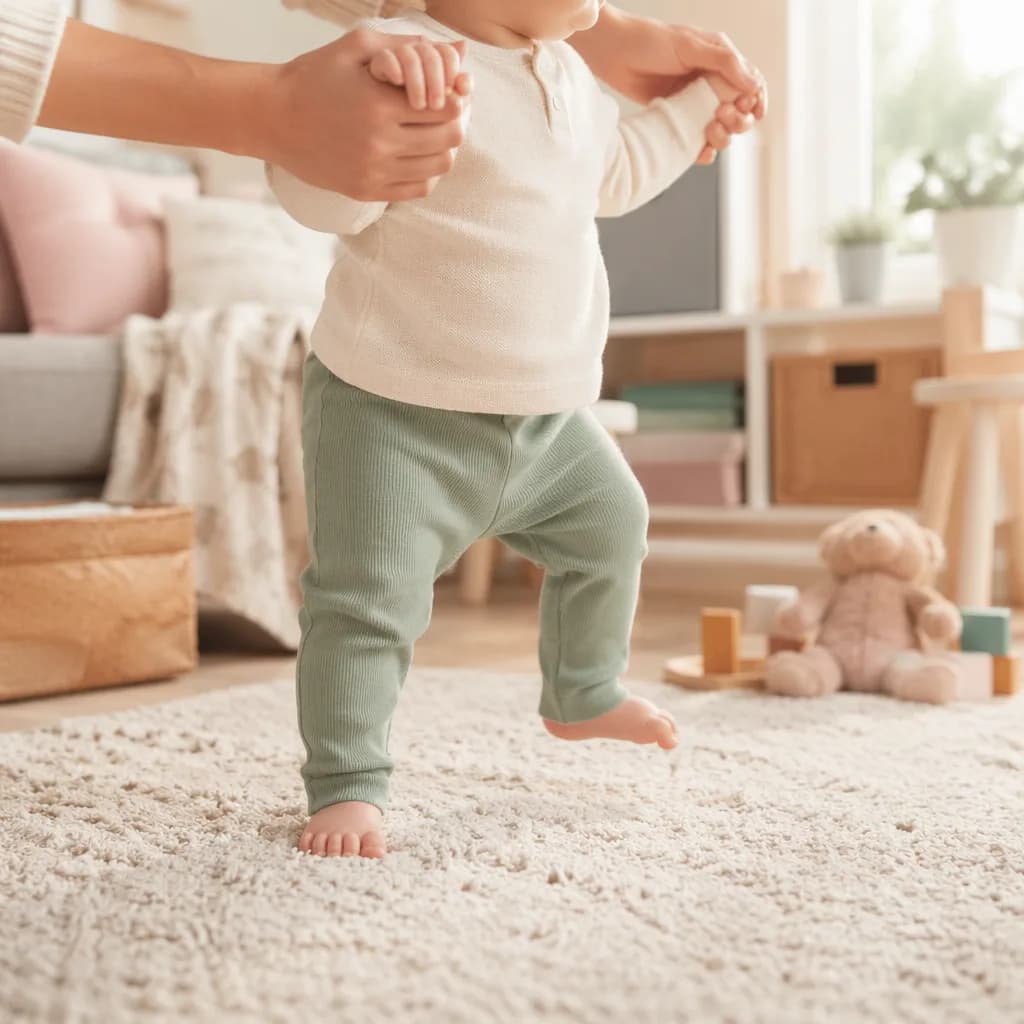
When do babies walk?
Most babies take their first independent steps sometime between 9 and 15 months, and many are walking well around 12 to 18 months. That’s a big window, and it can feel even bigger when every parent at the playground seems to be comparing dates.
Try not to let one milestone tell the whole story.
Walking is built on earlier skills: head control, rolling, sitting, crawling, pulling to stand, and cruising along furniture. If your baby is getting stronger, moving with purpose, reaching for things, trying new positions, and showing curiosity, later walking is often still within the normal range. You can think of it as a stack of skills, not a single finish line. If you’re watching those earlier steps, these guides on rolling, sitting, and crawling may help you see the bigger picture.
Here’s a real-life kind of example. One baby might cruise along the couch at 10 months, let go, and walk at 11 months. Another might crawl at lightning speed until 15 months, then suddenly stand up and take off across the room like they’ve been practicing in secret. Both patterns can happen.
If your baby was born early, prematurity can shift the walking timeline. In that case, adjusted age may matter more than the date on the calendar.
And while walking gets a lot of attention, it’s only one part of development. Babies are also working on sounds, gestures, and connection, which you can read more about in when babies start talking. If you happen to be saving sweet milestone notes for a baby book, even a name page like Rami: meaning & origin can become part of that story.
Walking timeline for babies by age
Babies don’t all walk on the same schedule. Some seem determined to get moving early, while others spend a long time perfecting sitting, crawling, or cruising before they let go. The age ranges below give you a gentle way to picture the progression.
4 to 6 months: This is the strength-building stage. Tummy time, rolling, kicking, and supported sitting all help babies work their core and legs. If your baby is pushing through their feet while you hold them upright for a moment, they’re practicing the muscles they’ll need later. Rolling often shows up around this season too, and you can read more in When Do Babies Roll Over? Timeline and Safety Tips.
6 to 9 months: Many babies start sitting more steadily, pivoting on their tummy, crawling, scooting, or pushing up onto hands and knees. Sitting gives them a better view of the room, which can make toys, pets, and older siblings suddenly very motivating. For more on that stage, see When Do Babies Sit Up? Timeline, Signs, Practice.
8 to 11 months: This is when furniture gets exciting. Babies may pull to stand, bounce while holding the couch, and begin cruising sideways along a coffee table or sofa. Cruising can look wobbly and awkward at first. That’s normal. They’re learning where their feet are.
9 to 15 months: Some babies take their first steps during this window. Those early baby first steps often come with a wide stance, stiff legs, and arms held high for balance, almost like a tiny tightrope walker.
12 to 18 months: Many babies gain steadier balance, walk across a room, squat down and stand again, and carry a small toy while moving. A favorite truck, stuffed animal, or even a name book like Rami: meaning & origin can become walking practice if they’re determined to bring it to you.
And if your baby skips crawling? That can still be normal, especially if they find another way to move and keep gaining strength. Some scoot, roll, or go straight to pulling up. For a closer look, visit When Do Babies Crawl? Timeline, Signs, and Tips for Parents. Speech grows on its own timeline too, which is why When Do Babies Start Talking? Age-by-Age Milestones can be helpful alongside motor milestones.
Signs baby will walk soon
Walking usually doesn’t come out of nowhere. Before those first independent steps, babies often spend a while practicing the pieces: balance, leg strength, weight shifting, and the confidence to let go for a second.
You might notice signs like:
- Pulling up to stand on the sofa, crib rails, a low table, or your hands. This is often one of the clearest “I’m working on it” moments.
- Cruising along furniture, especially the sofa or coffee table, while shifting weight from one foot to the other.
- Standing alone for a few seconds, then plopping down with a surprised look, or sometimes a very proud one.
- Squatting to pick up a toy, then standing back up while holding onto something. That squat-and-rise move takes real control.
- Taking little steps while holding one or both of your hands. Some babies want two hands for ages, then suddenly decide one hand is enough.
- Climbing over low cushions or trying to step over small obstacles, like a board book on the floor.
- Getting frustrated because crawling isn’t fast enough anymore. You may see more reaching, grunting, fussing, or lunging toward the toy, pet, or snack they want.
If your baby has recently been working on earlier movement skills, it can help to think of walking as part of a bigger chain. Rolling, sitting, crawling, pulling up, and cruising all build body awareness in different ways. You can read more about those earlier stages in When Do Babies Roll Over? Timeline and Safety Tips, When Do Babies Sit Up? Timeline, Signs, Practice, and When Do Babies Crawl? Timeline, Signs, and Tips for Parents.
A gentle parent note: these signs can show up weeks or even months before independent walking. That gap is normal. Some babies practice carefully for a long time, while others seem to go from cruising to toddling in a weekend.
And while you’re watching all this movement, language may be blooming too. If you’re curious, here’s our guide to When Do Babies Start Talking? Age-by-Age Milestones.
How to encourage baby first steps safely
First steps come from lots of small chances to practice. The best setup is simple: a safe, open patch of floor, a nearby grown-up, and no rush.
Give your baby plenty of floor time on a surface where they can move freely. Think living room rug with the coffee table pushed back, or a clear play mat with room to roll, pivot, crawl, kneel, and stand. Those earlier skills matter too. If your baby is still working on core strength or transitions, you may find it helpful to read When Do Babies Sit Up? Timeline, Signs, Practice, When Do Babies Roll Over? Timeline and Safety Tips, or When Do Babies Crawl? Timeline, Signs, and Tips for Parents.
Use favorite toys as gentle motivation. Place a soft block, crinkly book, or beloved stuffed animal just out of reach on a low couch or sturdy ottoman. That little bit of distance can invite pulling up, side-stepping, and cruising. Make sure the furniture won’t slide or tip.
You can also sit a few feet away and call your baby toward you. Smile. Clap softly. Hold out your hands. If they drop to their knees or crawl instead, that still counts as practice. Keep the mood playful rather than pressured, because babies can feel when everyone in the room is waiting for a “big moment.”
Bare feet are often best indoors when it’s safe. They help babies grip the floor, feel what’s underneath them, and make tiny balance adjustments with their toes. Socks can be slippery, so if the floor is cold, choose grippy socks.
Push toys can be useful, but only with close supervision. Pick one that’s stable, slow-moving, and won’t shoot across the room the second your baby leans on it. Skip baby walkers with wheels. They can increase injury risk and don’t teach the same natural walking patterns babies use when they balance and step on their own.
Keep practice short. A tired baby may get wobbly, fussy, or more likely to fall. Two cheerful minutes near the couch are better than ten frustrated ones.
Before practice, babyproof the space: sharp corners, stairs, cords, unstable furniture, and anything heavy that could tip. Then let your baby try, wobble, pause, and try again.
And yes, all this cheering counts as communication too. If you’re watching language grow alongside movement, here’s a helpful next read: When Do Babies Start Talking? Age-by-Age Milestones. If you’re naming a new baby while tracking milestones, Rami: meaning & origin is a sweet one to save.
What early walking and late walking can mean
Early walking can be completely normal. Some babies take those first steps before 10 months because they’ve had lots of practice, strong balance, and a real interest in being upright. If your baby has been pulling up, cruising along the couch, and trying little transfers from one piece of furniture to another, walking may simply be the next thing they’re ready to try.
Late walking can be normal too.
A baby who walks later than a cousin, sibling, or child at playgroup isn’t automatically behind. Temperament matters more than people often realize. Some babies are bold and willing to topple. Others are careful planners. They may stand, squat, cruise, and study the room for weeks before they decide, “Okay, I’ll let go now.”
Body build can also play a role. Some babies need more time to build the strength, balance, and coordination that walking asks for. And if your baby is a very efficient crawler, they may not feel much urgency. Crawling gets them to the toy basket just fine, thank you very much. If you’re watching that stage closely, our guide to when babies crawl can help you see the bigger picture.
What matters most is progress across milestones, not one date circled on the calendar. Think about your baby’s recent changes: Are they steadier than last month? More curious about standing? Better at shifting weight? That pattern tells you more than a side-by-side comparison at playgroup.
The same is true across baby development. Sitting, rolling, crawling, walking, and early communication all build in their own rhythm. You might find it helpful to look back at when babies roll over, when babies sit up, or when babies start talking as reminders that milestones usually unfold in steps.
Compare your baby to your baby. Last month’s wobbly stand becoming this month’s confident cruise is real progress, even if little Rami next door is already toddling across the room.
When to ask the pediatrician about walking
Most babies build walking in layers: rolling, sitting, crawling or scooting, pulling to stand, cruising, then those wobbly first steps. If one piece seems slow, it doesn’t automatically mean something is wrong. Still, it’s okay to ask early. A calm check-in can give you reassurance, a clearer plan, or a referral for practical support if your baby needs it.
Bring it up with the pediatrician if your baby isn’t pulling to stand by around 12 months, or if they aren’t taking independent steps by 18 months. You can say something simple at the visit: “She’ll stand if I hold her, but she isn’t pulling up on the couch yet. Should we watch this or do anything now?”
Call sooner if movement looks uneven or unusual. That includes one side seeming much stronger than the other, dragging one leg, or movement that looks very stiff or very floppy. Also mention persistent toe walking, especially if your child can’t stand with their feet flat on the floor.
Another reason to call promptly: your baby loses a skill they already had. If they were standing at the coffee table or cruising along the sofa and then stop doing it, that’s worth discussing.
Early evaluation doesn’t mean anyone is assuming something serious is happening. Sometimes it simply helps a baby get physical therapy, positioning ideas, or home practice that fits into regular life. Think: where to place toys, how to encourage safe cruising, or which shoes to skip indoors.
If your baby was born premature, ask whether you should use adjusted age when thinking about walking and other milestones. That same question can be helpful across other skills too, like the timelines for sitting up, rolling over, crawling, and talking. And if you’re saving baby names while you wait for those first steps, Rami is a sweet one to tuck away.
Shoes, falls, and everyday safety
For first steps indoors, barefoot is usually best on safe surfaces. Tiny toes can spread, grip the floor, and help your baby feel where their body is in space. Socks can be slippery, so if your floors are slick, bare feet or grippy socks are the safer pick.
Outside, shoes are more about protection than “teaching” walking. Look for lightweight shoes with flexible soles, roomy toes, and a secure fit that doesn’t slide off with every step. Skip stiff high-top shoes unless your clinician recommends them for a specific reason.
Early walking is wobbly. Very wobbly.
You’ll see wide steps, arms held up for balance, sudden sitting, and plenty of small falls. That’s normal practice, not failure. It can look a bit like the trial-and-error stages you may remember from rolling, sitting, and crawling. Babies learn by repeating a movement, adjusting, then trying again.
Set up practice spots that make falling less dramatic. Rugs, foam mats, or carpet can soften those plops. If your baby cruises around the coffee table, pad the sharp corner and move the ceramic mug before practice time. Simple changes help you relax enough to let them try.
A few safety checks matter every day: use gates at stairs, anchor furniture, and keep chairs away from counters or windows. Babies who can walk, climb, or almost climb can surprise you fast.
And while walking gets lots of attention, it’s just one part of development. Communication keeps growing too, often in tiny daily moments, like the ones in baby talking milestones. Then suddenly they’re toddling over because someone said “Rami,” or any favorite name, from across the room.
Frequently Asked Questions
What is the average age for babies to walk?
Many babies take first steps around 12 months, but walking anytime from 9 to 18 months can be normal.
What are the first signs baby will walk soon?
Common signs include pulling to stand, cruising along furniture, standing briefly alone, squatting with support, and stepping while holding your hands.
Should I worry if my baby is not walking at 15 months?
Not always. Many babies walk between 15 and 18 months. Check with your pediatrician if you have concerns or notice stiffness, weakness, or uneven movement.
When should I call the doctor if my baby is not walking?
Call if your baby is not pulling to stand by 12 months, not walking by 18 months, loses skills, or moves one side very differently.
Do babies need shoes to learn to walk?
No. Bare feet are best indoors when it is safe. Shoes are mainly for outdoor protection and should be light and flexible.
Is crawling required before walking?
No. Some babies skip traditional crawling and still walk normally, as long as they are building strength and moving in other ways.
Are baby walkers safe for learning to walk?
No. Wheeled baby walkers can cause injuries and do not help babies learn natural walking skills.
Frequently asked questions
When do babies usually start walking?
What are signs my baby is getting ready to walk?
Is it normal if my baby walks later than other babies?
How can I help my baby learn to walk?
When should I talk to the pediatrician about walking?
References
Sources
External research this article was grounded in.
- DO | English meaning - Cambridge Dictionarydictionary.cambridge.org
- DO vs. MD: What's the Differencewebmd.com
- Learning to walkcambspborochildrenshealth.nhs.uk
- When Do Babies Start Walking? Signs It’s Soonhealth.clevelandclinic.org
Related reading
More from the journal → development
When Do Babies Roll Over? Milestones and Safe Practice
Most babies roll between 4-6 months, but the direction matters. Here’s what rolling usually looks like, how to practice safely, and when to ask for help.
10 min readJul 3, 2026- development
Tummy Time by Age: Newborn to Crawling Guide
A calm age-by-age tummy time guide, from sleepy newborn chest time to rolling, reaching, and early crawling practice.
14 min readJul 3, 2026 - development
When Do Babies Start Crawling? Signs and Stages Guide
Most babies crawl between 7 and 10 months, but the signs can start earlier. Here’s what to watch for and how to support safe floor practice.
12 min readJul 3, 2026