Quick facts
Last updated July 2026
What it means
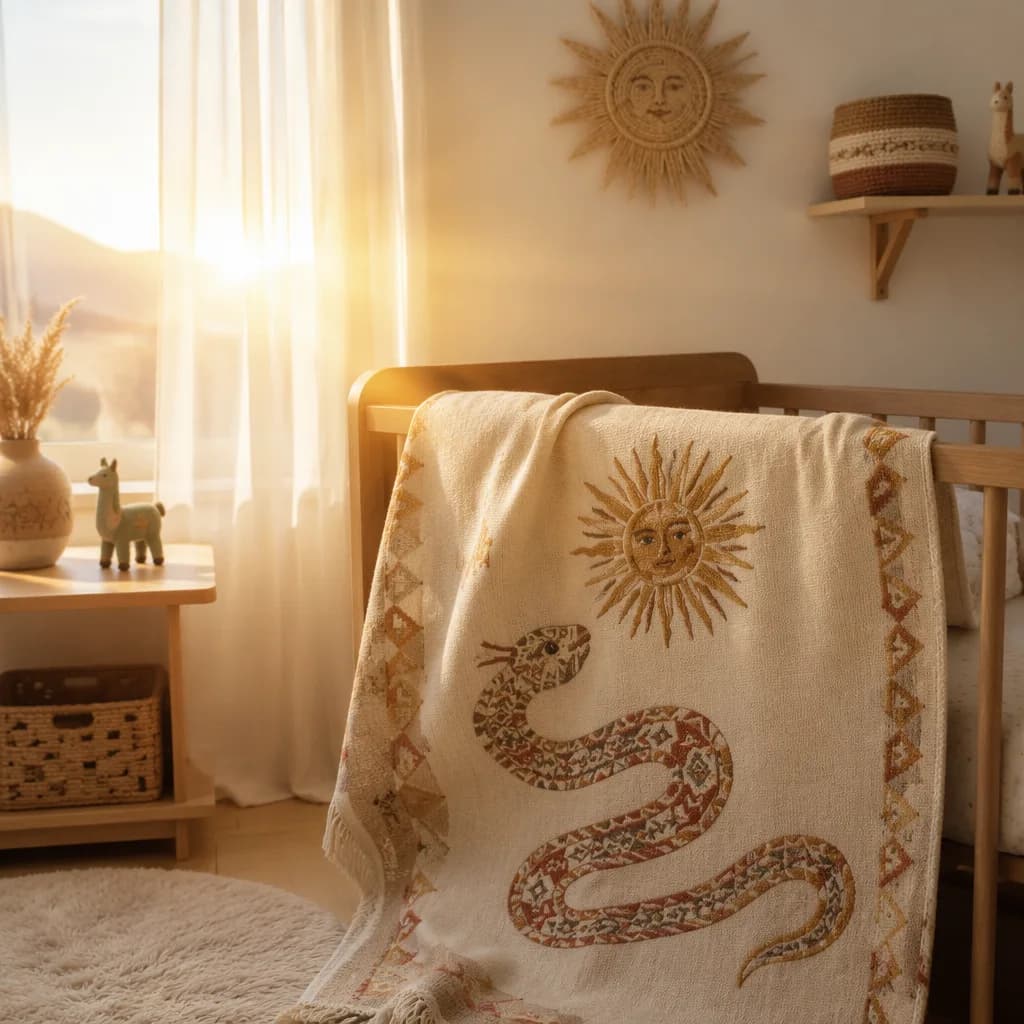
“Inti Amaru combines Inti, associated with the Inca sun god and the Quechua word for sun, with Amaru, a Quechua and Aymara name often connected with the serpent and immortality. Together, it suggests sunlit strength, life-giving energy, wisdom, and a deep tie to Andean tradition.”
Inti Amaru is a striking Andean name with a bright, grounded feeling. Inti is best known as the ancient Inca sun god and is also glossed as “sun” in Quechua sources. In Inca belief, Inti was a central solar figure, connected with warmth, light, growth, and the life-giving force of the sun. For a parent, Inti can feel like a name that carries hope without sounding soft. It’s small, clear, and full of presence. Amaru adds a different kind of strength. In Quechua, Amaru is commonly given the meaning “snake” or “serpent,” while Aymara sources also connect it with the idea of “immortal.” In Andean cultural context, the serpent is not just an animal image. It can point to wisdom, fertility, the earth, transformation, and the link between visible life and the spiritual world. That gives Amaru a layered, old-soul quality. Put together, Inti Amaru feels balanced: sun above, serpent below. Light and earth. Warmth and mystery. It’s the kind of name that sounds poetic, but still simple enough to say every day across the kitchen table. Because these names come from Indigenous Andean languages and Inca cultural memory, they deserve care. “Native American” can be a broad label, and here the more precise setting is the Indigenous Andes of South America, especially Quechua and Aymara language traditions. If this name connects to your family’s heritage, it may feel especially meaningful. If you’re drawn to it from outside the culture, it’s wise to learn the history behind it and use it respectfully, not as a costume or a trendy exotic sound.
Why parents love it
Parents often love Inti Amaru because it feels meaningful from the first sound. Inti is short, sunny, and easy to say. Amaru is deeper and more mysterious, with its serpent meaning and Andean cultural weight. Together, they make a name that feels warm and strong, like a child who has both spark and steadiness. It’s also a rare choice. If you’ve sat with lists of popular boy names and felt like everything sounded too familiar, Inti Amaru gives you something different without feeling invented. The sounds are clean: EEN-tee ah-MAH-roo. A teacher can learn it. Grandparents can practice it. A child can grow into it. The best reason to choose it is connection. Maybe your family has Quechua, Aymara, Peruvian, Bolivian, Ecuadorian, or broader Andean roots. Maybe you’re honoring a love for Indigenous history with real care. Either way, this is a name that asks for respect. It gives your son a story worth telling: sunlight, earth, wisdom, and cultural memory held in five beautiful syllables.
Heritage
Inti Amaru carries strong Andean cultural and spiritual associations. Inti is tied to the ancient Inca sun god, a major figure in Inca religion and state identity. Sources describe Inti as the patron deity of the Inca Empire and connect him with solar power, light, warmth, and life-giving energy. In family-name terms, that gives Inti a bright and protective feeling, like naming a child for the steady sun that helps crops grow and days begin. Amaru brings in another powerful image from Andean tradition: the serpent. In Quechua, Amaru is understood as “snake” or “serpent,” and in cultural writing it is often described as a symbol linked with wisdom, fertility, the earth, the underworld, transformation, and the bridge between earthly and spiritual life. The name is also historically familiar through Túpac Amaru, the last Sapa Inca of the Neo-Inca State, whose name appears in records with several spellings. There are a few sensitivities worth holding gently. These are not generic “nature names.” They come from living Indigenous language communities and from histories shaped by conquest, resistance, religion, and survival. Some families may welcome the name as a proud cultural connection. Others may feel cautious if it’s used without any understanding of its roots. A good rule is simple: say it correctly, know what it means, and be ready to teach your child the story behind it with respect.
Not enough popularity data to chart yet.
Inti’s sun meaning gives the name a warm, bright feeling that suits a child who brings light into a room.
Amaru’s serpent symbolism is often connected with knowledge and the deeper rhythms of the natural world.
The name balances the sun with earth-connected serpent imagery, giving it a steady, rooted quality.
Its link to Inca history and Andean symbolism makes the name feel brave without needing to sound loud.
Inti Amaru has a layered meaning, the kind of name that invites a child to ask questions about language, place, and ancestry.
Original
Inti Amaru
Transliterations
Mateo is familiar and gentle, which helps the rare Andean name feel easy to carry in everyday life.
Sol repeats the sun imagery in a simple, Spanish-friendly way.
Kai is short and open-sounding, so it doesn’t compete with the rhythm of Inti Amaru.
Rafael adds a classic, graceful ending to a name with ancient Andean roots.
Noé is soft, compact, and easy to pronounce beside the stronger sounds of Amaru.
Pair two names and see how they sound, flow, and feel together.
Generate a soothing personalised bedtime story starring your child.
Reveal the life-path and destiny numbers hidden in a baby name.
Playful, name-based personality sketch to share with friends.
No stories for Inti Amaru yet. Be the first!