
Baby Eczema Basics: Triggers, Care, and Doctor Signs
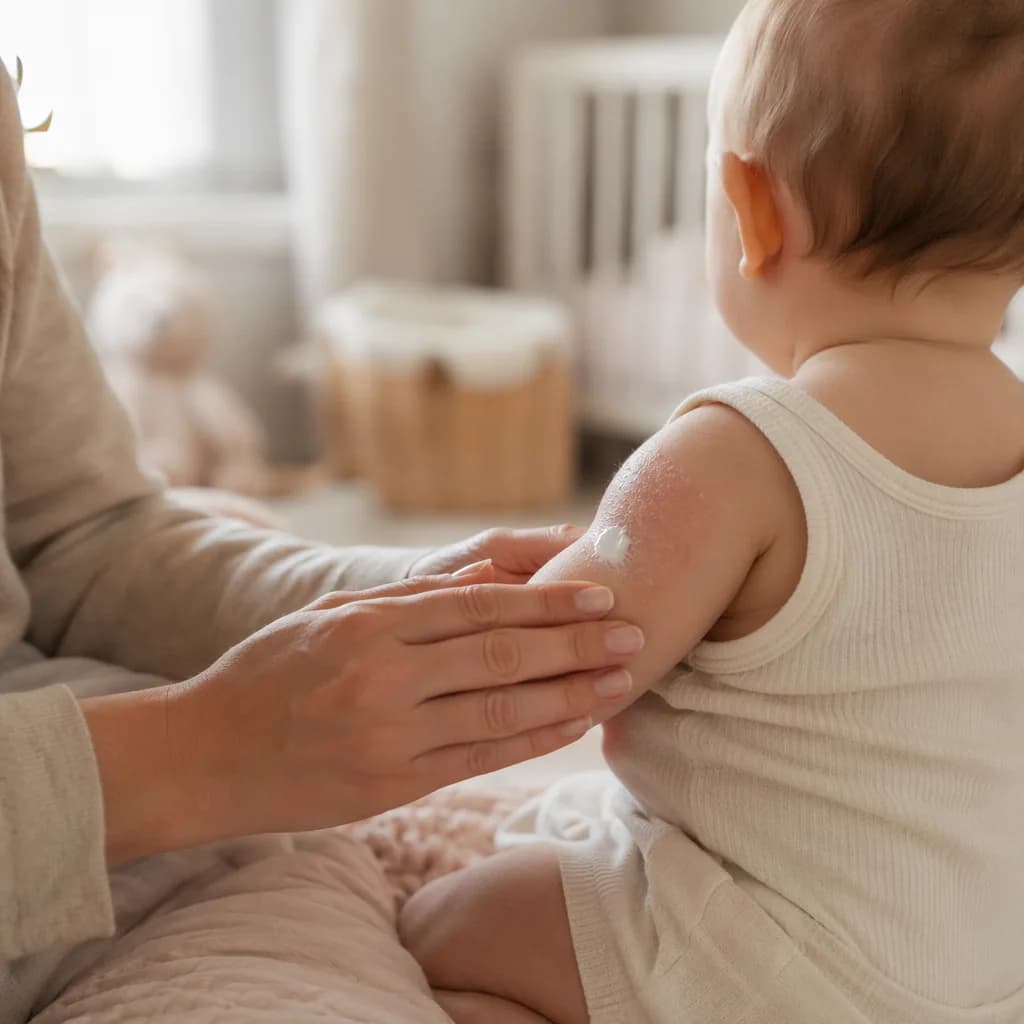
What baby eczema looks like
Baby eczema, also called atopic dermatitis, is a common inflammatory skin condition in babies. It often shows up as dry, itchy, red, rough, or scaly patches. Sometimes the skin looks cracked or irritated, and in stronger flare-ups it may crust or weep.
Location can shift as babies grow. In younger babies, eczema often appears on the cheeks, scalp, arms, and legs. In older babies, it may settle more into the creases of the elbows and knees, or around the wrists and ankles. If you’re sorting out what’s happening on the face specifically, our guide to Baby Eczema Basics: Triggers, Care, and Doctor Tips can help you think through common patterns.
A simple baby dry skin rash can look similar at first. The difference is usually the pattern. Basic dryness may improve quickly once you moisturize consistently. Eczema tends to itch, come back, and flare in patches, especially after contact with a trigger like saliva, sweat, dry air, fragrance, or rubbing.
For example, picture a 5-month-old with rough pink patches on both cheeks. The patches look worse after drooling and rubbing against a sleeve during naps. That kind of repeated flare pattern can point more toward eczema than everyday dryness, especially if it keeps returning.
Eczema doesn’t look the same on every baby’s skin. On lighter skin, it may look red or pink. On darker skin tones, it may look purple, gray, brown, or simply darker than the surrounding skin, which can make it easier to miss.
And yes, drool can complicate things. If you’re also seeing chewing and extra saliva, our Teething Symptoms: Signs, Remedies, and Soothing Tips guide may be useful too.
Common triggers for infant eczema
Eczema-prone skin is already sensitive, so a trigger doesn’t always cause eczema from scratch. More often, it irritates skin that’s already having a hard time holding onto moisture, and then a flare shows up.
Some everyday triggers are surprisingly ordinary: dry air, heat, sweat, drool, saliva, scratchy fabrics, fragranced soaps, bubble bath, laundry products, fabric softeners, baby powder, and harsh wipes. Fragrance is a big one to watch, especially in soaps, shampoos, detergents, and wipes. If your baby’s skin seems angrier after bath night or laundry day, that’s useful information.
Environmental irritants can play a part too. Pet dander, dust, pollen, dry air, and cigarette smoke can bother some babies. Sweat and scratching can also make eczema worse, which feels especially unfair because itchy skin makes babies want to rub and scratch more.
Teething can be a sneaky trigger around the mouth. When drool sits on the cheeks, chin, and neck folds, it can irritate the skin and make eczema flare there. A thin layer of plain petroleum jelly around the mouth before feedings and naps may help protect that area. If teething is in the mix, you may also like our guide to teething symptoms, signs, remedies, and soothing tips.
Food can feel scary in this conversation. Food allergies can be linked with eczema in some babies, but don’t cut major foods without talking with your pediatrician first. Babies need steady nutrition, and guessing can make mealtimes stressful fast.
A simple flare note can help you spot patterns. Jot down the date, weather, any new soap or lotion, laundry changes, food changes, illness, and where the rash showed up. This is the same kind of calm tracking that helps during fevers, like in our baby fever guide. For a broader care plan, see Baby Eczema Basics: Triggers, Care, and Doctor Tips.
Daily care tips that calm baby eczema
Baby eczema care usually comes down to a few repeatable habits. Nothing fancy. Just gentle skin care, done the same way often enough that your baby’s skin gets a chance to settle.
Start with the bath. Keep it short, lukewarm, and calm, usually 5 to 10 minutes. Hot water can make already-dry skin feel worse, so think warm bath, not steamy bathroom. Use a mild, fragrance-free cleanser only where it’s truly needed: diaper area, hands, neck folds, and any visibly dirty or smelly spots. No scrubbing. Your hand or a soft cloth is enough.
After the bath, pat skin so it’s still a little damp, then apply moisturizer within a few minutes. This timing matters because it helps trap moisture before it evaporates. Choose a thick, fragrance-free cream or ointment rather than a thin lotion. Lotions can disappear quickly, and some may sting irritated skin. Creams and ointments tend to sit on the skin longer and hold moisture better, which is exactly what eczema-prone skin needs.
Moisturizer isn’t just an after-bath thing, either. Aim for at least twice daily, and more often on rough patches if your pediatrician agrees. If you’re building a broader routine, this pairs well with the basics in Baby Eczema Basics: Triggers, Care, and Doctor Tips.
Clothing can help, too. Dress baby in soft cotton layers, so you can add or remove warmth without letting them overheat during sleep or play. Sweat is a common trigger, and some babies flare after getting too warm in pajamas, car seats, or a carrier. Simple cotton often beats bulky or scratchy fabrics.
Scratching is the hard part. Keep nails short and smooth. If your baby is scratching enough to break the skin, try soft mittens or pajamas with fold-over cuffs, especially overnight. Broken skin is more vulnerable, so this small step can make a real difference.
If drool is part of the problem, especially during teething, protect the cheeks and chin before naps or feeds with a thin layer of plain petroleum jelly. It creates a simple barrier between saliva and skin. For more drool-heavy days, you may also find Teething Symptoms: Signs, Remedies, and Soothing Tips helpful.
And if a rash suddenly looks infected, or your baby seems unwell alongside skin symptoms, it’s time to call your clinician. The same goes for fevers, which can feel confusing fast. Here’s a calm guide for that moment: Baby Fever Guide: What to Track and When to Call.
What to avoid during a flare
During an eczema flare, baby skin is already irritated, so this is the moment to keep things plain and predictable.
Skip fragranced lotions, essential oils, botanical blends, and adult skin care products. They may smell lovely, but fragrance is a common trigger, and “natural” doesn’t always mean gentle for infant eczema. A lavender lotion or citrusy oil can still sting, dry, or worsen a rough patch.
Bath time should be simple too. Avoid bubble baths and heavily scented washes, and don’t scrub scales or flaky spots, even if they look like they might “come off.” Use lukewarm water, keep baths short, and wash only the dirty or smelly areas with a mild, fragrance-free cleanser. Too much soap can strip already-sensitive skin and make that tight, itchy feeling worse.
Be careful with steroid creams from the drugstore. Topical corticosteroids can help eczema, but babies are more sensitive to them than adults, so ask your pediatrician or dermatologist before using one, especially on the face or diaper area.
I’d also skip internet remedies like apple cider vinegar, lemon juice, or baking soda baths. Irritated baby skin can burn easily, and these can make a flare feel worse instead of better.
If you’re sorting out what might be triggering the rash, our Baby Eczema Basics: Triggers, Care, and Doctor Tips guide can help you track patterns. And if your baby seems unwell along with skin changes, keep our Baby Fever Guide: What to Track and When to Call handy.
When to ask a pediatrician
A little dry patch can often be handled with gentle care for a few days: lukewarm baths, fragrance-free cleanser only where needed, and a thick fragrance-free cream or ointment right after bathing. But if the rash isn’t improving after several days, or it keeps coming back in the same angry pattern, it’s reasonable to call your pediatrician.
Call sooner if you see signs that the skin may be infected. Watch for yellowish crusting, oozing, pus-filled blisters, sores, swelling, warmth, increasing redness, pain, fever, or a baby who’s suddenly much fussier than usual. Eczema can make it easier for germs to get into the skin, so these changes deserve attention. If fever is part of the picture, it can help to track details like temperature, timing, and behavior. This baby fever guide can help you organize what you’re seeing before you call.
Get urgent care right away for a rash that spreads rapidly, trouble breathing, facial swelling, or hives after a food or medicine. Those symptoms need quick medical help.
Sleep and feeding matter too. If itching is waking your baby over and over, or the rash around the face is making feeding uncomfortable, that’s enough reason to ask for help. Babies shouldn’t have to scratch until they bleed before the rash is treated.
Your pediatrician may recommend a medicated ointment, treatment for infection, an allergy evaluation, or a referral to a dermatologist. Dermatologists may also guide families on options like topical corticosteroids, including how much to use and how often, since babies’ skin can be more sensitive than adult skin.
If you’re still sorting out daily care, triggers, and what a flare can look like, our full guide to baby eczema basics is a helpful next read. And if this is all happening during a rough week of teething or postpartum changes, be gentle with yourself. Parenting rarely hands us one issue at a time.
How pediatricians may treat eczema in babies
Most baby eczema care starts with the skin barrier. That usually means short lukewarm baths, a mild fragrance-free cleanser only where baby is dirty or smelly, no scrubbing, and moisturizer right after the bath. Thick creams and ointments tend to work better than lotions or oils. Many babies also need moisturizer twice a day, or more often when skin feels dry.
Your pediatrician may also help you look for triggers. Sweat, saliva, scratching, dry air, tobacco smoke, pet dander, pollen, fragranced soaps, laundry products, wipes, baby powder, and certain fabrics can all make eczema flare. If drool is irritating your baby’s cheeks or chin, a simple example is applying plain petroleum jelly around the mouth before feedings and naps. For more day-to-day ideas, see Baby Eczema Basics: Triggers, Care, and Doctor Tips.
When eczema is inflamed and itchy, a mild prescription topical steroid may be used for a short period. Babies are more sensitive to corticosteroids than adults, so follow the exact directions for how much to use, how often, and for how many days. This matters most on delicate areas like the face, neck folds, and diaper area.
In some cases, your child’s clinician may consider a non-steroid prescription cream, depending on your baby’s age and where the rash is showing up. If there are signs of infection, such as pus-filled blisters, sores, or yellowish-orange crusting, treatment may be needed. Antibiotics should only be used when a bacterial infection is suspected and your clinician recommends them.
If the rash comes and goes, bring photos to the appointment. Just like tracking symptoms for a fever can help during a call, photos give your doctor a clearer picture. This Baby Fever Guide: What to Track and When to Call has the same practical spirit: write down what you see, when it started, and what helped.
Baby eczema and food allergies
It’s very common to wonder if a rough eczema patch means a food allergy is hiding underneath. Many babies with eczema do not have food allergies, so try not to panic or start cutting foods right away.
Still, moderate to severe eczema can raise the chance of a food allergy. Your pediatrician may ask what your baby has eaten, what happened afterward, and whether symptoms showed up quickly or hours later. A simple note in your phone can help: food, time eaten, skin changes, tummy symptoms, breathing symptoms, and photos if there’s a rash. We use the same practical tracking mindset for other baby worries too, like in our Baby Fever Guide: What to Track and When to Call.
Call your pediatrician for advice if you notice hives, vomiting, wheezing, coughing, swelling of the lips or eyelids, or a sudden eczema worsening soon after eating. Those details matter.
Don’t remove milk, egg, peanut, wheat, soy, or other major foods from your baby’s diet without medical guidance. Cutting foods can make feeding harder, and your baby’s doctor can help decide what’s actually needed. If your baby is breastfed, don’t start a restrictive diet yourself unless the pediatrician recommends it.
If eczema is persistent, ask about early allergen introduction, especially before peanut. And for the skin side of things, our Baby Eczema Basics: Triggers, Care, and Doctor Tips can help you build a calmer daily routine.
Frequently Asked Questions
Is baby eczema the same as dry skin?
No. Dry skin may feel rough or flaky, but baby eczema often comes in itchy, inflamed patches that return or worsen with triggers.
What is the best moisturizer for infant eczema?
A thick, fragrance-free cream or ointment is usually best. Many families use petroleum jelly or a ceramide cream after baths and before bed.
Can baby eczema go away on its own?
Sometimes it improves with age, but flares often need steady skin care. If it keeps coming back or baby is scratching, ask your pediatrician.
How often should I bathe a baby with eczema?
Many babies do well with short lukewarm baths, followed right away by thick moisturizer. Your pediatrician can suggest a schedule for your baby.
Can teething make eczema worse?
Yes. Drool from teething can irritate the cheeks, chin, and neck. A thin layer of petroleum jelly can help protect the skin.
When is baby eczema an emergency?
Get urgent help for trouble breathing, facial swelling, widespread hives, fever with a painful rash, or a rash that spreads very quickly.
Frequently asked questions
What does baby eczema usually look like?
What can trigger eczema flare-ups in babies?
How can I care for baby eczema at home?
When should I call the doctor about baby eczema?
References
Sources
External research this article was grounded in.
Related reading
More from the journal → health
Newborn Congestion: What to Track and When to Call
Newborn congestion can sound scary. Learn what to track, what may help, and when feeding, fever, or breathing changes mean it’s time to call.
8 min readJun 13, 2026 health
Baby Eczema Basics: What to Track and When to Call
Learn what baby eczema can look like, what symptoms to track, and when it’s time to call your pediatrician for itchy, inflamed, or worsening skin.
10 min readJun 11, 2026 health
Newborn Poop Color Guide: What Parents Notice
Newborn poop can change quickly. Here’s what common diaper colors may mean, plus when red, white, gray, or clay-colored stool needs a call.
11 min readJun 11, 2026