
Baby Eczema Basics: What to Track and When to Call

What baby eczema can look like
Baby eczema, also called atopic dermatitis, can show up as dry, rough, itchy skin that looks inflamed or irritated. You might notice scaly patches, small raised bumps, redness, or areas that look crusty or oozy when it’s more severe. The itching is often the part parents notice most, because a baby may rub their face on your shirt, scratch at their legs, or wake more often because their skin feels uncomfortable.
It can appear in different places depending on your baby’s age and skin patterns. Common spots include the cheeks, scalp, arms, legs, trunk, and skin folds. Some babies get it behind the ears or around the elbows and knees. Skin folds can be especially tricky because warmth and rubbing can make irritation look angrier.
Eczema doesn’t look the same on every skin tone. On lighter skin, irritated patches may look pink or red. On darker skin, they may look purple, gray, brown, darker than the surrounding skin, or slightly ashy and rough. Texture and behavior matter, not just color.
A typical baby dry skin rash may look like light flaking or roughness that improves with gentle moisturizing. Eczema is more likely when the same areas keep flaring, seem very itchy, look inflamed, or disturb sleep. Repeated scratching, rubbing, oozing, or crusting are also clues that it may be more than simple dryness.
Only a clinician can diagnose eczema, so trust your gut if something feels off. If you’re already tracking symptoms the way you might with a temperature in our Baby Fever Guide: What to Track and When to Call, do the same with skin: where it is, what it looks like, what seems to trigger it, and whether sleep is affected. For next steps, see Baby Eczema Basics: Triggers, Care, and Doctor Tips.
What to track before your baby's appointment
A baby eczema appointment goes better when you can show patterns, not just describe “a rash that comes and goes.” Baby eczema can look dry, scaly, red, itchy, inflamed, bumpy, blistered, crusted, or oozy in more severe cases, and it often shows up on the face, behind the ears, and around elbows and knees.
Start with a simple rash map. Write down where you see it: cheeks, neck folds, tummy, wrists, backs of knees, diaper area. Then note whether it stays in the same spots, spreads, or seems to move around. If the rash is calm on appointment day, your notes can still help your pediatrician understand what’s been happening.
Next, track timing. Did the flare happen after a bath? After a new detergent? During cold weather? After sweating in a car seat or stroller? Eczema in infants can be affected by environmental triggers like irritants, allergens, stress, soaps, detergents, and temperature changes, so those little details matter. If you’re already reading up on patterns, our Baby Eczema Basics: Triggers, Care, and Doctor Tips guide pairs well with this checklist.
Watch for itching signals too. Babies can’t tell us, “My skin is itchy,” so look for cheek rubbing on sheets, scratching during diaper changes, extra fussiness at bedtime, or waking more often. Sleep disruption from itching is one reason to call the pediatrician.
Photos help a lot. Take clear pictures in the same lighting every few days, ideally from the same distance. A cheek rash at breakfast by the window is easier to compare if you repeat that setup.
Make a skin-contact list:
- Soap and shampoo
- Lotion or moisturizer
- Wipes
- Diaper cream
- Laundry detergent
- Fabric softener
- Any clothing material that seems irritating
Also jot down what helped and what didn’t: moisturizer timing, bath length, switching pajamas, avoiding a product, or any medicines already recommended by a doctor. This kind of tracking is useful for other baby symptoms too, like in our Baby Fever Guide: What to Track and When to Call and Teething Symptoms: Signs, Remedies, and Soothing Tips.
And while you’re caring for baby’s skin, don’t forget yourself. If you’re noticing changes in your own hair or body after birth, Postpartum Hair Loss: What's Normal and What Helps may feel reassuring. For a softer break between appointments and tracking notes, you might even browse a name page like Rami: meaning & origin.
Simple skin care steps parents can ask about
Baby eczema can make skin dry, itchy, red, and inflamed, and it’s completely reasonable to want a clear plan. Use these ideas as discussion points with your pediatrician or dermatologist, not as a substitute for medical care, especially if the rash is worsening, oozing, crusting, or keeping your baby from sleeping.
Start with bath time. Ask whether short, lukewarm baths make sense for your baby, followed by gently patting the skin dry instead of rubbing. That tiny change can matter when skin is already irritated.
Right after bathing, while the skin is still slightly damp, ask about applying a thick, fragrance-free moisturizer. Many parents find this step easier if the moisturizer lives right next to the towel, so it becomes part of the routine before pajamas go on. For eczema-prone infant skin, ointments and creams are often more protective than thin lotions because they create a heavier barrier.
Clothing and laundry can be part of the conversation too. During a flare, soft cotton clothing may feel gentler against irritated skin. Fragrance-free, dye-free laundry products are also worth asking about, especially if you’ve noticed redness after freshly washed clothes, sheets, or sleep sacks.
Scratching is hard, because babies don’t understand “don’t itch.” Keep nails trimmed short. If your pediatrician says it’s okay, soft mitts for sleep may help protect the skin. Cooler sleepwear can also be useful, since overheating may make itching feel worse.
Before trying anything medicated or “natural,” pause and ask first. That includes over-the-counter steroid creams, essential oils, herbal products, and food elimination plans. Infant skin is sensitive, and eczema can have genetic and environmental triggers, so a personalized plan is safer than guessing.
If you’re tracking patterns, our Baby Eczema Basics: Triggers, Care, and Doctor Tips pairs well with this. You might also like the same practical tracking approach in our Baby Fever Guide: What to Track and When to Call, because clear notes can make doctor visits feel calmer.
Common triggers worth watching for
Baby eczema triggers can be frustrating because they’re not the same for every baby. One child may flare after a warm bath with scented soap, while another seems worse after a sweaty nap. That’s why tracking usually helps more than guessing.
For skin contact triggers, watch what touches your baby’s skin every day: fragrance, harsh soaps, bubble bath, wipes, wool, rough fabrics, saliva, drool, and urine or stool sitting on the skin. These don’t always cause eczema on their own, but they can irritate already sensitive skin and make itching or redness worse.
Environmental changes can matter too. Dry indoor air, heat, sweating, cold weather, and sudden temperature changes are all worth noting in a simple log. You don’t need anything fancy. A note like, “Red cheeks after stroller walk in cold wind,” or “itchier after sweaty car nap,” can help you spot patterns before the next visit. We take a similar tracking approach in our Baby Fever Guide: What to Track and When to Call, because small details can make conversations with your clinician much clearer.
Food allergies can be related for some babies, but most baby eczema care starts with steady skin care and medical guidance. Please don’t remove major foods from your baby’s diet, or from a breastfeeding parent’s diet, without a clinician’s advice. That can create new worries and may not help the skin.
A real-life example: if your baby’s cheeks flare during teething, the culprit may be drool sitting on the skin. In that case, more frequent gentle wiping and barrier ointment may help more than a full diet change. For more on drool-heavy days, see Teething Symptoms: Signs, Remedies, and Soothing Tips, and for the bigger care picture, read Baby Eczema Basics: Triggers, Care, and Doctor Tips.
When to ask the pediatrician for help
Most baby eczema can be managed with gentle daily care, but there are times when it’s better to have your pediatrician take a look. Call if the rash is spreading, very itchy, painful, or not improving after a few days of careful skin care. If you’re already using mild products, keeping baths gentle, and moisturizing often, and your baby still seems miserable, that’s useful information for the doctor.
Also ask for help if the rash is affecting everyday life. A baby who’s waking again and again to scratch, feeding poorly, or acting unusually fussy may need more support than home care can offer. Eczema itching can be genuinely uncomfortable, and babies don’t have many ways to tell us other than crying, rubbing, or refusing to settle.
Watch closely for signs that the skin may be infected. Call promptly if you notice yellow crusting, pus, blisters, increasing warmth, swelling, red streaks, fever, or a sudden worsening of the rash. Oozing or crusting can happen in more severe eczema, and it’s one of those moments where guessing at home isn’t worth it.
If your baby is under 3 months old and has a fever, or if your baby looks very unwell at any age, seek urgent medical care. For help tracking temperature and symptoms, you might find our Baby Fever Guide: What to Track and When to Call useful alongside your eczema notes.
Before the appointment, gather a few simple details. Photos of the rash over several days can show changes your pediatrician may not see in the exam room. Bring a list of soaps, lotions, detergents, diapers, wipes, and any creams you’ve tried. Your tracking notes matter too: where the rash appears, when itching seems worse, sleep changes, possible triggers, and what has helped even a little.
Depending on what they see, the pediatrician may discuss prescription creams, treatment if infection is suspected, an allergy referral, or a dermatology referral. If you’re still sorting out everyday care and possible triggers, our guide to Baby Eczema Basics: Triggers, Care, and Doctor Tips can help you feel more prepared.
Questions to bring to the visit
A baby rash can look different by morning, so bring photos if you can. Good lighting helps. So does a quick note about where it started, what seemed to make it worse, and whether your baby has been scratching, rubbing, or sleeping poorly.
Here are the questions I’d have ready:
- “Does this look like baby eczema, another rash, or an infection?” Ask this especially if you’re seeing oozing, crusting, raised bumps, or a rash that’s spreading.
- “What type of moisturizer should we use, and how often?” It helps to ask for separate instructions for flare days and calmer days, since dry, itchy skin often needs steady care.
- “Do we need a medicated cream?” If yes, ask exactly where to use it, how much to apply, and for how many days.
- “What signs tell us the plan is working?” Also ask when to check back if the redness, itching, or sleep trouble isn’t improving.
- “Do allergy testing, formula changes, or diet changes make sense for our baby?” This is very specific to your child’s symptoms and history, so it’s worth asking before changing feeds or meals.
- “What should we do about itching at night?” If everyone’s sleep is getting rough, say that clearly.
If you’re tracking symptoms already, the same simple notes you’d use for a fever can help here too. This Baby Fever Guide: What to Track and When to Call has a practical tracking mindset, and our Baby Eczema Basics: Triggers, Care, and Doctor Tips can help you prep before the appointment.
And if this is one more thing on top of teething, feeding, and your own recovery, you’re not imagining it. Baby care piles up fast. You might also find comfort in Teething Symptoms: Signs, Remedies, and Soothing Tips or Postpartum Hair Loss: What's Normal and What Helps. For a tiny mood lift between appointments, name pages like Rami: meaning & origin can be a sweet little break.
Frequently Asked Questions
Is baby eczema the same as dry skin?
Not always. Dry skin can be mild and temporary, while baby eczema often causes itchy, inflamed patches that keep coming back.
Can infant eczema show up on the face?
Yes. Infant eczema often appears on the cheeks, chin, or scalp, though it can also show up on arms, legs, and the body.
What should I track if my baby has a dry skin rash?
Track rash location, itching, sleep changes, products used, bath routine, weather, drool, sweating, and photos of flares.
Should I change my baby's diet for eczema?
Don’t remove foods without medical guidance. Some babies have food triggers, but diet changes should be discussed with the pediatrician.
When is eczema in babies urgent?
Seek prompt care for fever, pus, yellow crusting, blisters, swelling, red streaks, severe pain, or if your baby seems very unwell.
Frequently asked questions
What does baby eczema usually look like?
What should I track before a baby eczema appointment?
When should I call the pediatrician about baby eczema?
Can baby eczema look different from simple dry skin?
References
Sources
External research this article was grounded in.
- Baby Eczema: Crucial Powerful Treatment Tips for Parents - Liv Hospitalint.livhospital.com
- Baby Products Online India: Newborn Baby Products & Kids Online Shopping at FirstCry.comfirstcry.com
- A parents guide to the management of Atopic Eczema - Leeds Teaching Hospitals NHS Trustleedsth.nhs.uk
- Baby - Simple English Wikipedia, the free encyclopediasimple.wikipedia.org
- Rock-A-Bye Baby +More Nursery Rhymes - CoCoMelon - Videos For Kidskidvideo.org
Related reading
More from the journal → health
Newborn Congestion: What to Track and When to Call
Newborn congestion can sound scary. Learn what to track, what may help, and when feeding, fever, or breathing changes mean it’s time to call.
8 min readJun 13, 2026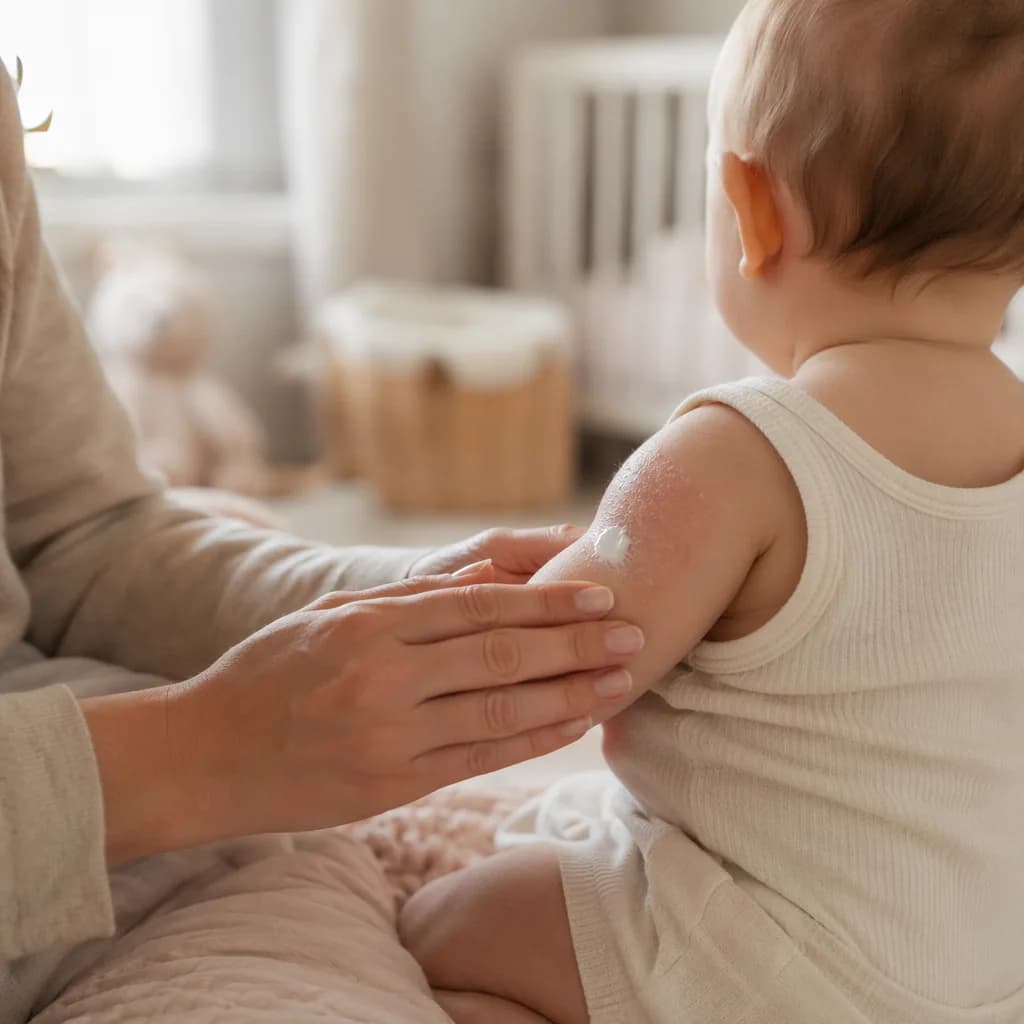 health
Baby Eczema Basics: Triggers, Care, and Doctor Signs
Baby eczema can look like dry, itchy patches that keep coming back. Learn common triggers, gentle daily care, and when to call the doctor.
11 min readJun 11, 2026 health
Newborn Poop Color Guide: What Parents Notice
Newborn poop can change quickly. Here’s what common diaper colors may mean, plus when red, white, gray, or clay-colored stool needs a call.
11 min readJun 11, 2026