
6 Month Baby Milestones: Sitting, Solids, Sleep
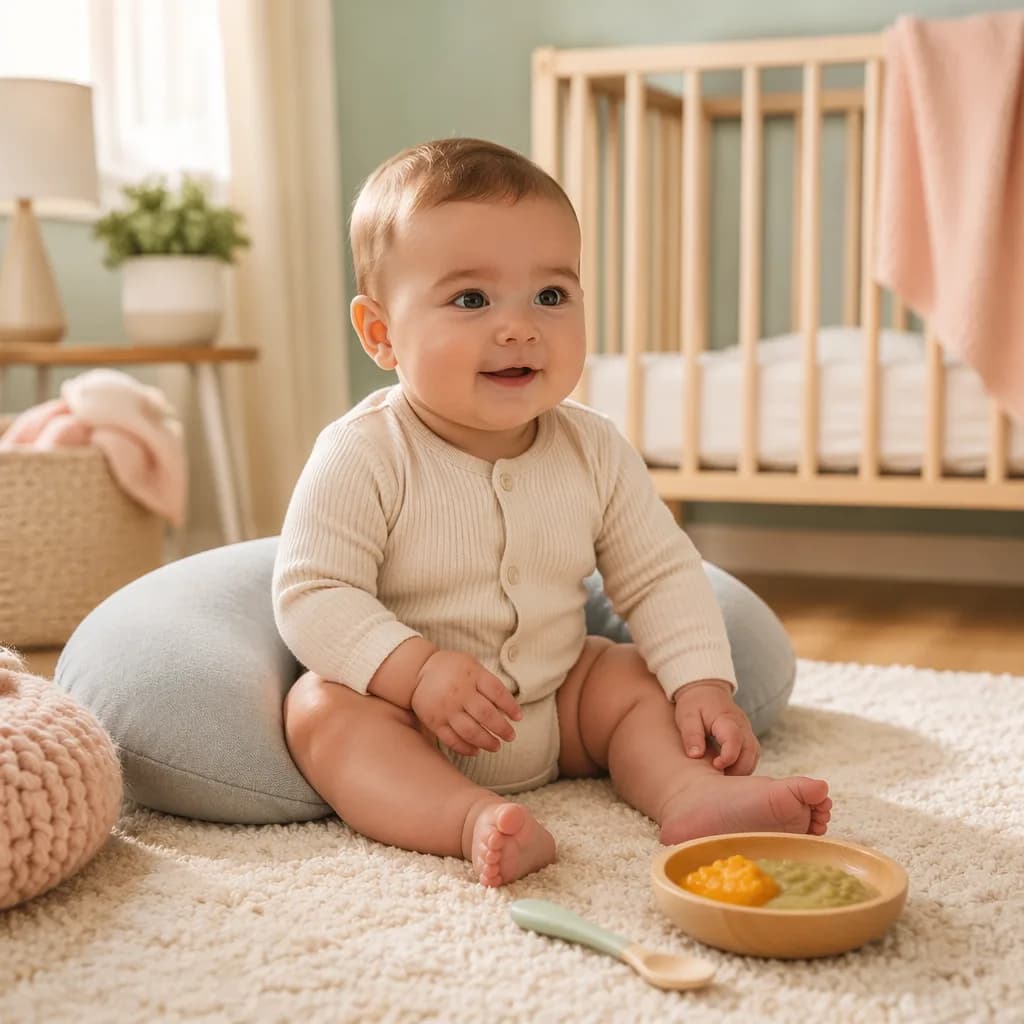
What should a 6 month old be doing?
Many 6 month olds can roll from tummy to back, sit with support, reach for toys, laugh, babble or squeal, and show interest in food. Some are also taking turns making sounds with you, blowing little “raspberries,” pushing up on straight arms during tummy time, and using their hands to explore everything by mouth.
But 6 months is a range, not a race.
The CDC describes developmental milestones as skills most children, 75% or more, can do by a certain age. Your baby may be ahead in one area and still practicing in another. If your baby was born prematurely, your doctor may look at development using adjusted age, so it’s always fair to ask how they’re tracking your baby’s progress.
Here’s what you may notice around this age:
- Movement: rolling, pushing up during tummy time, sitting while leaning on hands, or sitting with your support.
- Hand skills: reaching for a wanted toy, raking objects toward the palm, bringing safe items to the mouth.
- Communication: squealing, babbling, blowing raspberries, and taking turns making sounds.
- Social skills: laughing, knowing familiar people, enjoying mirrors, and lighting up during peekaboo.
- Sleep: longer night stretches may happen, though night feeds and daytime naps are still common.
- Feeding: breast milk or formula is still the main food source, while many babies begin showing readiness for solids around this time. Talk with your baby’s doctor about timing and choking risks.
Picture this: your baby sits in a high chair, grabs a soft spoon, squeals at you, then drops it and watches what happens. That tiny “game” touches movement, hand skills, communication, and cause-and-effect learning all at once.
If you’re looking back or ahead, you might like 4 Month Baby Milestones: Sleep, Feeding, Play, 9 Month Baby Development: Milestones, Food, Play, or When Do Babies Start Crawling? Milestones Explained. For floor play help, Tummy Time for Newborns: Safe Tips for the First Weeks is a gentle place to start.
Movement milestones at 6 months
At 6 months, movement often starts to look more purposeful. Your baby may roll from tummy to back, and some babies are also working on rolling from back to tummy. Others are still figuring out one direction first. That variation is common, so watch for steady progress rather than one exact skill on one exact day.
Sitting is usually still a work in progress. Many babies can sit with their hands propped in front, almost like a little tripod, while you stay close. Some may sit briefly without help, then topple sideways when they reach for a toy. A firm play mat on the floor is a great place for this practice because it gives them space to wobble, reset, and try again safely.
Tummy time may look stronger now than it did during the early weeks. If you started with short sessions from those newborn tummy time days, you might now see your baby pushing up on straight arms, rocking their body, pivoting in a circle, or reaching for a toy just out of reach. That reach is doing a lot of work. It builds shoulder strength, balance, and coordination.
You may also notice early signs that look like pre-crawling: rocking on the belly, pushing backward, turning toward a toy, or trying to pull knees under the body. Crawling is not expected at 6 months, but these little experiments are part of the path. If you’re curious about what comes next, this guide on when babies start crawling is a helpful follow-up.
For support, keep it simple: plenty of floor time, a firm mat, and a few safe toys placed slightly to the side or just out of reach. Try not to rely on seats, swings, or other containers for long stretches, since babies need room to roll, push, and practice. If you’re comparing month to month, you can look back at 4 month milestones or peek ahead to 9 month development.
Ask your pediatrician if your baby’s muscles seem very stiff or very floppy, if they’re not rolling at all, or if they use one side of the body much more than the other. A quick check can give you clarity and, if needed, extra support early.
Hand skills, vision, and curiosity
At 6 months, those busy little hands are doing more than grabbing whatever happens to be nearby. Many babies are reaching with purpose now, especially for a toy they want. You might notice your baby stretching toward a rattle, pulling a soft block closer with a raking motion, or passing a toy from one hand to the other during floor play.
Mouthing is part of the job description at this age. Babies put things in their mouths to explore them, so safe toys matter. Choose items that are too large to choke on, sturdy, and made for babies: soft blocks, crinkle books, textured teethers, rattles, and nesting cups are all simple winners.
This is also a sweet age for cause and effect play. Shake a rattle, pause, and watch your baby look for the sound. If they drop a toy and look down, hand it back and say, “You dropped it!” It’s repetitive, yes. It’s also learning.
A quick floor scan helps. Keep button batteries, water beads, small toy parts, and loose objects off the play mat and out of reach. Babies are fast with their hands, and even faster with their mouths.
If you’re thinking about how these skills build over time, you may like our guides on 4 month baby milestones, when babies start crawling, and 9 month baby development. For now, keep play short, supervised, and fun.
Communication and social milestones
At 6 months, your baby may be getting wonderfully noisy. You might hear “ba,” “ma,” or “da” sounds, squeals, raspberries, and big belly laughs. Some babies make funny throaty sounds too, almost like little growls during play. It can sound random, but this is real communication practice.
The best part is the back-and-forth. Baby squeals. You squeal back. Baby pauses, watches your face, then answers with another sound or a kicky little wiggle. That tiny “conversation” helps them learn that sounds have power. You’re showing them, “I hear you. Keep going.”
Socially, many 6-month-olds know familiar people, enjoy looking at themselves in a mirror, and laugh during games like peekaboo. You may also see more reaching when they want you, especially when they’re ready to be picked up or comforted. Some babies start turning toward their name around this stage, but it can be inconsistent. One minute they respond, the next they’re far more interested in a sock.
Simple daily habits count. Narrate diaper changes: “Wipe, wipe. Clean diaper. Socks next.” Read a sturdy board book and point to one picture at a time. Sing the same bedtime song each night. Then pause. Give your baby a few seconds to answer with a sound, a smile, or a hand wave.
If you’re comparing stages, it can help to look back at 4 Month Baby Milestones: Sleep, Feeding, Play or peek ahead to 9 Month Baby Development: Milestones, Food, Play. Physical play supports communication too, from floor time to early movement, so you may like Tummy Time for Newborns: Safe Tips for the First Weeks and When Do Babies Start Crawling? Milestones Explained.
Raise concerns with your baby’s doctor if you’re seeing no smiles, little eye contact, no sounds, or no response to loud noises. You don’t need to panic. Just ask. Early support can be very helpful. And if you’re in a naming mood between milestone checks, here’s a sweet read: Tanmay Suresh Upadhyay: meaning & origin.
Starting solids around 6 months
Around 6 months, many babies are ready to begin tasting solid foods, but milk still matters most. The CDC says breast milk or formula is still the most important source of “food” for your baby at this age, so think of solids as practice: new textures, new smells, new skills, and a lot of funny faces.
Readiness is usually about the whole picture, not one single sign. You may notice your baby can sit with support, has steadier head and neck control, opens their mouth when food comes near, brings toys or hands to their mouth, and seems less likely to push food right back out with their tongue. If you’re unsure, ask your baby’s doctor about timing, textures, and choking risks before you begin.
A very ordinary first meal is enough. Try one or two teaspoons of mashed avocado or iron-fortified oatmeal after a milk feed, when your baby is calm and not too hungry. You can also ask your pediatrician about iron-rich first foods such as pureed meat, lentils, beans, eggs, or iron-fortified baby cereal, along with soft fruits and vegetables.
There isn’t one right feeding style for every family.
Some parents like spoon feeding because it’s tidy-ish and easy to pace. Some try baby-led weaning, where baby explores soft, safely prepared foods with their hands. Many families use a mixed approach: oatmeal on a spoon at breakfast, soft banana pieces later. Watch your baby’s cues. Opening their mouth, leaning forward, or getting excited may mean “more.” Turning away, closing their mouth, or pushing food away can mean “I’m done.”
Common allergens are another good topic for your pediatrician, especially if your baby has severe eczema or a known allergy. Ask about simple, safe ways to introduce foods such as peanut, egg, dairy, wheat, soy, fish, and sesame.
Keep safety boring and consistent. Sit baby upright. Stay close. Skip whole grapes, nuts, popcorn, hard raw vegetables, chunks of meat, hot dog rounds, and spoonfuls of thick nut butter.
Gagging can be noisy and scary-looking, but it often means baby is working food forward. Choking is quiet or nearly quiet, and baby may struggle to breathe. If you’re anxious about this part, you’re not alone. A baby safety class can help you feel steadier.
Food skills grow right alongside sitting, rolling, and reaching. If you want to look back at the earlier feeding stage, see 4 Month Baby Milestones: Sleep, Feeding, Play. For what comes next with meals and finger foods, 9 Month Baby Development: Milestones, Food, Play is a helpful next read. And because stronger floor play supports all this sitting practice, you may also like Tummy Time for Newborns: Safe Tips for the First Weeks and When Do Babies Start Crawling? Milestones Explained.
Tiny note for the baby book: if you’re saving names and meanings alongside milestones, Tanmay Suresh Upadhyay: meaning & origin is one sweet example of how families record the details they want to remember.
Sleep at 6 months: what is typical?
Many 6 month olds sleep about 12 to 15 hours total in 24 hours, often split between nighttime sleep and 2 to 3 daytime naps. Some babies are starting to give longer stretches at night now. Others still wake for a feed, a cuddle, or help settling back down.
Both can be normal.
A simple rhythm at this age is about 2 to 3 hours awake between sleeps. For example, your baby might wake, feed, play on the floor, have a little supported sitting practice, then start rubbing eyes or zoning out around the 2-hour mark. Those sleepy cues matter more than the clock. If your baby turns away, gets fussy, stares off, or starts losing interest in toys, it may be time to wind things down.
Sleep can also feel bumpy around 6 months because so much is changing. The CDC notes that many babies this age are rolling from tummy to back, pushing up with straight arms during tummy time, and leaning on their hands while sitting. New skills have a funny way of showing up at 2 a.m. Rolling in the crib, practicing sounds, teething discomfort, and growing awareness that you’re nearby or not nearby can all affect nights.
Keep sleep safety steady even when sleep itself feels unpredictable. Place your baby on their back for every sleep, on a firm, flat mattress with no pillows, blankets, bumpers, or stuffed animals in the crib. If your baby rolls during sleep, place them on their back to start. If they can roll both ways on their own, you can let them stay in the position they get into.
Daytime practice helps too. Floor play, rolling games, and short tummy time sessions build the strength babies use for sleep, sitting, and later movement. If you want a refresher, this guide to tummy time for newborns is still useful for safe positioning basics, and you can peek ahead at when babies start crawling to see where these early skills may lead. Sleep looked different back at 4 months, and it’ll shift again by 9 months. For now, aim for safe, calm, repeatable routines.
A simple 6 month baby schedule
A 6 month baby schedule works best as a rhythm, not a strict clock. Think: milk, play, rest, repeat, with a little solids practice tucked in when your baby is calm and curious.
At this age, breast milk or formula is still the main source of food. Solids are practice at first, so many families offer them after a milk feed or between milk feeds, not when baby is overly hungry and frustrated. If your baby closes their lips, turns their head, or pushes food away, that’s a useful “all done” cue.
Here’s a sample day you can bend to fit your real life:
- 7:00 wake-up and milk feed
- 8:30 solids practice, maybe a few spoonfuls while baby sits supported
- 9:15 morning nap
- 11:00 milk feed
- 12:30 floor play, songs, mirror time, or rolling practice
- 1:30 afternoon nap
- 3:00 milk feed
- 4:30 short nap if needed
- 5:30 solids practice
- 6:30 bath, pajamas, books, and quiet cuddles
- 7:00 milk feed and bed
Some babies are moving toward 2 naps around this stage, while many still need 3 daytime naps. Both can be normal. Watch the baby in front of you. Rubbing eyes, zoning out, or getting fussy during play may mean it’s time to rest, even if the clock says otherwise.
Build play into the awake windows in small, easy ways. A few minutes on the floor with a toy just out of reach supports rolling, reaching, and early movement skills. If you want a refresher on early floor play, this guide to tummy time for newborns has safe basics that still help as babies get stronger. You can also peek ahead at when babies start crawling if you’re wondering what all this rolling and pushing up is leading toward.
Adjust the schedule for daycare drop-off, older siblings, feeding needs, and temperament. A baby who melts down by 6:15 may need an earlier bedtime. A baby who takes a long second nap may skip the short late nap. If you’re comparing stages, it can help to look back at 4 month baby milestones or ahead to 9 month baby development, just to see how quickly these rhythms keep changing.
And if you’re filling out the baby book during nap time, even a name rabbit hole like Tanmay Suresh Upadhyay: meaning & origin counts as a perfectly valid parent break.
6 month baby activities that actually help
At 6 months, the best activities are simple, short, and easy to repeat. You don’t need a special toy shelf. A mirror, a board book, a few fabric scraps, and your face are plenty.
Try these low-pressure ideas during happy awake time:
- Supported sitting with a toy basket: Sit on the floor with your baby between your legs or supported by firm pillows, with your hands close. Place a small basket of safe toys in front of them. This supports balance, core strength, reaching, and early choosing.
- Tummy time with a mirror: Put a baby-safe mirror in front of your baby during tummy time. Many babies love looking at their own face, and the mirror encourages lifting the head, pushing up, tracking, and staying on the tummy a little longer. If tummy time has been tricky from the start, this gentle guide to tummy time for newborns has helpful basics that still apply.
- Rolling games: Place two toys just to the side during tummy time so your baby has a reason to pivot, reach, and maybe roll from tummy to back. Keep it playful. If they fuss, pause and cuddle.
- Peekaboo: Use your hands, a burp cloth, or the edge of a blanket. Peekaboo helps with social connection, turn-taking, and those wonderful laughs that often show up around this age.
- Read one sturdy board book: You don’t have to finish it. Point to one picture and say, “Dog!” If your baby babbles back, answer them. That back-and-forth sound play supports language.
- Sing with hand motions: Songs with clapping, waving, or gentle arm movements invite listening, imitation, and communication. Your voice is more interesting to your baby than a video.
- Texture play with fabric scraps: Offer safe pieces of soft cotton, crinkle cloth, or a silky scarf while you supervise. Babies learn by touching, grasping, and bringing safe objects to their mouth.
- Water play with close supervision: A shallow tray with a little water and a washcloth can be fascinating. Stay right there. Always keep your baby within arm’s reach on raised surfaces and during any water play.
For screens, keep it practical and gentle. Video calls with loved ones can be sweet, but live interaction teaches more than videos at this age: your face, your pauses, your silly sounds, your response when they squeal.
If you’re curious what comes next, crawling often builds from these same floor skills. This guide on when babies start crawling can help you spot the early signs. You can also compare earlier and later stages with 4 month baby milestones and 9 month baby development.
Teething, growth, and checkup notes
Around 6 months, some babies get their first teeth. Others won’t have a tooth pop through for several more months, and that can still be completely normal.
Teething can look like extra drooling, lots of chewing, mild fussiness, or gums that look a little swollen. A chilled teether can feel good on sore gums. You can also wash your hands and gently rub baby’s gums with a clean finger. Some days, extra cuddles are the best tool you’ve got.
If your baby seems very uncomfortable, ask the pediatrician what medicine is safe and appropriate. Skip teething necklaces, gels with benzocaine, and frozen items that could be too hard, too cold, or unsafe if they break.
The 6 month well visit is also a good time to talk through the bigger picture: growth, feeding, sleep, development, vaccines, and any questions sitting in the back of your mind. The CDC notes that by 6 months, many babies are rolling from tummy to back, pushing up with straight arms during tummy time, leaning on hands while sitting, laughing, taking turns making sounds, and reaching for toys they want.
Bring up anything that feels off, even if it seems small. Maybe feeding suddenly feels harder, sleep has shifted, or one side seems stronger than the other. That’s exactly what checkups are for.
If you’re looking ahead, you might also like When Do Babies Start Crawling? Milestones Explained or 9 Month Baby Development: Milestones, Food, Play.
When to call the pediatrician
A quick call to the pediatrician is a good idea if something feels off. It doesn’t mean you’re overreacting, and it doesn’t mean something is wrong. It simply gives your baby support sooner if support is needed.
For 6 month baby milestones, check in if you notice your baby:
- isn’t rolling at all
- has poor head control
- seems very stiff or very floppy
- doesn’t reach for objects
- doesn’t smile, laugh, squeal, babble, or take turns making sounds with you
- doesn’t react to loud noises
- loses a skill they used to have
That last one matters. If your baby used to push up during tummy time and suddenly stops, or used to make lots of sounds and now seems quiet for days, trust your gut and ask.
Feeding concerns are worth a call too, especially around this age when families may be talking about solids. Reach out if your baby has trouble swallowing, coughs often during feeds, has poor weight gain, has fewer wet diapers, or vomits repeatedly. Breast milk or formula is still the main source of food at this age, and your doctor can help you sort out what’s normal versus what needs attention.
Sleep and breathing deserve prompt attention as well. Call if you notice loud persistent snoring, pauses in breathing, or extreme sleepiness that’s hard to interrupt.
If you’re comparing stages, our guides on 4 month baby milestones, 9 month baby development, and when babies start crawling can help you see the broader pattern. And if tummy time has been tricky, this gentle newborn tummy time guide may still give you useful ideas.
Frequently Asked Questions
What are the main 6 month baby milestones?
Many 6 month olds roll, sit with support, reach for toys, pass objects hand to hand, babble, laugh, recognize familiar people, and show interest in solids.
Should my 6 month old be sitting up alone?
Some babies sit alone briefly at 6 months, but many still need support. Sitting with hands propped or in a high chair with good head control is common.
How much should a 6 month old sleep?
Most 6 month olds sleep about 12 to 15 hours in 24 hours, including nighttime sleep and 2 to 3 naps.
How often should a 6 month old eat solids?
Many babies start with solids once a day, then slowly move toward 2 meals. Breast milk or formula is still the main food at this age.
What foods should I give my 6 month old first?
Good first foods include iron-rich options like pureed meat, lentils, beans, egg, or iron-fortified cereal, plus soft fruits and vegetables.
What are good 6 month baby activities?
Try tummy time with a mirror, supported sitting with toys, peekaboo, board books, songs, rolling games, and safe texture play.
Is crawling a 6 month baby milestone?
Crawling can start around this age for some babies, but it’s also normal if it comes later. Rocking, pivoting, and pushing up are common early steps.
What should a 6 month baby schedule look like?
A typical day includes milk feeds, 1 to 2 solids practice meals, 2 to 3 naps, floor play, outdoor time if possible, and a steady bedtime routine.
Frequently asked questions
What should a 6 month old baby be able to do?
Should my 6 month old be sitting up alone?
Can a 6 month old start solids?
Is it normal for a 6 month old to still wake at night?
When should I worry about 6 month milestones?
References
Sources
External research this article was grounded in.
- Milestones by 6 Months | Learn the Signs. Act Early. | CDCcdc.gov
- 6 Month Old Milestones – Sitting, Rolling & First Foodsmomwink.com
- 6-Month-Old Baby: Starting Solids, Sitting Up, and Sleep Changes | TeachToddlerteachtoddler.com
- 6 - Wikipediaen.m.wikipedia.org
Related reading
More from the journal → baby-development
Pincer Grasp Development: Ages, Signs, and Easy Play
Baby's pincer grasp starts messy, then gets precise. Learn the usual age range, early signs, simple play ideas, and when to ask for help.
9 min readJul 21, 2026 baby-development
When Do Babies Smile? Early Grins and Social Smiles
Learn when babies first smile, how newborn grins differ from social smiles, and what to watch for if your baby isn't smiling yet.
9 min readJul 15, 2026 baby-development
When Do Babies Crawl? Signs, Stages, and Tips
Most babies crawl between 6 and 10 months, but there’s a wide normal range. Learn signs, stages, crawling styles, and simple ways to help.
12 min readJul 3, 2026