
9 Month Baby Milestones: Skills, Sleep, and Worries

What are the main 9 month baby milestones?
At 9 months, many babies are busy in a very real, hands-on way. You may see more movement, like crawling, bottom shuffling, pulling to stand, or trying to bounce while holding the couch. Hand skills often get sharper too, with babies using their fingers to pick up small bits of food, bang toys together, or pass objects from one hand to the other.
Sounds can start to feel more purposeful around this age. Many 9 month olds babble with repeated syllables like “mama,” “dada,” or “baba,” even if they don’t fully attach the words to people yet. They may respond to their name, understand “no,” point toward something they want, wave, clap, or copy a simple action.
Socially, separation anxiety can show up strongly now. A baby who used to smile at everyone may suddenly cry when you leave the room or cling when someone unfamiliar comes close. Sleep can shift for the same reason, with more night waking because your baby wants to check that you’re still nearby.
Feeding usually gets more interactive. Many babies practice finger foods, sit in a chair for meals, show interest in a spoon, and try drinking from a cup.
Milestones come in ranges, not neat boxes. One 9 month old may pull to stand on the couch all day, while another sits happily passing blocks from hand to hand and working hard on sounds. Both can be making steady progress.
If you’re comparing stages, it can help to look back at 4 month baby milestones, 6 month baby milestones, or even those early 2 month baby milestones. For a broader month-by-month guide, see our 9 month baby development overview.
Look for progress over perfection. Your baby doesn’t need to match every checklist item on the same day.
Movement skills: crawling, sitting, pulling up, and cruising
At 9 months, movement can suddenly feel like the main event. One day your baby is sitting sweetly on the play mat, and the next they’re reaching for the TV remote, twisting sideways, and trying to launch themselves toward a crumb you somehow missed.
Many 9 month olds can sit without support and reach for toys while seated. You may see them get onto hands and knees, rock back and forth, crawl, scoot, or roll across the room with real purpose. Some babies pull up on furniture and bounce while holding on. A few start early cruising, which means stepping sideways while holding the couch or coffee table.
Crawling does not have to look “textbook.” Some babies army crawl on their bellies. Some bottom scoot. Some roll from one side of the room to the other and look very pleased with themselves. Some skip traditional hands-and-knees crawling and move straight toward pulling up and walking. That can still be okay. If you want the bigger picture for this age, our 9 Month Baby Development: Milestones, Food, Play guide walks through motor, language, feeding, and social changes together.
You can support movement in simple ways. Offer daily floor time when your baby is awake and supervised. Place a favorite toy just out of reach, close enough to be motivating but not frustrating. Let them practice pulling up on sturdy furniture that won’t tip. Indoors, bare feet or grippy socks can help them feel the floor better than slippery socks.
This is also the age when babyproofing gets very real. Lower the crib mattress before pulling up becomes a midnight hobby. Secure dressers, bookshelves, and other furniture to the wall. Block stairs with gates. Cover sharp corners. Move cords, strings, tiny objects, cleaners, and medicines well out of reach.
It’s sweet to look back at earlier stages, from those first smiles in 2 Month Baby Milestones: Smiles, Sounds, Sleep to the sitting practice in 6 Month Baby Milestones: Sitting, Solids, Sleep. By 9 months, all that practice is turning into motion. Lots of motion.
Hand skills: clapping, pointing, picking up tiny foods
At 9 months, those busy little hands are doing a lot. Your baby may clap, bang two toys together just to hear the sound, pass a block from one hand to the other, poke at things with one index finger, and start using a raking grasp or early pincer grasp during meals and play.
Clapping often begins as imitation. You clap, they copy. Then one day after “Pat-a-Cake,” they grin and clap again because they’ve realized it gets a reaction. That’s when it starts to feel less like a skill and more like a tiny conversation. This fits right alongside other 9-month social and communication changes, which we cover more fully in 9 Month Baby Development: Milestones, Food, Play.
The pincer grasp just means picking something up with the thumb and finger instead of the whole hand. At first, it may look clumsy. A baby might rake a tiny banana bit toward their palm, then try to pinch it. Good practice foods are soft and small, like a squished pea or a tiny piece of banana, offered while your baby is sitting safely and supervised.
Play can help without feeling like “practice.” Try chunky board books for turning pages, stacking cups to grab and bang, fabric scarves tucked into an empty tissue box for pulling, and large blocks for supervised play. These simple games build on the hand control that started earlier, around sitting and solids, as described in 6 Month Baby Milestones: Sitting, Solids, Sleep.
If your baby mostly mouths the toy, drops it, then tries again, that still counts. Exploration is messy at this age. And honestly, a high chair tray with soft finger foods can become one of the best fine-motor classrooms in the house.
Talking and listening: babbling, gestures, and first words
At 9 months, communication can feel suddenly louder, funnier, and much more intentional. Your baby may string sounds together like “ba-ba,” “ma-ma,” or “da-da,” then squeal, laugh, grunt, or repeat a sound just to see your face light up. They may copy a cough, a lip smack, or the rhythm of your voice.
Those “ma-ma” and “da-da” sounds might not mean Mama or Dada yet. That’s okay. At this age, babies are practicing the building blocks of speech, and meaning usually becomes clearer with time.
Listening is growing quickly too. Your baby may turn when you say their name, pause when they hear “no,” look around when you ask for a familiar person, or lift their arms when you say “up.” These little responses matter. They show that understanding is moving ahead, often faster than talking.
Gestures are part of language now. You might see waving, reaching, clapping, pointing, showing you a toy, or looking back at you after spotting something interesting. That shared look, like “Did you see that dog too?”, is a sweet early sign of communication.
A few simple habits help a lot:
- Narrate diaper changes: “Sock off. Wipe. Clean diaper. All done.”
- Pause during favorite songs so your baby can fill in a sound or bounce.
- Copy their babble, then wait for them to answer.
- Read the same board book every day, even if they chew the corner.
- Name real objects right in front of them: cup, banana, ball, shoe.
If you remember the coos from 2 months, the playful sounds around 4 months, and the babbling that often builds around 6 months, this stage feels like the next step. For a broader look at this age, see our 9 month baby development guide.
Social and emotional changes, including separation anxiety
Around 9 months, separation anxiety can suddenly feel big. Your baby may now understand that you still exist when you leave the room, but they don’t fully trust yet that you’ll come back quickly. That gap can feel scary to them.
This is also the age when many babies clearly prefer familiar people. A grandparent they saw happily last month may now get a serious stare. An unfamiliar adult reaching out for a cuddle might lead to tears. Stranger anxiety and strong parent preference are normal parts of 9 month old development, even when they feel awkward in the moment.
Common signs can include:
- Crying when you leave the room
- Clinging hard at daycare drop-off
- Waking upset at night and seeming to check that you’re nearby
- Refusing to be held by unfamiliar adults
- Reaching for you when someone else tries to comfort them
The best response is calm and predictable. Use a short goodbye, name what’s happening, and avoid sneaking out. Sneaking away can make babies more worried because they learn you might disappear without warning.
Try something simple like: “I’m going to the kitchen. Grandma is with you. I’ll be back after I wash my cup.”
Then, if you can, come back when you said you would. That tiny promise matters. Your baby is slowly learning that leaving is not the same as gone forever.
At daycare, a short routine helps: hug, one sentence, handoff, goodbye. Lingering often makes it harder. At night, keep reassurance quiet and boring so your baby feels safe without turning it into playtime.
If this feels like a big jump from earlier months, it is. Social awareness has been building since those first smiles in 2 Month Baby Milestones: Smiles, Sounds, Sleep, through the more interactive stage in 4 Month Baby Milestones: Sleep, Feeding, Play, and the sitting-and-reaching world of 6 Month Baby Milestones: Sitting, Solids, Sleep. For the bigger picture, see 9 Month Baby Development: Milestones, Food, Play.
Feeding milestones at 9 months
At 9 months, breast milk or formula is still the main source of nutrition, but solids are becoming a bigger, more interesting part of the day. This is the age when many babies want to grab, squish, taste, drop, and try again. Messy meals count as practice.
You may notice your baby sitting in a high chair for meals, reaching for food, and bringing pieces to their mouth with growing confidence. Many babies are working on finger feeding now, using their fingers to pick up small pieces. They may also practice drinking small amounts from a cup with help, including an open cup or straw cup, though spills are very normal. Chewing is still a new skill, so soft lumps are usually easier than firm or slippery pieces.
Good practice foods can include soft scrambled egg pieces, ripe avocado, shredded chicken, oatmeal, yogurt, soft cooked carrots, and tiny pasta pieces. Think soft, small, and easy to mash between fingers.
A few foods are better kept off the tray because they can be choking hazards: whole grapes, popcorn, nuts, hard raw vegetables, chunks of hot dog, and globs of nut butter. Crawling and grabbing also pick up around this age, so it helps to scan the floor before meals too.
If solids still feel new, you might like looking back at 6 Month Baby Milestones: Sitting, Solids, Sleep. For the bigger picture, 9 Month Baby Development: Milestones, Food, Play walks through feeding alongside movement, language, and play.
Talk with your pediatrician about allergens, iron-rich foods, texture progress, or any feeding worries. A quick question can save you a lot of second-guessing.
Sleep at 9 months: naps, night waking, and regressions
At 9 months, many babies settle into two naps during the day and a longer stretch of sleep at night. Still, wake-ups are very common. Some babies pop up once for comfort, while others wake several times, especially during big developmental weeks.
This age can be busy. Really busy.
Your baby may be crawling, practicing new moves, or pulling to stand in the crib and then realizing they don’t quite know how to sit back down. Separation anxiety can also peak around this time, so nighttime may bring extra “Are you still there?” checks. Teething, illness, and schedule changes can all make sleep feel wobbly too. If you’re looking at the bigger picture of this stage, our 9 Month Baby Development: Milestones, Food, Play guide pairs well with this.
A steady bedtime routine helps. Keep it simple: bath or wipe-down, pajamas, feeding, book, song, bed. Try giving a little extra connection before sleep, like a quiet cuddle or the same short phrase each night. During the day, let your baby practice pulling up and sitting back down, so the crib doesn’t become the main training ground at 2 a.m.
At night, boring and predictable is your friend. Go in, reassure, help them settle if needed, and keep lights low and voices soft. We don’t need to turn every wake-up into playtime.
Safe sleep still matters at this age. Place your baby on their back to sleep, use a firm mattress, and keep loose blankets, pillows, and stuffed animals out of the crib.
If sleep felt easier at earlier stages, you’re not imagining the shift. Many parents notice changes around big milestone windows, just like the ones covered in 4 Month Baby Milestones: Sleep, Feeding, Play and 6 Month Baby Milestones: Sitting, Solids, Sleep.
Play ideas that support 9 month old baby skills
At 9 months, play doesn’t need to be fancy. A baby this age is often busy crawling, reaching, banging objects, copying sounds, and testing what happens next. Simple games fit beautifully with many baby milestones 9 months can bring.
Try peekaboo with a burp cloth, then pause before you pop back out. Roll a soft ball back and forth on the floor. Stack cups and let your baby knock them down, because yes, knocking down is part of the fun. Clapping games are great too, especially if you clap, wait, and see if your baby tries to copy. For movement, make a tiny crawling tunnel with couch cushions and stay right beside them the whole time.
Language play can happen in the bath, on the changing mat, or during breakfast. Name body parts as you wash them: “Here are your toes. Here is your belly.” Read one short book twice instead of rushing through three. Copy your baby’s babbles, then pause so they can answer with a sound, a reach, or a smile. This back-and-forth is the heart of early communication. If you’re thinking back to earlier stages, you may notice how much has changed since 2 Month Baby Milestones: Smiles, Sounds, Sleep or 4 Month Baby Milestones: Sleep, Feeding, Play.
For fine motor practice, place large puffs or soft food pieces on the tray so your baby can try picking them up. Let them pull scarves from a tissue box. Offer toys with buttons, flaps, and safe textures to poke, pat, open, and close.
Movement play can be just as simple. Put a favorite toy slightly beyond reach. Place toys on a low couch cushion so your baby can kneel while holding on. Give plenty of floor time with space to move, crawl, shuffle, or pivot. If your baby is building from sitting and solids into more active play, 6 Month Baby Milestones: Sitting, Solids, Sleep pairs well with this stage, and our broader 9 Month Baby Development: Milestones, Food, Play guide has more ideas.
And truly, ordinary routines count. A laundry basket filled with clean socks may be more exciting than an expensive toy. Babies love real life. They love pulling, dropping, tasting safely, copying, and being with you.
If you need a tiny mental break during playtime, even reading something totally different like Tanmay Suresh Upadhyay: meaning & origin while your baby explores clean socks beside you counts as parenting in the real world.
When to call the pediatrician about 9 month milestones
First, take a breath. A concern at 9 months doesn’t automatically mean something is wrong. Babies grow on their own timelines, and some skills come in uneven little bursts. Still, early support can make a real difference, so it’s always okay to ask.
Call your pediatrician, or bring it up clearly at the 9 month checkup, if your baby:
- isn’t sitting with help
- feels very stiff or very floppy in your arms
- doesn’t bear weight on their legs when you support them upright
- isn’t babbling, like “ba,” “ma,” or “da” sounds
- doesn’t respond to sounds
- doesn’t make eye contact
- isn’t reaching for objects
- uses one side of their body much more than the other
- loses a skill they used to have
Feeding concerns are worth mentioning too. At this age, babies are practicing with textures and finger foods, so some messy gagging can happen as they learn. But talk with the doctor if you’re seeing frequent choking or gagging beyond normal learning, trouble swallowing, poor weight gain, or refusal of most textures.
It helps to bring specifics. Instead of saying, “She doesn’t move much,” you might say, “She reaches with her right hand but almost never uses her left,” or “He was babbling last month and now he’s mostly quiet.” Short videos can be incredibly useful too, especially for things that don’t happen on command in the exam room.
If you’ve been following milestones from earlier months, like 2 month smiles and sounds, 4 month feeding and play, or 6 month sitting and solids, you may already have a feel for your baby’s pattern. Our broader 9 month baby development guide can also help you organize what you’re seeing.
And trust your gut. You know your baby in a way no checklist does.
Frequently Asked Questions
What should a 9 month old be doing?
Many 9 month olds sit well, babble, respond to their name, reach for toys, eat soft solids, and may crawl, clap, pull to stand, or show separation anxiety.
Is it normal if my 9 month old is not crawling?
Yes, it can be normal. Some babies crawl later, scoot, roll, or focus on other skills first. Ask your pediatrician if your baby is not sitting, not trying to move, or seems very stiff or floppy.
Do babies usually clap at 9 months?
Some do, and some don’t yet. Clapping often develops between 8 and 12 months, especially when parents play clapping games and songs.
What sounds should a 9 month old make?
A 9 month old often babbles repeated sounds like ba-ba, da-da, or ma-ma, squeals, laughs, and copies simple sounds. The words may not have meaning yet.
Why is my 9 month old suddenly clingy?
Separation anxiety often starts around this age. Your baby understands you can leave, but doesn’t fully understand that you’ll come back soon.
How can I help my 9 month old learn to crawl?
Give plenty of supervised floor time, place a favorite toy just out of reach, limit long stretches in seats, and let your baby practice reaching, rocking, and pivoting.
How many naps does a 9 month old need?
Many 9 month olds take two naps a day, but sleep needs vary. A steady routine and age-appropriate wake windows can help if naps are getting messy.
What are red flags at 9 months?
Call the pediatrician if your baby is not sitting with help, not babbling, not responding to sounds, not reaching for objects, avoids eye contact, seems very stiff or floppy, or loses skills.
Frequently asked questions
What should my 9 month old baby be doing?
Is it okay if my 9 month old is not crawling yet?
Why is my 9 month old suddenly waking more at night?
What finger foods are good for a 9 month old?
When should I worry about 9 month milestones?
References
Sources
External research this article was grounded in.
- 9 (2009 animated film) - Wikipediaen.wikipedia.org
- 9-Month Baby Development: Crawling, First Words, Separation Anxiety | BebeSnapbebesnap.com
- Your child's developmental milestones from 7 to 12 monthswww2.hse.ie
- Milestones by 9 Months | Learn the Signs. Act Early. | CDCcdc.gov
- Baby Developmental Milestones By Monthmy.clevelandclinic.org
Related reading
More from the journal →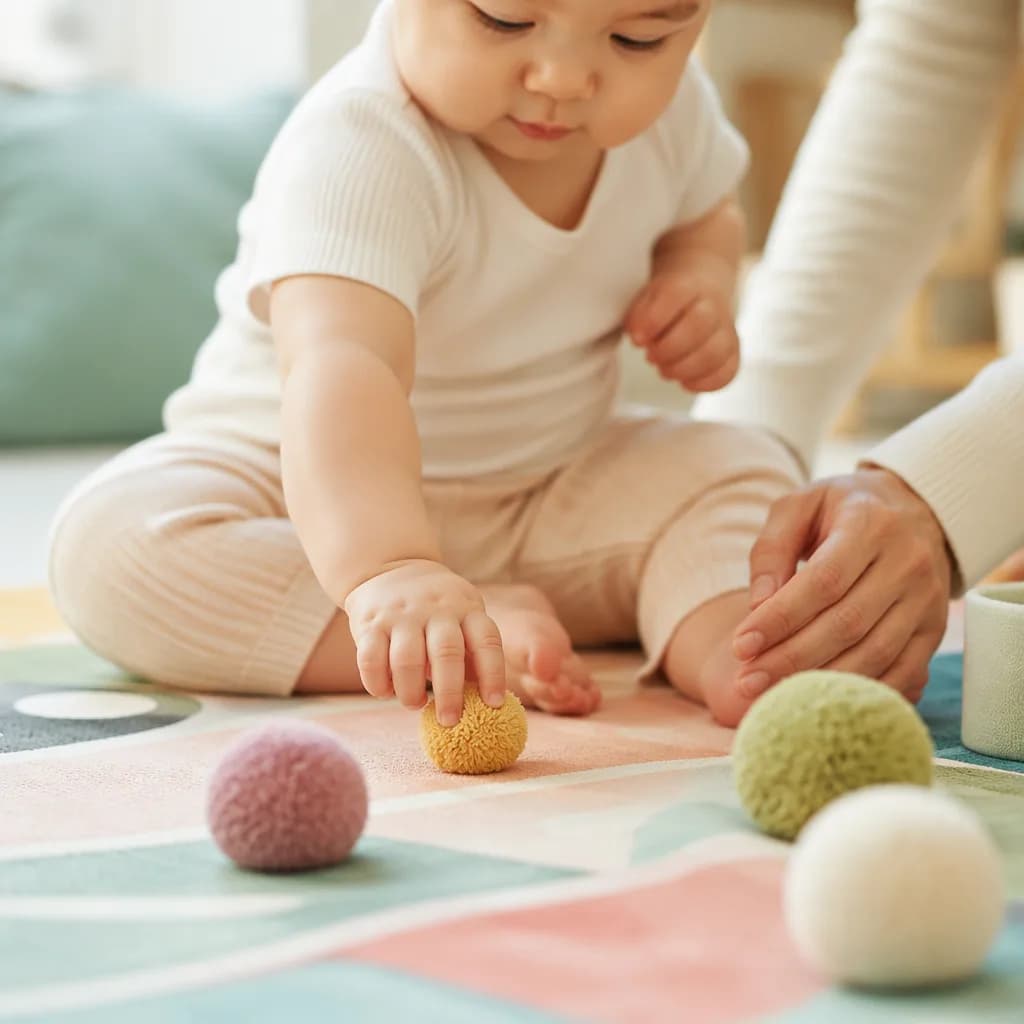 baby-development
Pincer Grasp Development: Ages, Signs, and Easy Play
Baby's pincer grasp starts messy, then gets precise. Learn the usual age range, early signs, simple play ideas, and when to ask for help.
9 min readJul 21, 2026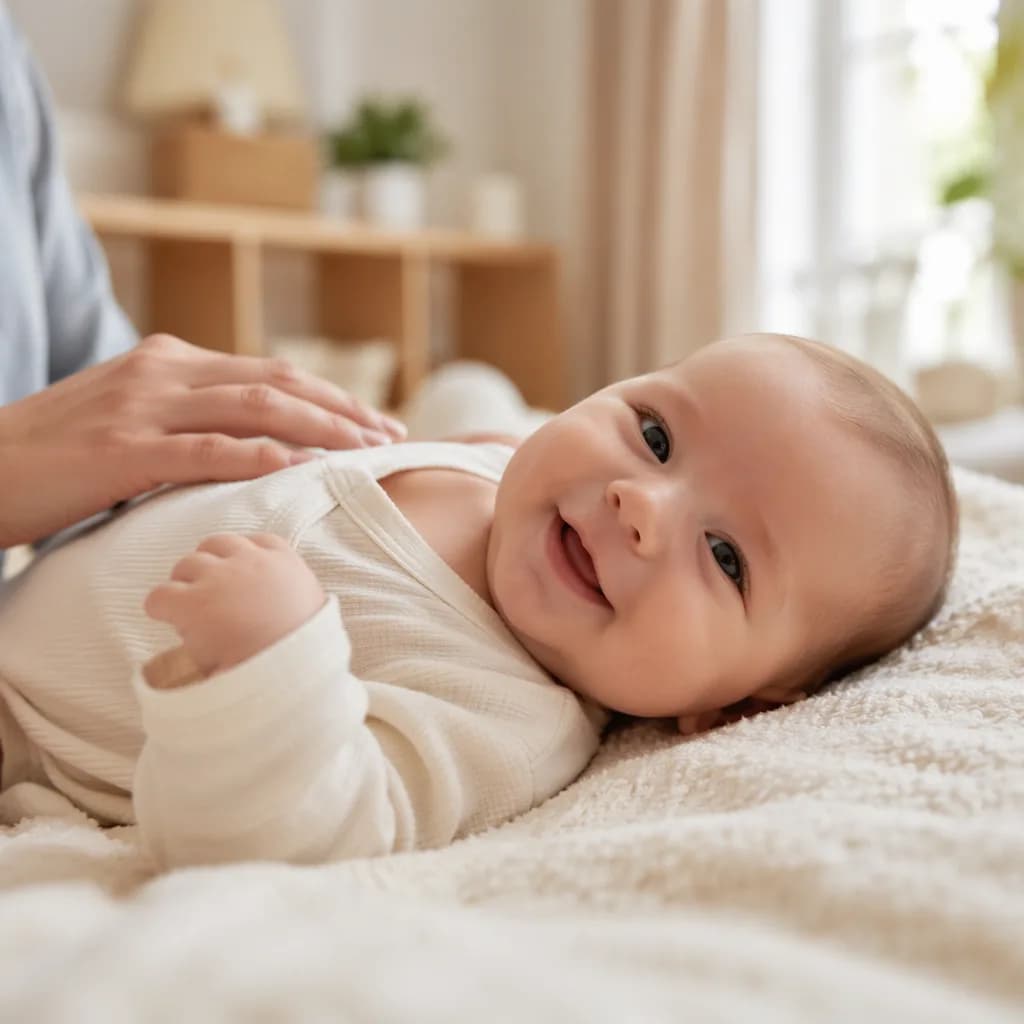 baby-development
When Do Babies Smile? Early Grins and Social Smiles
Learn when babies first smile, how newborn grins differ from social smiles, and what to watch for if your baby isn't smiling yet.
9 min readJul 15, 2026- baby-development
When Do Babies Crawl? Signs, Stages, and Tips
Most babies crawl between 6 and 10 months, but there’s a wide normal range. Learn signs, stages, crawling styles, and simple ways to help.
12 min readJul 3, 2026