
Baby-Led Weaning Basics: Safe First Foods

What baby led weaning means
Baby led weaning means offering your baby soft, graspable foods so they can feed themselves. Think a strip of very soft cooked sweet potato, a tender piece of banana, or another age-safe food they can pick up, bring to their mouth, and explore at their own pace.
It’s different from spoon-feeding purees because the baby is the one doing the grabbing, mouthing, and deciding how much to swallow. With purees, you’re usually loading the spoon and offering each bite. Both approaches can work. This isn’t a parenting identity test.
Many families use a mix, and that’s completely reasonable. Maybe your baby gnaws on soft finger foods at dinner, then takes spoon-fed oatmeal the next morning. A few spoon-fed meals won’t erase the skills they’re building through self-feeding. If you’re still sorting out timing and routines, our Baby Feeding Schedule: A Simple Start for Tired Parents can help make the day feel less scattered.
Early meals are mostly practice. Your baby is learning what food feels like, how to move it around, and how to sit with the family during meals. Milk still does the heavy lifting at first.
Before starting, check for readiness cues, especially sitting well and showing real interest in food. Our guide to Baby Weaning Signs: Is Your Baby Ready for Food? walks through those basics. And once you’re ready for common foods like egg or peanut in safe forms, keep Introducing Allergens to Baby: A Calm Parent Guide nearby.
BLW readiness signs to check before starting
Baby-led weaning usually starts around 6 months, not because the calendar is magic, but because most babies need that long to build the skills that make self-feeding safer. Before then, many babies simply aren’t ready for solids yet, especially finger foods they’ll pick up and bring to their own mouth.
A good first check: can your baby sit upright with minimal support and keep their head steady? For baby-led weaning, this matters a lot. A baby who still slumps sideways in the high chair or needs to be propped up with blankets is telling you, “Not quite yet.” Wait a bit, then try again.
Next, watch their curiosity at meals. Do they stare at your toast like it’s the most interesting thing in the room? Do they reach toward your plate or open their mouth when food comes close? That interest is one of the signs your baby may be getting ready. If you want a fuller checklist, this guide to baby weaning signs is a helpful next read.
You’ll also want to see some hand-to-mouth control. Babies don’t need perfect aim. They do need to be able to pick something up, bring it toward their mouth, and explore it without everything feeling random and floppy. This is part of what makes BLW different from spoon-fed purees.
Another quiet clue is the tongue-thrust reflex. Early on, babies often push food right back out with their tongue. That’s normal. For solids, we’re looking for that reflex to fade enough that food isn’t immediately pushed out every single time.
If your baby was born premature, has feeding issues, poor weight gain, low muscle tone, trouble sitting, swallowing concerns, or other medical needs, check with your pediatrician before starting. A quick conversation can save you a lot of worry.
Once readiness is clear, you can think about rhythm and first meals. Our baby feeding schedule can help you start gently, and when you’re ready for foods like peanut or egg, read introducing allergens to baby before you begin.
Baby led weaning first foods that are easy to hold
Once your baby is showing the usual readiness signs, like sitting with little or no support, holding their head steady, and reaching for food, the best first foods are soft, grippy, and shaped for little hands. Think finger-length pieces, foods that squish easily between two fingers, and textures that let baby practice without needing teeth.
Here are gentle, practical starters to try:
- Soft avocado spears rolled in ground oats or hemp hearts. Avocado can be slippery, so that little coating helps baby get a better grip.
- Steamed sweet potato wedges. Cook them until they squish easily between two fingers, then let them cool before serving.
- Ripe banana half with some peel left on. Peel the top portion and leave the lower peel as a handle, which can make it easier for baby to hold.
- Steamed broccoli florets with a long stem. The stem works like a built-in handle, while the soft top gives baby something to mouth and explore.
- Well-cooked pasta shapes, such as large rigatoni or fusilli. Go soft, not al dente.
- Soft ripe pear slices. Remove the skin if it feels tough or chewy.
- Omelet strips cut into finger-length pieces. Egg is a common allergen, so use this when you’re ready to introduce it in an age-safe way. If you want a steadier plan, this calm guide to introducing allergens to baby can help.
- Flaked salmon or soft fish cakes with no bones. Keep an eye on salt levels, especially with prepared foods.
- Thick plain yogurt on a preloaded spoon. You load the spoon, then hand it over so baby can bring it to their own mouth.
- Iron-rich options like soft shredded beef, lentil patties, mashed beans spread thinly on toast strips, and egg.
Iron-rich foods are especially helpful to include early, rather than relying only on rice cereal. If you’re still figuring out timing, this baby feeding schedule keeps things simple, and this guide to baby weaning signs can help you decide whether today is a good day to start.
And if you’re meal planning while also scrolling baby name ideas during nap time, you’re in good company. Save sweet finds like Aurora or Tanmay Suresh Upadhyay for later, then come back to the high chair with one soft food, one calm breath, and a bib you don’t care about.
How to cut and serve food safely
For brand-new eaters, shape matters as much as softness. A good starting point is food cut about the size and shape of an adult finger. Think a long strip of ripe avocado, a soft roasted sweet potato wedge, or a well-cooked carrot stick. That shape lets baby grip the food in their fist and gnaw from the end.
Use the squish test before anything goes on the tray: press the food between your thumb and finger. If it mashes easily, it’s usually soft enough for early baby-led weaning. If it stays firm, cracks, or needs real pressure, cook it longer or save it for later.
Some shapes are trickier for babies to manage. Avoid round coin shapes, firm chunks, sticky clumps, and slippery pieces that shoot around the mouth. Once foods like grapes, cherry tomatoes, blueberries, and similar round foods are age-appropriate, cut them into quarters lengthwise rather than serving them whole.
Nut butter needs special prep too. Don’t offer a spoonful, since it can be thick and sticky. Spread it thinly on toast, or stir a small amount into yogurt or oatmeal so the texture is easier to handle. If you’re starting common allergens like peanut or egg, this calm guide to introducing allergens can help you plan one step at a time.
Set baby up seated upright in a high chair, buckled in, with feet supported if possible. That steady position helps them focus on eating. If you’re still wondering whether your baby is ready for this stage, check the signs first in Baby Weaning Signs: Is Your Baby Ready for Food?.
Keep meals slow and boring in the best way. No rushing. No chasing bites. A baby who is laughing hard, crying, crawling around, or very tired isn’t in a good eating position, even if the food is prepared safely.
A simple rhythm helps: offer one or two soft foods, stay close, and let baby practice. For a broader day-by-day starting point, Baby Feeding Schedule: A Simple Start for Tired Parents is a helpful next read.
Baby led weaning safety: choking, gagging, and supervision
Gagging can look scary the first few times you see it. A baby may cough, sputter, make loud noises, get watery eyes, turn red, or push food forward with their tongue. That’s usually the body doing its job. Gagging is a protective reflex that helps move food out of the way before it slips too far back.
Choking is different. It’s often silent or very quiet. A choking baby may not be able to cry or cough effectively, may struggle to breathe, or may have lips, skin, or a face that looks blue or dusky. If that happens, it’s an emergency.
Before starting solids, it’s a good idea for parents and regular caregivers to take an infant CPR class. Not because something bad is expected, but because knowing what to do can help you stay clear-headed if a meal suddenly goes sideways.
Set up meals with safety first. Baby should be upright, buckled into a high chair, and watched the whole time. Stay within arm’s reach. Skip feeding in strollers or car seats, since a reclined or moving position can make it harder for baby to manage food safely.
Some foods need to wait, or be changed into a safer shape and texture. Avoid these in the first year or until prepared safely:
- Whole nuts
- Popcorn
- Hard raw apple
- Raw carrot coins
- Whole grapes
- Hot dog rounds
- Chunks of meat
- Sticky spoonfuls of nut butter
- Marshmallows
- Hard candy
- Large globs of soft bread
Honey should also be avoided before 12 months because of botulism risk.
If you’re still checking readiness, our guide to baby weaning signs can help you sort out sitting, head control, and interest in food. For a simple rhythm once meals begin, this baby feeding schedule keeps things gentle and realistic. And when you’re ready for peanut, egg, and other common allergens, read Introducing Allergens to Baby: A Calm Parent Guide.
Tiny side note for the name-loving parents reading during nap time: Aurora and Tanmay Suresh Upadhyay are lovely rabbit holes for later, after the high chair is wiped down.
Allergens, iron, and milk during baby led weaning
During the first year, breast milk or formula is still your baby’s main source of nutrition. Solids are practice, learning, texture, smell, and tiny tastes that slowly become more meaningful meals. If you’re still figuring out timing, our Baby Feeding Schedule: A Simple Start for Tired Parents can help make the day feel less scattered.
Around 6 months, babies’ iron stores begin to drop, so iron-rich foods deserve a regular spot on the tray. Think soft, baby-safe pieces or mashes that fit your baby’s skills. The goal isn’t a big portion. It might be a few licks, a squish in the fist, and one actual swallow. That counts.
Allergens can feel intimidating, but the guidance is calmer than many parents expect. Common allergens include peanut, egg, dairy, wheat, soy, sesame, fish, shellfish, and tree nuts. Introduce them one at a time, in baby-safe forms, when your baby is well and you’re able to watch for a reaction. A quiet morning at home is much better than five minutes before daycare drop-off.
Here’s a real-life example: stir a small amount of thin peanut butter into warm oatmeal, mix it well, then let it cool before serving. You want it smooth and loose, not sticky or thick. Offer a small taste first, then stay nearby and watch.
If your baby has eczema, a known food reaction, or a family history of allergy, talk with your pediatrician or allergist before starting higher-risk foods. You can also read Introducing Allergens to Baby: A Calm Parent Guide for a slower walk-through.
And before any of this, make sure the readiness signs are there. Sitting well, steady head control, and real interest in food matter. If you’re unsure, Baby Weaning Signs: Is Your Baby Ready for Food? is a helpful gut-check.
A simple first week meal plan
One small meal a day is plenty at first. Your baby may lick the food, squish it into the tray, drop it for the dog, or ignore it completely. That still counts as practice.
Before you start, make sure your baby is showing the usual readiness signs: steady head control, sitting with little or no support, interest in food, and swallowing instead of pushing food back out. If you’re still checking those boxes, this guide to baby weaning signs can help you slow down and decide.
Here’s a gentle first week:
Day 1: Offer a steamed sweet potato wedge, soft enough to mash between your fingers. Add a few sips of water from an open cup.
Day 2: Try an avocado spear. If you’re introducing dairy, offer a preloaded spoon with plain yogurt.
Day 3: Serve a soft omelet strip with a ripe pear slice. Keep both easy to hold and soft.
Day 4: Offer a broccoli floret and mashed beans spread thinly on a toast strip.
Day 5: Try a banana half with some peel left on as a handle, plus iron-fortified oatmeal on a preloaded spoon.
Day 6: Serve soft pasta with low-salt tomato sauce and a steamed zucchini stick.
Day 7: Offer flaked salmon with another sweet potato wedge.
Sit your baby upright, buckled in the high chair, and stay close the whole time. Gagging can be noisy and startling, but choking is silent and needs emergency action.
If this feels like a lot to remember, pair the meal with your regular milk routine and keep it simple. Our baby feeding schedule can help you fit solids into a tired-parent day. For peanut, egg, dairy, fish, and other common allergens, read Introducing Allergens to Baby before you offer them.
Common early problems and what to try
Some early baby-led weaning hiccups look dramatic, but they’re often fixable with small changes. If your baby gags often, pause and check the basics before deciding they hate the food. Is the texture soft enough? Is the piece shaped so they can manage it? Are they sitting upright in the high chair, buckled, with their head steady and free to lean slightly forward?
Gagging can be loud and red-faced. Choking is different: silent, scary, and an emergency. Stay close for every bite.
Slippery foods are a classic frustration. A ripe banana spear or avocado slice may shoot right out of a baby’s fist. Try rolling slick foods in ground oats, crushed cereal, hemp hearts, or finely shredded coconut so there’s something to grip. It’s messy, but it helps.
If your baby stuffs too much in at once, offer just one or two pieces on the tray. Then model small bites yourself. Pick up a soft strip of food, take a tiny nibble, and exaggerate slow chewing. Babies watch us closely during meals, which is one reason sitting together can help.
If frustration takes over, make the food easier to handle. Preloaded spoons can work well for yogurt or oatmeal. Slightly larger soft pieces may also be easier to grab than tiny bits at first. For readiness clues, our guide to baby weaning signs can help you step back and reassess.
And if your baby eats almost nothing? That’s common in the beginning. Milk feeds still matter most as solids get started, and a simple rhythm can help. See Baby Feeding Schedule: A Simple Start for Tired Parents. When you’re ready for peanut, egg, and other common allergens, go slowly and use age-safe forms. This calm allergen guide walks through it.
Call the pediatrician if your baby coughs with most meals, has repeated vomiting, struggles to swallow, or isn’t gaining weight as expected.
Frequently Asked Questions
What age can you start baby led weaning?
Most babies can start around 6 months, once they can sit upright, hold their head steady, show interest in food, and bring objects to their mouth.
What are the best first foods for baby led weaning?
Good first foods are soft and easy to grip, such as steamed sweet potato wedges, avocado spears, ripe banana, broccoli florets, omelet strips, and soft pasta.
Is baby led weaning safe?
Baby led weaning can be safe when foods are soft and cut properly, baby sits upright, an adult supervises closely, and caregivers know choking first aid.
How do I know if my baby is gagging or choking?
Gagging is usually noisy, with coughing or tongue movement. Choking is often quiet and may include trouble breathing, color change, or weak coughing.
Can I mix purees with baby led weaning?
Yes. Many families offer both finger foods and spoon-fed foods. The key is following baby’s cues and keeping textures safe.
What foods should babies avoid during baby led weaning?
Avoid whole nuts, popcorn, hard raw vegetables, whole grapes, hot dog rounds, hard candy, sticky nut butter spoonfuls, honey before 12 months, and high-salt foods.
Do babies need teeth for baby led weaning?
No. Babies can mash soft foods with their gums. Foods should be soft enough to squish easily between your fingers.
How much should my baby eat at first?
At first, a few tastes are enough. Breast milk or formula stays the main nutrition source through the first year.
Frequently asked questions
When can my baby start baby-led weaning?
What are good first foods for baby-led weaning?
Is gagging normal with baby-led weaning?
Can I mix baby-led weaning with purees?
References
Sources
External research this article was grounded in.
- Rock-A-Bye Baby +More Nursery Rhymes - CoCoMelon - Videos For Kidskidvideo.org
- Baby Led Weaning: A Pediatrician's Guide to Starting Solids Safely - Blueberry Pediatricsblueberrypediatrics.com
- Complete Guide to Baby-Led Weaning (recipes, tips & more) | Baby Foodebabyfoode.com
- Baby-Led Weaning with Katie Ferrarobabyledweaning.co
Related reading
More from the journal →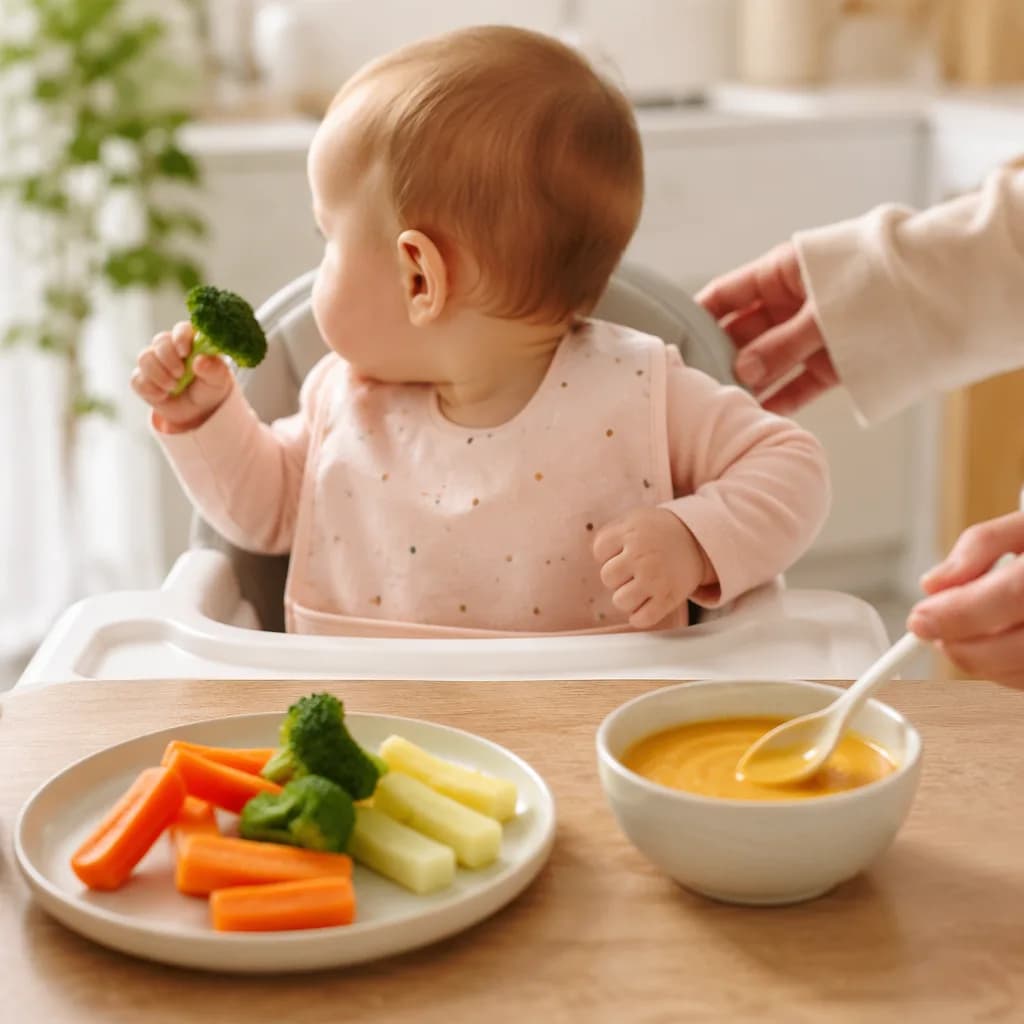 baby-food
Baby Led Weaning vs Purees: Which Fits Your Baby?
Baby led weaning and purees can both work. Here’s how to compare safety, mess, feeding skills, iron needs, and your real family schedule.
14 min readJul 18, 2026 baby-food
Baby Food Storage: Fridge, Freezer, and Travel Tips
Simple baby food storage rules for the fridge, freezer, and diaper bag, including how long purees last and when to toss leftovers.
14 min readJul 4, 2026- baby-food
Introducing Allergens to Baby Safely and Calmly
A calm, practical guide to introducing baby allergens safely, with timing tips, safe textures, high-risk cautions, and what reactions to watch for.
12 min readJul 3, 2026