
Baby Food Storage: Fridge, Freezer, and Travel Tips
Baby food storage rules parents should know first
Baby food is a little fussier than grown-up leftovers. Once a spoon touches your baby’s mouth, saliva can introduce bacteria into the food. If that same spoon goes back into the jar, pouch, or storage container, the whole batch can spoil faster, even if it still smells and looks fine.
The easiest rule is this: serve a small amount in a clean bowl, then put the untouched food away right away.
For example, scoop two tablespoons of applesauce into a baby bowl. Feed from that bowl only. If your baby wants more, use a clean spoon to add another small scoop. The rest goes back in the fridge immediately, not on the counter while you finish the meal.
For cold foods, keep them refrigerated at 40°F or below. Homemade baby food generally has a short fridge window, especially foods with meat, fish, egg, or grains. Hot food should stay hot until serving, at 140°F or above, then be cooled and stored safely if it hasn’t touched your baby’s spoon.
Store-bought baby food has two sets of rules. Unopened jars and pouches are shelf-stable until their expiration date. Once opened, treat them much more like homemade food: refrigerate them and use them within 2-3 days. Don’t feed straight from the jar unless you plan to toss what’s left.
This same clean-bowl habit helps whether you’re spoon-feeding purees or trying soft finger foods from Baby-Led Weaning Basics: Safe First Foods. It also makes life calmer as you try new ingredients, including foods from Introducing Allergens to Baby Safely and Calmly or Iron-Rich Foods for Babies: First Foods That Work.
How to store baby food in the fridge
Fridge storage gets much easier when you have a simple “use by” rhythm. Homemade baby food doesn’t have the preservatives that store-bought food does, so it won’t keep as long as we sometimes hope.
Here’s the fridge guide to keep handy:
| Baby food type | Fridge storage time |
|---|---|
| Homemade fruit and vegetable purees | 2-3 days |
| Opened store-bought fruits and vegetables | 2-3 days |
| Baby food with meat, poultry, fish, or egg | 1-2 days |
| Grain porridge, like rice or oatmeal | 1-2 days |
| Mixed meals | Follow the shortest ingredient window |
| Mixed with breast milk | 24 hours |
For everyday life, many parents like an even simpler rule: most homemade fruit and vegetable purees are best used within about 24-48 hours, and meat-based baby food is easiest to treat as a “use within 24 hours” food. That way you’re not doing fridge math while holding a hungry baby.
Use shallow, airtight containers rather than one big deep jar. Shallow portions cool faster, and a tight lid helps protect the food from fridge smells and extra handling. Label every container with the food name and date, even if you’re absolutely sure you’ll remember. By Wednesday, “sweet potato” and “carrot” can look suspiciously similar.
Place baby food on the middle or back shelves of the fridge, where the temperature stays steadier. Skip the fridge door. It gets opened and closed all day, so it’s not the best spot for something as sensitive as baby food.
Toss food if it smells sour or off, has mold, looks slimy, or has watery separation with bubbles. Also throw away anything left out too long, or any leftovers from the feeding bowl after a spoon has touched your baby’s mouth and gone back in.
If you’re planning first foods, Baby-Led Weaning Basics: Safe First Foods and Purees vs Baby-Led Weaning: Which Fits Your Baby? can help you match storage habits to the way your baby eats. For protein meals, Iron-Rich Foods for Babies: First Foods That Work is a helpful next read.
Freezing baby food safely
Freezing baby food is one of those small systems that can make mornings feel calmer. If you batch-cook carrot puree, lentil mash, or oatmeal on Sunday, you can freeze it in single servings and pull out only what you need for breakfast or daycare prep.
The key is portioning before it goes into the freezer.
For new eaters, 1-ounce cubes are a nice starting point. They thaw quickly, and there’s less waste if your baby only takes a few bites. As appetite grows, 2-ounce portions can work better, especially for familiar foods your baby usually finishes.
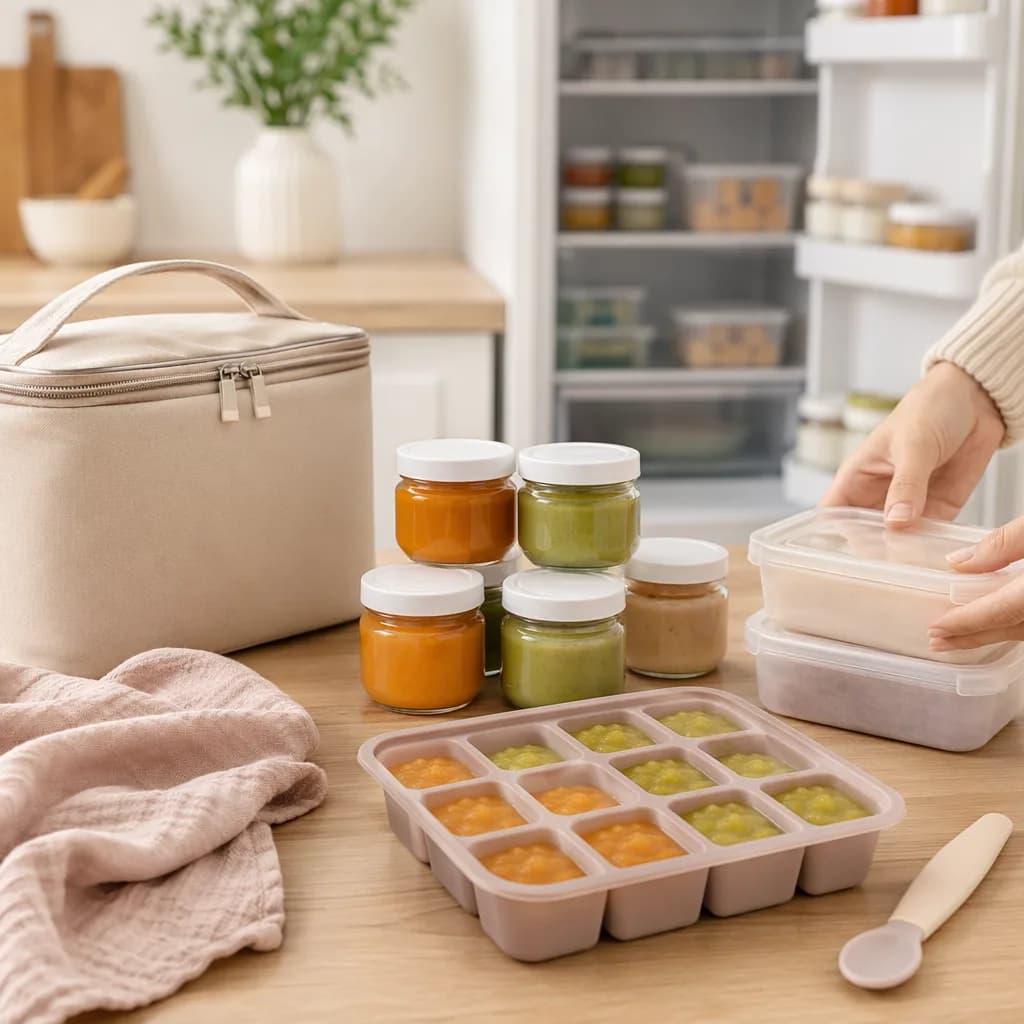
Good freezer containers include silicone freezer trays, small glass jars clearly labeled freezer-safe, BPA-free plastic baby food containers, and freezer bags laid flat. Once cubes are frozen, you can pop them into a freezer bag and label the bag with the food and date. “Peas, June 3” is much kinder to your tired future self than a mystery green cube.
Skip regular glass jars unless they’re labeled freezer-safe. Glass that isn’t made for freezing can crack as the food expands.
For timing, homemade fruit and vegetable purees are best used within 1-3 months in the freezer. Foods with meat, fish, or egg should be used within 1 month, and grain porridge is best within 1-2 months. Baby food mixed with breast milk isn’t recommended for freezing. If you’re working through first foods, this is a good time to keep notes alongside guides like Baby-Led Weaning Basics: Safe First Foods and Purees vs Baby-Led Weaning: Which Fits Your Baby?.
Some foods freeze more gracefully than others. Banana, avocado, potato, and some dairy-based purees may come out a little grainy, watery, or browned. They may still be usable within the safe window, but the texture might not be as lovely as it was fresh.
To prevent freezer burn, use tight lids, press extra air out of freezer bags, and keep labels clear. Tuck food toward the back of the freezer where it stays colder and freezes faster.
If you’re freezing iron-rich meals or new allergen foods, label carefully so you can track what baby ate and when. These guides can help: Iron-Rich Foods for Babies: First Foods That Work and Introducing Allergens to Baby Safely and Calmly.
Thawing and reheating without guesswork
The easiest routine is boring in the best way: after dinner, move tomorrow’s lunch cubes from the freezer to the fridge. By morning, they’re thawing safely, and you’re not trying to soften a frozen pea puree while the baby is already hungry.
For thawing, the safest option is overnight in the fridge. If you’re short on time, keep the food in a sealed container and thaw it in water rather than leaving it out on the counter. Thawed baby food shouldn’t sit at room temperature for long, because lukewarm food gives bacteria time to multiply. Once it’s thawed, use it within 24 hours.
Microwaves are handy, but they need extra attention. They can heat unevenly and create hot spots, especially in thick purees like sweet potato or squash. One spoonful might feel barely warm while another is hot enough to burn. After reheating, stir really well, all the way through to the center, then test a small dab on the inside of your wrist. You’re aiming for lukewarm, not hot.
Reheat only once. If food has already been warmed and cooled, toss what’s left instead of saving it for later. And don’t refreeze thawed baby food. Each thaw and freeze cycle gives bacteria another chance to build up, even if the food still looks fine.
If you’re mixing feeding styles, these same food-safety habits still apply. A tray of puree cubes and soft finger foods from Baby-Led Weaning Basics: Safe First Foods can live side by side in your week. The same goes for iron-rich first foods or new ingredients you’re tracking while introducing allergens calmly. Keep portions small, thaw only what you need, and let the rest stay frozen.
Homemade baby food storage by food type
A simple storage rule helps on those nights when dinner, bath, and bedtime all seem to happen at once: label everything, use the shortest safe window for the ingredients inside, and toss anything that’s been in the feeding bowl after a spoon touched your baby’s mouth.
Here’s the quick version for homemade baby food:
| Food type | Fridge | Freezer |
|---|---|---|
| Fruit purees | 2-3 days | 1-3 months |
| Vegetable purees | 2-3 days | 1-3 months |
| Grain porridge, like rice or oatmeal | 1-2 days | 1-2 months |
| Meat, poultry, fish, or egg purees | 1-2 days | 1 month |
| Mixed meals with meat, fish, or egg | 1-2 days | 1 month |
| Food mixed with breast milk | 24 hours | Not recommended |
For beans, mixed vegetables, pasta-based meals, or anything with several ingredients, it’s safest to label the container clearly and follow the shortest storage time for whatever is in the mix. If chicken is blended into a carrot puree, for example, treat it like a meat puree, not a vegetable puree.
Single-ingredient purees are easier in the early weeks. A tray of plain pear cubes and a tray of plain sweet potato cubes are simple to label, rotate, and use up on time. They also make it easier to notice patterns if you’re watching for reactions, especially while introducing allergens calmly. Keep newer foods separate from familiar favorites at first. Plain oatmeal today, egg another day, peas another day. Less guessing.
Cooked food should be cooled quickly before it goes into containers, then moved into the fridge or freezer promptly. Don’t put hot food straight into the freezer, since it can raise the temperature around nearby foods. Rice, pasta, and grain-based foods need the same careful treatment: cool them promptly, store them cold, and don’t leave them sitting warm.
If you want the smoothest texture, mix in breast milk right before serving instead of before freezing. This works nicely with purees or baby-led weaning, and it keeps storage simpler. For heartier first foods, meat, fish, egg, and other iron-rich baby foods just need tighter storage windows and clear labels.
Opened jars, pouches, and store-bought baby food
Unopened jars and pouches are the easy part. Most can sit in a cool pantry until the printed date, as long as the packaging is intact and they haven’t been stored somewhere hot, like the back of a car or beside the stove.
Once you open them, the rules change fast. Treat opened store-bought baby food like homemade food: refrigerate it right away and use it within the time listed on the package. Many opened baby foods need to be used within 2-3 days, but brands can vary by ingredients and processing, so the label gets the final say.
One small habit helps a lot: don’t feed straight from the jar or pouch if you want to save leftovers. Spoon a serving into a clean bowl first. If a spoon that’s been in your baby’s mouth goes back into the jar, saliva gets mixed in, and the rest can spoil quickly. Same goes for pouches. Once a pouch has been squeezed directly into your baby’s mouth, toss whatever is left.
Before opening, give the package a quick parent-check. Skip anything with a broken seal, leaking pouch, swollen lid, rust, cracks, or food that spurts when opened. It’s annoying to waste food, especially when you packed it for an outing, but this is one of those times where tossing it is the calmer choice.
As your baby starts trying more textures and ingredients, storage gets easier when you build simple routines. You might pair store-bought purees with ideas from Purees vs Baby-Led Weaning: Which Fits Your Baby?, or use pantry pouches alongside safe finger foods from Baby-Led Weaning Basics: Safe First Foods. If you’re checking labels for new ingredients, especially common allergens or protein-rich options, keep Introducing Allergens to Baby Safely and Calmly and Iron-Rich Foods for Babies: First Foods That Work close by.
Baby food storage for daycare, errands, and travel
Packing baby food to leave the house is mostly about one simple goal: keep cold food cold until it’s served. An insulated lunch bag with enough ice packs is your friend here. Tuck the food right against the ice packs, zip the bag fully, and try not to open it over and over while you’re out.
For daycare, keep it boring and clear. That’s a good thing.
A simple daycare setup might look like this: two labeled puree cubes, already thawed in a small sealed container, plus a clean spoon in a separate bag and a short note that says, “Serve at lunch. Stir well. Warm until steaming, then cool to lukewarm before feeding.” Add the date made and the ingredient name on the container, especially if you’re working through new foods or tracking reactions after reading Introducing Allergens to Baby Safely and Calmly.
If daycare has a fridge, ask that the food goes in as soon as possible after drop-off. Even if it’s packed with ice packs, the fridge gives you a steadier cold temperature and less guesswork by lunchtime.
For errands or a longer outing, you’ve got a few practical options. Unopened shelf-stable pouches are easy because they can stay at room temperature until opened. Frozen puree cubes can work nicely too, since they may thaw by lunch while staying chilled in the lunch bag. Small containers packed in a cooler are another solid choice, especially for foods you’ve made ahead after comparing Purees vs Baby-Led Weaning: Which Fits Your Baby?.
Once baby food has been sitting at room temperature, use the 2-hour rule. In hot weather or a warm car, 1 hour is the safer limit. Warm cars change the math fast.
And after feeding, don’t save what’s left in the bowl. Once a spoon has touched your baby’s mouth and gone back into the food, saliva can bring in bacteria. Toss the leftovers, even if it feels wasteful. Pack smaller portions next time, maybe one cube instead of two.
Best containers and labels for less waste
The best container is the one that matches how your baby actually eats.
Silicone trays are great for freezing single servings of puree. Once the cubes are solid, pop them into a freezer bag, press out extra air, and label the bag clearly. Small jars work well in the fridge, especially for fruit or veggie purees you’ll use within a couple of days. Snap-lid containers are handy for daycare portions or meals with more texture, like grain porridge. Reusable pouches can be convenient for outings, but they’re easiest to manage when filled with food you plan to use soon.
Freezer bags save space, but they need good labeling. Write the food, date made, date frozen, and anything added, like breast milk, water, cinnamon, or a splash of cooking liquid. Painter’s tape works surprisingly well on jars and containers, and freezer labels are made to stay put in cold storage.
Portion size matters too. Tiny portions prevent that frustrating moment where your baby eats three bites and the rest has to be tossed because the spoon touched their mouth. If you’re comparing feeding styles, Purees vs Baby-Led Weaning: Which Fits Your Baby? can help you plan realistic portions.
Keep older food at the front of the freezer so it gets used first. A simple freezer inventory on the fridge door helps too: “peas, June 2, 4 cubes.” Add notes as you try foods from Baby-Led Weaning Basics: Safe First Foods, Iron-Rich Foods for Babies: First Foods That Work, or Introducing Allergens to Baby Safely and Calmly.
Common baby food storage mistakes to avoid
Even careful parents get tripped up by baby food storage. Usually it’s not one big mistake. It’s the tiny “I’ll just deal with it in a minute” moments.
- Saving food from the feeding bowl after the spoon has gone back and forth. Once a spoon touches your baby’s mouth and goes back into the bowl, saliva gets mixed into the food. That bowl is done. Toss what’s left, even if it feels painful to waste a few bites.
- Leaving cooked puree on the counter while finishing chores. Puree that sits out at room temperature gives bacteria time to multiply. Cool it quickly, portion it, and get it into the fridge or freezer instead of letting it wait while you fold laundry or rinse bottles.
- Freezing one big container. It sounds efficient, but then you’re stuck thawing more than you need. Single servings are much easier. A silicone cube tray works well, especially if you’re comparing spoon-feeding with ideas from Purees vs Baby-Led Weaning: Which Fits Your Baby?.
- Forgetting to label. Carrot and sweet potato can look pretty similar when frozen. Write the ingredient and date before it disappears into the freezer.
- Putting hot food straight into deep containers. Deep containers slow cooling, and hot food can raise the freezer temperature around it. Let food cool first, then portion it.
- Storing baby food in the fridge door. The door gets more temperature swings, so place baby food deeper inside the fridge where it stays colder and steadier.
- Using damaged containers or loose lids. If a lid doesn’t seal tightly, swap it out.
Safe storage also helps when you’re building variety with Baby-Led Weaning Basics: Safe First Foods, adding Iron-Rich Foods for Babies: First Foods That Work, or tracking reactions from Introducing Allergens to Baby Safely and Calmly.
Frequently Asked Questions
How long can baby food stay in the fridge?
Most homemade fruit and vegetable purees keep for about 24-48 hours. Meat, poultry, fish, and mixed meals are safest used within 24 hours.
Can you freeze homemade baby food?
Yes. Freeze homemade baby food in small airtight portions, label it, and use it within 1-3 months for best quality.
How do you thaw frozen baby food?
Thaw it overnight in the fridge, under cold running water in a sealed container, or in the microwave. Stir well and check for hot spots.
Can you refreeze thawed baby food?
Usually, no. Do not refreeze thawed baby food unless it has been cooked again after thawing.
How long can baby food sit out?
Use or refrigerate baby food within 2 hours. In hot weather or a warm car, toss it after 1 hour.
Can I save baby food after my baby ate from the bowl?
No. Once the spoon has touched your baby's mouth and gone back into the food, toss any leftovers from that bowl.
What is the best way to store baby food for daycare?
Pack it in a labeled airtight container inside an insulated bag with ice packs, then refrigerate it at daycare if possible.
Can opened baby food pouches be saved?
Only if your baby did not eat directly from the pouch. Refrigerate right away and follow the package storage directions.
Frequently asked questions
How long does homemade baby food last in the fridge?
Can I save baby food after my baby has eaten from it?
What’s the safest way to freeze baby food?
How do I pack baby food for travel?
References
Sources
External research this article was grounded in.
Related reading
More from the journal → baby-food
Baby Led Weaning vs Purees: Which Fits Your Baby?
Baby led weaning and purees can both work. Here’s how to compare safety, mess, feeding skills, iron needs, and your real family schedule.
14 min readJul 18, 2026 baby-food
Baby-Led Weaning Basics: Safe First Foods
A calm starter guide to baby-led weaning, with readiness signs, safe first foods, choking basics, and simple ways to begin.
13 min readJul 3, 2026- baby-food
Introducing Allergens to Baby Safely and Calmly
A calm, practical guide to introducing baby allergens safely, with timing tips, safe textures, high-risk cautions, and what reactions to watch for.
12 min readJul 3, 2026