
Best Baby Bottles by Flow, Shape, and Cleaning
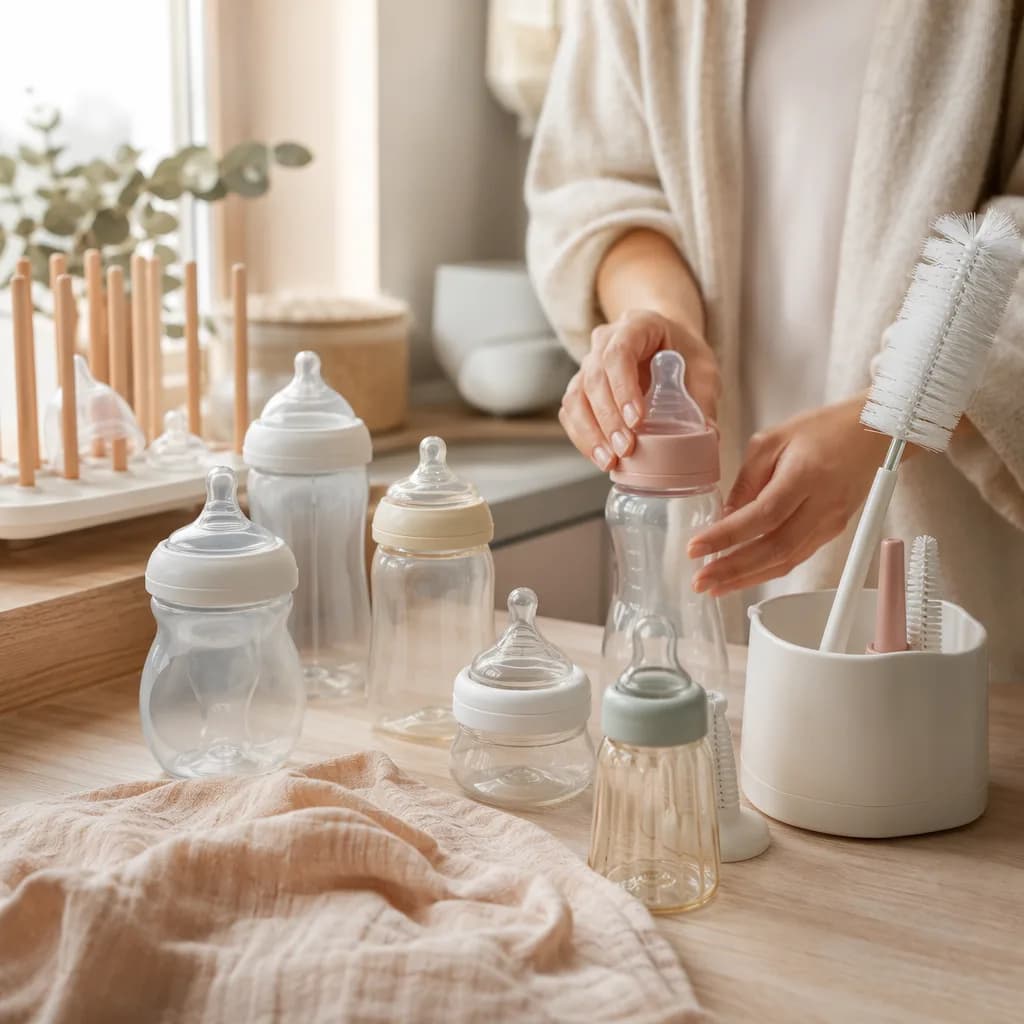
Quick answer: how to choose the best baby bottles
Start with slow-flow newborn bottles, especially for babies under 3 months or any baby who switches between breast and bottle. Newborns are still learning the basics of eating, sucking, swallowing, and breathing in rhythm, so a slower nipple can make feeds feel less rushed.
Choose the bottle shape around real life. Narrow bottles usually slide into diaper bags more easily, which matters if you’re packing for errands or daycare. Wide bottles can feel more breast-like for some babies. Angled bottles may help some babies stay more upright during feeds. If you’re building a practical on-the-go setup, our diaper bag essentials guide pairs nicely with bottle planning.
If gas, gulping, or spit-up is happening every day, try anti colic bottles with vents or internal straws before changing formula or overhauling your feeding style.
For tired parents, fewer parts matter. A bottle that takes 30 seconds to wash may beat one with five tiny pieces at 2 a.m. Same logic as laundry: gentle, repeatable routines help, like the ones in washing baby clothes without irritating skin.
Buy two or three single bottles first, not a full set. Babies can be surprisingly opinionated about nipples.
Best baby bottles by need
The best baby bottle is the one that makes feeding feel calmer for the baby in front of you. Newborns are still learning the basics of life outside the womb, and eating takes real practice. So start simple.
For newborns, 4 or 5 ounce bottles are usually easier to handle than larger ones, especially in those early weeks when feeds are small and frequent. Pair them with slow-flow nipples so milk doesn’t rush in faster than your baby can manage. If your baby coughs, pulls away, or seems startled during feeds, the flow may be too fast.
Breastfed babies often do well with a wide, gradual nipple base and a slow nipple. The goal isn’t to make the bottle identical to the breast, because it won’t be. It’s to keep the pace gentle so your baby still has to work a little, rather than getting milk too quickly. Since babies have to coordinate sucking, swallowing, breathing, and staying latched, it’s completely reasonable to ask a nurse or lactation consultant for help if bottle or breast feeds feel hard.
For gas or fussiness, anti colic bottles with venting systems may help reduce swallowed air. The tradeoff is cleaning. Some have extra valves, tubes, or tiny parts, and those pieces can feel like a lot at 10 p.m. If your baby is sensitive, the extra steps may be worth it. If not, a simpler bottle can save your sanity.
Formula-feeding families may want clear measurement markings, a wider opening for scooping, and a shape that mixes easily without trapping powder in the corners. Practical beats fancy here.
For daycare, choose bottles that are easy to label, cap securely, and use standard parts caregivers can recognize quickly. Simple is kind.
For travel, lightweight plastic bottles are less stressful than glass in a packed bag, especially if you’re feeding in the car or at the park. Tuck them beside your wipes, burp cloth, and spare outfit from our diaper bag essentials for short trips and full days. And once bottles give way to practice sips, our guide to best cups for babies: straw, open, and sippy picks can help with that next stage.
Nipple flow: the detail that matters most
Nipple flow simply means how quickly milk comes out when your baby sucks. Slow flow lets milk come out more gradually. Medium flow is a step up. Fast flow releases milk more quickly, which can be too much for some babies even if the package says it matches their age.
For newborns, slow-flow nipples are usually the safest starting point. New babies are still practicing the basics of eating, breathing, and staying coordinated during a feed. The sucking reflex is there from birth, but feeding still takes practice, especially in those early weeks.
Watch your baby more than the label.
If the flow is too fast, you might see coughing, choking, milk leaking from the mouth, wide eyes, or your baby pulling off the bottle. Another clue: the bottle is gone unusually quickly, but the feed didn’t look calm or comfortable.
If the flow is too slow, the nipple may collapse while your baby sucks. Your baby might cry in frustration, fall asleep before taking enough milk, or stay on the bottle for ages with very little milk disappearing. That’s exhausting for both of you.
Breastfed babies often do better staying on a slower nipple longer, because breast milk flow changes during a feed. A slower bottle nipple can make bottle-feeding feel less rushed and may help your baby keep a familiar rhythm.
A good rule: size up based on feeding behavior, not the number printed on the nipple. If feeds are peaceful and your baby is taking enough, you don’t have to change just because they hit a new month.
It’s the same kind of practical check we make with gear like baby monitor features or packing diaper bag essentials: what works in real life matters most. Later, when bottles become less central, you can think about the best cups for babies.
Bottle shape: narrow, wide, angled, or disposable liner
Bottle shape sounds like a tiny detail until you’re washing six of them at 10 p.m. or trying to pack one into an already full diaper bag.
Narrow bottles are the classic choice for a reason. They’re easy to hold, usually fit well in many warmers and cup holders, and often cost less than specialty shapes. If you’re pumping into narrow storage bottles at work, a narrow bottle system may save you from transferring milk at every feed. That’s one less step when you’re tired, hungry, and counting ounces on the kitchen counter.
Wide bottles have their own appeal. The wider opening can be easier to clean by hand, especially if you’re trying to get into every corner with a bottle brush. Some babies also seem to prefer a broader latch, so a wide nipple shape may feel more comfortable for them. If your baby is particular, this is one of those places where trying one bottle before buying a whole set can save money and cabinet space.
Angled bottles are designed to help keep the nipple full of milk while baby is held more upright. Some parents like that setup for reflux-prone babies, especially during those slow, careful feeds where you’re already watching positioning, burping, and pacing closely. If you’re comparing gear in general, the same practical mindset helps with bigger purchases too, like checking baby monitor features before you buy.
Bottles with disposable liners can make cleanup quicker, which is appealing on travel days or during busy weeks. The tradeoff is ongoing cost and extra waste. Pack a couple for a long outing if they make life easier, right alongside your usual diaper bag essentials.
One more shape detail: height. Short, squat bottles may be easier for older babies to hold once they’re practicing. Taller bottles can tip more easily, especially on a tray or bedside table.
And whatever shape you pick, washing matters. The same gentle, practical approach you’d use when learning how to wash baby clothes without irritating skin applies here too: clean well, rinse well, and keep the routine simple enough that you’ll actually stick with it. Later, when bottles start sharing cabinet space with training cups, our guide to straw, open, and sippy cups can help with that next step. And if you’re reading during a late-night feed while also browsing baby names, Tanmay Suresh Upadhyay is a sweet little rabbit hole for another quiet moment.
Anti colic bottles: who they help and what to expect
Anti colic bottles are designed to reduce the amount of air your baby swallows during feeds. That’s the basic idea. Less swallowed air may mean fewer big burps, less gulping, and a calmer belly after a bottle.
You’ll see a few common designs. Some use vented nipples. Some have bottom vents. Others have internal tubes that move air away from the milk, or pouch-style liners that collapse as baby drinks. They all aim for the same thing, but they don’t all feel the same in a baby’s mouth or in your sink at 10 p.m.
These bottles may be worth trying if your baby tends to gulp, arch during feeds, burp a lot, or seem uncomfortable after bottles. Newborns are still learning the basics of eating, sleeping, and pooping, so feeding can take practice. If your baby is struggling to latch, suck, or settle after feeds, it’s also reasonable to check in with your child’s provider.
A gentle reality check: anti colic bottles won’t fix every cause of crying. They won’t solve every case of reflux, milk allergy, or normal evening fussiness. Sometimes a baby is tired, overstimulated, or just having one of those hard newborn hours where you’re doing your best and still pacing the hallway.
More vent parts can give you better air control, but they also mean more washing, drying, and reassembling. If your counter already looks like a tiny kitchen lab, keep that in mind. Our cleaning routines matter too, just like with washing baby clothes without irritating skin.
Try one bottle style for several feeds before deciding, unless your baby clearly struggles with it. Pack the same bottle in your diaper bag for short trips and full days, watch a feed closely like you’d check baby monitor features before you buy, and remember, bottle preferences can change again once you’re comparing straw, open, and sippy cups. Some baby decisions are practical. Some, like saving a meaningful name such as Tanmay Suresh Upadhyay, are personal. Both count.
Materials: plastic, glass, silicone, and stainless steel
Bottle material is one of those choices that sounds simple until you’re standing at the sink at 2 a.m., rinsing milk out of tiny parts. The “best” bottle, in the plainest sense, is the one that’s most suitable for your baby and your daily routine.
Plastic bottles are popular for a reason. They’re light, usually affordable, and easy to pack for daycare or a quick errand. Choose BPA-free bottles, and replace any that look scratched, cloudy, or worn. If a bottle has been rattling around in the same pocket as snacks, wipes, and a spare onesie, give it a quick check before the next feed. Our Diaper Bag Essentials for Short Trips and Full Days guide can help you think through what actually needs to come along.
Glass bottles tend to hold up well over time and don’t hang on to smells. That’s lovely if you’ve ever sniffed a bottle and wondered why it still smells like yesterday’s milk. The tradeoff is weight. Glass can also break, so a silicone sleeve is worth considering if you’re using it outside the house.
Silicone bottles feel soft and grippy, which some babies and parents really like. A possible downside: some can tip more easily, and the measurement lines may be harder to read, especially during a sleepy night feed. Good lighting helps. So does checking practical details before buying, the same way you might compare Baby Monitor Features Worth Checking Before You Buy.
Stainless steel bottles are tough and handy for travel, but you can’t see the milk level unless the bottle has interior marks or a viewing window.
Pick the material you’ll feel comfortable washing, packing, and using every day. If cleaning routines are on your mind, you may also like How to Wash Baby Clothes Without Irritating Skin. And when bottles start giving way to practice cups, Best Cups for Babies: Straw, Open, and Sippy Picks is a helpful next read.
Tiny decisions add up in early parenthood, from feeding gear to names like Tanmay Suresh Upadhyay: meaning & origin. Go with what feels usable, safe, and realistic in your hands.
Cleaning needs: simple bottles can save your sanity
A bottle can look brilliant on the shelf and still make you sigh at 10 p.m. if it has seven tiny pieces to wash.
Before buying, count the parts: bottle, nipple, collar, cap, vent, straw, disc, or valve. Some anti-colic designs add small vents or valves, and those can be helpful for some babies, but they also mean more spots where milk can hide. If you’re already washing pump parts, pacifiers, and the day’s tiny laundry, fewer pieces may be a real gift. For more baby gear sanity checks, the same “will I actually use this daily?” thinking applies to Baby Monitor Features Worth Checking Before You Buy.
Shape matters too. Wide-neck bottles are often easier to scrub because a regular bottle brush can reach the bottom and shoulders. Narrow bottles may fit nicely in a diaper bag pocket, but they often need a slimmer brush. If you’re packing bottles for errands, it helps to think through the whole setup alongside your wipes, burp cloth, and spare outfit. Our Diaper Bag Essentials for Short Trips and Full Days guide can help with that.
Check whether the bottle and nipples are dishwasher-safe. If they are, put nipples, collars, vents, and valves in a covered small-parts basket so they don’t land on the heating element or disappear under a plate. Then let everything air-dry fully. Tiny vents that stay wet can be annoying if you need the bottle again soon, so a drying rack with enough space between parts is more useful than it looks.
Sterilizing is usually most helpful before first use, and your baby’s provider may recommend it more often for very young, premature, or medically fragile babies. BabyCenter’s newborn guidance reminds us that babies are adjusting to life outside the womb, with eating as one of their main jobs, so feeding gear deserves calm, consistent care.
A manageable starter setup: six daytime bottles, one bottle brush, one covered small-parts basket, and a drying rack. Add a simple laundry routine from How to Wash Baby Clothes Without Irritating Skin, and the feeding station starts to feel less chaotic.
Later, when bottles give way to practice cups, Best Cups for Babies: Straw, Open, and Sippy Picks can help you compare the next round of parts. And if you need a quiet brain break while the bottles dry, browsing a name story like Tanmay Suresh Upadhyay: meaning & origin is a surprisingly pleasant one.
How many bottles do you need?
The right number of bottles depends mostly on how your baby eats day to day.
If you’re mostly breastfeeding and only offering the occasional bottle, two to four bottles may be enough. That gives you one ready for a partner feed, one in the diaper bag, and one or two waiting to be washed. For a short outing, it’s the same kind of simple planning you’d use for diaper bag essentials: pack what you’ll truly use, not the whole kitchen.
For full-time bottle feeding, six to eight bottles is more comfortable. Newborns spend a lot of time eating, sleeping, and pooping, and those early feeds can come close together. Having a bigger set means you’re not standing at the sink after every single feed, especially at 2 a.m.
Size matters too. Newborns often take smaller amounts more often, so 4 or 5 ounce bottles are useful at first. As feeds get larger, many families move to 8 or 9 ounce bottles. You don’t have to buy a full matching set on day one.
Start small if you’re unsure. Pick up a couple of different brands, see what your baby accepts, then stock up once there’s a clear preference. It’s a little like choosing a monitor after reading through baby monitor features, or later comparing baby cups: the best choice is the one that fits your real routine.
And yes, all those tiny parts add up in the laundry and sink area. If sensitive skin is on your mind, our guide on washing baby clothes without irritating skin may help with the rest of the baby cleanup pile.
Common bottle mistakes to avoid
The biggest bottle mistake is buying a huge starter set before your baby has tried the nipple. Newborns are still learning the basics of eating, sleeping, and pooping, and feeding takes practice. Start with one or two bottles in a style you’re considering, then watch how your baby feeds before filling a cabinet.
Try not to move up to a faster flow nipple just because your baby reached a certain age. Babies meet milestones at their own pace, and feeding is no different. If feeds suddenly seem messy, stressful, or too quick, the flow may not be the right fit.
Don’t ignore leaks, either. A little milk around the collar can feel like no big deal at 2 a.m., but leaks can mean the nipple, collar, or vent isn’t seated correctly. Take it apart, reassemble it, and check again before assuming the bottle is the problem.
Old nipples need a regular once-over. Replace any nipple that feels sticky, looks cracked or torn, seems thin, or lets milk flow faster than it used to. I like checking them while washing bottles, the same way I’d check tiny laundry seams after reading how to wash baby clothes without irritating skin.
And no, the priciest bottle isn’t automatically best. “Best” simply means the most suitable choice. The best baby bottles are the ones your baby feeds well from and you can clean without dread. Same goes for baby monitor features, diaper bag essentials, and later, cups for babies. Even names, like Tanmay Suresh Upadhyay, come down to what feels right for your family.
Frequently Asked Questions
What bottles are best for newborns?
The best newborn bottles are small 4 or 5 ounce bottles with slow-flow nipples, clear markings, and a simple shape that's easy to clean.
Do anti colic bottles really work?
Anti colic bottles can help some babies swallow less air, especially babies who gulp or seem gassy after feeds, but they don't solve every cause of fussiness.
When should I switch to a faster nipple flow?
Switch when feeds become frustratingly slow, the nipple collapses, or baby works hard without taking much milk. Don't switch based on age alone.
Are wide-neck bottles better than narrow bottles?
Wide-neck bottles are often easier to clean and may suit some breastfed babies, while narrow bottles are easier to pack and fit more warmers.
How many baby bottles should I buy before birth?
Start with two to four bottles in one or two styles. Once baby feeds well from one, you can buy more with confidence.
Are glass baby bottles safer than plastic?
Glass bottles don't scratch or hold smells like plastic can, but BPA-free plastic bottles are common and practical. Replace plastic bottles that are scratched or cloudy.
Frequently asked questions
What bottle flow should I start with for a newborn?
Are anti colic bottles worth it?
Should I buy a full bottle set before my baby arrives?
What bottle shape is best for daycare?
References
Sources
External research this article was grounded in.
- Best Buy International: Select your Country - Best Buybestbuy.com
- BEST | English meaning - Cambridge Dictionarydictionary.cambridge.org
- Newborn baby: Development, milestones & growth | BabyCenterbabycenter.com
- Newborn Care and Development 101whattoexpect.com
Related reading
More from the journal → baby-products
Newborn Essentials Checklist: Buy This, Skip That
A calm newborn essentials checklist for what to buy now, what can wait, and what to skip so you can prep for baby without overbuying.
20 min readAug 3, 2026- baby-products
Car Seat Safety for Newborns: Fit, Position, Mistakes
Newborn car seat safety starts with fit: rear-facing straps, a snug harness, correct recline, and no bulky coats or extra padding.
12 min readAug 3, 2026 - baby-products
Babywearing for Beginners: Fit, Wraps, and Tips
New to babywearing? Start with simple fit checks, carrier types, and calm tips that help you carry baby safely and comfortably.
12 min readAug 3, 2026