
Best Baby Monitor: Audio, Video, Wi-Fi Choices
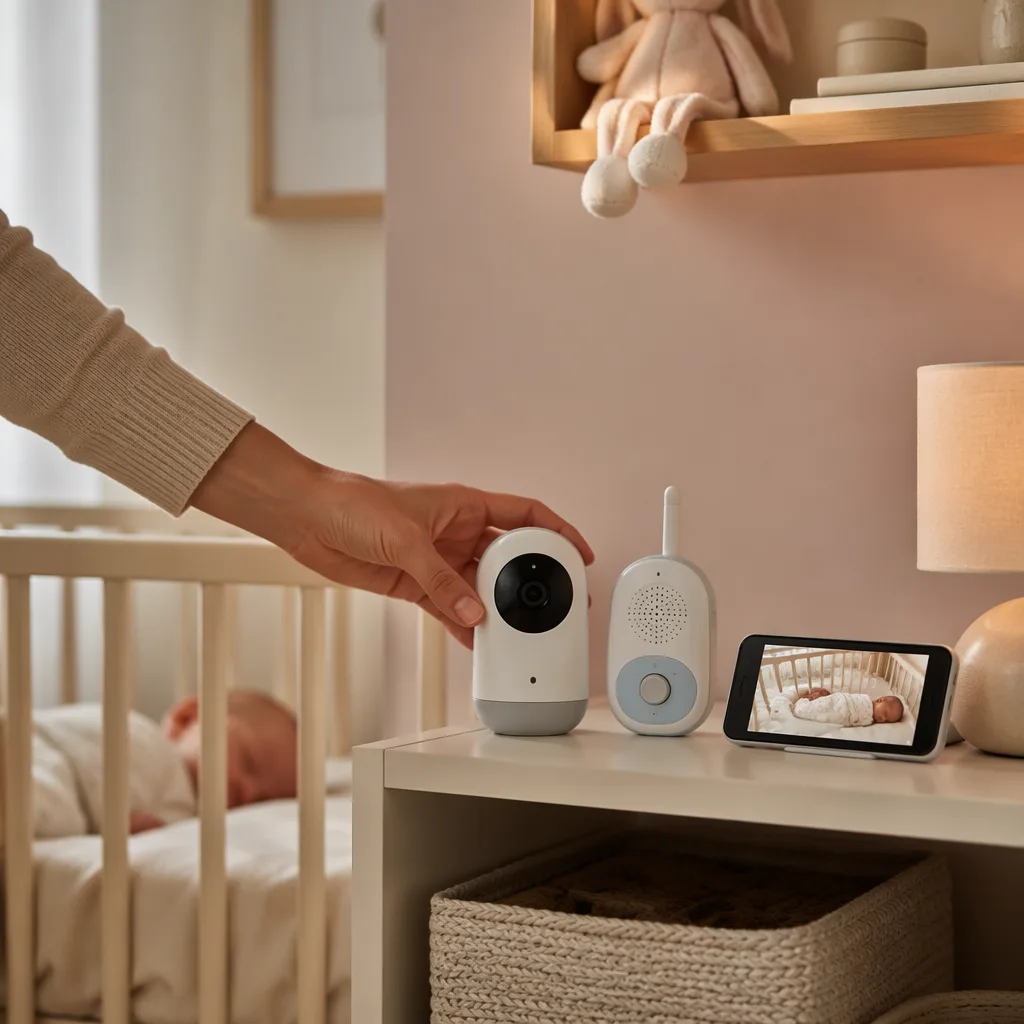
Start With What You Actually Need to Hear or See
The best baby monitor isn’t always the one with the longest feature list. It’s the one that fits your home, your baby’s sleep setup, and your own comfort level at 2 a.m. In the plainest sense, “best” means the most suitable choice, and that’s a helpful way to think about monitors.
Start with distance. Can you hear the nursery from your bedroom, or are there stairs, thick walls, or a closed door in between? A small apartment may only need a simple audio monitor, especially if the crib is close and background noise is low. A two-story house may feel much easier with video and strong range, so you’re not running upstairs every time you hear a squeak.
Then think about noise. If you use a fan, white noise machine, dishwasher, or older sibling’s bedtime chatter, audio sensitivity matters. If you have twins, siblings sharing a room, or a baby who naps in both a bassinet and crib, camera placement and extra units may matter more than fancy extras.
Shared room sleep is different too. If your baby is in a bassinet near your bed, you may not need much beyond your own ears for now. Later, when the crib moves farther away, your needs may change, just like they do with feeding gear such as baby bottles by flow, shape, and cleaning or sleep tools like pacifiers by age, sleep, and weaning.
More features can be helpful, but they also mean more alerts, charging, apps, updates, and settings to manage. Before you buy, make a short list of what would actually calm you. Then compare it with these baby monitor features worth checking before you buy. Keep it practical, like packing diaper bag essentials for short trips and full days, or choosing a name with personal meaning, like Tanmay Suresh Upadhyay.
Audio Baby Monitors: Simple, Cheap, and Often Enough
An audio baby monitor is the simplest kind: one unit stays near the crib, and the parent unit lets you hear what’s happening from another room. Crying, fussing, coughing, little grunts, rustling sheets, or movement sounds all come through, so you can decide whether baby needs you or is just shifting between sleep cycles.
For many families, audio is enough.
The biggest draw is how low-fuss these monitors are. They usually cost less than video or Wi-Fi models, they’re quick to set up, and there’s no app account or camera feed to think about. That can mean fewer privacy worries, which feels good when you’re already making a hundred decisions about sleep, feeding, and gear. Many audio monitors also have strong battery life, and there’s no glowing screen lighting up your nightstand at 2 a.m.
The tradeoff is clear: you can’t see baby. If you hear a noise, you may not know whether they’re settling back down, chewing on a pacifier, or stuck in a strange position. If pacifiers are part of your sleep setup, our guide to Pacifier Pros and Cons by Age, Sleep, and Weaning may help you think that through. Audio monitors can also run into static or range problems, especially in larger homes.
If you’re comparing models, look for clear sound, volume lights, good range, and a rechargeable parent unit. Two-way talk can be helpful if your baby calms to your voice, though some babies perk right up when they hear you. For a broader checklist, see Baby Monitor Features Worth Checking Before You Buy.
Audio monitors also pair nicely with a simple baby setup: bottles that are easy to wash, a stocked diaper bag, and names you love, like Tanmay Suresh Upadhyay. If you’re still sorting feeding gear, Best Baby Bottles by Flow, Shape, and Cleaning is a practical next read, and Diaper Bag Essentials for Short Trips and Full Days can help keep outings calmer.
Video Baby Monitors: Helpful Eyes on the Crib
A video baby monitor lets you see the crib instead of only hearing sound from the nursery. For many parents, that small screen brings a lot of calm. You can check whether baby is actually awake, still asleep, rolling around, looking for a pacifier, or just making those tiny sleep noises that somehow sound very dramatic at 2:13 a.m.
There are two common styles. A non-Wi-Fi video monitor usually comes with a local parent unit, which is basically its own little screen. You keep it on your nightstand, clip it nearby while folding laundry, or carry it from room to room. App-based models use your phone or tablet as the screen, which can feel convenient if you already live with your phone close by.
The best choice is the one that fits how you actually parent at night. Cambridge defines “best” as the most suitable or effective option, and that’s a helpful way to think about monitors too. If you like a separate device that doesn’t compete with texts and alerts, a parent-unit monitor may feel easier. If you want to check the crib from an app, an app-based model may suit you better. For a bigger buying checklist, this guide to Baby Monitor Features Worth Checking Before You Buy is a good next read.
Features worth comparing:
- Night vision, so you can see in a dark room
- Camera angle, especially if the crib is in a corner
- Zoom, for checking little movements without walking in
- Screen size, because squinting at midnight gets old
- Battery life on the parent unit
- Temperature display, if room comfort is on your mind
- The option to add extra cameras later
There are a few practical downsides. Video monitors often cost more than audio-only ones. Screen checking can become a habit, especially in the early weeks. Cheaper cameras may also feel frustrating if the image lags or looks grainy.
One parent tip: set the camera up, then crouch down to crib level and check the view before you trust it overnight. Can you see baby’s face area? Are crib rails blocking the angle? Is the night view clear enough?
It’s the same kind of small prep that helps with other baby gear, like choosing Best Baby Bottles by Flow, Shape, and Cleaning, packing Diaper Bag Essentials for Short Trips and Full Days, or reading through Pacifier Pros and Cons by Age, Sleep, and Weaning. Little choices add up. And yes, sometimes we also end up reading baby name pages like Tanmay Suresh Upadhyay: meaning & origin during a nap trap.
Wi-Fi Baby Monitors: App Access With Tradeoffs
A Wi-Fi baby monitor streams video or audio through an app, usually to your phone or tablet. Instead of carrying a separate parent unit around the house, you open the app and check the nursery from wherever you have access.
That can be genuinely handy. If you’re back at work, you may be able to peek in during lunch. If grandparents have permission, they can see a sleepy wave after naptime without being in the room. Some Wi-Fi models also offer clearer video, and some include cloud features like saved recordings. Those extras can feel comforting, especially during a stretch when sleep is changing and you’re already thinking through things like feeds, soothing, and whether a pacifier is helping or hurting. If that’s you, our guide to Pacifier Pros and Cons by Age, Sleep, and Weaning may pair well with monitor shopping.
The tradeoffs are real, though.
Wi-Fi monitors depend on your internet connection, so an outage can interrupt access. Apps can glitch. Your phone battery can drain faster if you’re checking often or leaving video open. Some features may come with subscription costs. Privacy also deserves your attention, because app-based access means you’re managing logins, permissions, and settings.
Before buying, check the security basics. Use a strong, unique password. Turn on two-factor authentication if the app offers it. Keep the monitor’s firmware updated. Don’t share logins casually, even with people you trust, because shared passwords tend to keep spreading. For a broader checklist, see Baby Monitor Features Worth Checking Before You Buy.
Wi-Fi may be the best fit for parents who want remote access, travel often, or like having everything on a phone. It works especially well if you’re comfortable managing app settings. Think of it like packing for a day out: helpful when organized, stressful when it’s not. Our Diaper Bag Essentials for Short Trips and Full Days guide has that same practical spirit.
And while you’re comparing baby gear, you might also like Best Baby Bottles by Flow, Shape, and Cleaning. If naming is on your mind too, here’s a sweet pause: Tanmay Suresh Upadhyay: meaning & origin.
Breathing and Movement Monitors: What They Can and Can't Do
Breathing and movement monitors sit in their own little category. They’re different from a standard audio or video monitor because they’re trying to give you information about how your baby is moving, breathing, or resting.
The main types are pretty straightforward:
- Wearable socks or bands that go on your baby and track movement or breathing-related patterns.
- Under-mattress movement pads that sense motion from beneath the crib mattress.
- Smart monitors that use sensors or camera-based features to track breathing patterns while your baby sleeps.
For some parents, that extra layer of information feels calming. If you’re already checking the crib every ten minutes, a breathing monitor may help you sleep a little more. It can also be something to consider if you’ve talked with your pediatrician about a specific concern, or if your anxiety is high and you need extra reassurance while you work on getting more rest.
But these monitors have limits.
A consumer breathing monitor is not a substitute for safe sleep practices or medical care. It doesn’t replace putting your baby on their back, using a firm flat mattress, and keeping loose blankets, pillows, bumpers, and stuffed animals out of the crib. Those basics still matter every single night, with or without a monitor.
False alarms can happen too. And a false alarm at 2 a.m. is not a small thing. Your heart races, you’re suddenly wide awake, and even after everything is fine, it can take a while to calm your body down. If you know alarms will make you more anxious, that’s worth taking seriously before you buy.
If you’re comparing monitor styles, our guide to baby monitor features worth checking before you buy can help you sort out what you’ll actually use. You may also be thinking through the rest of nighttime care, like pacifier pros and cons by age, sleep, and weaning, which fits right into the same bigger sleep picture.
And because sleep gear is only one part of baby prep, it’s fine to balance this purchase with everyday needs too, like baby bottles by flow, shape, and cleaning or diaper bag essentials for short trips and full days. Some parents are comparing devices at midnight while also saving sweet name ideas, like Tanmay Suresh Upadhyay: meaning & origin. That’s real life with a baby on the way.
Features That Matter More Than Fancy Extras
The best baby monitor is the one that works clearly in your actual home, not the one with the longest feature list. If we’re ranking what matters most, start here: reliable signal, clear audio, battery life, easy controls, camera quality, and alerts that don’t make you jump every three minutes.
Reliable signal comes first because a monitor that cuts out at bedtime isn’t helpful. Think in real-life paths. Can you hear the nursery from the kitchen while washing bottles? Does the picture hold if you step into the basement to switch laundry? What about sitting on the porch for ten minutes, or walking into the yard while an older child kicks a ball around?
Clear audio is next. A fuzzy picture is annoying, but muffled sound can make every little noise feel confusing. Battery life matters too, especially if you carry the parent unit from room to room. Easy controls are a quiet lifesaver at 2 a.m., when you don’t want to tap through five screens just to lower the volume.
Camera quality helps most at night. You want to see whether baby is asleep, stuck in a corner of the crib, or just wiggling around. If you want a deeper checklist before shopping, this guide to Baby Monitor Features Worth Checking Before You Buy pairs well with this section.
A good return policy really matters. Monitor performance depends on your home layout and, for Wi-Fi models, your Wi-Fi strength. What works beautifully in one house may struggle in another.
Nice-to-have features can be lovely: lullabies, a night light, room temperature, pan and tilt, split screen, and white noise. Just don’t buy extras you won’t use, especially if they add subscriptions or extra app steps. It’s like choosing from Best Baby Bottles by Flow, Shape, and Cleaning or packing Diaper Bag Essentials for Short Trips and Full Days: simple usually wins when you’re tired.
And if sleep tools are on your mind, you may also like Pacifier Pros and Cons by Age, Sleep, and Weaning. Names on the nursery door can wait, though Tanmay Suresh Upadhyay: meaning & origin is a sweet rabbit hole for later.
How to Choose the Best Baby Monitor for Your Family
The best baby monitor is the one that’s most suitable for how your family actually lives, not the one with the longest feature list.
Start with the simplest decision path. If you want something easy, familiar, and quick to use, choose an audio monitor. It’s a good fit if you mostly need to hear when your baby wakes. If you feel calmer being able to peek without opening the nursery door, choose a video monitor. If you want to check in while someone else is caring for your baby, a Wi-Fi monitor may make sense because it’s built around remote access. If you’re considering a breathing monitor, think of it as extra tracking, not a promise of better sleep or a replacement for your usual safe sleep choices.
Then match the monitor to your real routine.
If you live in a small apartment, audio or a simple video setup may be enough. In a larger home, you may care more about range, volume, and battery life. If your baby naps while an older sibling plays downstairs, video might help you avoid unnecessary check-ins. If grandparents, a nanny, or a babysitter help often, look for controls that are easy to explain in one minute while you’re heading out the door with your diaper bag essentials.
Before you shop, choose two or three must-have features. That keeps the decision from getting messy. Maybe you want local video, no subscription, and two cameras. Maybe long battery life matters most because you carry the parent unit from room to room. Our guide to baby monitor features worth checking before you buy can help you narrow that list.
Budget matters too. A reliable basic monitor that you can use half-asleep at 2 a.m. may serve you better than an expensive one with menus you hate. We make the same kind of tradeoffs with feeding gear, sleep tools, and comfort items, from baby bottles to pacifiers.
And if you’re deep in baby prep, naming lists, and nursery decisions (hello, late-night searches like Tanmay Suresh Upadhyay), take a breath. The monitor is a tool. It can help you listen, look, and respond, but it isn’t the thing that makes sleep safe.
Frequently Asked Questions
What type of baby monitor is best for most parents?
A video baby monitor with clear night vision, good range, and reliable battery life works well for many families, but a simple audio monitor is enough for some homes.
Is a Wi-Fi baby monitor safe to use?
Yes, if you use strong security habits: a unique password, two-factor authentication, regular updates, and careful control over who can access the app.
Do I need a breathing monitor for my baby?
Most healthy babies don’t need one. If you’re worried about breathing or oxygen levels, ask your pediatrician what type of monitoring, if any, makes sense.
What is the difference between a Wi-Fi and non-Wi-Fi video baby monitor?
A Wi-Fi monitor streams through an app and can be viewed remotely. A non-Wi-Fi monitor usually uses a dedicated parent unit and only works within local range.
Can a baby monitor prevent SIDS?
No consumer baby monitor can prevent SIDS. Safe sleep habits matter most: back sleeping, a firm flat mattress, and an empty crib.
What features should I look for in the best baby monitor?
Prioritize reliable signal, clear sound, good night vision if using video, long battery life, easy controls, and alerts you’ll actually respond to.
Frequently asked questions
Is an audio baby monitor enough?
When is a video baby monitor worth it?
Are Wi-Fi baby monitors safe to use?
What features matter most in a baby monitor?
References
Sources
External research this article was grounded in.
- Best Buy International: Select your Country - Best Buybestbuy.com
- BEST | English meaning - Cambridge Dictionarydictionary.cambridge.org
Related reading
More from the journal → baby-products
Newborn Essentials Checklist: Buy This, Skip That
A calm newborn essentials checklist for what to buy now, what can wait, and what to skip so you can prep for baby without overbuying.
20 min readAug 3, 2026- baby-products
Car Seat Safety for Newborns: Fit, Position, Mistakes
Newborn car seat safety starts with fit: rear-facing straps, a snug harness, correct recline, and no bulky coats or extra padding.
12 min readAug 3, 2026 - baby-products
Babywearing for Beginners: Fit, Wraps, and Tips
New to babywearing? Start with simple fit checks, carrier types, and calm tips that help you carry baby safely and comfortably.
12 min readAug 3, 2026