
When Do Babies Sit Up? Signs, Practice, and Safety
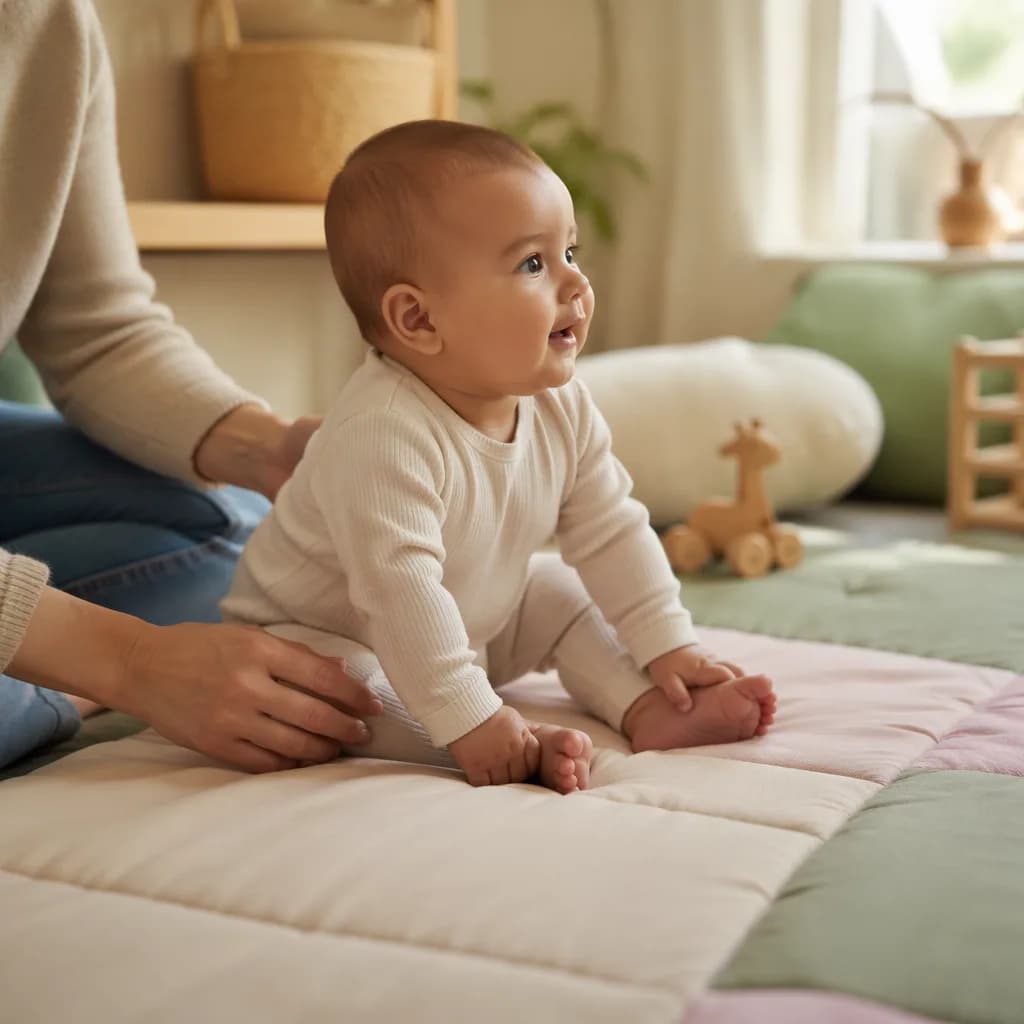
When do babies sit up on their own?
Most babies start sitting with support around 4-6 months, then sit independently around 6-8 months. There’s a range here, and that’s normal. Some babies seem eager to be upright early, while others take their time building the neck, shoulder, back, and core strength that sitting needs.
You’ll usually see sitting develop in stages. First comes propped sitting, where your baby sits with your hands, a pillow nearby, or your body helping them stay steady. Then comes tripod sitting, when they lean forward and brace themselves with their hands on the floor. After that, they begin sitting without hands, which means they can stay upright and use their hands to play, reach, or bang a toy on the floor.
A real-life example helps. A 5-month-old may sit leaning on their hands for a few seconds before tipping sideways. A 7-month-old may sit longer, look around, and reach for a toy without immediately toppling over. Both can be part of a typical baby sitting milestone range.
If your baby is still younger, tummy time and simple floor play are the quiet building blocks. You might find more age-appropriate ideas in our guide to 3 Month Old Milestones, Play Ideas, and Daily Rhythm. And if you want the bigger picture, we’ve also covered When Do Babies Sit Up? Signs, Timeline, and Tips.
Call your pediatrician if your baby seems very floppy, unusually stiff, or isn’t gaining head control by around 4 months. A quick check can give you reassurance, or help you get support early.
Signs your baby may be ready to sit
Readiness for sitting is really about strength and control, not just age. Some babies look eager before their bodies are quite ready, while others take their time and build those muscles slowly.
The biggest early sign is good head control. If your baby can hold their head steadier when you pick them up, carry them upright against your chest, or place them on their tummy, that’s a helpful clue. You may have noticed this building during the stage covered in 3 Month Old Milestones, Play Ideas, and Daily Rhythm.
Tummy time gives you another good window into readiness. A baby who pushes up on forearms, then maybe hands, is working the neck, shoulders, back, and belly muscles that sitting needs. It can look small from the outside, but that little push-up is hard work.
You might also see your baby rolling, rocking, or trying to shift weight from side to side. Those wobbly movements matter. They’re practicing balance.
Another sweet sign: your baby wants to sit upright so they can see what’s going on. Maybe they fuss when reclined but calm when held sitting on your lap, looking around at siblings, pets, or the ceiling fan.
If you want the bigger picture, our full guide on When Do Babies Sit Up? Signs, Timeline, and Tips walks through what usually comes next. Just remember: sitting is a body-control skill, and babies build it one tiny rep at a time.
How to help baby sit up safely
Start small, and keep it on the floor. A couple of short, supervised practice sessions each day are plenty, especially when your baby is still building the neck, belly, and back strength that sitting takes.
A simple way to begin: sit on the floor with your baby between your legs, or place them on a soft play mat in front of you. Keep your hands gently around their ribs or hips for support. Try not to pull your baby up by the arms, since their shoulders and arms aren’t meant to do the hard work here. We want their trunk doing the practice.
Your lap works beautifully too. For supported sitting baby practice, sit your baby on your thighs facing out, so they can look around the room. Or turn them toward you and make silly faces. That face-to-face setup can feel extra steady and reassuring, especially if your baby is unsure at first.
Place a favorite toy at chest height, maybe on a low cushion or in your hand. This encourages your baby to look forward instead of folding over toward their toes. A crinkly toy, soft rattle, or board book can be enough.
You can also let your baby try tripod sitting for a few seconds at a time. That’s when they lean forward with both hands on the floor for balance. Stay close. If they wobble, guide them gently at the hips or ribs, then give them a break.
Keep it playful. Stop when your baby gets tired, fussy, or starts slumping heavily. Sitting practice shouldn’t feel like a workout they have to push through.
Here’s a sample routine that fits into an ordinary day: after two or three diaper changes, do a 2-minute floor practice. Try 30 seconds in your lap, 30 seconds supported at the ribs, a few seconds of tripod sitting, then a cuddle. Done.
If you’re watching other early skills alongside sitting, our guide to 3 Month Old Milestones, Play Ideas, and Daily Rhythm has gentle play ideas, and you can also read the full sitting overview here: When Do Babies Sit Up? Signs, Timeline, and Tips.
Tummy time and floor play that build sitting skills
Sitting starts long before a baby can actually sit. A lot of the prep happens on the floor, in tiny daily moments that look like play: lifting the head, pushing through the arms, wobbling, reaching, rolling, and trying again.
Tummy time is one of the simplest ways to help babies work the neck, shoulders, back, and core muscles they’ll use for sitting. If your baby protests, keep it short. Try 1 or 2 minutes after a diaper change, or place a rolled towel under their chest so their arms can come forward more easily. Get down face-to-face and make it social. A crinkly toy just out of reach helps too.
Once your baby is propped on their elbows, encourage little reaches. Put a soft ring slightly to one side so they shift weight through one arm and reach with the other. That kind of play helps prepare for tripod sitting, where babies lean forward on their hands for support. You can find more age-based play ideas in 3 Month Old Milestones, Play Ideas, and Daily Rhythm.
Side-lying play is another quiet winner. Lay baby on one side with a toy near chest level, then switch sides. This helps with balance, reaching across the body, and body awareness.
Rolling practice matters too. Give baby space to roll from back to side, side to tummy, and tummy to back when they’re ready. Floor time usually gives babies more freedom to build these skills than long stretches in seats, swings, or other containers.
For the bigger picture, here’s a helpful companion guide: When Do Babies Sit Up? Signs, Timeline, and Tips.
What to avoid while practicing sitting
Sitting practice should be low, soft, and supervised. The safest place is usually a blanket or play mat on the floor, with you close enough to catch or comfort your baby if they wobble.
Don’t leave a baby sitting on a couch, bed, changing table, or any other raised surface. Even a baby who seems steady can suddenly lean, fold forward, or tip sideways. It only takes a second.
Try not to prop your baby with pillows and walk away, either. Pillows can make sitting look supported, but they don’t stop every fall. A baby can still slump forward, slide down, or topple to the side. If you use your body or a nursing pillow for brief support, stay right there and keep it short.
Molded floor seats, jumpers, and activity centers can be useful in small doses, but they shouldn’t become the main way your baby “practices” sitting. These seats do a lot of the balance work for your baby, so floor time matters more. If you’re in the early stage, the play ideas in 3 Month Old Milestones, Play Ideas, and Daily Rhythm can help you build toward sitting gently.
Also, don’t force sitting before your baby has enough head and trunk control. Wobbling is normal. Falling sideways is normal, too. That’s part of learning, as long as practice happens on a soft, flat floor with an adult right there.
For the bigger picture, see When Do Babies Sit Up? Signs, Timeline, and Tips.
When to call the pediatrician
Most babies build sitting skills little by little, and a wobbly month doesn’t automatically mean something is wrong. Still, if your gut says, “This feels off,” it’s okay to check in. Early support can make practice safer and less frustrating for everyone.
Call your pediatrician if your baby has poor head control around 4 months, or if they seem unusually floppy or unusually stiff in your arms. You can also ask for guidance if your baby strongly favors one side, like always reaching with the same hand, rolling only one way, or leaning hard to one side during floor play.
By the middle of the first year, babies are usually showing steady strength gains in some form. If your baby isn’t rolling, pushing up during tummy time, or getting stronger over time, bring it up at a visit. Our 3 month old milestones and play ideas guide can help you notice those early patterns without turning every play session into a checklist.
It’s also worth checking in if your baby isn’t sitting with support by around 7 months, or isn’t sitting independently by around 9 months. Your pediatrician may simply want to watch, offer positioning tips, or suggest pediatric physical therapy. PT can be a very practical resource, with simple exercises you can do during diaper changes, tummy time, or play on the floor.
For a broader age-by-age view, see When Do Babies Sit Up? Signs, Timeline, and Tips.
Frequently Asked Questions
What age do babies sit up without support?
Many babies sit without support around 6-8 months, though some are ready a little earlier or later.
Can a 4-month-old sit up?
A 4-month-old may sit briefly with strong support, but most babies are not ready to sit independently yet.
How can I help baby sit up?
Use short, supervised floor sessions, tummy time, lap sitting, tripod practice, and toys placed at chest height.
Is supported sitting safe for babies?
Yes, supported sitting is safe when your baby has decent head control and you stay right beside them on a flat surface.
Should I use pillows to help my baby sit?
Pillows can be used briefly while you are right there, but never leave a baby propped in pillows unattended.
When should I worry if my baby is not sitting?
Check with the pediatrician if your baby is not sitting with support by about 7 months or independently by about 9 months.
Frequently asked questions
When do babies usually sit up on their own?
What are signs my baby is ready to practice sitting?
How can I help my baby learn to sit safely?
Should I use pillows or a baby seat for sitting practice?
When should I call the pediatrician about sitting?
References
Sources
External research this article was grounded in.
- DO | English meaning - Cambridge Dictionarydictionary.cambridge.org
- DO vs. MD: What's the Differencewebmd.com
- Positive Parenting Tips: Infants (0–1 years) | Child Development | CDCcdc.gov
Related reading
More from the journal → development
When Do Babies Laugh? Milestones and Play Ideas
Most babies laugh around 3 to 4 months. Learn what early giggles mean, what can encourage them, and when to check in with your pediatrician.
8 min readAug 3, 2026- development
When Do Babies Start Babbling? Sounds and Stages
Most babies start babbling around 4 to 6 months, then build toward ba-ba and da-da sounds as speech skills grow.
11 min readAug 3, 2026 - development
When Do Babies Roll Over? Timing, Practice, Safety
Rolling can look wobbly at first. Learn what early practice looks like, how tummy time helps, and what safety changes once baby starts to roll.
11 min readAug 3, 2026