
When Do Babies Start Talking? Milestones by Age
When do babies start talking?
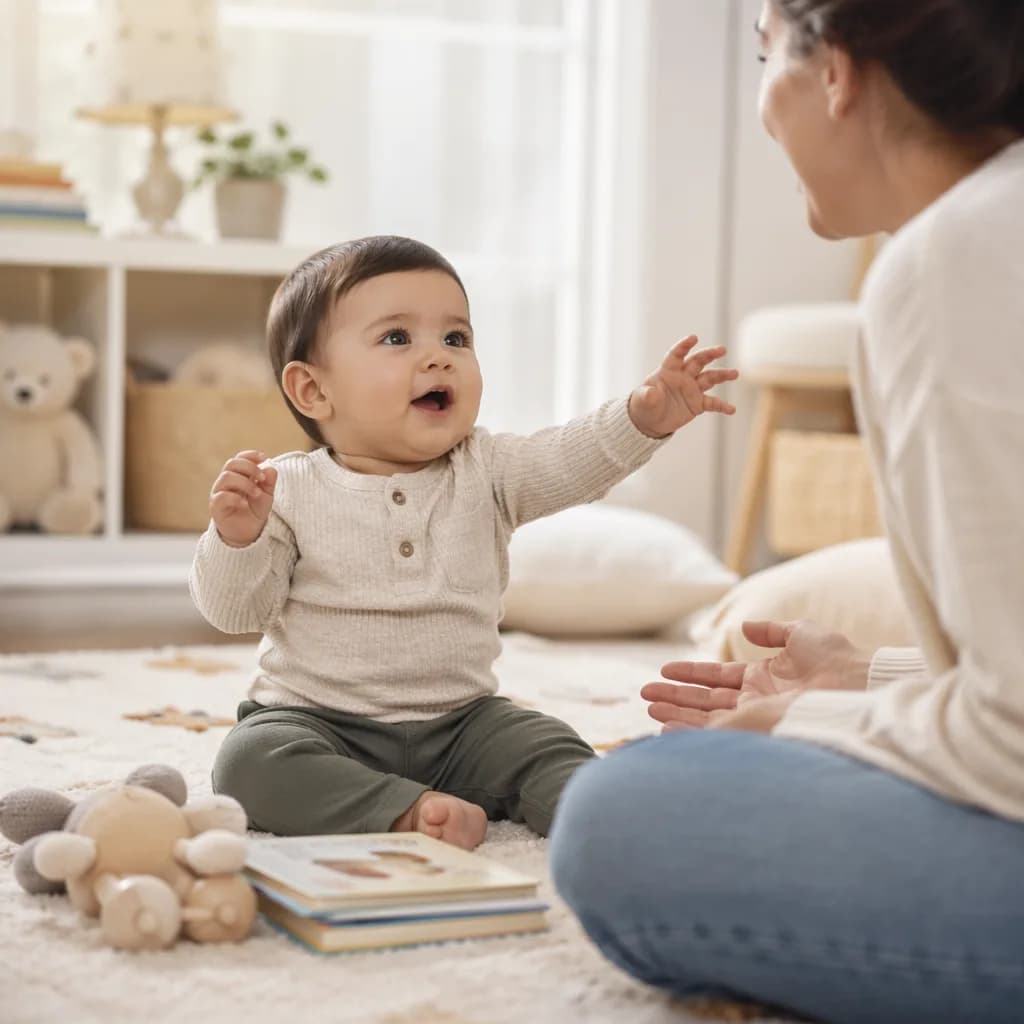
Most babies say a first clear word around 12 months, but there’s a wide normal range. Some babies are busy practicing sounds for months before a word sounds obvious to everyone else. Others seem quiet, then suddenly start using a handful of words close together.
Talking starts long before “mama” or “ball.” A newborn’s cry is communication. So are coos, giggles, eye contact, reaching, waving, pointing, and all that wonderful babbling in the car seat. In the first year, babies are learning that sounds and gestures get a response from you, and those back-and-forth moments are part of language development.
You may hear “mama” or “dada” before your baby truly connects the word to a person. Early babbling can sound very word-like, especially around 7 to 11 months, when babies may repeat sounds like “ma-ma” or “da-da.” Meaning usually becomes clearer with time and repetition.
By 12 to 17 months, many toddlers say a few words to label people or objects, even if the pronunciation is fuzzy. By 18 months, many toddlers say about 10 to 25 words. Some say more. Some say fewer and are still developing in their own steady way, especially if they’re understanding simple phrases, responding to you, and trying to communicate.
For example, if your baby reaches toward a cup and says “ba,” that may be a real attempt to tell you something, even if it doesn’t sound like “cup” yet.
Just like with movement milestones such as sitting up, rolling over, or crawling, speech has a range. If you want the full age-by-age picture, we walk through it here: When Do Babies Start Talking? Age-by-Age Milestones.
Baby talking milestones from birth to 24 months
Baby talk starts long before a clear “mama” or “dada.” In the first two years, babies are busy listening, watching, copying, and slowly matching sounds with meaning. Receptive language, what your baby understands, often grows before spoken words show up.
Here’s a gentle age-by-age guide.
Birth to 2 months: Your baby communicates through cries, body movements, facial expressions, and those tiny changes in breathing and fussing that parents start to recognize. Newborns may quiet when they hear a familiar voice, and they can react to loud sounds. This is communication, even if it doesn’t sound like talking yet.
2 to 4 months: Cooing often begins around this stage. You may hear soft vowel sounds like “oo” and “ah,” especially when your baby is relaxed, fed, and looking at your face. If you answer back, even with a simple “Oh, really?” you’re teaching the rhythm of conversation.
4 to 6 months: Babies often get noisier in the best way. Laughing, squealing, and playing with pitch and volume can all appear. Your baby may turn toward new sounds, respond to tone of voice, and vocalize back when you talk. This is also a busy time for physical milestones, so if you’re tracking the bigger picture, you might like When Do Babies Roll Over? Timeline and Safety Tips.
6 to 9 months: Babbling starts to sound more speech-like. You may hear “ba,” “ma,” “da,” or strings like “ba-ba-ba.” These sounds don’t always mean a specific person yet, but they’re practice for real words.
9 to 12 months: Babies may copy simple sounds, use gestures, respond to their name, and understand familiar words like “cup” or “bye-bye.” Some may say a first word. Others are still building quietly. Around this age, sitting and crawling can change how babies communicate too, since they can reach, point, and move toward what they want. These guides can help: When Do Babies Sit Up? Timeline, Signs, Practice and When Do Babies Crawl? Timeline, Signs, and Tips for Parents.
12 to 18 months: First words usually become more consistent. Your baby may point, wave, shake their head, enjoy being read to, and follow simple directions when you gesture, like “give me the ball.” Some toddlers say a few words clearly, while others have words only close family understands.
18 to 24 months: Vocabulary can grow quickly here. Many toddlers begin using two-word phrases like “more milk” or “daddy go,” ask for common foods by name, make animal sounds, and use words like “mine.” If you want the fuller timeline beyond this section, read When Do Babies Start Talking? Age-by-Age Milestones.
And because language is personal in every family, names become some of the sweetest early words. If you’re curious about baby name meanings, Rami: meaning & origin is a lovely one to explore.
Baby babbling stages and what they sound like
Babbling doesn’t arrive all at once. It usually builds from tiny social sounds into those funny, full-body “conversations” babies have with the ceiling fan, the dog, or your face at 6 a.m.
Cooing often comes first. In the early months, babies may make gentle vowel-heavy sounds, like “oooh” and “aaah,” along with little pleasure sounds such as coos, giggles, and laughs. This stage can feel very social. You talk, they smile or make a noise back, and suddenly it feels like a real exchange.
By about 4 to 6 months, many babies start playing with sound more. You may hear squeals, raspberries, growly noises, or repeated open-mouth sounds. Some of it sounds random because it is practice. Your baby is trying out breath, lips, tongue, jaw, volume, and timing. It’s a lot like how motor skills build bit by bit too, from head control to rolling, sitting, and crawling. If you’re watching those skills alongside speech, you might like When Do Babies Roll Over? Timeline and Safety Tips, When Do Babies Sit Up? Timeline, Signs, Practice, and When Do Babies Crawl? Timeline, Signs, and Tips for Parents.
Canonical babbling is the classic baby babble most parents recognize. It often shows up around 6 to 10 months, with repeated syllables like “bababa,” “mamama,” or “dadada.” At this age, babies may also respond to their name, enjoy games like peek-a-boo, and imitate simple sounds.
Later, babbling gets more mixed. Variegated babbling sounds less repetitive, more like “badaga” or “mabido.” Then comes jargon babbling, where your baby sounds like they’re telling you a whole dramatic story in baby language. The rhythm, pauses, and expression are there, even if the real words aren’t yet.
Babbling is practice for talking, but it’s also practice for conversation: taking turns, copying sounds, and noticing how you respond. If babbling suddenly stops, or if it never really begins by around 9 to 10 months, bring it up with your pediatrician. You can also keep an eye on the broader speech timeline in When Do Babies Start Talking? Age-by-Age Milestones. And if all those “ra-ra” sounds have you thinking about names, Rami: meaning & origin is a sweet one to browse.
What counts as a baby's first word?
A first word is usually any sound your baby uses consistently for the same person, object, or action. It doesn’t have to sound crisp or “grown-up” to count.
So if your baby says “ba” every time they want a bottle, that can be a real word. If “da” always means the dog, or “nana” means banana, write it down. The meaning and consistency matter more than perfect pronunciation.
Animal sounds and sound effects can count too. “Moo” for cow, “woof” for dog, or “vroom” for car are all early ways babies label the world. Around 18 to 23 months, children may make animal sounds and begin using words to ask for familiar foods, though every child’s timeline has its own wiggle room.
Common first words often come from daily life: names, favorite foods, pets, siblings, and objects your baby sees again and again. A child might say a sibling’s name before “mama,” or ask for crackers before naming a toy. That’s normal. Babies are practical little communicators.
They also understand more than they can say. Before many spoken words show up, babies may respond to their name, recognize words for familiar things like “cup” or “shoe,” enjoy games like peek-a-boo, and use gestures to communicate. Speech is just one piece of the bigger communication picture, much like sitting, rolling, and crawling each build in steps. If you like milestone timelines, you might also find When Do Babies Sit Up? Timeline, Signs, Practice, When Do Babies Roll Over? Timeline and Safety Tips, and When Do Babies Crawl? Timeline, Signs, and Tips for Parents helpful.
One simple trick: keep a phone note called “words.” Add the sound, what it means, and the date, like “moo = cow, June 4.” Early words can be easy to miss in the snack-time, bath-time blur. For a broader age-by-age look, see When Do Babies Start Talking? Age-by-Age Milestones. And if you’re tracking names your baby can say, short names like Rami can be fun to notice too.
How to encourage talking during everyday routines
You don’t need flashcards or a special “language time” to help your baby practice communication. The ordinary parts of the day are full of chances: diaper changes, snacks, bath time, stroller walks, and getting dressed.
Try narrating what’s happening in short, clear phrases. During socks and shoes, you might say, “Sock on. Other sock on. Shoes next.” In the bath, “Warm water. Splash splash. Wash toes.” These tiny phrases are easier for babies to hear, copy, and connect to what’s right in front of them.
Then pause.
That little pause matters because babies communicate long before they can say clear words. They might answer with a coo, a squeal, a reach, a point, a kick, or a very serious eyebrow raise. Treat that as part of the conversation. If your baby says “ba,” you can copy it back, then add one tiny step: “Ba. Ball.” If they pat the high chair tray, you can say, “More? More banana.”
This back-and-forth style fits beautifully with other early milestones too. A baby who’s practicing sitting has a new view of your face and hands, which can make songs and books more fun. If that stage is on your mind, here’s a gentle look at when babies sit up. Rolling, crawling, and reaching also give babies new ways to show you what they notice, from the dog bowl to a favorite toy. You can read more about rolling over and crawling if you’re tracking those changes too.
Board books are another easy win. Pick books with simple pictures and let your baby point, pat, chew the corner, or turn pages out of order. That still counts. Say what they’re looking at: “Baby. Dog. Cup.” If a name in a story catches your ear, like Rami, say it slowly and with warmth. Babies love familiar sounds.
Songs help for the same reason. Sing the same little songs often, especially during routines: one song for cleanup, one for bath, one for bedtime. Repetition helps babies start to predict sounds and words.
You can also offer simple choices while showing the objects: “Milk or water?” “Blue cup or red cup?” Keep it playful. Try not to turn every sweet moment into “Say mama” practice. Warm, responsive back-and-forth is usually the better teacher, and it makes talking feel like connection instead of a test. For the bigger age-by-age picture, see when babies start talking.
When to ask a pediatrician about speech delay
You don’t have to wait for a milestone to be “officially missed” before asking. If something feels off, bring it up. A quick check can either reassure you or help your child get support sooner.
Hearing is a good place to start. Ask your pediatrician if your baby doesn’t startle at loud sounds, doesn’t seem to respond to voices, or isn’t turning toward new noises by the middle of the first year. Hearing can affect speech and language development, and evaluations often include a hearing check for that reason.
A few communication signs are worth flagging early:
- By around 4 months: your baby isn’t cooing, smiling, or making sounds back when spoken to.
- By around 9 to 10 months: your baby isn’t babbling sounds like “ba-ba-ba,” “ma-ma,” or “da-da.”
- By 12 months: your baby isn’t using gestures like reaching to be picked up, waving, pointing, or trying to communicate with actions.
- By 15 to 18 months: there are no clear words, or very limited attempts to communicate needs, interests, or feelings.
Also call promptly if your child loses sounds, words, gestures, or social connection they once had. That kind of change is always worth a conversation.
Speech delays can have different causes. Sometimes hearing is part of the picture. Sometimes a child has trouble understanding language, sharing thoughts, or producing speech sounds clearly. Sometimes they’re developing in their own pattern but need more support and practice. Your pediatrician may refer you to a speech-language pathologist, and depending on the evaluation, you may also be guided toward hearing testing or other developmental support.
If you’re tracking milestones across the whole first year, it can help to look at speech alongside movement, like sitting up, rolling, and crawling. For the full language timeline, see When Do Babies Start Talking? Age-by-Age Milestones.
Prematurity, bilingual homes, and other normal variations
A milestone chart is a guide, not a measuring stick for every baby in every family.
If your baby was born early, ask your pediatrician whether you should be looking at milestones by adjusted age during the first two years. That one question can take a lot of pressure off, especially if you’re comparing your baby with a cousin, a playgroup friend, or an older sibling’s baby book.
Bilingual homes can bring another layer of worry, but hearing two languages doesn’t confuse babies. What matters is communication across the whole day. If your toddler says “agua” for water, “ball,” and “mama,” those words all count as meaningful language. You don’t need to pick one language to “make talking easier.” Keep using the languages your family actually speaks.
Temperament matters too. Some babies are loud little experimenters, babbling in the grocery cart and shouting “ba-ba-ba” at the dog. Others watch, listen, and save their sounds for quieter moments. Both styles can fit within normal development, just like some babies sit, roll, or crawl on slightly different timelines. If you’re in that comparison spiral, it can help to read other milestone guides, like When Do Babies Sit Up? Timeline, Signs, Practice, When Do Babies Roll Over? Timeline and Safety Tips, or When Do Babies Crawl? Timeline, Signs, and Tips for Parents.
Older siblings can also change the picture. A big sister may answer every question for the baby, hand over the snack before they ask, and proudly announce, “He wants milk.” Sweet? Yes. But it can make fewer spoken words more noticeable at first.
Shows with songs or letters don’t replace back-and-forth interaction. Babies learn through real exchanges: your face, their sound, your answer, their gesture.
A wide range can be normal. Still, trust your gut. If something feels off, ask early, and use a milestone guide like When Do Babies Start Talking? Age-by-Age Milestones as a starting point for the conversation. And if you’re naming a chatty future storyteller, Rami: meaning & origin is a sweet one to browse.
Frequently Asked Questions
What age do babies usually say their first word?
Many babies say a first clear word around 12 months, though some start a little earlier or later.
Is babbling considered talking?
Babbling is not true talking yet, but it is an important speech milestone and a key step toward words.
What are common first words for babies?
Common first words include mama, dada, hi, bye, ball, dog, milk, more, and favorite names or foods.
Should my 12 month old be talking?
Many 12 month olds have one or two words, but gestures, babbling, pointing, and understanding words matter too.
When should I worry if my baby is not talking?
Ask your pediatrician if your baby is not babbling by 9 to 10 months, has no gestures by 12 months, or has no words by 15 to 18 months.
Do bilingual babies talk later?
Bilingual babies may split words between two languages, but bilingualism itself does not cause speech delay.
Frequently asked questions
When do babies usually say their first word?
Is babbling the same as talking?
How many words should an 18-month-old say?
When should I worry if my baby is not talking?
References
Sources
External research this article was grounded in.
- Age-Appropriate Speech and Language Milestones | Children's Hospital of Philadelphiachop.edu
- Developmental Milestones: Baby Talk from First Sounds to First Wordsnurturing-care.org
- Speech and Language Developmental Milestones | NIDCDnidcd.nih.gov
- When Should a Child Start Talking? Real Speech Milestonesspeechtherapy.org
- DO | English meaning - Cambridge Dictionarydictionary.cambridge.org
Related reading
More from the journal → development
When Do Babies Laugh? Milestones and Play Ideas
Most babies laugh around 3 to 4 months. Learn what early giggles mean, what can encourage them, and when to check in with your pediatrician.
8 min readAug 3, 2026- development
When Do Babies Start Babbling? Sounds and Stages
Most babies start babbling around 4 to 6 months, then build toward ba-ba and da-da sounds as speech skills grow.
11 min readAug 3, 2026 - development
When Do Babies Roll Over? Timing, Practice, Safety
Rolling can look wobbly at first. Learn what early practice looks like, how tummy time helps, and what safety changes once baby starts to roll.
11 min readAug 3, 2026