
When Do Babies Sit Up? Signs, Timeline, and Tips
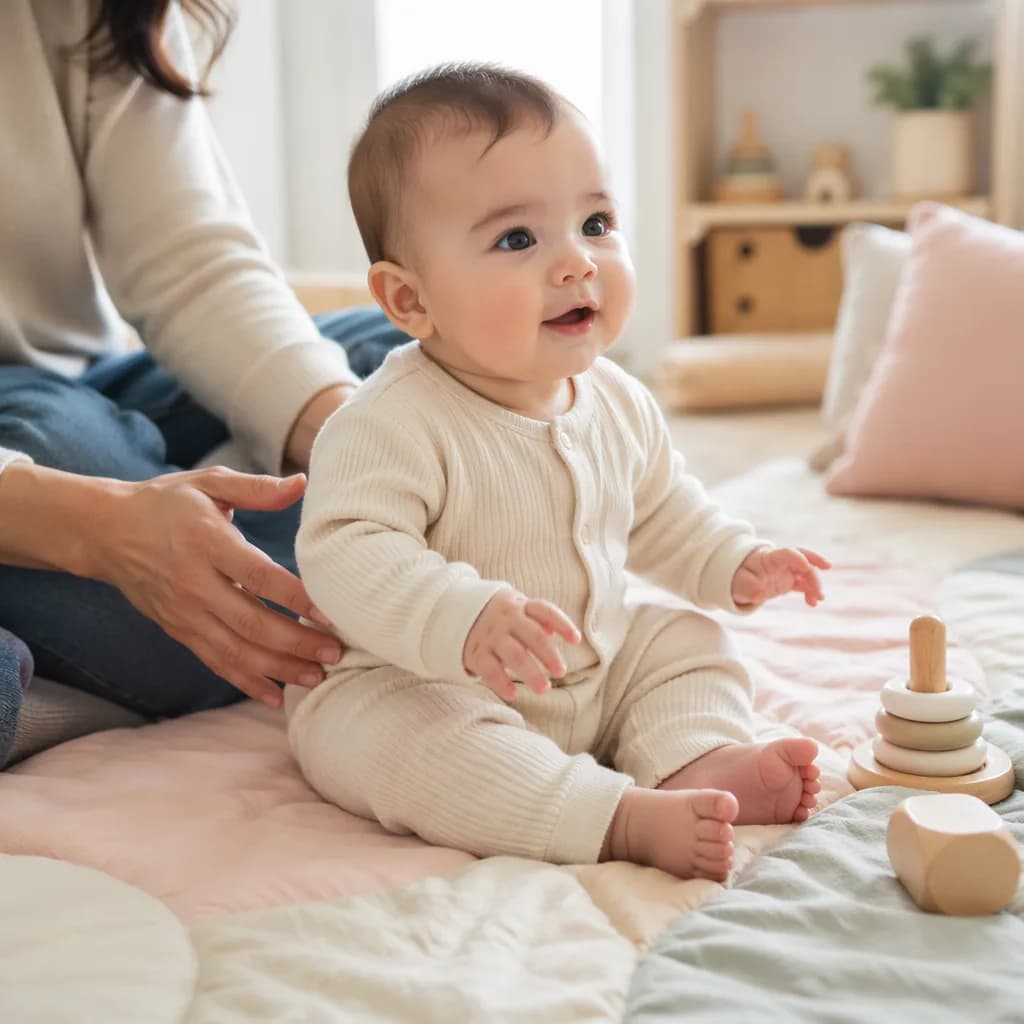
When do babies sit up?
Many babies start sitting with support around 4-5 months, then work toward sitting independently around 6-8 months. Some babies may sit with a little help as early as 6 months, and many master independent sitting between 7-9 months.
There’s a wide normal range here. Sitting is one of those milestones that builds gradually, not all at once on a single magical Tuesday. A healthy baby might be wobbly at 6 months, steadier at 8 months, and able to get into sitting by themselves closer to 9 months. If you’re tracking the bigger picture, our guide to When Do Babies Sit Up? Timeline, Signs, Practice walks through the stages in more detail.
The terms can get confusing, so here’s the plain version. Supported sitting means you’re helping your baby stay upright, maybe on your lap or between your legs. Propped sitting often means your baby is upright with pillows or your body helping them stay safe. Tripod sitting is when your baby leans forward and supports themself with one or both hands on the floor. Sitting without hands means they can stay upright while using their hands to play, reach, or explore.
Babies usually get there after head control improves, neck muscles strengthen, and their trunk becomes steadier. Rolling often comes before stronger sitting, so you may see progress there too. If that’s where your baby is right now, you might like When Do Babies Roll Over? Timeline and Safety Tips. Later, sitting helps open the door to reaching, scooting, and crawling, which we cover in When Do Babies Crawl? Timeline, Signs, and Tips for Parents.
And if you’re up during a nap window reading baby milestone posts and name ideas like Rami: meaning & origin, you’re in good company. Milestones and naming tabs seem to multiply fast.
Baby sitting up timeline by age
Sitting happens in stages, and the range is pretty wide. Some babies start trying supported sitting around 4 to 6 months, while many sit independently for several minutes somewhere between 6 and 9 months. If you want the bigger picture, we cover the full progression in When Do Babies Sit Up? Timeline, Signs, Practice.
Newborn to 3 months: Your baby isn’t ready to sit yet, but the groundwork is already happening. Short tummy time sessions, being held upright against your chest, and floor play help build neck, upper body, and core strength. Even a few calm minutes on a clean blanket after a diaper change can count.
4 months: Some babies begin holding their head steadier and may enjoy brief supported sitting on your lap. Think “hands-on support,” not solo practice. You might sit on the floor with your baby between your legs, read a board book, then gently help them lie back down when they get tired.
5 months: This is when some babies experiment with tripod sitting, leaning forward with their hands on the floor for support. They’ll wobble. That’s normal. Those tiny shifts help them learn balance.
6 months: Around baby development 6 months, many babies can sit with less help and may start reaching for a toy while staying balanced. Rolling often supports this progress too, since it builds control through the trunk. If your baby is working on that skill, you may like When Do Babies Roll Over? Timeline and Safety Tips.
7-8 months: Many babies sit independently for longer stretches now. They may recover better from small wobbles, reach with one hand, or turn toward your voice. You might notice more babbling during floor play too, which pairs nicely with When Do Babies Start Talking? Age-by-Age Milestones.
9 months and beyond: By about 9 months, many babies can get into sitting by themselves. From there, sitting often blends into scooting, crawling, and pulling up. For what may come next, read When Do Babies Crawl? Timeline, Signs, and Tips for Parents. And if you happen to be naming a sibling while watching all these milestones fly by, Rami: meaning & origin is a sweet one to browse during nap time.
Signs your baby may be ready to practice sitting
Before babies sit on their own, you’ll usually notice a few small changes in how they move. One of the clearest signs is better head control. During tummy time, or when you carry your baby upright against your chest, their head may bob less and stay steadier for longer stretches.
You may also see stronger pushing during tummy time. First it might be forearms, then hands on the floor with straighter arms. That pushing builds the upper body and core strength babies need for tripod sitting, where they lean forward and support themselves with their hands.
Another good clue: your baby seems more upright on your lap. Instead of folding forward right away, they may hold their trunk a little taller while you read a board book or sing. If they reach for a toy while you support them, that’s useful practice too. Reaching takes balance, coordination, and tiny weight shifts.
Rolling and shifting weight side to side matter as well. Sitting isn’t just “back strength.” Babies need controlled movement forward, backward, left, and right. If rolling is starting to show up, this guide to when babies roll over can help you connect the dots.
Readiness looks different from baby to baby. Some start showing early sitting signs around 4 to 6 months, while independent sitting often comes later. For a fuller age-by-age look, see When Do Babies Sit Up? Timeline, Signs, Practice. And if you’re tracking what comes next, crawling and early communication often become the next fun questions, like when babies crawl or when babies start talking.
How to help baby sit up safely
Start with the floor. It sounds simple, but plenty of supervised tummy time is one of the best ways to help your baby build the neck, shoulders, back, and core strength they’ll need for sitting. If tummy time is still a protest-heavy activity, try just a few minutes at a time when your baby is rested and has a clean diaper. Get down face-to-face, or place a soft mirror nearby so there’s something interesting to look at.
A firm floor surface is your friend here. Spread out a blanket or play mat, then stay close. Skip practicing on a couch or bed, where a quick wobble can turn into a fall. Babies can topple before we even finish saying, “Oops.”
For supported sitting, sit your baby on your lap or between your legs on the floor. Rather than pulling on their arms, support them gently around the ribs or hips. Some babies need higher support at first, around the upper rib cage. Others may be steady enough with your hands lower at the hips. You’re looking for that sweet spot where they’re working a little, but not struggling.
Keep practice short. Two to five minutes can be plenty, especially in the beginning. Stop before your baby gets too tired or frustrated. A baby who’s folding forward, flinging backward, or fussing hard is telling you they’ve had enough for now.
Try placing one interesting toy at chest height or slightly to one side. A rattle, soft block, or crinkly cloth can encourage your baby to lift their head, shift their weight, and reach. That reaching practice helps build balance while sitting. If you’re also tracking related milestones, rolling often comes before stronger sitting skills, and you can read more in When Do Babies Roll Over? Timeline and Safety Tips.
When your baby is ready, let them use tripod sitting, with their hands on the floor in front for support. This wobbly stage is normal. Stay right there, hands ready, because babies shouldn’t be left unattended in sitting, even for a quick second.
Baby seats can be useful for limited moments, like feeding, but they’re not the main way babies learn balance. Floor practice gives babies more chances to move, shift, and build real control. For the bigger picture, see When Do Babies Sit Up? Timeline, Signs, Practice, then peek ahead to When Do Babies Crawl? Timeline, Signs, and Tips for Parents when sitting starts looking steadier.
What to avoid during sitting practice
A little wobbling is normal. A risky setup isn’t.
Avoid propping your baby high on pillows on a couch, bed, or chair. Even a baby who seems steady for a few seconds can tip sideways or fling backward quickly, so keep sitting practice on the floor with you close by. A soft blanket and a few pillows around them are much safer than an elevated surface.
Try not to rush sitting before your baby has steady head control. Sitting takes head, neck, core, and upper body strength, and babies build those skills through floor play, tummy time, side-lying play, and rolling practice. If you want the bigger picture, this guide to when babies sit up walks through signs and timing.
Also skip repeated “pull-ups” by the hands as the main exercise. Babies need trunk support and controlled weight shifts, not just a quick lift from their arms. Sitting between your legs while you support their torso is a gentler way to help.
Seats, swings, and jumpers can be useful for short stretches, like during a meal, but they shouldn’t replace floor time. Floor play gives your baby room to practice the same body control that later helps with rolling, crawling, and eventually babbling back during play, which ties into early talking milestones.
And please don’t compare your baby to a cousin, friend, or social media video. Real babies develop in their own order. Your baby’s pace is their pace, whether their name is Emma, Mateo, or Rami.
When to ask the pediatrician
Most babies work toward sitting on their own timeline, and a slower week or two doesn’t automatically mean something is wrong. Still, if something feels off, it’s completely reasonable to ask. Early support can make practice feel safer and easier if your baby needs a little extra help.
Call your pediatrician if your baby has poor head control by around 4 months. Head and neck control are key pieces of sitting, rolling, and later movement skills, so this is a good one to bring up early.
You’ll also want to ask about it if your baby seems very stiff, very floppy, or strongly favors one side. For example, you might say, “She tips immediately to the left every time,” or “He can’t keep his head steady in my lap.” Those details help much more than a general “I’m worried.”
Mention it at a visit if your baby isn’t sitting with support by around 6 months, or isn’t sitting independently by around 9 months. You can also jot down what you’re seeing during floor play, tummy time, and rolling practice. If you’re tracking nearby skills, our guides to when babies roll over and when babies crawl can help you notice patterns without spiraling.
If you want a fuller sitting timeline, start with When Do Babies Sit Up? Timeline, Signs, Practice. And if you’re in a milestone-reading mood during nap time, you might also like When Do Babies Start Talking? Age-by-Age Milestones. Or take a tiny brain break with a baby name like Rami: meaning & origin.
How sitting connects to the next milestones
Sitting changes the whole room for your baby. Suddenly, they’re not just looking up from a blanket or peeking over your shoulder. They can see toys, faces, the dog walking by, and that crinkly board book just out of reach. Even better, sitting frees their hands for play.
That hands-free practice matters. While sitting, babies can reach for a toy, pass it from one hand to the other, turn it around, drop it, grab it again, and slowly figure out what their body can do. That’s early problem-solving in a very baby way. If you’re watching these skills build, our guide to When Do Babies Sit Up? Timeline, Signs, Practice can help you see what’s typical.
Sitting also links to bigger movement skills. Some babies sit, then scoot or crawl. Others roll first, so you may want to read When Do Babies Roll Over? Timeline and Safety Tips. Some crawl before they sit steadily, and some never do a classic hands-and-knees crawl at all. For that next stage, here’s When Do Babies Crawl? Timeline, Signs, and Tips for Parents.
Sitting can make high chair meals easier and safer too, since your baby has more control in an upright position. And as babies play face-to-face, they’re also soaking up sounds, turns, and gestures, all part of early communication. You can follow that thread in When Do Babies Start Talking? Age-by-Age Milestones. If you’re also saving sweet name ideas for a future sibling, Rami: meaning & origin is a lovely quick read.
Frequently Asked Questions
What month do babies usually sit up?
Many babies sit with support around 4-5 months and sit independently around 6-8 months.
Is it normal if my 6 month old is not sitting alone?
Yes, it can be normal. Many 6 month olds still need support, but they should usually be gaining better head and trunk control.
How can I help my baby sit up?
Offer daily tummy time, short supported sitting on the floor or your lap, and toys placed just within reach.
Can I sit my baby up at 3 months?
You can hold a 3 month old upright with full support, but most babies are not ready to practice floor sitting yet.
When should I worry about my baby not sitting?
Ask your pediatrician if your baby has poor head control by 4 months, cannot sit with support by 6 months, or is not sitting independently by 9 months.
Are baby seats good for learning to sit?
Baby seats can be useful briefly, but floor time and supported practice with you help babies build balance and strength better.
Frequently asked questions
When do babies usually sit up on their own?
What are the signs my baby is getting ready to sit?
How can I help my baby practice sitting safely?
Should I worry if my baby is not sitting at 6 months?
References
Sources
External research this article was grounded in.
- When Can Babies Sit Up? Plus Warning Signs and Ways You Can Helphealthline.com
- Sitting: When can babies sit on their own and how to support it | Loveveryblog.lovevery.com
- DO | English meaning - Cambridge Dictionarydictionary.cambridge.org
Related reading
More from the journal → development
When Do Babies Laugh? Milestones and Play Ideas
Most babies laugh around 3 to 4 months. Learn what early giggles mean, what can encourage them, and when to check in with your pediatrician.
8 min readAug 3, 2026- development
When Do Babies Start Babbling? Sounds and Stages
Most babies start babbling around 4 to 6 months, then build toward ba-ba and da-da sounds as speech skills grow.
11 min readAug 3, 2026 - development
When Do Babies Roll Over? Timing, Practice, Safety
Rolling can look wobbly at first. Learn what early practice looks like, how tummy time helps, and what safety changes once baby starts to roll.
11 min readAug 3, 2026