
When Do Babies Start Talking? Milestones by Age
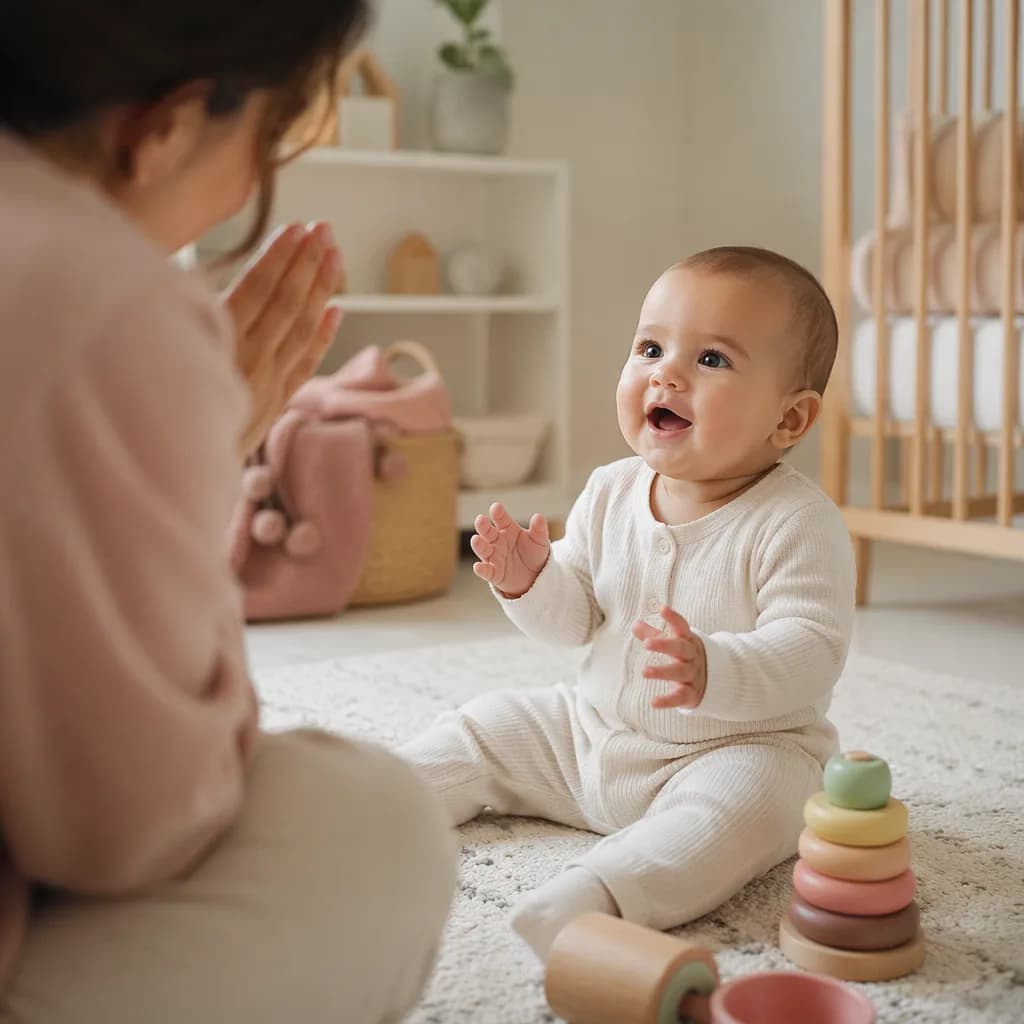
When do babies start talking?
Most babies say their first clear word sometime between 10 and 14 months, though some start a little earlier or later. A “real” first word means your baby is using a sound consistently with meaning. So “mama” counts if they say it while reaching for Mom, looking at her, or calling for her. If they’re happily repeating “mamama” during play with no clear connection yet, that’s still wonderful practice, but it’s babbling rather than a meaningful word.
Talking starts long before that first word. In the first year, babies communicate through cries, coos, squeals, facial expressions, gestures, and babbling. They also begin understanding familiar words and routines before they can say much themselves. By around 12 months, many babies can understand simple words, respond to short questions with gestures, and use pointing, waving, pushing away, or reaching to show what they want.
There’s a wide normal range. One baby may say “ball” at 11 months, while another spends more time pointing, babbling, and understanding before words arrive. Milestones aren’t a test. They’re gentle signposts that help you see whether baby language development is moving along.
If you like seeing the bigger picture, this Baby Milestones Guide: Track Progress Without Stress pairs nicely with speech updates, just like physical guides such as When Do Babies Roll Over? Timeline and Safety Tips and When Do Babies Crawl? Timeline, Signs, and Tips for Parents. For a fuller speech timeline, see When Do Babies Start Talking? Age-by-Age Milestones.
Baby talking milestones by age
Baby talk starts long before that first clear “mama” or “dada.” In the first year, babies are already learning how voices work, how people respond, and how sounds can get attention. The ages below are a guide, not a deadline. Some babies are quiet observers for a while, then surprise you.
Birth to 3 months: Newborn communication is mostly crying, but there’s a lot happening underneath it. Your baby may startle at sudden sounds, calm when they hear a familiar voice, and begin making soft coos or vowel-like sounds. Those little “ooo” noises during a nappy change count. They’re early practice.
4 to 6 months: This is often when babies get more playful with sound. You may hear laughs, squeals, and changes in pitch, almost like they’re testing how high or low their voice can go. Many babies turn toward sounds and begin making consonant-like noises. If you say “ba” and they grin back with their own version, that’s a tiny conversation.
7 to 9 months: Babbling usually becomes more rhythmic here, with strings like “bababa” or “dadada.” Babies may respond to their name, copy sounds, and use their voice to get your attention. This is also a lovely age for back-and-forth games: you make a sound, pause, and let them answer. For a fuller age-by-age view, see When Do Babies Start Talking? Age-by-Age Milestones.
10 to 12 months: Your baby may understand simple words such as “no” or “bye-bye,” especially when they’re used in familiar routines. Gestures become a big part of communication too, like waving, pointing, reaching, or shaking their head. Some babies say one or two meaningful words around this stage. Others are still babbling with purpose.
12 to 18 months: In the second year, toddlers often understand more than they can say. They may have a small but growing set of words, point to objects they want, and follow simple directions when you use gestures, such as “bring me your teddy.” Repeating their early words back clearly can help, without pressure. If milestones feel hard to keep straight alongside rolling, crawling, and everything else, our Baby Milestones Guide: Track Progress Without Stress can help you keep perspective.
18 to 24 months: Many toddlers may say 20 to 50 or more words by this stage, and some begin combining two words, like “more milk” or “mama up.” Their understanding is growing quickly too, and they may follow simple directions with two key words, such as “give me spoon.”
Speech grows alongside the rest of baby development. One baby might be busy practising movement after reading your cues in When Do Babies Roll Over? Timeline and Safety Tips, while another is focused on sounds before crawling takes off, as covered in When Do Babies Crawl? Timeline, Signs, and Tips for Parents. And if you’re choosing a name you’ll soon hear called back to you in a tiny voice, Rami: meaning & origin is a sweet one to browse.
When do babies say mama and dada?
Many babies start playing with sounds like “mama” or “dada” around 6 to 9 months. At first, though, it’s usually babble. Sweet, heart-melting babble, but still practice sounds rather than a true name for you or your partner.
Meaningful “mama” and “dada” often show up closer to 10 to 12 months, when your baby starts using the word for the right person. You might see Dad walk into the room, then baby reaches up, grins, and says “dada, dada, dada” again and again. That’s the shift parents are listening for: the sound is now connected to a person.
Some babies say “dada” first, and it can sting a little if you’ve been doing the midnight feeds. Try not to take it personally. For some babies, “dada” is simply an easier sound to make. It doesn’t mean baby has picked a favorite.
Around this stage, babies are also learning that words belong to people, objects, and routines. They may understand familiar words like “mummy,” “daddy,” “ball,” or “teddy” before they can say many of them. You can help by repeating clear, simple words in everyday moments: “Mama’s here,” “Daddy’s home,” “bye bye,” “drink.”
If you’re tracking speech alongside other first-year changes, our When Do Babies Start Talking? Age-by-Age Milestones guide gives a broader view. And if milestones in general are starting to feel like a scoreboard, take a breath and peek at our Baby Milestones Guide: Track Progress Without Stress.
Early sounds that come before first words
Before a baby says a clear “mama” or “dada” with meaning, there’s a whole lot of communication already happening. Those little noises, faces, and hand movements are part of the path toward talking, even when they don’t sound like words yet.
Cooing is often one of the first sounds parents notice. Around 2 to 3 months, babies may start making soft “oo” or “ah” noises, especially when they’re calm, fed, and looking right at you. It can feel like a tiny conversation during a diaper change: you say, “Hi, sweet pea,” and your baby answers with a long, wobbly “oooo.”
Babbling often begins around 6 months and becomes more speech-like over time. At first it may be loose and playful, then you might hear repeated patterns like “ba-ba” or “ma-ma.” This kind of repeated consonant and vowel babbling is called canonical babbling, and it’s a meaningful baby talking milestone because your baby is practicing the building blocks of speech.
Near the end of the first year, some babies use jargon. That’s babble with the rhythm and melody of a real conversation, even though the words aren’t clear. Your baby may look at you, wave a spoon, and “talk” very seriously in a string of sounds. Honestly, it can be adorable.
Gestures count too. Pointing, waving, reaching, showing you a toy, shaking the head for “no,” or pushing something away are all early communication. Babies often understand more than they can say, so these gestures help them tell us what they want, notice, or don’t like.
If you like having the bigger picture nearby, our When Do Babies Start Talking? Age-by-Age Milestones guide pairs well with this stage. And because speech grows alongside movement and play, it can also help to glance at a gentle Baby Milestones Guide: Track Progress Without Stress.
What counts as a real first word?
A real first word isn’t about perfect pronunciation. It’s about meaning.
We’d count a word when your baby uses it on purpose, uses it consistently, and connects it to a person, object, action, or need. So if “ba” means bottle every time, and your baby reaches for the bottle while saying it, that counts. If “woof” shows up whenever the dog walks in, that counts too.
Signs can count as first words as well. If your baby uses the sign for more during meals because they want another bite, that’s real communication. The same goes for word approximations, like “mama,” “dada,” or a sound that clearly stands in for a familiar object. In the second year, children often understand more than they can say, and early talking may come through babble, gestures, pointing, waving, animal sounds, and copied words. Our Baby Milestones Guide: Track Progress Without Stress can help you keep that bigger picture in mind.
One random sound said once usually doesn’t count yet, even if it sounds exactly like a word. A baby might say “duck” while banging a spoon, never look at the duck, and never say it again. Cute? Absolutely. A confirmed first word? Probably not yet.
For a wider age-by-age look at early speech, see When Do Babies Start Talking? Age-by-Age Milestones. Like rolling or crawling, talking has a range, and the pattern matters more than one single day on the calendar.
How to encourage baby language development at home
The best language “activity” is usually the thing you’re already doing.
Talk during ordinary routines: diaper changes, bath time, stroller walks, getting dressed, and meals. Babies hear words more clearly when they’re tied to something familiar. During a diaper change, you might say, “Clean diaper,” “Wipes are cold,” or “All done.” At lunch, try “Banana,” “More water,” or “Spoon fell.”
Keep your phrases short and clear. “Socks on.” “Cold milk.” “Daddy is home.” These little sentences are easier for babies to hear, copy, and connect with what’s happening.
Then pause.
That quiet beat matters. Babies communicate before they can talk by cooing, babbling, pointing, waving, shaking their head, reaching, laughing, shouting, and using their voice to get your attention. After you say, “Do you want the ball?” wait a few seconds. Your baby might kick, look at it, grunt, or babble. That counts as a turn.
Board books are another gentle way to build language. Choose simple pictures and name what your baby touches or looks at: “Dog.” “Baby.” “Car.” If they stay interested for a couple of minutes with your help, that’s plenty. You don’t have to finish the book. Following their eyes and fingers is often better than sticking to the story.
Songs help too, especially familiar ones. Try pausing before the last word: “Twinkle, twinkle, little…” and wait. Your baby may smile, bounce, make a sound, or stare at you expectantly. That’s communication.
As words begin, repeat and expand. If your baby says “ball,” you can answer, “Yes, red ball.” If they say “mama,” you might say, “Mama’s here.” You’re giving them a clear model without turning it into a lesson.
During play, it helps to lower background noise from the TV or phones so your baby can focus on your face, voice, and those back-and-forth moments. If you’re tracking talking alongside movement milestones like rolling or crawling, our Baby Milestones Guide: Track Progress Without Stress can help you keep the bigger picture in mind. You can also compare speech stages in When Do Babies Start Talking? Age-by-Age Milestones, or read about physical milestones like when babies roll over and when babies crawl.
Signs baby understands language before talking
Long before the first clear “mama” or “dada,” babies are busy taking language in. Receptive language, what your baby understands, often grows faster than the words they can say. So if your baby isn’t talking much yet, you may still see plenty of signs that language is clicking.
You might notice your baby looks toward familiar people or objects when you name them: “Where’s Daddy?” or “Where’s the ball?” By around 9 months, many babies respond to their name most of the time, even if “respond” simply means turning their head, pausing, or looking up from a toy.
Simple directions can start to make sense too, especially with a gesture. If you hold out your hand and say, “Give it to me,” your baby may place the block in your palm. They may also stop or pause when they hear “no,” though obeying every time is another matter entirely. Very normal.
Gestures count as communication. Pointing to a snack, waving bye-bye, shaking their head, or lifting both arms to be picked up are all meaningful ways babies “talk” before words arrive. During everyday routines, like bath time or dinner, familiar words paired with the same objects can help your baby connect meaning with language.
If you’re tracking speech alongside movement, our Baby Milestones Guide: Track Progress Without Stress can help you keep the big picture in mind. You can also compare what you’re seeing with our full guide, When Do Babies Start Talking? Age-by-Age Milestones.
When to ask the pediatrician about speech delays
Milestones are a guide, not a grade. Babies develop at different speeds, and the second year especially can look uneven. Some children understand far more than they can say, which is very common between ages one and two. Still, if something feels off, it’s okay to ask early. You’re not overreacting.
A good first step is to bring it up with your pediatrician if:
- By 4 months, your baby isn’t reacting to loud sounds or doesn’t make many sounds.
- By 6 months, your baby doesn’t laugh, squeal, or turn toward voices.
- By 9 months, your baby isn’t babbling or responding to their name.
- By 12 months, your baby isn’t using gestures like pointing, waving, or reaching, and doesn’t have babbled strings of sounds.
- By 15 months, your baby has no clear words.
- By 18 months, your baby says fewer than about 10 words or doesn’t seem to understand simple directions.
- By 24 months, your toddler isn’t using two-word phrases or is hard to understand most of the time.
For context, around 12 months and beyond, many children begin to understand simple words, familiar routines, and short one-step instructions with gestures, like “bring me your teddy.” They may also use babble, gestures, intonation, and a few clear words to get their message across. You can see the broader picture in our When Do Babies Start Talking? Age-by-Age Milestones guide.
If your pediatrician shares your concern, common next steps may include a hearing check, an early intervention referral, or a speech-language evaluation. None of this means you did anything wrong. It simply gives your child more support, sooner.
And if you’re tracking several skills at once, speech can feel like one more thing on the list alongside rolling and crawling. Our Baby Milestones Guide: Track Progress Without Stress, rolling timeline, and crawling guide can help you keep the whole picture in view without turning every day into a checklist.
Premature babies and talking milestones
If your baby was born early, language milestones may be tracked a little differently. During the first two years, many doctors use adjusted age, which means your baby’s age is counted from their due date rather than their birth date.
Here’s a simple example. If a baby was born 2 months early, then at their first birthday they may be compared with 10-month milestones, not 12-month milestones. So if you’re reading a guide like When Do Babies Start Talking? Age-by-Age Milestones, it helps to know which age your child’s doctor wants you to use.
This comes up with movement milestones too, like in rolling over and crawling. Babies develop on their own timing, and prematurity can shift that timing.
Still, trust your gut. If your baby isn’t making sounds, responding to familiar voices, using gestures, or trying to communicate in ways that worry you, bring it up early with your pediatrician. You’re not overreacting. You’re getting clarity.
For a calmer way to track all of this, our Baby Milestones Guide: Track Progress Without Stress can help you keep the big picture in mind.
Frequently Asked Questions
What age do babies usually start talking?
Most babies say a first meaningful word between 10 and 14 months, though early communication starts with coos and babbles months before that.
Is babbling considered talking?
Babbling is not true talking yet, but it is an important baby talking milestone because babies are practicing the sounds and rhythm of speech.
When do babies say mama with meaning?
Many babies say 'mama' as a meaningful word around 10 to 12 months, after first babbling the sound without meaning.
Should my 1-year-old be talking?
At 1 year, some babies say one or two words, while others mostly babble and gesture. A pediatrician can help if there are no sounds, gestures, or signs of understanding.
Do baby signs delay talking?
No. Simple signs like 'more' or 'milk' usually support communication and may reduce frustration while spoken words are still developing.
What if my baby understands everything but does not talk?
Some babies understand more than they can say, which is common. If your baby has no words by 15 to 18 months, ask about a hearing check or speech evaluation.
Can screen time affect baby language development?
Too much passive screen time can crowd out the back-and-forth talking babies need. Real conversation, songs, books, and play are more helpful.
Frequently asked questions
When do babies usually say their first word?
Does babbling count as talking?
What should my baby be doing before first words?
Should I worry if my 12 month old isn’t talking yet?
References
Sources
External research this article was grounded in.
- Developmental Milestones: Baby Talk from First Sounds to First Wordsnurturing-care.org
- DO | English meaning - Cambridge Dictionarydictionary.cambridge.org
- Speech and language development (from 12 to 24 months) | Great Ormond Street Hospitalgosh.nhs.uk
- DO vs. MD: What's the Differencewebmd.com
- DO Definition & Meaning | Dictionary.comdictionary.com
Related reading
More from the journal → development
When Do Babies Laugh? Milestones and Play Ideas
Most babies laugh around 3 to 4 months. Learn what early giggles mean, what can encourage them, and when to check in with your pediatrician.
8 min readAug 3, 2026- development
When Do Babies Start Babbling? Sounds and Stages
Most babies start babbling around 4 to 6 months, then build toward ba-ba and da-da sounds as speech skills grow.
11 min readAug 3, 2026 - development
When Do Babies Roll Over? Timing, Practice, Safety
Rolling can look wobbly at first. Learn what early practice looks like, how tummy time helps, and what safety changes once baby starts to roll.
11 min readAug 3, 2026