
6 Month Baby Milestones: Sitting, Babbling, Food

What are the main 6 month baby milestones?
At 6 months, many babies are busy practicing a mix of movement, communication, feeding, social, and thinking skills. You might see more control during tummy time, like pushing up through the arms, reaching for a spoon at meals, turning toward a familiar voice, or laughing when you pop out during peekaboo.
It can feel like everything is happening at once.
Movement milestones often show up as stronger head and trunk control, more purposeful reaching, and early sitting practice. Some babies sit with a little support, while others are still working on balance. During floor play, you may notice your baby pushing up during tummy time or rolling in one direction more confidently than the other.
Communication can look like babbling, squealing, blowing raspberries, or answering your voice with sounds of their own. A baby may turn when they hear you come into the room, then kick and grin because they know what’s next.
Feeding milestones can include growing interest in food. Your baby may watch every bite you take, grab for the spoon, or open their mouth when food comes close. For a broader look at this stage, you may like 6 Month Baby Milestones: Sitting, Solids, Sleep.
Babies develop on their own timelines, and the pattern matters more than one single skill. One baby may sit well before babbling much. Another may love sounds before rolling both ways. If your baby was born early, adjusted age matters too: a 6 month old born 8 weeks early may be closer to a 4 month old developmentally.
If you’re comparing stages, it can help to look back at 3 Month Baby Milestones: Smiles, Strength, and Play or peek ahead to 9 Month Baby Development: Milestones, Food, Play.
Movement skills: rolling, reaching, and sitting up
At 6 months, sitting can look a few different ways, and all of them can be normal. Some babies do a “tripod sit,” leaning forward with both hands on the floor like tiny kickstands. Some can sit by themselves for a few seconds before tipping sideways. Others still need a light hand at the hips or a pillow nearby while they figure out balance.
This stage often builds on the strength you may have noticed back in those early tummy time days, around the time of 3 month baby milestones and even the first smiles and stretches from 2 month baby milestones. Now that strength starts showing up in bigger, wigglier ways.
You might see your baby rolling from tummy to back and back to tummy, pushing up on straight arms, grabbing their feet, or passing a toy from one hand to the other. Some babies start rocking on hands and knees too, which can look like crawling practice even if they don’t go anywhere yet. It’s a lot of effort for such a small body.
A simple way to support this: during tummy time, place a soft toy just to one side, close enough to reach but not directly in front. Your baby may shift weight onto one arm, stretch with the other, and accidentally practice the same balance skills they’ll use for sitting and crawling later.
Use the floor as the main practice spot. It’s firm, safe, and gives babies room to wobble. If your baby is on a couch or bed, stay right there with a hand ready, because new rollers can surprise you. If they’re pushing up, rocking, or trying to sit in the crib, it’s a good time to lower the crib mattress.
And if sitting doesn’t fully click this month, take a breath. Some babies sit closer to 7 or 8 months, especially if they’re gradually building core strength. For a broader look at this stage, you can also read 6 Month Baby Milestones: Sitting, Solids, Sleep, then peek ahead to 9 month development when those early wobbles often turn into much busier movement.
Talking and social milestones at 6 months
At 6 months, baby “talk” can be wildly charming. You might hear long vowel sounds, happy squeals, little growly noises, raspberries, belly laughs, and early consonant practice like “ba,” “ma,” or “da.” It’s the kind of sound show that can stop you mid-diaper change.
And yes, “ma” or “da” may make your heart melt. Usually, though, those sounds aren’t true words yet. They’re practice sounds as your baby plays with their mouth, tongue, breath, and voice. Still special. Still worth answering.
Socially, many babies are becoming much more tuned in to their favorite people. Your baby may recognize familiar faces, smile at their own reflection in the mirror, react differently to a gentle voice versus a sharp or excited one, and light up when a routine starts. Think of the kicky legs when the bath water runs, or the big grin when you sing the same bedtime song.
You don’t need fancy activities to support language. Try pausing after you talk, almost like you’re leaving space for a tiny reply. Copy your baby’s sounds back to them. Narrate ordinary care: “Clean diaper. Fresh wipes. One sock, two socks.” Sing the same short song every day so it becomes familiar and comforting.
If you’ve been watching development from earlier months, this builds naturally from the smiles and sounds in 2 Month Baby Milestones: Smiles, Sounds, Sleep and the back-and-forth play in 3 Month Baby Milestones: Smiles, Strength, and Play. You can also compare this stage with 6 Month Baby Milestones: Sitting, Solids, Sleep, then peek ahead to 9 Month Baby Development: Milestones, Food, Play.
One gentle note: if your baby rarely responds to sounds or voices, it’s reasonable to ask the pediatrician whether a hearing check makes sense. Better to ask early and get support if it’s needed.
First foods readiness: signs your baby may be ready
Around the 6 month mark, many parents start watching for signs that baby might be ready to try solid foods. Age helps us start the conversation, but it’s not the whole story. Readiness is more about what your baby can do with their body at mealtime.
A baby may be ready for first foods when they can sit with support, hold their head and neck steady, open their mouth when food comes toward them, bring toys or hands to their mouth, and look curious when you eat. You know the look: staring at your spoon like it’s the most interesting thing in the room.
If your 6 month old still slumps heavily in the high chair, seems very wobbly, or can’t keep their head steady, it’s okay to pause. A little more time can make meals safer and calmer. If you’re unsure, your pediatrician can help you decide whether baby needs more support before starting. For a broader look at this stage, our guide to 6 Month Baby Milestones: Sitting, Solids, Sleep may help you connect feeding readiness with sitting and daily routines.
First foods can be simple. Think smooth purees, mashed soft foods, or safely prepared finger foods if your family is using a baby-led approach. A few gentle starters: iron-fortified oatmeal mixed with breast milk or formula, mashed avocado, soft banana, or well-cooked mashed lentils. Tiny tastes count. This isn’t a full dinner.
Safety matters every time. Seat baby upright, stay close during meals, and avoid choking hazards. Skip honey before age 1. Breast milk or formula still does the heavy lifting for nutrition at this age, so solids are practice, flavor, texture, and learning.
If you’re thinking back to earlier growth, those first smiles and stronger head control from 2 months and 3 months really do build toward this moment. And before long, meals may look much busier, as you’ll see in 9 Month Baby Development: Milestones, Food, Play.
Sleep and daily rhythm around 6 months
Around 6 months, sleep can start to feel a little more predictable, but it’s still not usually neat and tidy. Many babies are settling into 2 to 3 naps during the day and a longer stretch of sleep at night, while others still wake for comfort, feeding, or help getting back to sleep.
That’s normal.
This age brings a lot of change. A baby who’s practicing rolling, sitting, or pushing up may suddenly seem busy in the crib. Teething can make nights choppy. Appetite can shift as solids begin. Some babies also become more aware when you leave the room, which can make bedtime feel harder than it did back at the 2 month milestone stage or even during those smiley, wiggly 3 month days.
A simple rhythm often works better than a strict clock-based schedule: wake, feed, play, nap, then repeat. Toward evening, keep things calm. A short routine, like bath, pajamas, feeding, book, song, and bed, gives your baby a familiar pattern without turning bedtime into a big production.
For sleep safety, place baby on their back in a crib or bassinet with a firm mattress. Keep the sleep space clear of loose blankets, pillows, and stuffed animals.
If you notice loud snoring, pauses in breathing, poor feeding, or extreme sleepiness, it’s a good idea to call your pediatrician. For more on this stage, you may like 6 Month Baby Milestones: Sitting, Solids, Sleep, and if you’re looking ahead, 9 Month Baby Development can help you see what may come next.
6 month old activities that support development
At 6 months, play can be beautifully simple. You don’t need a basket of new toys. A clean wooden spoon, a soft scarf, a mirror, a few board books, and plastic measuring cups can turn a regular afternoon into practice for reaching, sitting, listening, and exploring.
Try tummy time with one interesting object just out of reach. A wooden spoon on the blanket, a crinkly paper packet under close supervision, or a textured teether can give your baby a reason to stretch and shift their weight. If they reach once and then flop down, that still counts.
Supported sitting is another sweet little activity. Sit your baby on a blanket with pillows nearby, then place measuring cups in front of them to touch, bang, or pass from hand to hand. Stay close. The goal isn’t perfect sitting. It’s safe, short practice.
For movement play, roll your baby gently from back to side on a blanket and pause so they can finish the motion if they want to. You can also sit with baby on your lap and rock slowly side to side while singing. If you remember those early strength-building days from 3 Month Baby Milestones: Smiles, Strength, and Play, this is the same idea, just with a bigger, wigglier baby.
Language play fits into normal care. Copy your baby’s babbles like you’re having a real conversation. Read one short board book, even if you only make it through three pages. Name body parts in the bath: “Here are your toes. Here is your belly.” Sing during diaper changes. Babies don’t need a polished performance. They just need your voice.
For sensory play, offer a soft scarf to grasp, a mirror for face-watching, textured teethers for mouthing, or a shallow tray with a little water for splashing while you’re right there. Water play needs close, constant supervision, even when it looks tiny and harmless.
Keep expectations realistic. Two minutes of happy practice counts, especially on a fussy afternoon. If your baby turns away, stiffens, cries, or seems tired, stop and try again later.
For a wider look at this stage, see 6 Month Baby Milestones: Sitting, Solids, Sleep. And if you like peeking ahead, 9 Month Baby Development: Milestones, Food, Play gives a gentle preview of what may come next.
When to ask the pediatrician about development
If something about your 6 month old’s development is making you pause, it’s okay to ask. Asking early doesn’t mean something is wrong. It just means you’re giving your baby a chance to get support sooner if they need it.
Bring it up with the pediatrician if you’re seeing any of these signs:
- A body that feels very stiff or very floppy
- Not rolling in either direction
- Poor head control
- Not bringing hands or objects to the mouth
- Not responding to sounds
- No smiling or social engagement
- Trouble feeding
Vision is worth mentioning too. Talk with the doctor if your baby’s eyes often cross after 6 months, if they don’t track faces or toys, or if one eye seems consistently turned. Feeding concerns also deserve a call, especially coughing or choking often during feeds, poor weight gain, or no interest in milk or solids.
Try to bring specific examples instead of trying to describe the whole picture from memory. You might say, “She can sit with my hands at her ribs for 10 seconds, but folds forward right away if I let go,” or “He turns toward the dog barking, but not when I call his name from across the room.” Little details help your pediatrician understand what you’re seeing at home.
If you’re comparing stages, it can help to look back at earlier patterns in 2 month milestones and 3 month milestones, then peek ahead to what may come around 9 months. We also have a broader guide to 6 month baby milestones.
And if delays are suspected, ask directly about early intervention. In many places, parents can request an evaluation without waiting for a referral.
Frequently Asked Questions
What should a 6 month old baby be able to do?
Many 6 month olds roll, reach for toys, sit with support, babble, laugh, recognize familiar people, and show interest in food. Some skills may come a little earlier or later.
Should my 6 month old be sitting up alone?
Some babies sit alone briefly at 6 months, while others still need support. Tripod sitting or supported sitting is common. Ask your pediatrician if baby has poor head control or seems very floppy.
What sounds should a 6 month old make?
At 6 months, babies often squeal, laugh, blow raspberries, and babble vowel or consonant sounds like ba, ma, or da. These are usually practice sounds, not true words yet.
How do I know if my 6 month old is ready for solids?
Look for good head control, sitting with support, opening the mouth for food, bringing objects to the mouth, and interest in what you eat. Breast milk or formula is still the main food.
What are good first foods for a 6 month old?
Good first foods include iron-fortified baby oatmeal, mashed avocado, soft banana, pureed meats, mashed beans, and well-cooked vegetables. Keep textures safe and stay close while baby eats.
How much tummy time does a 6 month old need?
Many babies do well with several short tummy time sessions each day. Aim for happy practice on the floor, even if it is only a few minutes at a time.
What activities can I do with my 6 month old?
Try peekaboo, supported sitting play, tummy time with a toy just out of reach, board books, songs, mirror play, and copying baby's babbles during everyday care.
When should I worry about 6 month old development?
Call the pediatrician if baby is very stiff or floppy, has poor head control, doesn't respond to sounds, doesn't smile, isn't bringing hands to mouth, or has trouble feeding.
Frequently asked questions
What should my 6 month old be doing?
Should my baby be sitting up at 6 months?
What sounds are normal for a 6 month old?
Is 6 months the right time to start solid foods?
When should I worry about 6 month milestones?
References
Sources
External research this article was grounded in.
- 6 - Wikipediaen.m.wikipedia.org
- 6 (number) - New World Encyclopedianewworldencyclopedia.org
- 6 (number) - Simple English Wikipedia, the free encyclopediasimple.m.wikipedia.org
- Milestones by 6 Months | Learn the Signs. Act Early. | CDCcdc.gov
- Baby Developmental Milestones By Monthmy.clevelandclinic.org
Related reading
More from the journal →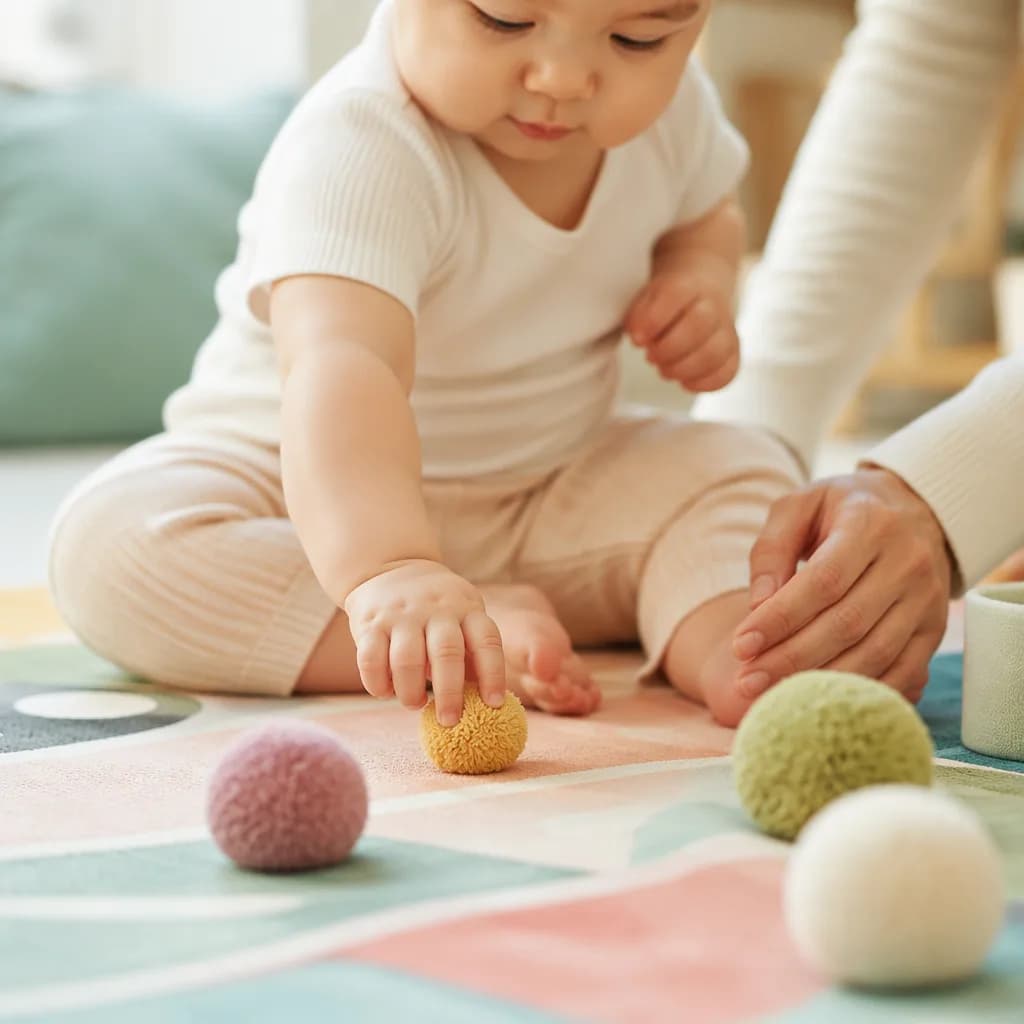 baby-development
Pincer Grasp Development: Ages, Signs, and Easy Play
Baby's pincer grasp starts messy, then gets precise. Learn the usual age range, early signs, simple play ideas, and when to ask for help.
9 min readJul 21, 2026 baby-development
When Do Babies Smile? Early Grins and Social Smiles
Learn when babies first smile, how newborn grins differ from social smiles, and what to watch for if your baby isn't smiling yet.
9 min readJul 15, 2026- baby-development
When Do Babies Crawl? Signs, Stages, and Tips
Most babies crawl between 6 and 10 months, but there’s a wide normal range. Learn signs, stages, crawling styles, and simple ways to help.
12 min readJul 3, 2026