
6 Month Baby Milestones: Sitting, Food, and Play

What are the main 6 month baby milestones?
At 6 months, many babies are working on sitting with support, rolling, reaching for toys, babbling, showing interest in food, and lighting up when they see familiar people. You might notice more purpose in their movements now. A toy isn’t just something to stare at. It’s something to grab, mouth, shake, drop, and demand back with a very serious little noise.
Six month milestones are ranges, not strict deadlines. Some babies sit earlier. Some need more time. If your baby was born early, your doctor may look at milestones using adjusted age, which can give a clearer picture of where they are developmentally.
The main areas to watch around this age are movement, hands and vision, communication, social skills, feeding, sleep, and play. A very real 6 month moment might look like this: your baby sits in a tripod position for a few seconds, drops a spoon from the high chair, then squeals when you pick it up. That tiny scene tells you a lot. Core strength, hand control, cause and effect, social connection, and a budding sense of humor are all showing up at once.
If you’ve been following along from 2 month baby milestones or 3 month baby milestones, this stage can feel like a big leap. And if you’re looking ahead, our guide to 9 month baby development can help you see what may come next. For a fuller 6 month overview, you can also read 6 Month Baby Milestones: Sitting, Solids, Sleep.
Milestone charts are helpful because they let you notice patterns. They’re not meant to make you panic. If something feels off, your baby’s doctor is the best person to assess concerns and talk through next steps.
Sitting, rolling, and stronger body control
At around 6 months, many babies are busy figuring out what their bodies can do. You may see rolling from tummy to back and back to tummy, stronger pushes through the arms during tummy time, and little legs pressing down when you hold baby upright on your lap.
Sitting often comes in stages. Sitting with support means baby can stay upright while you hold their trunk, or while they’re nestled against your body. Tripod sitting is that sweet, wobbly phase where baby leans forward with both hands on the floor for balance, like a tiny yoga pose. Independent sitting comes later, when baby can sit without hands down and can turn their head or reach without toppling right away.
This is also the age when safety starts changing fast. Once rolling begins, diaper changes on a bed, couch, or changing table need your hand on baby the whole time. Babies can surprise you with one strong twist. If baby is pushing up strongly on arms or starting to get knees tucked under, it’s a good time to lower the crib mattress before they practice new moves in the middle of the night.
Simple floor play helps more than fancy gear. Try short tummy time sessions several times a day, even 2 or 3 minutes counts if baby is tired. Place a soft rattle just out of reach so they have a reason to shift weight, stretch, and maybe roll. For sitting practice, sit on the floor with baby between your legs, your knees making a safe little bumper on each side.
Baby seats are handy for a quick moment, but long stretches in them don’t give babies the same chance to twist, push, reach, and learn balance. Floor time is where a lot of the work happens.
Some babies crawl soon after this stage. Others roll across the room, pivot in circles, or scoot backward for a while before crawling clicks. If you’re comparing this stage with earlier months, 3 Month Baby Milestones: Smiles, Strength, and Play and 2 Month Baby Milestones: Smiles, Sounds, Sleep can help you see how much has changed. For the bigger 6 month picture, including food and sleep, see 6 Month Baby Milestones: Sitting, Solids, Sleep, and for what may come next, 9 Month Baby Development: Milestones, Food, Play is a helpful peek ahead.
Hand skills, vision, and exploring objects
At 6 months, baby play gets wonderfully busy. You may see your baby reaching with both hands, grabbing a toy with more purpose, passing it from one hand to the other, and bringing almost everything straight to the mouth. That mouth move isn’t random. It’s one of the ways babies learn about shape, texture, weight, and “what happens if I chew this?”
You might also notice your baby raking at small items with the whole hand instead of neatly pinching them. That’s expected at this stage. The neat finger-and-thumb grasp usually comes later, closer to the skills many parents watch for in 9 month baby development.
Vision is changing too. A 6-month-old may track a toy as it rolls away, watch a spoon drop from the high chair, or follow you as you walk across the room. That growing depth awareness makes simple games feel brand new. Try slowly moving a lightweight rattle from side to side and giving your baby time to follow it before offering it to grab.
Good toys don’t need to be fancy. A soft crinkle book, silicone teether, nesting cups, lightweight rattle, or clean wooden spoon can keep a baby happily exploring. If you’re thinking back to earlier stages, those first batting and looking skills from 3 month baby milestones and 2 month baby milestones are now turning into fuller, more active play.
A quick safety check helps. Choose toys too large to choke on, and look often for loose parts, tears, or pieces that could break off.
Parent tip: put out just three or four toys at a time. Rotate them later. Too much on the floor can make play feel scattered, while a small choice set helps your baby focus, explore, and try again. For the bigger 6-month picture, you may also like 6 Month Baby Milestones: Sitting, Solids, Sleep.
Babbling, sounds, and early communication
At 6 months, baby communication can feel like a tiny, noisy conversation. You might hear strings like “ba-ba,” “da-da,” or “ma-ma,” mixed with squeals, belly laughs, grunts, and those very soggy raspberries that somehow happen right after a clean outfit.
This is a lovely shift from the earlier coos and smiles you may remember from the 2 month baby milestones and 3 month baby milestones. Now, your baby may start taking turns with sounds. You say “ooo,” they answer with a squeal. You pause, they kick and babble back. It’s simple, but it’s real connection.
And yes, “da-da” can absolutely melt everyone in the room.
Most repeated sounds at this age usually aren’t true words yet. Baby is practicing mouth movements, rhythm, volume, and social back-and-forth. So if “dada” shows up during diaper changes, lunch, and while staring at the ceiling fan, it’s probably not a formal announcement. Still sweet, though.
Receptive language is growing too. Your baby may turn toward familiar voices, respond to their name sometimes, notice your tone, or calm when a trusted caregiver speaks. A soft “I’m right here” during a fussy car seat moment can mean a lot.
To encourage speech, keep it easy:
- Copy one of baby’s sounds, then pause.
- Narrate one small routine: “Sock on. Other sock on. Up we go.”
- Read the same short board book each day, even if baby mostly chews the corner.
- Make room for silence so baby can answer in their own way.
Hearing matters for language. If your baby rarely reacts to sound, doesn’t turn toward voices, or seems to have lost sounds they were using before, ask the pediatrician. For a wider look at this stage, you can also read 6 Month Baby Milestones: Sitting, Solids, Sleep, then peek ahead to 9 month development. And if you’re in a naming mood during all this babbling, Tanmay Suresh Upadhyay is a sweet one to browse.
Social and emotional changes at 6 months
At 6 months, your baby’s personality can feel suddenly louder. You may see big smiles for familiar faces, belly laughs during peekaboo, and a clear “I know you” reaction when a parent walks into the room. Mirrors can become fascinating too. Some babies grin, pat the glass, or lean in as if they’ve found a very interesting friend.
You might also notice stronger opinions. A baby who loved every rattle last month may now push one away and reach for the crinkly book instead. These early likes and dislikes are part of how they’re learning, much like the smiling and social back-and-forth you may remember from 2 month milestones and 3 month milestones.
Stranger awareness can begin around this age, even though separation anxiety often becomes more obvious later. A very real example: your baby beams at Grandma on video chat but hides their face when a new neighbor leans over the stroller. That doesn’t mean they’re rude or “too attached.” It means they’re noticing who feels familiar.
Cause and effect is big right now. Drop the spoon. Watch you pick it up. Bang the table. Hear the sound. Do it again. And again.
Try naming what you see: “That surprised you,” or “You wanted Daddy.” Comfort quickly, keep routines predictable, and don’t expect your baby to self-regulate like an older child. For a broader look at this stage, see 6 Month Baby Milestones: Sitting, Solids, Sleep, then peek ahead to 9 month development.
Starting solids and feeding milestones
At 6 months, food starts to become part of the day, but milk still does the heavy lifting. Breast milk or formula is still your baby’s main source of nutrition right now, so solids are more about practice, taste, texture, and learning how mealtimes work.
Readiness matters more than the calendar alone. Many babies are ready for first foods when they can hold their head steady, sit with support, bring toys or hands to their mouth, show real interest in what you’re eating, and open their mouth when a spoon comes near. If your baby turns away, pushes food out, or gets upset, that’s okay. Pause and try again another day.
A simple starter routine can be: milk feed first, then one small meal a day. Put baby upright in a high chair, offer a tiny amount of food, and stay close with a calm adult watching the whole time. Think one or two spoonfuls at first, not a full bowl. This is messy learning.
Good first foods can look a few different ways:
- Smooth iron-rich purees, like meat puree, lentils, beans, or iron-fortified oatmeal
- Soft mashed foods, like mashed tofu, beans, egg, or lentils
- Safely prepared finger foods if your family is using baby-led feeding
Iron-rich foods are a helpful place to start. Iron-fortified oatmeal, lentils, beans, egg, meat puree, and mashed tofu are all common options families rotate through. You don’t need a fancy menu. One food, one calm meal, one washable bib.
For allergy questions, ask your pediatrician about timing if your baby has severe eczema, a known food allergy, or other risk factors. That quick conversation can help you feel clearer before offering higher-allergy foods.
Safety is the big piece. Avoid honey before 12 months. Skip whole nuts, popcorn, hard raw vegetables, whole grapes, and large chunks of food. Foods should be soft and prepared in a way your baby can manage.
If you want the wider picture of this stage, our guide to 6 month baby milestones pairs nicely with earlier changes from 3 month milestones and 2 month milestones. And before long, those early tastes turn into the busy mealtimes you’ll see in 9 month development.
Sleep patterns and daily rhythm at 6 months
At 6 months, sleep can start to feel a little more predictable, then suddenly get wobbly again. Many babies sleep about 12-16 hours in a 24-hour period, often split between nighttime sleep and two or three naps. Still, there’s a wide range. Some babies take chunky naps. Some do tiny 32-minute naps that end the second you sit down with coffee.
This is also an age where new skills can make nights busier. A baby who’s learning to roll may practice in the crib. A baby who’s discovering new sounds may babble at 2 a.m. Starting solids can shift feeding patterns or make evenings feel different for a bit. If sleep gets bumpy, it doesn’t mean you did anything wrong.
Safe sleep still matters every night and every nap: place baby on their back, use a firm flat sleep surface, and keep loose blankets, pillows, and stuffed animals out of the crib.
Night waking is normal for many families at this stage. Some babies still feed overnight, and growth or feeding needs can vary, so it’s best to follow your pediatrician’s guidance. If you’re comparing this month to earlier sleep, it may help to look back at 2 Month Baby Milestones: Smiles, Sounds, Sleep or 3 Month Baby Milestones: Smiles, Strength, and Play and notice how much has changed.
A simple bedtime rhythm can help: feed, diaper, pajamas, short book, song, crib. Keep it boring and repeatable. That’s the magic.
For the bigger picture around this age, you can also read 6 Month Baby Milestones: Sitting, Solids, Sleep, then peek ahead to 9 Month Baby Development: Milestones, Food, Play. And if bedtime has turned into your quiet naming-notes moment, Tanmay Suresh Upadhyay: meaning & origin is a sweet one to save.
Simple play ideas for 6 month old development
Play at 6 months doesn’t need to look fancy. A blanket on the floor, your face close by, and one safe object to explore can be plenty.
At this age, baby learns through repetition, eye contact, touch, and hearing your voice. The same peekaboo game five times in a row may feel boring to you, but to your baby it’s practice: watching your face, waiting, reacting, and trying again. If you’re comparing this stage with earlier months, you may notice how much more alert and ready to join in your baby feels than during 2 month baby milestones or 3 month baby milestones.
Here are simple play ideas tied to common 6 month baby milestones:
- Peekaboo for social skills: Use your hands, a soft washcloth, or the edge of a burp cloth. Pause before you say “boo” so baby has a moment to anticipate your face coming back.
- Tummy time reaching for motor strength: Place a clean empty container or measuring cup just out of reach. Let baby stretch, shift weight, and try again.
- Texture play for sensory learning: Offer a soft washcloth, a smooth wooden spoon, or nesting measuring cups while you sit right there. Name what baby feels: “soft,” “bumpy,” “cool.”
- Sound games for communication: Tap a wooden spoon on an empty container, then stop and wait. Copy baby’s squeals, raspberries, or little babbles like it’s a real conversation.
Try this 10-minute floor routine when you want a simple plan:
- Two minutes of tummy time
- Two minutes sitting with support
- Two minutes reaching for a toy
- Two minutes reading a board book
- Two minutes of songs or silly sounds
That’s enough. Really.
For more on how play fits with sitting, solids, and sleep, this guide to 6 month baby milestones pairs well with what you’re doing on the floor. And if you like looking ahead, 9 month baby development gives a helpful peek at what may come next.
A quick screen-time note: live video chats with family are different from passive videos because baby can see familiar faces respond. Still, floor play and face-to-face talk give your baby more back-and-forth learning. Your voice beats a playlist most days.
Tiny side note for name lovers: if you’re saving meaningful names while baby plays nearby, Tanmay Suresh Upadhyay has a lovely meaning and origin page to browse later.
When to ask the pediatrician about milestones
Milestones aren’t a pass-fail test. Babies grow at their own pace, and some weeks are quiet before a big leap. Still, if something feels off, you don’t have to wait for the next checkup.
Call your pediatrician if your 6 month old:
- Seems very stiff or very floppy
- Doesn’t roll in either direction
- Can’t bring hands to mouth
- Doesn’t reach for objects
- Doesn’t respond to sounds
- Doesn’t laugh or make vowel sounds
- Has lost a skill they used to have
Feeding concerns are worth a call too. Reach out if your baby has trouble swallowing, frequently chokes or coughs during feeds, isn’t gaining weight well, or shows no interest in any solids after repeated gentle tries. A baby might gag as they learn new textures, but frequent coughing or choking is different and deserves a closer look.
If your baby was born early, ask your doctor about adjusted age. For example, a baby born two months early may be expected to meet some milestones closer to 4 months adjusted age, even though they’re 6 months old by the calendar. That context can make milestone conversations much calmer.
It can help to bring notes or short videos to the visit. A 20-second clip of how your baby moves on the floor, reacts to your voice, or handles a spoon can show the doctor what’s happening at home in a way that’s hard to explain while you’re sitting in the exam room.
If you’re comparing stages, you might find it helpful to look back at 2 month milestones or 3 month milestones, then peek ahead to 9 month development. And for a fuller 6 month overview, see 6 Month Baby Milestones: Sitting, Solids, Sleep. Early support can be helpful. It doesn’t mean anything is seriously wrong.
Frequently Asked Questions
What should a 6 month old baby be doing?
Many 6 month olds roll, sit with support, reach for toys, babble, laugh, recognize familiar people, and show interest in food.
Should my 6 month old be sitting up alone?
Some can sit alone briefly, but many still need support or use a tripod position. Steadier sitting often develops over the next few months.
How much solid food should a 6 month old eat?
Start small, often just 1-2 tablespoons once a day. Breast milk or formula is still the main nutrition source at this age.
What sounds should a 6 month old make?
Common sounds include squeals, laughs, raspberries, vowel sounds, and early babbles like ba, da, or ma.
Is crawling a 6 month milestone?
Crawling can happen around this age, but it’s not expected for every baby at 6 months. Many babies crawl later.
How many naps does a 6 month old need?
Many 6 month olds take two or three naps a day, with total sleep around 12-16 hours in 24 hours.
When should I worry about 6 month baby milestones?
Call the pediatrician if baby doesn’t respond to sounds, seems very stiff or floppy, doesn’t reach, can’t bring hands to mouth, or loses a skill.
Frequently asked questions
What milestones should my 6 month old be reaching?
Should my 6 month old be sitting independently?
What kind of play is best for a 6 month old?
When should I worry about 6 month milestones?
References
Sources
External research this article was grounded in.
- 6 - Wikipediaen.wikipedia.org
- 6abc Action News - WPVI Philadelphia, Pennsylvania, New Jersey and Delaware News6abc.com
- Math Calculatormathway.com
- 6 - Wikipediaen.m.wikipedia.org
Related reading
More from the journal →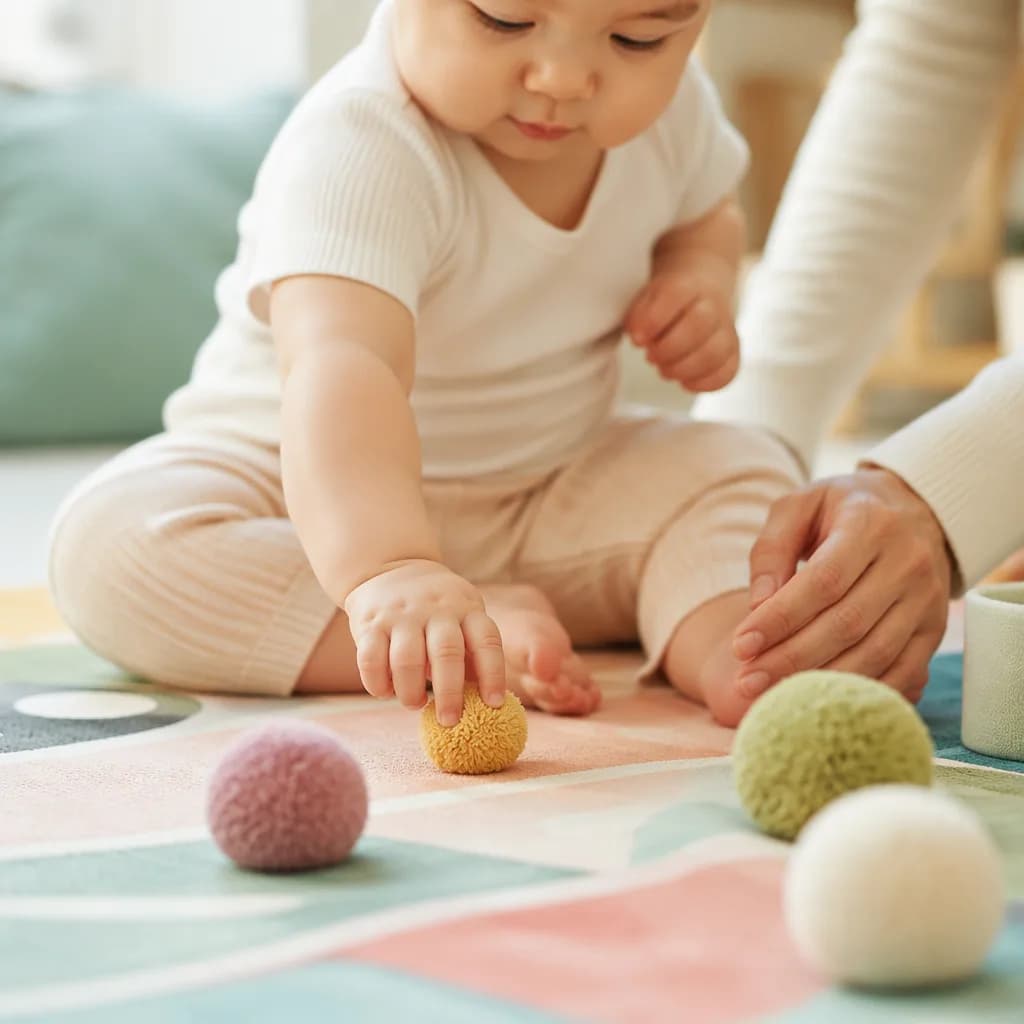 baby-development
Pincer Grasp Development: Ages, Signs, and Easy Play
Baby's pincer grasp starts messy, then gets precise. Learn the usual age range, early signs, simple play ideas, and when to ask for help.
9 min readJul 21, 2026 baby-development
When Do Babies Smile? Early Grins and Social Smiles
Learn when babies first smile, how newborn grins differ from social smiles, and what to watch for if your baby isn't smiling yet.
9 min readJul 15, 2026- baby-development
When Do Babies Crawl? Signs, Stages, and Tips
Most babies crawl between 6 and 10 months, but there’s a wide normal range. Learn signs, stages, crawling styles, and simple ways to help.
12 min readJul 3, 2026