
9 Month Baby Milestones: Crawling, Babbling, Play
What are the main 9 month baby milestones?
Many 9 month olds are sitting well, moving toward toys, babbling repeated sounds, using their hands more carefully, and showing stronger social preferences. You may notice more reaching, grabbing, banging, searching for hidden objects, and looking to you for a reaction during play.
There’s a wide normal range at this age. Some babies crawl. Some scoot, roll, pivot on their tummy, or seem much more interested in pulling up and standing than crawling. If your baby was born early, it can help to look at milestones by adjusted age, especially during the first year.
Here’s a simple way to think about 9 month baby development:
- Movement: Your baby may sit with better balance, twist from side to side, push up on arms during tummy time, or move toward a toy. Some babies are working on hands-and-knees rocking or crawling motions.
- Hands and feeding: Hands get busier now. Babies may rake small foods toward themselves, move toys between hands, drop objects into containers, or work toward a thumb-and-finger pickup.
- Communication: Babbling often becomes more playful, with repeated sounds and lots of back-and-forth noises.
- Social skills: Your baby may clearly prefer familiar people, watch your face closely, and react to your tone or expression.
- Play: Cause-and-effect play is big. So are peekaboo, hiding toys under a cloth, knocking down soft blocks, and filling or emptying baskets.
For example, your baby may sit on the rug, twist to grab a block, bang it on the floor, then look back at you as if to say, “Did you see that?”
If you want to compare earlier stages, you can revisit 6 Month Baby Milestones: Sitting, Solids, Sleep, 3 Month Baby Milestones: Smiles, Strength, and Play, or 2 Month Baby Milestones: Smiles, Sounds, Sleep. For a fuller age-by-age guide, see 9 Month Baby Development: Milestones, Food, Play.
Movement milestones: crawling, pulling up, and sitting
At 9 months, movement can look wildly different from baby to baby. One baby may crawl straight toward the dog bowl like they’ve been training for weeks. Another may sit happily, pivot in a circle, scoot backward, or rock on hands and knees without going anywhere yet.
That range is normal.
Common gross motor skills around this stage include sitting without support, turning or pivoting while seated to reach a toy, getting onto hands and knees, rocking back and forth, army crawling on the belly, crawling on hands and knees, scooting on the bottom, and starting to pull up to stand. Some babies are busy practicing one skill while another seems to pause for a bit. If your baby spent 6 months working on sitting, like we talked about in 6 Month Baby Milestones: Sitting, Solids, Sleep, it makes sense that those muscles are now helping with reaching, shifting weight, and trying to move.
Crawling does not have to happen exactly at 9 months. The bigger thing to watch is steady progress: more strength, more coordination, and more curiosity about getting to things. A baby who reaches farther, pushes up stronger, turns toward a sound, or tries to get to a favorite rattle is learning movement, even if they’re not crawling across the room yet.
You can support this with simple floor time every day. Place a toy just out of reach during tummy time or seated play. Put a firm couch cushion nearby as a soft obstacle to lean on, reach over, or eventually climb across with you right there. Try to limit long stretches in seats, swings, or jumpers, since babies need room to practice shifting their weight and using their whole body.
This is also the age to look at your room from the floor. Anchor furniture, cover outlets, move cords out of reach, gate stairs, and check the floor often for small objects. Babies are fast once they figure out their own version of moving.
Call your pediatrician if your baby seems very stiff or very floppy, uses one side much more than the other, cannot sit with help, or has lost a skill they had before. And if you want the bigger picture beyond movement, 9 Month Baby Development: Milestones, Food, Play can help you see how all these little changes fit together.
Pincer grasp baby skills: what to expect
At around this stage, many babies are getting more interested in tiny things on the highchair tray. The pincer grasp is the hand skill that lets a baby use the thumb and pointer finger to pick up small items, like a soft pea or a little piece of banana.
It usually doesn’t look neat at first. Your baby may start by raking food toward their palm with the whole hand. Then comes a rough pincer grasp, where the thumb and finger work together but still look a bit clumsy. Over the next few months, that grip often becomes more precise, with the fingertips doing more of the work. If you’ve been watching hand skills since 6 Month Baby Milestones: Sitting, Solids, Sleep, this is one of those lovely “oh, wow, they’re really changing” moments.
For safe practice, keep it simple. Try one or two soft cooked peas on the tray, tiny pieces of ripe banana, or O-shaped cereal if your baby is developmentally ready for it. A less crowded tray helps babies focus. It also keeps them from grabbing a big handful before they know what to do with it.
Food should be soft, small, and easy to mash. Avoid whole grapes, nuts, popcorn, hard raw vegetables, coin-shaped hot dogs, and chunks of sticky nut butter. Stay close while your baby eats, even when they seem confident.
Pincer grasp practice isn’t only about food. Play builds those same little muscles. Your baby may transfer toys between hands, bang soft blocks together, turn board book pages with help, or put objects in and out of a container. These playful movements connect beautifully with the bigger picture of 9 Month Baby Development: Milestones, Food, Play.
And if you like looking back, those early swipes from 3 Month Baby Milestones: Smiles, Strength, and Play and hand discoveries from 2 Month Baby Milestones: Smiles, Sounds, Sleep were part of this same path. Tiny skills add up.
Baby babbling milestones at 9 months
At 9 months, baby babbling can get wonderfully loud, silly, and surprisingly expressive. You may hear repeated sounds like “ba-ba,” “da-da,” or “ma-ma,” along with squeals, growls, raspberries, and sudden experiments with volume. One minute they’re whisper-babbling at a toy, the next they’re shouting at a spoon like it has personally offended them.
Many babies use these sounds without meaning at first. So yes, “da-da” may not mean Dad quite yet, even if Dad immediately melts into a puddle on the kitchen floor. That early sound play still matters. Your baby is practicing how their mouth, tongue, breath, and voice work together.
You may also notice receptive language growing in small, everyday ways. Your baby might turn toward familiar voices, respond to their name sometimes, pause when they hear “no,” or study your face closely while you talk. These moments can be easy to miss because they happen during ordinary routines, like diaper changes or breakfast. If you’ve been watching development since 2 Month Baby Milestones: Smiles, Sounds, Sleep or 3 Month Baby Milestones: Smiles, Strength, and Play, this stage can feel like those early coos have turned into a full baby conversation.
The best language play is simple. Narrate what you’re doing: “Sock on. Other sock on.” Copy your baby’s sounds back to them, then pause so they can “answer.” Sing the same little songs often. During play, name objects clearly: “ball,” “cup,” “bear.” These tiny back-and-forth moments fit naturally with the play ideas in 6 Month Baby Milestones: Sitting, Solids, Sleep and 9 Month Baby Development: Milestones, Food, Play.
Bring it up with a clinician if your baby isn’t babbling, has little response to sound, doesn’t make eye contact during interaction, or loses sounds they were using before. Trust that parent radar. It’s there for a reason.
Social and emotional changes you may notice
At 9 months, your baby may suddenly feel much more opinionated about where you are. This can look like reaching to be picked up, crying when you walk away, or clinging to your shirt when someone else says hello. Stranger anxiety and clinginess are common parts of 9 month old development, even in babies who were happy to be passed around a few weeks ago.
A big piece of this is object permanence. In plain parent terms: your baby now understands that you still exist when you leave the room. That’s a huge brain leap, but it can make goodbyes harder. If you disappear, they may wonder why they can’t get to you.
You may also see the sweet side of this stage. Your baby might laugh at silly faces, copy a wave or clap, and light up during peekaboo because hiding and coming back finally makes sense. If you remember the early social smiles from 2 Month Baby Milestones: Smiles, Sounds, Sleep or the playful connection in 3 Month Baby Milestones: Smiles, Strength, and Play, this is that same bond growing bigger.
Try a simple goodbye script: “I’m going to the kitchen. I’ll be right back,” then return as promised. Sneaking away every time can make some babies more watchful.
Separation anxiety often comes in waves, especially during illness, teething, or sleep changes. It doesn’t mean you’ve done anything wrong. For more on this age, see 9 Month Baby Development: Milestones, Food, Play.
9 month baby activities for learning and play
At 9 months, play can be wonderfully simple. You don’t need a cart full of new toys. A scarf, a bowl, a ball, and your voice can do a lot.
If you’re comparing stages, you may notice how different this feels from the early smile-and-sound days in 2 Month Baby Milestones: Smiles, Sounds, Sleep or the tummy strength work in 3 Month Baby Milestones: Smiles, Strength, and Play. Now your baby is more active, more curious, and often very eager to make things happen.
Try these everyday 9 month baby activities:
Movement play
- Play crawl chase on the floor. Move a few feet away, smile, and say, “Come get me!”
- Hide a favorite toy partly under a scarf and let your baby rescue it.
- Practice cruising at the couch if your baby is pulling up. Stay close and place a toy just to one side.
- During tummy time, roll a soft ball slightly out of reach so your baby stretches, pivots, or scoots toward it.
Hand-skill play
Stacking cups are lovely because they can be nested, knocked down, banged together, and passed from hand to hand.
You can also place a few blocks beside a mixing bowl and show your baby how to drop them in. The sound is half the fun. For grip practice, stuff clean scarves into an empty tissue box and let your baby pull them out one by one. At meals, soft finger foods can support early self-feeding skills, just keep watch and choose textures your baby can manage.
For more on this stage overall, see 9 Month Baby Development: Milestones, Food, Play.
Language play
Copy your baby’s babbles, then pause. That little back-and-forth is powerful.
During diaper changes, name body parts: “Here are your toes. Here is your belly.” Sing a simple song and clap along. Read the same short board book every day, even if your baby mostly chews the corner. Repetition helps make the routine familiar.
Sensory play
Set up shallow water splashing in a tray with you right there. Offer crinkly paper only with close supervision. Let your baby explore safe textures like a clean washcloth, a silicone teether, or a soft scarf.
A quick 10-minute setup: sit on the floor with a muffin tin, three blocks, and a scarf. Let your baby bang the tin, drop blocks into the cups, pull the scarf free, and crawl toward whichever item looks most exciting.
If you want a refresher on the stage just before this one, 6 Month Baby Milestones: Sitting, Solids, Sleep is a helpful read. And if you’re also saving name ideas during late-night feeds, Tanmay Suresh Upadhyay: meaning & origin is a sweet little side trip.
Feeding, sleep, and routines at 9 months
At 9 months, many babies are doing a mix of breast milk or formula and solid foods. Solids are becoming more interesting now, especially if your baby likes grabbing the spoon, squishing banana between their fingers, or trying to pick up tiny bits of soft food from the tray.
This is a lovely stage for self-feeding practice. You might offer mashed foods, soft finger foods, and then small pieces as your baby seems ready, always with close supervision. Think mashed sweet potato, soft steamed carrot sticks, or little pieces of ripe pear. Meals aren’t just about calories. They’re practice.
Every highchair meal can support a milestone: using the pincer grasp to pick up small foods, moving food around the mouth for early chewing practice, sitting upright with better balance, and watching you eat, talk, pause, and try again. If you started solids around 6 months, you may notice how much has changed since those first tastes in 6 Month Baby Milestones: Sitting, Solids, Sleep.
Sleep can feel a little bumpy at this age. Many 9 month olds take two naps, but night waking can still happen. Separation anxiety, new movement skills, teething, or a schedule that’s a bit off can all make nights harder. No need to assume you’re doing something wrong.
A simple rhythm helps: predictable meal times, plenty of floor play before naps, and a short bedtime routine you can repeat most nights. Bath, pajamas, feed, book, song, bed. Overnight, consistent responses can be comforting, even if your baby isn’t sleeping straight through yet.
If you want the bigger picture for this age, 9 Month Baby Development: Milestones, Food, Play pairs well with this stage, especially as crawling, babbling, and mealtime confidence all start connecting.
When should parents be concerned?
Nine months can be a wonderfully busy age, but it can also bring little worries. Try not to panic over one missed milestone. Babies don’t all move on the same timetable. A baby who isn’t crawling yet, for example, may still be making steady progress with sitting, reaching, rolling, and exploring.
Patterns matter more.
It’s a good idea to check in with your pediatrician if your baby is not sitting with support, is not bearing weight on their legs when you hold them upright, or uses their hands very little during play. Also bring it up if you’re not hearing any back-and-forth sounds, your baby doesn’t respond to their name or everyday sounds, shows very little interest in interaction, or has lost a skill they used to have.
Feeding deserves attention too. Talk with your doctor if feeds often include choking or coughing, if your baby seems unable to manage textures, or if weight gain is a concern. At this age, many babies are practicing with solids and self-feeding skills, but feeding should still feel reasonably safe and manageable.
Hearing and vision concerns are worth checking early. If your baby doesn’t turn toward sounds, doesn’t seem to notice your voice, or doesn’t track people and toys with their eyes, ask for an evaluation. You’re not overreacting. You’re gathering information.
If you’re comparing where your baby has been, it may help to look back at earlier stages like 2 Month Baby Milestones: Smiles, Sounds, Sleep, 3 Month Baby Milestones: Smiles, Strength, and Play, and 6 Month Baby Milestones: Sitting, Solids, Sleep. For a broader view of this stage, our guide to 9 Month Baby Development: Milestones, Food, Play can help you see what may be connected.
Trust your gut. If something feels off, take a short video of play, feeding, or movement and bring it to the appointment. A 20-second clip can show your doctor what’s happening at home much better than memory can.
Frequently Asked Questions
What should a 9 month old be able to do?
Many 9 month olds sit well, move toward toys, babble repeated sounds, pass objects between hands, start a pincer grasp, and show stronger attachment to familiar people.
Is it normal if my 9 month old is not crawling?
Yes, it can be normal. Some babies crawl later or move by scooting, rolling, or pulling to stand first. Ask the doctor if your baby seems weak, stiff, or is not progressing.
What sounds should a 9 month old make?
Common sounds include babbling like ba-ba, da-da, ma-ma, squeals, laughs, raspberries, and different pitches. A lack of babbling is worth discussing with your pediatrician.
How can I help my baby develop a pincer grasp?
Offer safe small soft foods one at a time, let your baby pick up blocks or puffs, and play with objects that can be dropped into a cup or bowl.
What are good 9 month baby activities at home?
Try peekaboo, crawling to a favorite toy, stacking cups, dropping blocks into a bowl, reading board books, singing with claps, and supervised water play.
Should my 9 month old understand no?
Some babies pause or look at you when they hear no, but impulse control is still tiny. Use a calm voice, redirect, and repeat often.
How many naps does a 9 month old usually take?
Many 9 month olds take two naps a day, though nap length and night waking vary. New motor skills and separation anxiety can temporarily disrupt sleep.
When should I call the doctor about 9 month baby milestones?
Call if your baby loses skills, does not babble, does not respond to sounds, cannot sit with help, uses one side much more, or seems very stiff or floppy.
Frequently asked questions
Should my 9 month old be crawling?
What sounds should a 9 month old be making?
How can I help my 9 month old reach milestones?
When should I worry about 9 month milestones?
References
Sources
External research this article was grounded in.
- 9 (2009 animated film) - Wikipediaen.wikipedia.org
- Baby Activities 6-9 Months: 100+ Expert-Approved Play Ideas for Sitting, Crawling & First Words - To Be The Perfect Mothertobetheperfectmother.com
- Milestones by 9 Months | Learn the Signs. Act Early. | CDCcdc.gov
- 9 month old baby milestones: Development, growth, speech, language, and more | Huckleberryhuckleberrycare.com
- Baby Developmental Milestones By Monthmy.clevelandclinic.org
- Denver's Leading Local News: Weather, Traffic, Sports and more | Denver, Colorado | 9news.com9news.com
Related reading
More from the journal →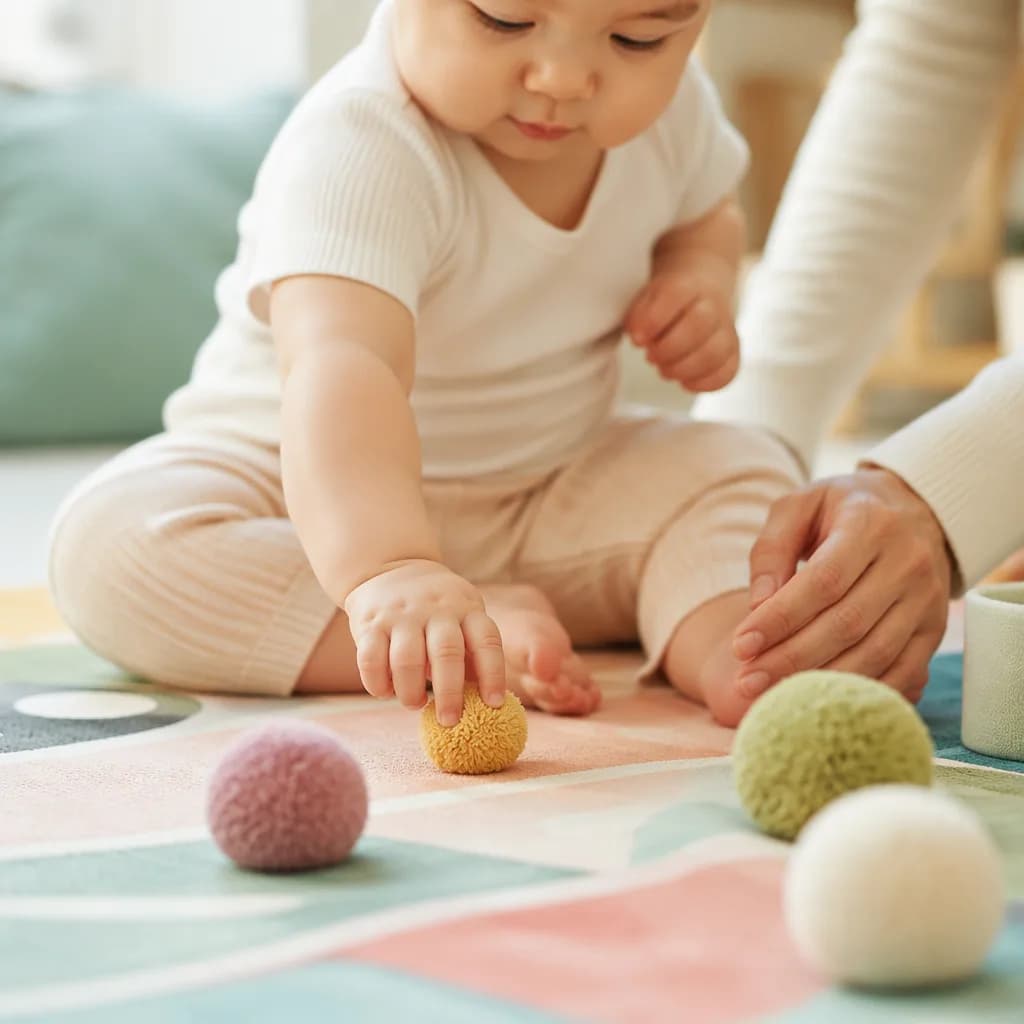 baby-development
Pincer Grasp Development: Ages, Signs, and Easy Play
Baby's pincer grasp starts messy, then gets precise. Learn the usual age range, early signs, simple play ideas, and when to ask for help.
9 min readJul 21, 2026 baby-development
When Do Babies Smile? Early Grins and Social Smiles
Learn when babies first smile, how newborn grins differ from social smiles, and what to watch for if your baby isn't smiling yet.
9 min readJul 15, 2026- baby-development
When Do Babies Crawl? Signs, Stages, and Tips
Most babies crawl between 6 and 10 months, but there’s a wide normal range. Learn signs, stages, crawling styles, and simple ways to help.
12 min readJul 3, 2026