
9 Month Baby Milestones: Crawling, Grasp, Talking

What are typical 9 month baby milestones?
At 9 months, your baby may suddenly feel much less like a tiny infant and much more like a busy little person with opinions. This age often brings big changes in movement, hand skills, sounds, social reactions, eating, and sleep.
Many babies can sit without support by now and get into a sitting position by themselves. Some are crawling, scooting, rolling with purpose, or trying hard to move toward a toy just out of reach. Others may be pulling to stand, especially near a couch or your legs, though that can come a little later too.
Hands get busy at this age. Your baby may move toys from one hand to the other, bang two things together, rake food toward themselves with their fingers, and practice picking up small soft foods during meals. Expect spills. A banana piece on the tray, the floor, and maybe in their hair is still learning.
Communication is growing too. You may hear lots of “mamamama” and “bababababa,” even if those sounds don’t mean specific words yet. Your baby may lift their arms to be picked up, look when you call their name, laugh during peek-a-boo, and react when you leave the room. Some babies are shy, clingy, or fearful around strangers. That preference for familiar people is part of social development.
Sleep and feeding still matter in the background. Babies from 4 to 12 months need 12 to 16 hours of sleep a day, including naps, and steady sleep and feeding routines can help them know what to expect.
Milestones are guideposts, not a race. If your baby was born early, ask your doctor about using corrected age when looking at milestones. And if you’re comparing stages, it can help to look back at 6 month baby milestones, or even earlier changes like 3 month milestones and 2 month milestones. For a broader look at this age, see 9 Month Baby Development: Milestones, Food, Play.
Crawling and other big movement skills
At 9 months, movement can look wildly different from baby to baby. One baby may belly crawl across the rug like a tiny commando. Another may scoot on their bottom, roll toward a toy, push backward by accident, or get up on hands and knees and rock without going anywhere yet.
All of that can be part of the “figuring it out” stage.
The CDC lists several movement milestones that most babies can do by 9 months: sitting without support, getting into a sitting position by themselves, moving things from one hand to the other, and using fingers to rake food toward themselves. Compared with the wobblier sitting you may remember from 6 month baby milestones, this age often feels more active and more determined. Your baby sees the spoon, drops the spoon, looks for the spoon, then tries to get to the spoon.
Classic hands-and-knees crawling is common, but it isn’t the only path. Some babies spend weeks rocking, pivoting, rolling, or scooting before crawling forward. Some seem to skip the picture-book crawl and later put their energy into pulling up, cruising along furniture, or walking. If your baby is curious, using both sides of the body, and gaining new movement skills, that’s reassuring.
You can encourage movement with simple play. Put a favorite toy just out of reach on a safe play mat and cheer your baby on as they roll, scoot, or crawl toward it. This is the same playful, low-pressure style that helps all along the way, from 2 month smiles and sounds to 3 month strength and play.
Now is also the moment to babyproof like you mean it. Block stairs. Tie up cords. Cover outlets. Strap furniture to the wall. Move pet bowls during floor play. Get down on your hands and knees and look for small objects under the couch, because that’s exactly where your baby will look.
Ask your pediatrician if your baby seems very stiff or very floppy, shows little interest in moving, has lost a skill, or consistently uses one side much more than the other. You know your baby best, and early questions are always okay. For the bigger 9-month picture, see 9 Month Baby Development: Milestones, Food, Play.
Pincer grasp, finger foods, and hand skills
Around 9 months, you may notice your baby working hard to pick up tiny things. The pincer grasp means picking up small items with the thumb and one finger, usually the pointer finger. It’s a big little skill.
Before that neat thumb-and-finger pickup shows up, many babies use a “raking” motion. They drag food or toys toward themselves with the whole hand or several fingers. The CDC lists raking food toward himself as a 9-month movement milestone, along with moving things from one hand to the other and banging two things together. Over time, that broad scoop often becomes a more careful pinch.
Mealtimes are a natural place to practice, as long as food is safe. Try very soft banana pieces, cooked carrot cubes, or cereal puffs. Every small food should be soft, age-safe, and cut in a way that reduces choking risk. Sit close by, expect sticky fingers, and let your baby try again and again.
Hands get stronger during play, too. Chunky puzzle knobs are great for grabbing. So are blocks that can be banged together, toys dropped into a container and taken out again, and sturdy board books with pages your baby can help turn. Clapping games count, even if the timing is wildly off. That’s part of the charm.
If your baby is still mostly swiping at food, that can be part of the progression. Keep offering safe chances to practice without turning it into a test. You can find more ideas for this stage in 9 Month Baby Development: Milestones, Food, Play, and if you’re thinking back to how much has changed since 6 Month Baby Milestones: Sitting, Solids, Sleep, you’re not imagining it. Those tiny fingers have been busy.
Communication: babbling, gestures, and understanding
By 9 months, communication can feel suddenly more social. Your baby may be making long strings of sounds like “mamamama,” “babababa,” or “dadadada,” and you might hear squeals, laughs, grunts, and very clear “I need you now” cries that sound different from the tired or hungry ones.
This is the age when babies often love a back-and-forth “conversation.” If your baby says “ba-ba,” copy it with a smile, then add a real word: “ba-ba, ball.” The CDC suggests repeating your baby’s sounds and adding simple words this way, because it gives them a tiny bridge from babble to language. If you remember those early coos from the 2 month baby milestones stage or the bigger smiles and play from 3 month baby milestones, this is that same connection growing into something louder, sillier, and more intentional.
Understanding is growing too. Many babies look when you call their name. They may react when you leave by looking, reaching, or crying. Some will pause when they hear “no,” look toward a familiar person when you ask “Where’s Daddy?” or get excited because they recognize a simple routine, like bib means food or sleep sack means bedtime.
Gestures matter just as much as sounds. Your baby may lift their arms to be picked up, reach for a favorite toy, wave “bye-bye,” hand you an object, or begin pointing toward something interesting. Excitement counts too: kicking legs when you bring the cup, bouncing when a song starts, or lighting up during peek-a-boo.
And yes, “mama” or “dada” may melt you. At this age, those sounds may not always be specific yet, though some babies do begin using words with meaning around now.
Simple support works best. Narrate diaper changes: “Sock off. Wipe. Clean diaper.” Pause during a favorite song so your baby can squeal or babble into the gap. Read sturdy board books and name the pictures. During meals, point and label: “banana,” “cup,” “spoon.” These small moments fit naturally alongside feeding and play routines from 6 month milestones and the broader 9 month baby development picture.
Social and emotional changes at 9 months
At 9 months, your baby may suddenly seem much more opinionated about people. This is normal. The CDC lists being shy, clingy, or fearful around strangers as a common milestone at this age, and you might see it when a grandparent visits and your baby cries instead of reaching out.
Separation can feel bigger now too. You leave the room to grab laundry, and your baby looks for you, reaches, or cries. That reaction can tug at your heart, but it also shows they know you’re their safe person. A quick, cheerful goodbye helps more than sneaking away. Try, “Mama’s going to the kitchen. Mama’s back!” Short and predictable is the goal.
You may notice strong preferences for familiar caregivers, a certain stuffed animal or blanket if it’s safe for your baby’s sleep space and age, the same bedtime song, or the usual feeding routine. Babies often feel calmer when the day has a rhythm. If you’ve been watching changes since the early smiley days in 2 Month Baby Milestones: Smiles, Sounds, Sleep or 3 Month Baby Milestones: Smiles, Strength, and Play, this new attachment phase can feel like a big leap.
Play is still the best teacher. Peekaboo is especially good now because many babies smile or laugh during it. You can also roll a soft ball back and forth, pass a toy with “my turn, your turn,” or copy silly sounds like “bababa” and wait for your baby to answer.
With new people, go slow. Let your baby watch from your arms first. Keep routines familiar, offer comfort, and let connection happen in tiny steps. For a wider look at this age, see 9 Month Baby Development: Milestones, Food, Play, especially if you’re also comparing changes from 6 Month Baby Milestones: Sitting, Solids, Sleep.
Sleep, feeding, and growth at 9 months
At 9 months, sleep often has a rhythm, even if it’s not always neat. Many babies do best with a steady bedtime, nighttime sleep, and two naps during the day. The CDC notes that babies from 4 to 12 months need 12 to 16 hours of sleep in 24 hours, including naps, and consistent sleep times can make things easier.
Still, this is a very normal age for sleep to wobble.
Your baby may be busy practicing big new skills, like getting into a sitting position, moving toys from one hand to the other, or trying to get to something just out of reach. Some babies are also dealing with teething, a cold, or stronger separation anxiety. The CDC lists reacting when you leave, looking, reaching, or crying, as a common 9-month milestone, so those bedtime tears can feel extra intense right now.
Feeding is growing too. Breast milk or formula is still a major source of nutrition, while solids give your baby practice with tastes, textures, chewing, and self-feeding. If you started solids around 6 months, like we talked about in 6 Month Baby Milestones: Sitting, Solids, Sleep, you may notice your baby is now more curious and hands-on at meals.
Textures can vary by readiness. Some babies do well with mashed foods, thicker purees, and soft finger foods they can rake toward themselves with their fingers. Sit close, expect spills, and let meals be messy. That’s part of learning.
Keep choking safety front and center. Avoid whole grapes, popcorn, hard raw vegetables, nuts, and any foods your baby can’t safely mash or manage. Skip honey until after 12 months. If you want a wider look at this age, 9 Month Baby Development: Milestones, Food, Play pairs well with this stage.
9 month old activities that build new skills
At 9 months, play can be wonderfully simple. You don’t need special toys or a perfect setup. A blanket on the floor, a few cups, a board book, and your face are plenty.
Short bursts count, too. Five focused minutes on the floor can be plenty, especially on a fussy day.
For movement, give your baby lots of safe floor time. Place a favorite toy just out of reach and cheer them on as they roll, scoot, or crawl toward it. If you have a clean cardboard box, open both ends and make a little tunnel. Sit at one end and call your baby’s name, or shake a toy so they have a reason to come through. At the couch, you can help your baby practice supported standing while you stay close. Keep it brief and steady, then return to the floor when they seem tired.
Hand skills can be built into ordinary play. Stack plastic cups and let your baby knock them down. Put large soft blocks into a container, dump them out, then do it again together. Offer safe finger foods at meals so your baby can practice raking food toward themselves and feeding with their fingers. Expect spills. That’s part of the learning.
Communication grows through repetition. Read the same short book every day, even if you only name two pictures before they grab the pages. During bath time, point and name body parts: “nose,” “belly,” “toes.” Sing a familiar song and pause before the last word so your baby can smile, bounce, or make a sound. When they say “bababa” or “mamama,” copy it back, then add a simple word like “ball” or “more.”
Sensory play can stay safe and supervised. Let your baby crinkle paper while you watch closely, splash hands in a shallow tray of water, or feel a soft washcloth, a smooth scarf, and a bumpy towel. Simple textures are fascinating at this age.
If you want a broader look at what many babies are practicing now, our guide to 9 Month Baby Development: Milestones, Food, Play pairs nicely with this. You may also notice how much has changed since 6 Month Baby Milestones: Sitting, Solids, Sleep, when sitting and early solids were often the big focus.
When to call the pediatrician
Most 9-month-olds are working on skills at their own pace, and there’s a wide range of normal. Still, some signs are worth a calm check-in with your pediatrician, especially if your gut is telling you something feels off.
Call if your baby can’t sit with help, seems very stiff or very floppy, doesn’t bear weight on their legs when you support them, or shows no interest in reaching, rolling, scooting, crawling attempts, or moving toward toys. At this age, the CDC notes that most babies can sit without support, move things from one hand to the other, rake food with their fingers, and look for dropped objects. If those kinds of skills aren’t showing up yet, it’s reasonable to ask about it.
Also mention hand and feeding concerns. For example: your baby doesn’t bring objects to their mouth, can’t pick up objects at all, or has trouble swallowing. Feeding is messy at this stage, but it shouldn’t feel scary every time. If solids have been hard since the stage covered in 6 Month Baby Milestones: Sitting, Solids, Sleep, bring that history with you.
Communication signs matter too. Check in if your baby doesn’t respond to sounds, doesn’t babble, doesn’t respond to their name, or avoids eye contact most of the time. You can compare earlier social and sound patterns from 2 Month Baby Milestones: Smiles, Sounds, Sleep and 3 Month Baby Milestones: Smiles, Strength, and Play, but don’t use them to worry yourself late at night.
Call promptly if your baby loses a skill they once had.
Bring specifics. A 20-second video of crawling attempts, a clip of feeding trouble, or notes like “doesn’t turn when I call her name at breakfast” can help your pediatrician see what you’re seeing. For more everyday context, this 9 Month Baby Development: Milestones, Food, Play guide can help you sort what’s typical from what deserves a closer look.
Frequently Asked Questions
Should my 9 month old be crawling?
Many 9 month olds crawl, scoot, roll, or army crawl, but some skip classic crawling. Ask your pediatrician if your baby shows no interest in moving or seems very stiff or floppy.
What should a 9 month old be able to say?
Many babies babble sounds like ba-ba, da-da, or ma-ma. Some may use mama or dada with meaning, but clear words often come later.
What is the pincer grasp milestone?
The pincer grasp is when a baby picks up small items using the thumb and finger. Around 9 months, many babies are moving from raking with the whole hand toward this skill.
What are good 9 month old activities?
Try peekaboo, board books, stacking cups, crawling games, container play, soft finger foods, songs with pauses, and supervised floor play with toys just out of reach.
How many naps does a 9 month old need?
Many 9 month olds take two naps a day, though timing varies. Sleep can be disrupted by teething, new movement skills, illness, or separation anxiety.
When should I worry about 9 month baby milestones?
Call the pediatrician if your baby is not sitting with help, not babbling, not responding to sounds or their name, not reaching for objects, or loses a skill they had before.
Frequently asked questions
What should a 9 month old baby be able to do?
Should my 9 month old be crawling yet?
What hand skills are common at 9 months?
How much should a 9 month old sleep?
When should I talk to the pediatrician about 9 month milestones?
References
Sources
External research this article was grounded in.
Related reading
More from the journal →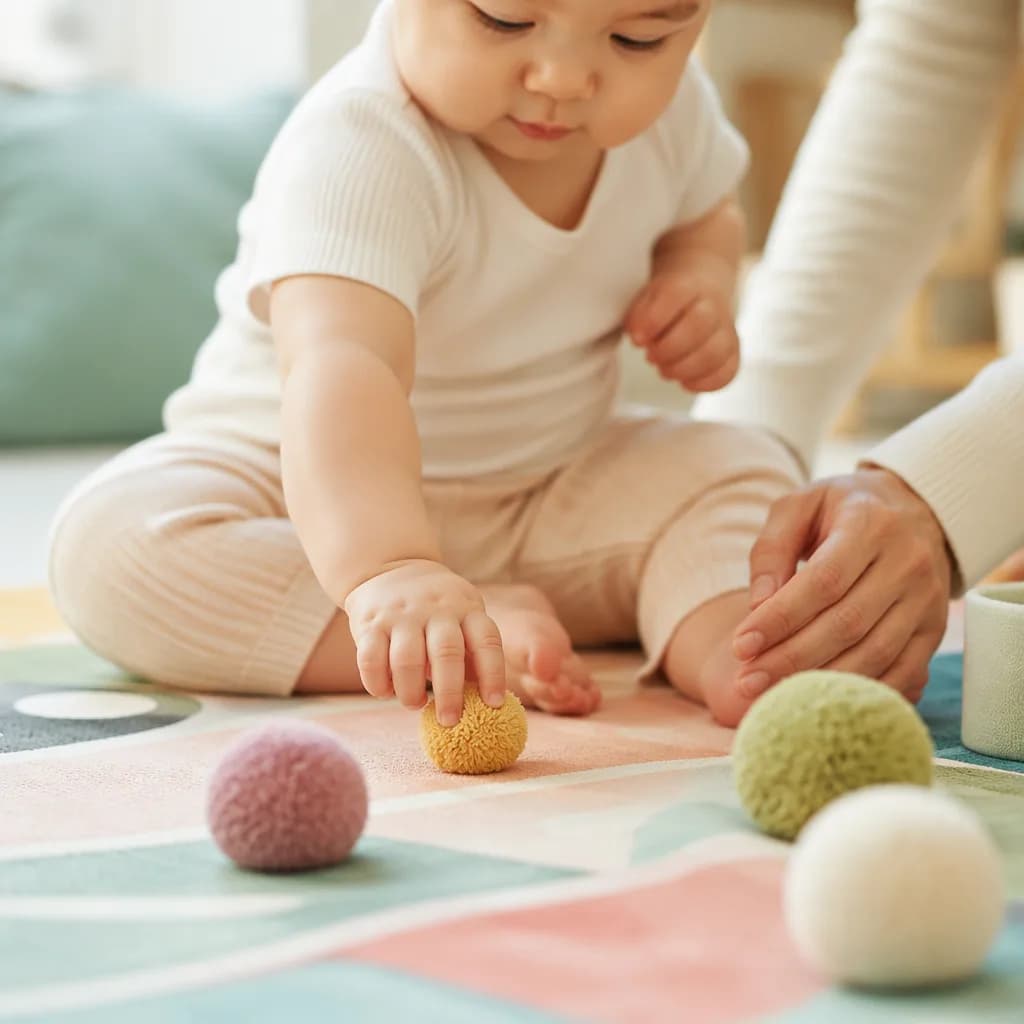 baby-development
Pincer Grasp Development: Ages, Signs, and Easy Play
Baby's pincer grasp starts messy, then gets precise. Learn the usual age range, early signs, simple play ideas, and when to ask for help.
9 min readJul 21, 2026 baby-development
When Do Babies Smile? Early Grins and Social Smiles
Learn when babies first smile, how newborn grins differ from social smiles, and what to watch for if your baby isn't smiling yet.
9 min readJul 15, 2026- baby-development
When Do Babies Crawl? Signs, Stages, and Tips
Most babies crawl between 6 and 10 months, but there’s a wide normal range. Learn signs, stages, crawling styles, and simple ways to help.
12 min readJul 3, 2026