
9 Month Baby Milestones: Crawling, Sounds, Play
What are the main 9 month baby milestones?
At 9 months, many babies are busy in a very hands-on way. They want to move, grab, taste, copy, and check whether you’re still nearby. It’s a big little age.
A parent-friendly snapshot might look like this: your baby may be sitting without support, rocking on hands and knees, reaching for toys, raking cereal pieces with their fingers, or starting to pinch small bits of food between finger and thumb. You may hear babbling strings like “mamama” or “dadada,” even if those sounds don’t clearly mean you yet. Socially, your baby may look for a dropped toy, respond to familiar faces, or show strong opinions about who gets to hold them. Sleep and feeding can still feel a bit changeable, especially as babies practice new skills and get more curious at meals.
Try not to treat this month like a checklist. Babies develop on different timelines. One baby might crawl early but take longer with finger foods. Another might babble all day and prefer to watch before moving. If you’ve been following along since 2 month milestones, 3 month milestones, or 6 month milestones, you already know development often comes in uneven little bursts.
In the rest of this guide, we’ll look at each area more closely: movement, hands, communication, social play, sleep, and feeding. We’ll also share simple ways to support practice at home, like floor play, back-and-forth sounds, and mealtime chances to explore. For a broader month-by-month view, you can also read 9 Month Baby Development: Milestones, Food, Play.
Movement milestones: crawling, pulling up, and sitting
At 9 months, movement can look wonderfully messy. Many babies are sitting steadily now, reaching for toys without toppling right away, and using their hands to catch themselves when they lean too far. Some can get into sitting on their own from the floor, which is a big shift from the supported sitting you may remember from the 6 month baby milestones stage.
You might see pivoting in a circle on the belly, scooting, army crawling, hands-and-knees crawling, or pulling to stand at the couch. Some babies rock back and forth on all fours for days before going anywhere. Some push backward first and look deeply offended by it. Very normal.
Classic crawling isn’t the only path, either. A baby may bottom shuffle, roll across the room, or skip crawling and move toward cruising later. The main thing you’re watching is progress in strength, coordination, curiosity, and the ability to move with more purpose.
A simple practice setup works best. Put your baby on a firm floor surface with a favorite toy just out of reach, maybe the crinkly book or the measuring spoon they always want more than the actual toy. Let them try. You can also place couch cushions on the floor as soft little obstacles for climbing over, crawling around, or leaning on. Bare feet often help with grip, so keeping socks off during floor play can make pulling up and pushing forward a little easier.
This is also the age when babyproofing starts to feel less optional. Add baby gates where needed, anchor furniture, cover outlets, and move cords, pet bowls, and small objects out of reach. If your baby is trying to stand at the couch, assume they’ll soon try the coffee table, the laundry basket, and your pant leg.
If you like comparing stages, it can be sweet to look back at those early strength-building days in 3 month milestones or 2 month milestones. For the bigger picture this month, see 9 Month Baby Development: Milestones, Food, Play. And if you’re naming a new sibling while chasing a crawler, Tanmay Suresh Upadhyay: meaning & origin is there for a quiet moment later.
Hand skills: pincer grasp, clapping, and object play
Around the nine month milestones, many babies start practicing a more precise way to pick things up: the pincer grasp. In plain parent language, that means using the thumb and pointer finger to grab a small piece of food or a tiny object. At first, it may look more like a messy side pinch, with the thumb pressing against the side of the finger instead of the fingertip. That still counts as practice.
This is a big shift from earlier baby hand skills. Back around the stage we talked about in 3 Month Baby Milestones: Smiles, Strength, and Play, hands were often opening, closing, batting, and coming to the mouth. By the time babies are working through 6 Month Baby Milestones: Sitting, Solids, Sleep, many are raking at toys or food with the whole hand. Now, they may begin trying to pick up one puff instead of scooping a whole fistful.
You’ll see this during real life, not just playtime. A baby might pick up a soft puff from the tray, turn a board book page with your help, bang two blocks together, or drop a spoon from the high chair and lean over to see where it went. Yes, the spoon game gets old fast. It’s also learning: cause, effect, sound, distance, and your reaction.
Good toys for this stage are simple. Try soft blocks, stacking cups, textured balls, and crinkle books. For food practice, offer finger foods that are soft and appropriately sized for your baby’s eating skills, especially if you’re also reading about 9 Month Baby Development: Milestones, Food, Play.
A quick safety check helps. Keep choking hazards out of reach, including whole grapes, popcorn, nuts, coins, button batteries, and toy parts smaller than a toilet paper tube. Babies are quick now.
If you’re comparing stages, the tiny smiles from 2 Month Baby Milestones: Smiles, Sounds, Sleep can feel like yesterday. Now those same little hands are clapping, grabbing, dropping, and proudly trying again. And if you’re in a naming mood during all this baby watching, Tanmay Suresh Upadhyay: meaning & origin is a sweet little side read for a quiet minute.
Sounds and communication at 9 months
At 9 months, baby communication can feel like a tiny conversation, even before real words arrive.
You may hear repeated babbling sounds like “ba-ba,” “da-da,” or “ma-ma.” Your baby might copy your tone, squeal back when you sound excited, or get quiet when your voice turns serious. Some babies respond to their name by looking up, pausing, or turning toward you. Familiar voices often get a quick head turn, especially if it’s a parent, sibling, or grandparent walking into the room.
Gestures count too. Reaching to be picked up, lifting arms, leaning toward a toy, or pushing something away are all ways your baby is telling you something.
You might hear “mama” or “dada” around this age, and yes, it’s completely heart-melting. It may not have clear meaning yet, though. Many babies practice those sounds before they connect them to a specific person. That connection usually builds with lots of repetition and warm responses.
Receptive language is growing as well. Your baby may understand “no” sometimes, pause when called, recognize a familiar routine like “bye-bye,” or look toward a named person or object. If you say, “Where’s Daddy?” they might glance his way. If you hold up a cup and name it every day, they may start to connect the sound with the object.
Simple habits help. Narrate diaper changes: “Wipe, wipe. Clean diaper. All done.” Read the same short book often, even if you only make it through two pages. Sing a favorite song and pause before the last word, then wait. Give your baby a chance to answer with a sound, smile, bounce, or look.
If you’re comparing stages, it can help to look back at early sound development in 2 month milestones, 3 month milestones, and 6 month milestones. You can also see the bigger picture in our guide to 9 month baby development.
Do check in with your baby’s doctor if your baby doesn’t react to sound, isn’t babbling, or loses sounds they used before. Trust that nudge. You know your baby best.
Social and emotional development at 9 months
At 9 months, your baby may suddenly seem much more aware of who feels safe and familiar. A grandparent they smiled at last month might get a serious stare today. A new babysitter may bring tears. And yes, your baby may cry when you leave the room even though they were happily banging a spoon on the high chair one minute earlier.
That clinginess isn’t a problem. It’s a sign your baby knows you’re their person.
You may notice stranger anxiety, separation protest, and a strong preference for familiar caregivers. Many babies this age also “check in” with a parent before exploring. They might crawl a few feet away, look back at your face, then keep going if you look calm and encouraging. This is such a sweet shift from the early smiley days you may remember from 2 month milestones and 3 month milestones.
Back-and-forth play gets more fun now too. Your baby may grin to get your attention, laugh when you repeat the same silly sound, hold out a toy as if to “share,” wave, or light up during peekaboo. Repetition is a big favorite because it helps babies predict what happens next. Peekaboo is funny partly because they know you’re coming back.
A few gentle supports can help:
- Keep goodbyes short and warm: “I love you. I’ll be back after snack.”
- Use predictable routines before naps, daycare, or bedtime.
- Offer a safe comfort object if your baby is old enough and it fits your sleep setup.
- Practice tiny separations at home, like stepping into the hallway and returning quickly.
If you’re also tracking movement, food, and play, our 9 month development guide pairs well with the broader changes that started around 6 months. And if you’re naming a sibling or just love name meanings, Tanmay Suresh Upadhyay is a thoughtful one to browse.
Play ideas that support nine month milestones
At nine months, play doesn’t need to be fancy or long. It helps to organize it by skill area, so you can pick one simple activity and call it good. Five minutes on the kitchen floor while dinner warms up absolutely counts.
For more of the bigger picture, you can also keep 9 Month Baby Development: Milestones, Food, Play nearby as a gentle reference.
Crawling practice: Place a favorite toy on the far side of a pillow and let your baby work toward it. You can also sit a few feet away, open your arms, and call them warmly: “Come see me!” If they roll, scoot, rock, or just grin at you, that’s still useful practice. Keep the space safe and stay close.
Pincer grasp practice: During meals, offer soft cooked pea halves or small banana pieces, and supervise closely the whole time. Let your baby try picking them up, squishing them, dropping them, and trying again. It’s messy. It’s also real learning.
If solids still feel new in your house, the 6 Month Baby Milestones: Sitting, Solids, Sleep stage can be a helpful look back at where many feeding routines began.
Language play: Try copycat sounds. If your baby says “ba,” you say “ba” back with a smile. Pause during familiar songs and see if they make a sound, bounce, or look at you to continue. Label what they’re touching in plain words: “ball,” “cup,” “dog.” Tiny conversations count.
Those early smiles and coos started months ago, so it can be sweet to look back at 2 Month Baby Milestones: Smiles, Sounds, Sleep or 3 Month Baby Milestones: Smiles, Strength, and Play and notice how far your baby has come.
Object permanence play: Hide a toy under a washcloth and let your baby pull it off. Say, “Where’s the car? There it is!” Do it again if they’re into it. Stop if they’re not.
Problem-solving play: Put a block inside a cup. Show your baby how to dump it out, then hand the cup back. They may bang it, mouth it, or throw it. That’s normal kitchen-floor science.
And if you’re saving meaningful names while baby plays beside you, Tanmay Suresh Upadhyay: meaning & origin is there for a quiet later read.
Feeding, sleep, and daily routines at 9 months
At 9 months, feeding often starts to feel more like a rhythm than a constant guessing game. Breast milk or formula is still a main source of nutrition, while solids usually become more varied, more textured, and a little more interesting to your baby.
This is a nice age to offer soft finger foods, if your baby is ready. Think squishy pieces they can pick up and mash with their gums. Families may also start practicing with an open cup or straw cup at meals, even if most of the water ends up on the bib. That’s normal. It’s practice, not a performance.
Iron-rich foods can be helpful to include in the rotation, depending on what works for your family. Soft beans, shredded meat, eggs, or iron-fortified cereal are common options. If you started solids earlier, around the stage covered in 6 Month Baby Milestones: Sitting, Solids, Sleep, you may notice that meals now feel more hands-on and much messier.
A quick safety note: gagging can happen while babies learn new textures. It’s noisy, dramatic, and understandably stressful to watch. Choking is different. It’s often silent and needs immediate action.
Sleep can shift around this age too. Many 9 month olds take two naps, with wake windows around 2.5 to 4 hours. Even babies who were sleeping fairly predictably may wake more during teething, illness, or a burst of motor practice. Pulling to stand in the crib is a classic example. Some babies learn to stand before they learn how to sit back down, then they cry because they’re stuck.
Practice helps. During the day, let your baby pull up on a couch or sturdy surface, then gently show them how to bend their knees and sit. For a wider look at this age, you can read 9 Month Baby Development: Milestones, Food, Play.
When to ask the pediatrician about 9 month old development
If something about your baby’s development is worrying you, it’s okay to ask early. Truly. Bringing up a concern doesn’t mean something is automatically wrong. It just means you’re paying close attention, and if your baby does need support, sooner is usually easier than later.
At 9 months, it’s worth checking in with the pediatrician if your baby is not sitting with help, not bearing weight on their legs when you support them, or seems to use one side of the body much more than the other. For example, “He only reaches with his right hand,” is exactly the kind of detail that helps.
Also mention it if your baby’s body feels very stiff or very floppy, if there’s no babbling, no response to their name or everyday sounds, no eye contact, or no interest in little back-and-forth moments like smiling, copying sounds, or taking turns with a toy. Loss of skills matters too. If your baby used to babble, roll, sit, reach, or engage with you and then stops, call.
Feeding concerns belong in the same conversation. Ask about trouble swallowing, frequent coughing during feeds, poor weight gain, or a hard time moving toward thicker textures. If you’re also thinking about food, sitting, and play together, our guide to 9 Month Baby Development: Milestones, Food, Play may help you organize what you’re seeing.
Bring specific examples if you can: “She doesn’t turn when I clap behind her,” or “He coughs most times we try thicker food.” These small snapshots are more useful than trying to describe the whole month at once.
Contact the pediatrician sooner for sudden regression, breathing trouble, signs of dehydration, an injury, or that strong gut feeling that something isn’t right. You know your baby. If you’ve been tracking milestones from earlier months, like 2 months, 3 months, or 6 months, bring those notes too.
Frequently Asked Questions
What should a 9 month old baby be able to do?
Many 9 month olds sit well, crawl or try to move, babble repeated sounds, respond to their name, use early gestures, and pick up small foods with a developing pincer grasp.
Is it normal if my 9 month old is not crawling?
Yes, it can be normal. Some babies crawl later or move by scooting, rolling, or bottom shuffling. Ask your pediatrician if your baby cannot sit, seems very stiff or floppy, or uses one side much more.
What sounds should a 9 month old make?
A 9 month old often babbles strings like “bababa,” “dadada,” or “mamama,” copies tone, squeals, laughs, and uses sounds to get attention.
What is the pincer grasp at 9 months?
The pincer grasp is when a baby uses the thumb and pointer finger to pick up small items. At 9 months, it may look clumsy and improve with practice.
How can I help my 9 month old reach milestones?
Offer daily floor time, safe finger foods, simple books, songs with pauses, peekaboo, and toys that can be banged, dumped, stacked, or hidden under a cloth.
Should my 9 month old be saying words?
Clear words are not expected yet for many babies. Babbling, responding to sounds, looking toward familiar people, and using gestures are more common at this age.
How many naps does a 9 month old need?
Many 9 month olds take two naps a day, though sleep varies. New crawling, pulling up, teething, illness, and separation anxiety can all affect sleep.
When should I worry about baby milestones at 9 months?
Call the pediatrician if your baby is not sitting with help, not babbling, not responding to sounds, avoids eye contact, seems very stiff or floppy, or loses a skill they had.
Frequently asked questions
What should my 9 month old baby be doing?
Is it normal if my 9 month old is not crawling yet?
How can I help my 9 month old practice milestones?
What sounds should a 9 month old make?
When should I call the pediatrician about 9 month milestones?
References
Sources
External research this article was grounded in.
- 9 (2009 animated film) - Wikipediaen.wikipedia.org
- Denver's Leading Local News: Weather, Traffic, Sports and more | Denver, Colorado | 9news.com9news.com
- nine.com.au -- the new ninemsn - News, Sport, TV, Entertainment, Lifestyle | Latest Breaking News Headlines from Australia and the worldnine.com.au
- Ninite - Install or Update Multiple Apps at Onceninite.com
Related reading
More from the journal →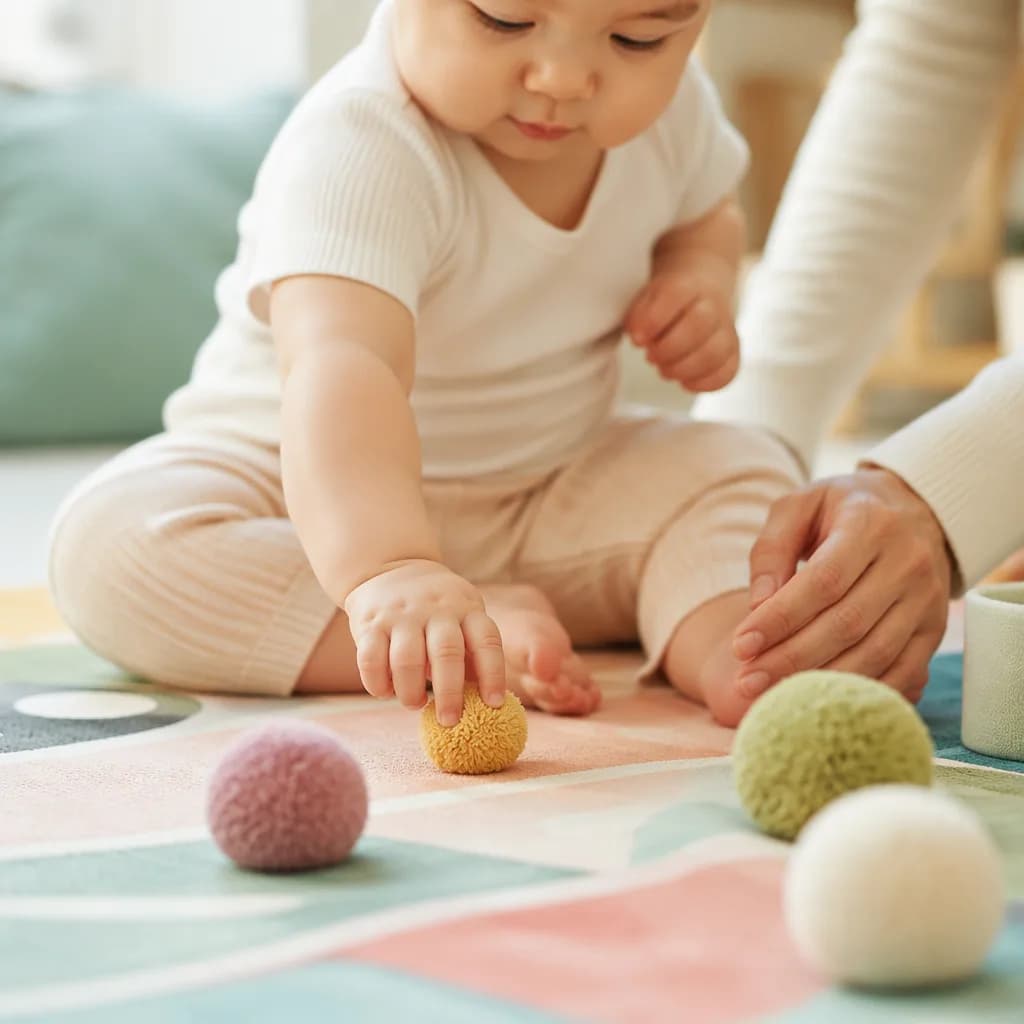 baby-development
Pincer Grasp Development: Ages, Signs, and Easy Play
Baby's pincer grasp starts messy, then gets precise. Learn the usual age range, early signs, simple play ideas, and when to ask for help.
9 min readJul 21, 2026 baby-development
When Do Babies Smile? Early Grins and Social Smiles
Learn when babies first smile, how newborn grins differ from social smiles, and what to watch for if your baby isn't smiling yet.
9 min readJul 15, 2026- baby-development
When Do Babies Crawl? Signs, Stages, and Tips
Most babies crawl between 6 and 10 months, but there’s a wide normal range. Learn signs, stages, crawling styles, and simple ways to help.
12 min readJul 3, 2026